
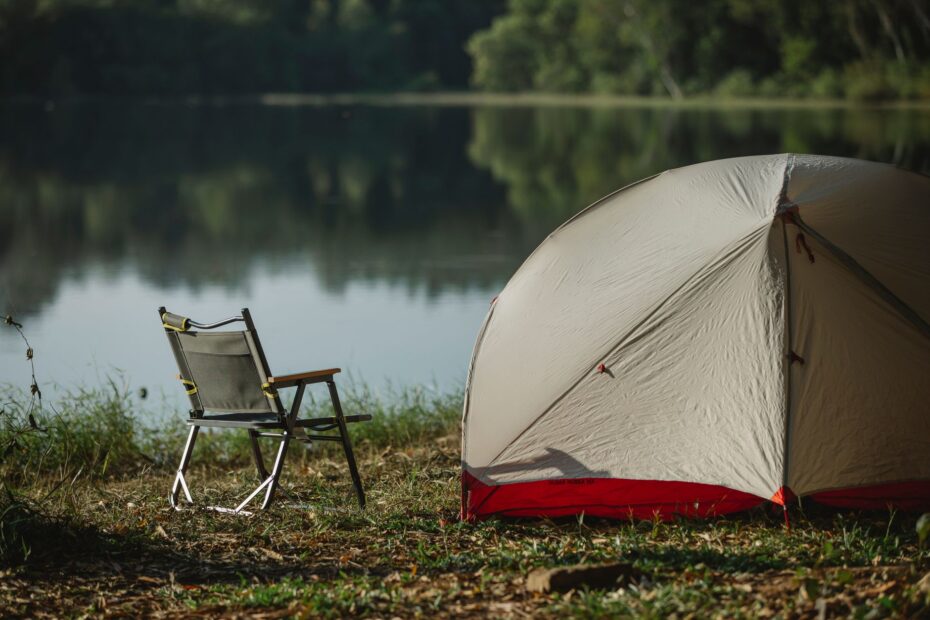
Four small leg ends concentrate the combined weight of your body and chair beyond what grass, sand, or mud can support. A seat that feels solid on gravel can tilt within minutes on damp turf as one leg presses into a weaker patch.
You can use the ground check, terrain choices, and wider bases below to set a steadier seat at a campsite, beach, or festival field.
Ground Pressure Concentrates Weight at Each Chair Leg
Most of your weight reaches the ground through four small contact points rather than the full chair frame. Ground pressure means weight divided by contact area, so a small chair leg surface area presses harder into soil than a broad base.
Narrow Legs Focus the Load
Your body weight joins the chair’s own weight, and the frame divides that total across its legs. A tubular aluminum leg touches far less ground than a broad rubber foot, chair leg pad, or flat wood base. Smaller contact points raise pressure at each leg.
Use a simple example to picture the force involved. Your chair and body might place 200 pounds on level ground, leaving about 50 pounds at each leg. A dime-sized contact patch delivers that weight into a tiny piece of soil rather than spreading it across a wider area.
| Leg contact type | How weight reaches ground | Likely surface result |
|---|---|---|
| Narrow tube end | Weight lands on a tiny area | A leg can press into wet turf or sand |
| Wide foot cap | Weight spreads across a wider base | The chair settles more slowly in soft soil |
| Flat pad under each leg | Weight reaches a broad, level base | The chair has steadier footing |
One sinking leg shifts the chair’s balance. After a leg drops an inch, your seat tilts and more of your weight moves toward the remaining legs. That extra force can push another foot downward, turning a small dent into a wobble.
Wide feet reduce pressure, yet they do not solve every problem. Your chair can still rock where a root, rut, or raised stone leaves one leg higher than the rest. Ground pressure explains sinking; level contact explains whether the frame stays square.
Whether that pressure causes sinking depends on how firmly the underlying soil can resist it.
Soft Ground Has Different Load-Bearing Capacity
The pressure at each leg meets soil with a different load-bearing capacity. Dry grass can cover firm dirt, while wet turf can feel solid at the surface and compress under the root layer. Your chair responds to the soil beneath the grass blades.
Wet Turf Gives Way Below the Surface
Water reduces friction between soil particles. Saturated dirt shifts more easily under a narrow leg, so the leg moves down rather than resting on a firm layer. This is why camp chairs sink in grass after rain, near a spigot, or beside a drainage swale.
Grass blades add almost no structural strength. Roots can bind a thin upper layer, yet loose soil, animal holes, old stake holes, and damp pockets can sit below it. Your front-left leg can find weak ground while the other three remain firm.
Sand Shifts Sideways and Mud Yields Downward
Loose dry sand moves sideways under chair legs. Individual grains roll away from the pressure point, allowing a narrow foot to travel down like a small post. Compacted damp sand has denser grains and gives your chair a firmer base.
Mud and recently disturbed soil lose shape faster because their structure is already broken apart. A chair foot can press through with little resistance. Deep mud calls for a different location, since pads can sink with the chair or sit unevenly on the surface.
| Surface | What happens under a chair leg | Practical response |
|---|---|---|
| Dry grass over firm dirt | The leg stays close to the surface | Use level ground after a quick check |
| Wet turf | The leg presses through weak soil | Use broad pads or move to firmer ground |
| Loose dry sand | The leg pushes grains outward | Use wide feet or seek compacted sand |
| Compacted damp sand | The leg meets denser material | Set the chair on the level, firmer patch |
| Mud or loose fill | The leg penetrates deeply | Move the chair to another surface |
Recently disturbed soil deserves the same caution as wet ground. A tent area, vehicle track, filled hole, or loose campsite edge can look dry while its soil remains poorly packed. Pressing the intended leg positions gives you a clearer answer than judging the color of the surface.
Once a weak patch is identified, increasing the contact area can reduce how deeply each leg presses into it.
A Four-Leg Test Finds Weak Spots Before You Sit
A level-looking patch can still have one soft corner. Before your chair carries your full weight, check the four places where its feet will land. That short routine separates soil sinking from a wobble caused by a root, rut, or shallow hole.
The Check Takes Less Than a Minute
- Choose firmer ground. Set the chair away from saturated grass, loose fill, drainage channels, and the downhill edge of a slope.
- Press each spot. Use your heel or hand to feel for soft soil, hollows, roots, stones, and uneven resistance.
- Set the empty chair. Check that all four feet touch before your body adds weight to the frame.
- Load it gradually. Lower yourself with control and watch each leg during the opening few seconds.
- Check fresh dents. Stand up once and inspect for a leg that has started to bury itself or a pad that has shifted.
Your chair can wobble without sinking at all. Four-legged frames need every foot to meet the same plane, and a raised root can leave one foot hanging above the ground. The frame then twists as you sit, adding stress at rivets, fabric joints, and slender aluminum tubes.
Do not force a twisted chair flat by leaning harder into it. Frame tension can bend a leg or tear fabric near a corner pocket.
Test gradual loading before settling into the seat. Start with part of your weight, pause, and watch for a leg that slides, rotates, or presses down. A stable chair stays level through that short check instead of shifting after your hips reach the seat.
Wider Bases Spread Weight Across Softer Soil
A broad, flat base lowers pressure by spreading each leg’s weight over more ground. That is how to keep camping chairs from sinking on mildly soft grass or loose soil: set a stable base beneath every leg and keep the four bases close in height.
Matched Pads Keep the Seat Level
Wood scraps work well where each piece lies flat and does not split under weight. Firm, flat rocks can work too, provided their tops are level and their edges do not press into chair feet. Four pieces with similar thickness keep your seat from leaning toward one raised corner.
A folded tent footprint or foam sit pad spreads weight only where it stays flat. Thin fabric can bunch beneath a tubular leg, and a slick mat can slide across damp grass. Your base needs traction above and below, not merely extra material.
Improvised Bases Have Clear Limits
| Base option | Where it can work | Where it can fail |
|---|---|---|
| Flat wood scraps | Mildly soft grass or loose dirt | Wood cracks, rocks, or has sharp splinters |
| Firm flat rocks | Level stones with broad tops | A rock rolls or presses into chair fabric |
| Folded groundsheet | Slightly soft, dry ground | Material bunches or slides under weight |
| Plastic lids | Minor load spreading on dry soil | A lid cracks, slips, or collects water |
| Tennis balls | Leg ends fit tightly into cut openings | Balls roll, hold water, or fit poorly |
Plastic lids and tennis balls are limited bases, not ground anchors. A lid can skate across packed dirt, while a ball can roll as your weight shifts. Skip sharp rocks, stacked stones, brittle plastic, and narrow boards that can tip beneath a chair leg.
Use four similar bases instead of mixing a rock, lid, board, and folded mat. Uneven thickness changes the seat angle and places one leg under extra force. Your goal is a broad, level contact area at every leg position.
Chair Foot Caps and Base Shapes Suit Repeated Terrain
Repeated trips to beaches, festivals, or damp campgrounds can justify dedicated camping chair feet for soft ground. Wider foot caps spread weight before the leg reaches soil, but they cannot make a muddy slope safe or level.
Camping Chair Foot Caps Need a Tight Fit
A leg cap works best when it fits tightly, sits flat, and provides a wider base than the original foot. Loose caps can twist off in mud or remain buried in sand. Your cap needs to match the tube shape without blocking folding joints.
Helinox-style lightweight chairs use thin legs to keep packed weight low, so their feet can need extra help on sand. Coleman and GCI Outdoor chairs vary by model, yet wider feet and sturdier leg ends leave shallower marks than narrow tube ends. Check the frame’s stated load limit before adding rigid attachments.
Base Shape Changes the Ground Options
- Wide-foot chairs. Your chair suits soft grass and packed sand because each foot spreads weight over a larger area.
- Sled-style bases. Rails resist sand penetration better than narrow legs, though ruts and roots can make the base rock.
- Four narrow legs. Your chair packs light and sits well on firm dirt, yet needs pads on soft surfaces.
- Large leg pads. Your existing chair gains more footprint, though each pad needs a secure fit and level placement.
- Ground anchors. An anchor can hold a chair during wind, but it does not fix sinking or uneven ground.
Big Agnes and REI Co-op carry compact camp furniture built around portability, so broad contact points are not present on every model. Your terrain should guide the tradeoff. Larger feet help on grass and sand, while uneven ground can still leave a broad base rocking.
Camping chair leg caps are worth using where soft ground is a recurring issue rather than a rare campsite surprise. Their value comes from added contact area, not from extra height. A cap that raises one leg more than the others can make your chair less stable.
Even a broad cap cannot compensate for a slope that shifts more of the load onto one side.
Stable Seating Depends on Slope and Weight Distribution
Wide feet solve pressure, but placement solves the rest. Your chair needs one consistent surface rather than a seam where firm gravel meets loose soil or a root lifts one leg above the others.
Terrain Calls for Specific Choices
- Deep mud. Move to firmer ground rather than stacking materials beneath legs that will keep pressing downward.
- Soft grass. Use broad pads beneath all four legs after checking for wet spots beneath the root layer.
- Loose sand. Choose compacted sand where available, then use wide feet or flat pads for extra contact area.
- Uneven ground. Move away from roots, ruts, and holes that leave one leg carrying more weight than the others.
- Sloped ground. Turn the chair away from downhill lips, depressions, and edges where a leg can drop suddenly.
Your weight distribution changes as you recline, reach for a cooler, or sit near the edge of the seat. An empty chair can appear stable and then sink or twist after your hips settle into the fabric. Gradual loading shows that movement before a full drop.
Do not use taller stacks to correct a sinking leg. Height can add leverage, make the chair more likely to tip, and leave the frame uneven. A different patch of ground is safer than a precarious pile beneath one foot.
Leave the site in the condition you found it where possible. The Leave No Trace Center for Outdoor Ethics promotes low-impact camping, and removing temporary pads helps limit ruts in fragile turf.
Camping chairs sink into soft ground where the surface cannot carry pressure at each leg. Visible sinking, frame twisting, or repeated rocking after a gradual sit shows that your setup has reached a safe limit. Move the chair instead of adding a taller or slipperier base.
What to Remember Before Setting Up
Your chair stays steady where its feet suit the ground beneath them. Spread your weight with broad, level pads on mildly soft soil, use compacted surfaces where available, and leave deep mud or uneven spots that keep shifting under load.
A chair that settles evenly can remain comfortable through normal movement. But a chair that keeps moving is telling you to choose another patch of ground. Your safest choice is a level surface with four solid contact points.
FAQ
Why do camping chairs sink into soft ground?
Your weight passes through four small leg ends, concentrating pressure beyond what soft ground can support. After pressure at one leg exceeds the soil’s load-bearing capacity, dirt, grass, mud, or sand shifts aside and the leg moves downward. Uneven moisture and soil density can leave one leg lower than another.
Why does a chair sink even when the ground looks dry and firm?
Dry grass can cover damp or loose soil below the surface. Roots can hold a thin upper layer together while an animal hole, old stake hole, drainage pocket, or recently disturbed patch sits underneath. Your heel test can reveal that weak layer before the chair carries your weight.
How can I stop my camping chair from sinking into sand or mud?
Choose firmer ground before adding pads. Your chair benefits from compacted damp sand, while deep mud calls for another location. On mildly soft sand or soil, set a broad flat base beneath every leg and lower yourself gradually to check that each base stays level.
What can I put under camping chair legs on soft ground?
Flat wood scraps, firm broad rocks, and stable leg pads can spread your chair’s weight across a larger footprint. A folded mat can work on dry, mildly soft ground where it stays flat. Skip stacked materials, sharp rocks, brittle boards, and slick plastic that can shift beneath your chair.
Do wider chair feet work better on grass and sand?
Wider chair feet lower ground pressure because they spread your weight across more surface area. Your chair will leave shallower dents on soft grass and sand, though wide feet cannot correct a deep hole, saturated patch, or slope that leaves one leg unsupported.
Are camping chair leg caps worth using?
Repeated use on soft grass, sand, or loose soil makes securely fitted, flat-sitting leg caps a practical upgrade. Your caps need a broad base and a tight connection to the leg. Loose caps can twist, detach in mud, or leave uneven footing on rough ground.