
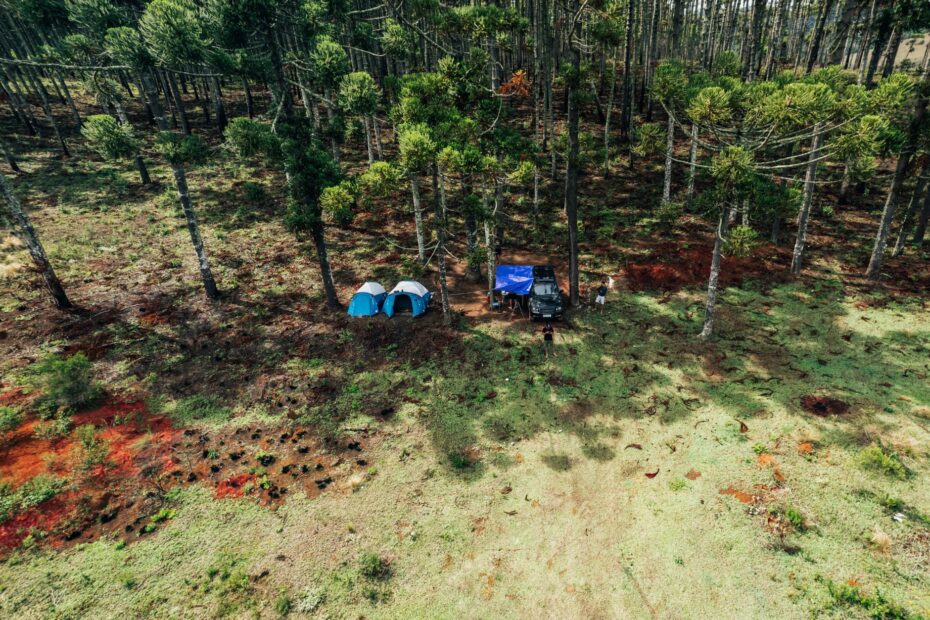
One layer is cut to a tent’s exact floor shape, while the other is a larger sheet that serves several camp tasks. A footprint sits inside your tent floor outline, while a tarp needs folding; exposed tarp edges can catch fly runoff and send water beneath your sleeping area.
This comparison covers fit, materials, campsite conditions, and packing trade-offs for campers who want cleaner gear and drier sleeping space.
Two Ground Covers Serve Different Jobs
Your tent floor takes pressure from gravel, roots, damp soil, and packed mud. A ground cover adds a sacrificial layer beneath that fabric, but a footprint and tarp handle that job in different ways.
A Footprint Matches One Tent Floor
Factory-cut groundsheets follow one model’s floor dimensions, usually matching it exactly or sitting just inside its edges. Models from MSR, NEMO Equipment, Big Agnes, and Coleman can include corner loops or attachment points that line up with the tent body.
It shields your tent floor from abrasion, punctures, mud, and ground moisture. Your footprint cannot repair worn waterproofing, seal damaged seams, or turn a leaking bathtub floor into a dry sleeping space.
A Tarp Handles More Camp Tasks
A ground tarp is a waterproof sheet built for several jobs around camp. You can place it beneath a tent, hang it overhead, rig it as a windbreak, cover firewood, or wrap exposed gear during hard rain.
That broader role changes the tent footprint vs tarp choice. A tarp gives your kit wider camp utility, while a footprint gives your tent floor close coverage with less folding.
| Ground cover | Main role | Fit beneath your tent | Useful camp roles |
|---|---|---|---|
| Tent footprint | Shields the tent floor | Matched to a tent model | Ground protection |
| Ground tarp | Multipurpose weather barrier | Needs folding or sizing | Shelter, gear cover, windbreak, emergency cover |
| Tyvek sheet | Light ground barrier | Cut to your floor shape | Groundsheet use, temporary cover |
Fit controls where rainwater travels after it leaves the fly. A close footprint edge stays beneath the floor, while surplus tarp material can leave a visible lip in the runoff path.
Fit and Coverage Keep Runoff Outside
Rain falling from a tent fly lands beside the tent wall, where loose material can become a shallow tray. Your ground cover needs to remain hidden beneath the floor perimeter.
A Smaller Outline Limits Water Collection
Dedicated footprints sit flush with the tent floor or slightly inside its edge. That tent footprint size leaves no exposed lip for runoff, even after wind shifts the tent fabric overnight.
A tarp under tent setup follows the same rule, though rectangular tarps rarely arrive in the right dimensions. Fold surplus material inward and keep every edge beneath the floor before staking your tent.
A tarp extending beyond the tent floor can catch runoff from the fly and channel water beneath your shelter. A waterproof tarp becomes a water trap once its edge sticks out.
One Exposed Corner Changes the Result
Example: a 7-by-9-foot tarp beneath a compact two-person tent can leave several inches visible on every side. During steady rain, those edges collect roof runoff and direct it toward the floor seams.
Check the door side, rear wall, and tent vestibule before settling in. Your vestibule can shed a substantial amount of water, so a tarp edge beneath that runoff zone deserves extra attention.
Close coverage solves the runoff issue, but rough ground brings a separate concern. Fabric thickness, coatings, and abrasion resistance decide how well the layer handles repeated pressure from stones and grit.
Materials Shape Ground Performance
Sharp granite can wear fabric regardless of how thin or thick it looks. Your material needs suitable abrasion resistance for the ground beneath it while still fitting your packing plan.
Footprints Favor Low Bulk and Exact Fit
Purpose-built footprints tend to use coated nylon, polyester, or silnylon for low packed weight and compact storage. Their narrow shape leaves out extra fabric, large grommets, and broad reinforced panels.
A hydrostatic head rating describes a fabric’s resistance to water pressure. Your footprint benefits from water resistance, yet abrasion resistance matters just as much because repeated rubbing can wear through a thin coating.
Tarps Favor Tough Fabric and Tie-Outs
A polyethylene tarp handles hard use around car camps, though it can take up substantial pack space. Lighter nylon tarps cut weight, but your corners and tie-out points need care on rocky ground.
| Design feature | Tent footprint | General tarp |
|---|---|---|
| Shape | Model-specific floor outline | Square or rectangular sheet |
| Packed weight | Lower for its coverage area | Higher with heavy fabric and hardware |
| Corner hardware | Tent-compatible loops or fittings | Grommets and reinforced tie-outs |
| Overhead shelter role | Limited | Useful with ridgelines and poles |
- Silnylon sheets: Your pack stays lighter, though thin fabric benefits from a clean campsite.
- Polyethylene tarps: Your ground layer handles hard surfaces, though folded bulk can crowd a backpack.
- Tyvek groundsheets: Your sheet can be cut to the floor outline for dry-to-damp ground.
- Reinforced grommets: Your tarp can work overhead, but grommets add little beneath a tent.
Grommets matter overhead because cord, trekking poles, and stakes pull against those reinforced points. Beneath your tent, they add little floor protection and can form stiff spots under the fabric.
Because those reinforcements are built for shelter pitching rather than floor contact, tarp placement needs more attention.
A Tarp Works Safely Beneath a Tent With Careful Setup
Yes, provided the tarp is waterproof, durable enough for the terrain, and folded entirely beneath your tent floor.
Your preparation matters more than the tarp brand. A flat site, hidden edges, and removed debris reduce the two common tarp problems: water collection and pressure points.
A Clean Site Protects Every Layer
Clear pinecones, sticks, sharp stones, and broken twigs before unrolling your tarp. A tarp cuts scuffing, but a pointed rock can still press through fabric after a night of body weight and shifting gear.
Pick a tarp that folds smaller than your tent floor. Trimming suits a spare tarp kept only for ground use, while folded edges preserve its overhead-shelter role and leave reinforced hems intact.
A Flat Layout Stops Water Channels
- Clear the ground: Remove sharp debris and stay away from low spots where surface water gathers.
- Lay the tarp: Spread it flat with the smoothest side facing your tent floor.
- Fold excess inward: Tuck every visible edge under the tarp so no flap extends beyond your tent.
- Pitch the tent: Set your tent on top without dragging it across the groundsheet.
- Check the perimeter: Walk around your tent and confirm that no tarp edge shows beyond the floor.
Your final inspection should catch ridges, folded corners, and shallow depressions. A fold pointing downhill can direct water toward the tent floor like a narrow gutter.
Avoiding those drainage errors can justify a fitted footprint even when a tarp costs less and serves more uses.
Keep the tarp flat beneath the sleeping area. Raised folds can collect water, add pressure points, and leave damp marks beneath the tent after rain.
Weight, Budget, and Versatility Set the Trade-Off
A close-fitting groundsheet saves setup time because it arrives in the right shape. Your choice changes once packed weight, gear already on hand, and camp tasks enter the picture.
Footprints Suit Repeated Use With One Tent
A dedicated footprint suits you when one tent handles most trips and fast setup matters. It packs small, stays in place during pitching, and reduces the chance that spare fabric catches rain.
For ultralight camping, those details affect every mile. Your footprint covers only the floor area, while a shelter tarp carries fabric and tie-outs that your tent may not need.
Tarps Suit Flexible Camp Systems
A tarp suits you when the same sheet will cover a picnic table, shade a cooking area, block wind, or shield backpacks. Car camping leaves more room for that extra material and its broader uses.
| Camping situation | Stronger choice | Reason |
|---|---|---|
| Long backpacking route | Dedicated footprint | Your packed weight and exact fit carry more value. |
| Repeated trips with one tent | Dedicated footprint | Your setup stays quick and predictable. |
| Car campsite with changing weather | Tarp | Your sheet can cover gear or form overhead shelter. |
| Limited gear budget | Properly sized tarp | Your existing multipurpose sheet can fill both roles. |
REI carries model-matched groundsheets because close fit reduces setup errors. Tarp makers focus on tie-outs and broad coverage, so your camp routine sets the practical value of each format.
Campsite Conditions Point Toward the Right Ground Cover
Wet grass, abrasive desert soil, and packed campground pads place different demands on your ground layer. Tent footprint vs tarp comes down to your campsite, tent model, and the rest of your gear system.
Dedicated Footprints Favor Speed and Consistency
Choose a matched footprint for repeated use with one tent, fast setup after dark, or rainy trips where close edges reduce runoff mistakes. Your tent floor gains protection without spare corners to fold or watch.
No. A dry, smooth site and a durable tent floor reduce its value, yet a footprint still limits wear from grit and mud during repeated use.
Tarps Favor Existing Gear and Wider Camp Uses
Choose a tarp sized below your tent floor where budget or camp versatility matters more than model-specific fit. Your tarp can move from beneath the tent to a gear cover or rain shelter on a later trip.
Example: a family car campsite with a Coleman tent and a spare tarp benefits from that flexible sheet, provided its folded outline stays hidden. After packing the tent, your tarp can cover chairs during rain.
- Clear debris: Remove roots, stones, cones, and sticks before placing your ground cover.
- Check drainage: Keep your tent away from shallow channels and low spots after rain.
- Hide every edge: Fold tarp material inward until no section extends beyond the tent floor.
- Inspect seams: Check your bathtub floor and floor coating before wet-ground trips.
- Dry before storage: Air out your groundsheet so mud and moisture do not remain trapped.
Final Takeaways for Your Tent Setup
Your ground cover should shield the tent floor without collecting water around it. Pick a tent-specific footprint for light weight and dependable fit, or choose a tarp for broader camp utility while keeping every edge inside the floor perimeter.
Clean ground still matters most because no sheet removes the pressure of a sharp rock beneath your sleeping pad. Your tent footprint vs tarp decision works best after you match the material and size to the site.
FAQ
What is a tent footprint, and what does it do?
A tent footprint is a fitted groundsheet placed beneath your tent floor. Your footprint reduces abrasion from grit, roots, gravel, and mud while adding a moisture barrier between the tent fabric and wet ground.
Can I use a tarp instead of a tent footprint?
A waterproof tarp folded inside the floor edges can replace a footprint if its material can handle the terrain. Your setup needs flat ground and hidden edges because exposed material can direct rainwater beneath the tent.
Can a regular tarp be used as a tent footprint?
With its edges folded inside the tent floor perimeter, a regular tarp can serve as a protective ground layer. Your tarp should lie flat, with no raised folds, visible corners, or grommets pressing directly against the tent floor.
What are the main differences between a tent footprint and a tarp?
A footprint matches one tent floor and focuses on low bulk and close coverage. A tarp has a square or rectangular shape, needs folding beneath a tent, and can also serve as overhead shelter, a windbreak, or a gear cover.
Should a tent footprint be smaller than the tent floor?
Your footprint should match the floor closely or sit slightly inside its perimeter. A smaller outline keeps rain from the tent fly on the ground rather than on a visible groundsheet edge that can route water underneath.
Will a tarp under a tent cause water to collect underneath it?
A tarp can collect water beneath your tent when any edge extends beyond the floor. Your hidden, flat tarp avoids that tray effect, while a low campsite or downhill fold can still direct surface water toward the tent.