
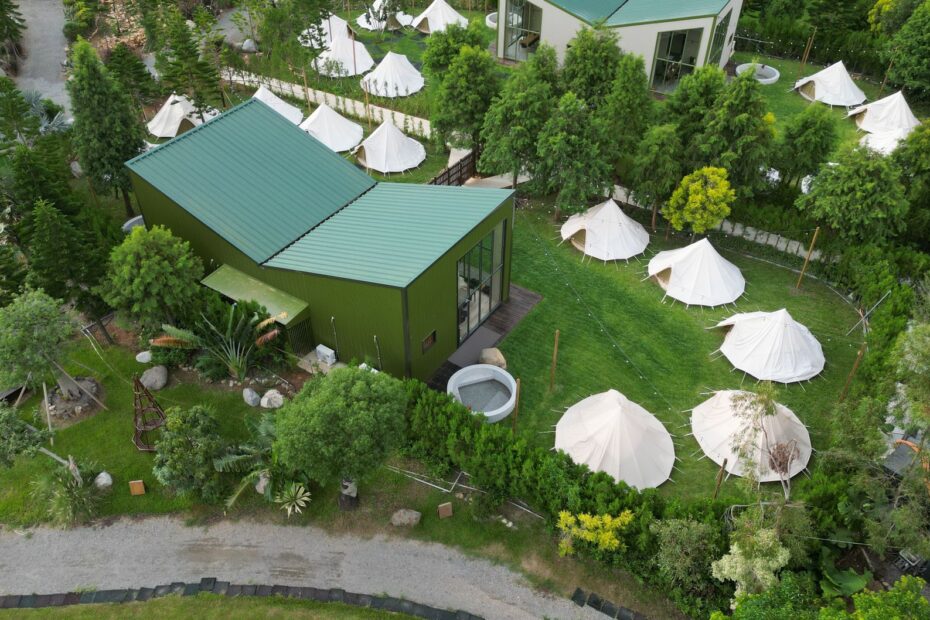
A furnished outdoor stay provides shelter and bedding, while a self-run campsite requires you to bring your own gear. Both put you near trails, stars, and campfires, yet your morning changes greatly with a made bed, private bathroom, or packed tent.
This comparison covers lodging, amenities, gear, total trip costs, nature time, and group needs so you can choose an outdoor stay that suits your comfort level and budget.
Two Outdoor Lodging Styles Set Different Expectations
A ready-to-use canvas tent signals a glamping stay. It is outdoor lodging with a prebuilt structure, furnishings, and site services that range from simple beds to cabin-style comfort. Your unit could be a safari tent, yurt, dome, cabin, or furnished RV.
Traditional camping centers on self-sufficiency. You bring a tent, sleeping bag, food-storage setup, and core equipment, then set up and care for your site. A developed campground can supply a tent pad, fire ring, picnic table, water spigot, and shared restroom.
The difference between glamping and camping comes down to who handles the shelter and daily setup. A yurt with a private bathroom can feel close to a small cabin, while a bare canvas tent with shared facilities can feel close to tent camping. Your reservation details matter more than the lodging label.
| Feature | Glamping | Traditional camping |
|---|---|---|
| Lodging | Prebuilt tent, yurt, cabin, dome, or similar unit | Your tent, trailer, hammock, or shelter |
| Sleeping setup | Bed and linens can be part of the stay | Your pad, cot, air mattress, and bedding |
| Daily tasks | Fewer setup tasks, based on the property | Setup, cooking, cleanup, and weather management |
| Privacy | Ranges from secluded units to clustered sites | Ranges from primitive sites to busy campgrounds |
Comfort Details Separate a Furnished Unit From a Campsite
The sleeping surface makes the contrast clear. Many glamping units have a mattress, sheets, blankets, furniture, and lighting ready at arrival. You supply a sleeping pad, cot, or air mattress for tent camping, then rely on its insulation against cold ground.
Glamping amenities vary sharply between properties. A cabin can have a full kitchen and a private bathroom, while a safari tent could have a bed, lanterns, and a shared bathhouse a short walk away. Your comfort depends on the listed features rather than the word “glamping.”
Bathrooms and power depend on the specific site
A private bathroom appears at some furnished sites, but it is not automatic. Your stay could involve a shared bathhouse, composting toilet, outdoor shower, or no plumbing. Electricity and Wi-Fi can be available in the unit, limited to a common building, or absent at a remote property.
Heat and air conditioning deserve the same attention. A cabin may have a full HVAC system, while a dome may use a small heater with limited power. You will feel that difference during a humid July night or a cold shoulder-season morning.
Campgrounds focus on a workable outdoor base
A campground usually gives you the basics for an outdoor stay rather than a furnished room. You may find a level tent pad, picnic table, fire ring, shared restroom, and potable water. KOA campgrounds range from basic tent sites to cabins and RV spaces, showing how broad the category can be.
Example: A furnished Under Canvas tent can have beds, linens, and a wood stove, while a nearby National Park Service campground may have a marked site, picnic table, and fire ring. Both place you outdoors, but your evening routine changes sharply.
Review bathroom access, shower temperature, power limits, and climate control during booking. A photo of a bed does not confirm a private restroom or overnight heat.
Once the amenities are confirmed, the remaining question is how much time you want to spend maintaining camp.
Gear and Camp Skills Change Your Daily Work
A furnished bed removes more than luggage. It removes a chain of tasks: pitching shelter, inflating pads, arranging a cooking station, and packing down before departure. You gain time at arrival, though a furnished stay still calls for weather awareness and careful packing.
Traditional camping rewards camp skills with flexibility. You choose the shelter, sleeping system, cooking method, and site routine, but every choice carries a weather and safety consequence. A poorly staked tent can leak during rain, while an under-insulated pad can leave you cold even inside a warm sleeping bag.
Traditional camping relies on a complete kit
- Shelter system: Bring a tent, stakes, groundsheet, rainfly, and repair items suited to wind and rain.
- Sleep insulation: Match your sleeping bag and pad to overnight lows because cold ground pulls heat from your body.
- Food storage: Use required lockers, bear-resistant containers, or vehicle storage where site rules allow it.
- Cooking plan: Pack a stove, fuel, cookware, water plan, and cleanup method for stove meals or campfire cooking.
- Light and power: Carry headlamps, spare batteries, and a charged phone battery pack rather than relying on outlets.
- Weather layers: Pack rain gear, dry socks, sun protection, and warm layers for temperature drops after sunset.
Food storage, fire rules, and campground rules differ by park because wildlife behavior and fire conditions differ by place. You need to follow those rules even at a developed site, where a paved loop can make the setting feel less remote. That approach aligns with National Park Service park-specific guidance.
Glamping reduces gear without removing preparation
Your bag can be lighter at a furnished site, but clothing, food, water, maps, footwear, medications, and weather awareness remain your responsibility. A remote yurt does not erase the need to know where parking sits, how far you walk after dark, or whether cell service reaches the property.
Site services also vary. Confirm towels, cookware, dishes, firewood, refrigeration, electricity, Wi-Fi, parking, and on-site assistance. Hipcamp listings range from simple land stays to furnished structures, so your packing list should follow the unit description rather than the platform name.
Those packing demands can create expenses that make a low nightly rate less of a bargain.
Total Trip Cost Goes Beyond the Nightly Charge
A low campsite fee can hide a full trunk of equipment. Glamping vs traditional camping becomes a budget decision once you add bedding, food storage, transportation, park entry, booking fees, meals, firewood, and activities to the overnight charge.
| Trip expense | Glamping pattern | Traditional camping pattern |
|---|---|---|
| Lodging or site fee | Higher because a built unit and furnishings are part of the stay | Lower for many tent sites |
| Shelter and bed | Part of many stays | Purchased, rented, or borrowed |
| Food setup | Kitchen access ranges from a full kitchen to none | Stove, cooler, cookware, and storage may be needed |
| Extra charges | Cleaning fees, property fees, or activities can appear | Park entry, firewood, rentals, and reservation fees can appear |
For an occasional weekend, a higher lodging charge can cost less than acquiring a tent, pads, bags, cooler, stove, and cookware. Rental gear changes that math, especially for a two-night trip. Your total should cover every item needed to sleep, eat, travel, and enter the site.
Repeat campers spread equipment spending across more nights. A family that already owns four sleeping bags and a reliable tent can spend far less at a campground than at a furnished property. You may still choose glamping for a celebration where dependable sleep matters more than setup time.
Outdoor Immersion Depends More on Habits Than Labels
A campfire’s smoke, an owl after dark, and a trail before breakfast are available through either lodging style. Outdoor time depends on location, schedule, noise, light, and your willingness to spend time outside the shelter rather than on whether your bed has linens.
Traditional camping puts you close to campcraft. You pitch the shelter, watch clouds, cook a meal, hang damp gear, and adjust to a changed forecast. Those hands-on tasks can deepen the traditional camping experience, though they also use daylight and demand stronger preparation.
Glamping is comfort and convenience, not an automatic barrier between you and nature. A low-impact glamping site far from roads can feel more immersive than a crowded campground beside a highway. Your itinerary can still include hiking, wildlife viewing, stargazing, and quiet time outdoors.
Stewardship remains the same at every site
Furnished tents, cabins, RV sites, and primitive camps all need careful use. Pack out trash, respect wildlife, keep fires within site rules, and leave natural objects where you found them. Those actions follow the seven Leave No Trace principles from the Leave No Trace Center for Outdoor Ethics.
Site operations matter too. A unit with plumbing, power, laundry, and vehicle access can use more resources than a basic tent site, while careless camping can damage soil and vegetation. Your behavior carries more weight than the trip label.
That flexibility matters most when travelers have different tolerances for inconvenience, privacy, and unpredictable weather.
Group Needs Point Toward the Better Fit
Reliable sleep and a nearby bathroom can change a family weekend from tense to enjoyable. Glamping suits new campers, families with young children, couples planning a special occasion, and groups that need predictable comfort after a day outdoors.
Traditional camping suits budget-focused travelers with usable gear, groups that enjoy campcraft, and trips where a basic site leaves more money for park access or several nights away. You can choose simpler sites that do not carry lodging services, though that choice adds setup work.
Whether glamping is better than camping depends on the work your group wants around its outdoor time. A couple planning a special occasion may value a private bathroom and furnished bed. Your family may value a short walk to the restroom, while experienced campers may prefer a lower site fee and their own gear.
Your priorities shape the practical choice
- Choose glamping: Favor it for furnished sleep, easier arrival, bathroom access, and less equipment hauling.
- Choose tent camping: Favor it for lower site fees, flexible locations, and hands-on outdoor routines.
- Review child needs: Plan for naps, nighttime bathroom trips, allergies, and a safe route from parking.
- Review pet rules: Confirm pet access, leash requirements, cleaning charges, and nearby walking areas before arrival.
- Review weather cover: Look for a rainfly, sealed windows, shade, heating, cooling, and a dry cooking space.
- Review cancellation terms: Weather, smoke, and road closures can affect remote stays more than a hotel stay.
Verify bathroom privacy, bedding and towels, kitchen access, heat or air conditioning, distance from parking, fire rules, and weather protection during booking. Then pack for the conditions rather than the listing photos. That final review can keep a glamorous tent from becoming an expensive lesson in missing details.
Bring headlamps and rain layers even for a furnished stay. Power failures, muddy paths, and sharp temperature changes do not stop at the edge of a glamping property.
Final Thoughts
Your right choice rests on the gap between the outdoor time you want and the work you want around it. Pick glamping for a built-in base that protects sleep and comfort; pick traditional camping for lower site fees, camp skills, and a self-run stay.
In glamping vs traditional camping, the stronger fit is the one whose actual amenities, total expense, weather protection, and daily tasks suit your group. You will have a better trip with clear expectations than with a label that sounds more comfortable or more adventurous.
FAQ
What is the difference between glamping and camping?
Glamping uses prebuilt lodging with furnishings and selected site services, while traditional camping asks you to bring, set up, and maintain much of your shelter and equipment. Your experience still depends on the specific site because a rustic yurt and a full-service cabin can have very different comfort levels.
What amenities do glamping sites usually provide?
Glamping amenities can include a bed, linens, furniture, lighting, electricity, heat, cooling, cookware, and a private bathroom. Your unit may instead have shared restrooms, limited power, outdoor showers, or a communal kitchen, so review the property details before packing.
Do you need to bring your own gear when glamping?
You need far less sleeping and shelter gear at many glamping sites, yet your trip still needs clothing, footwear, food, water, rain layers, a headlamp, and personal items. Bring cooking supplies only after you confirm whether your unit has cookware, refrigeration, and a fire ring.
Is glamping more expensive than camping?
Glamping carries a higher nightly lodging charge because the site has a built accommodation, furnishings, and sometimes hospitality services. Traditional camping can cost less per night, though your budget grows through tent gear, bedding, food storage, fuel, rentals, park fees, and transportation.
Can you have a campfire while glamping?
A legal fire feature and safe local conditions are required before a glamping site can allow a campfire. Your reservation rules, county fire restrictions, and seasonal burn limits control the answer, so use the designated ring or fire pit and never gather wood from the site.