
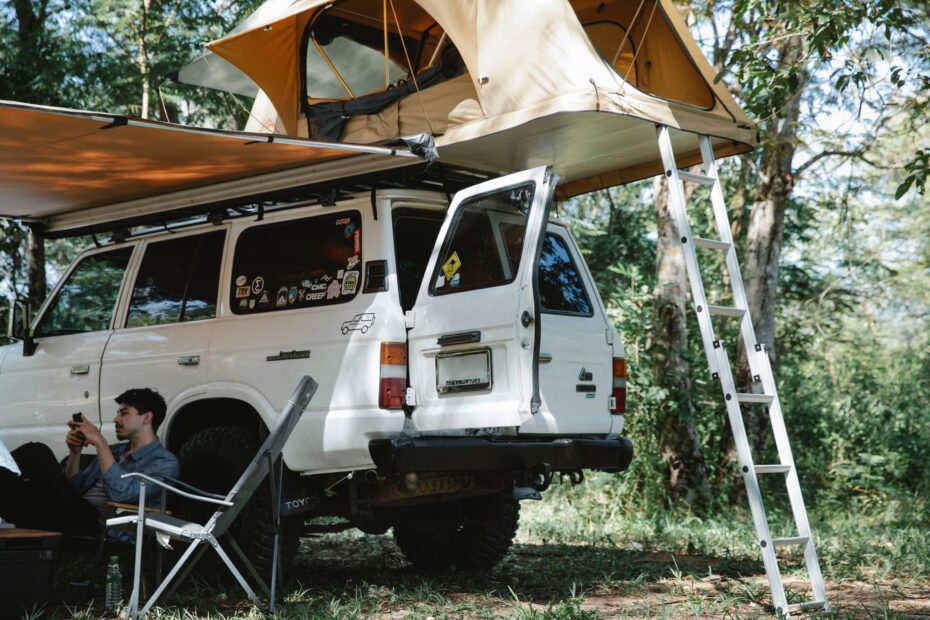
A vehicle can reach one type of overnight site, while the other may offer few or no services. Car camping refers to reaching camp with your vehicle nearby, while primitive camping refers to staying with few facilities. Your site can fit both descriptions, so you need to check roads, water, toilets, and waste rules.
This comparison covers site types, gear, permits, campground amenities, and practical trade-offs for tent camping, family weekends, and backcountry plans.
Vehicle Access and Site Services Describe Different Things
A vehicle beside your tent does not confirm that drinking water, toilets, or trash bins are nearby. Car camping describes how close your vehicle reaches camp, while primitive camping describes the services waiting after you arrive.
Car Camping Means Your Vehicle Reaches Camp
It means camping at or near a site reached by vehicle, with gear stored in or beside that vehicle. You could sleep in a ground tent, rooftop tent, camper van, trailer, or the rear of an SUV.
A developed campground might place your vehicle on a paved pad 20 feet from a tent pad. A forest-road pullout might place it beside a dirt clearing. The sleeping setup changes, but vehicle access remains the defining detail.
Primitive Camping Means Fewer Facilities
Potable water, flush toilets, electrical hookups, and trash collection are often unavailable at these sites. Your site could be a marked space with a fire ring or an undeveloped backcountry location.
The difference between car camping and primitive camping becomes clearer once you separate access from amenities. A drive-in campsite can still leave you responsible for water, sanitation, food storage, and every item of waste.
| Camping term | What it describes | What you need to check |
|---|---|---|
| Car camping | How close your vehicle reaches camp | Road access, parking space, and vehicle limits |
| Primitive camping | How few campground amenities exist | Water, toilets, trash, fires, and sanitation |
| Backcountry camping | Camping beyond road access | Distance, route, permits, and emergency planning |
For example, you could reserve a primitive drive-in site at a state forest, unload a large cooler, and still haul every scrap of trash home. That combination creates four common camping setups.
Four Camping Setups Combine Access and Amenities
A picnic table or restroom can change your overnight routine more than the distance from pavement. The same vehicle that carries an air mattress into a developed campground can also reach a bare site with no water source.
Developed Car Camping Has Predictable Facilities
Developed car camping places your vehicle beside or near a marked campsite with campground amenities. Your loop could include restrooms, potable-water spigots, picnic tables, trash bins, showers, electrical hookups, or a camp host.
KOA Campgrounds, state parks, and private campgrounds use this model, though features differ by site. Your reservation does not prove that a certain loop has hookups, so check the individual site description before departure.
Primitive Drive-In Camping Keeps Vehicle Access
A primitive drive-in campsite could offer only a level clearing, basic site marker, and fire ring. You can bring bulky gear because your vehicle reaches camp, yet water, sanitation, food protection, and waste removal remain your responsibility.
For example, a family arriving in a pickup at a U.S. Forest Service site could pitch a cabin tent and use a five-gallon water container. Without a trash bin, every wrapper, bottle cap, and used fuel canister leaves with your gear.
Backcountry and Dispersed Camping Follow Separate Rules
Backcountry camping requires travel away from road access, usually on foot. Paddling, skiing, and horseback travel also reach backcountry sites in some areas, so your shelter, food, water treatment, and emergency gear must travel with you.
Dispersed camping means camping outside a developed campground on public land where overnight stays are allowed. Primitive camping vs dispersed camping is not an exact match because a primitive site can be reserved and marked, while dispersed camping follows rules for a wider area.
| Setup | Vehicle location | Services | Example |
|---|---|---|---|
| Developed car camping | At or near site | Several facilities | State park tent loop |
| Primitive drive-in camping | At site | Few or no facilities | Forest clearing with a fire ring |
| Backcountry primitive camping | Trailhead or road | Few or no facilities | Permit-based hiking site |
| Dispersed camping | Varies by area | Few or no facilities | Allowed national forest zone |
Those labels overlap, but site-specific rules still control your trip. A primitive label can mean more than one thing, and the details matter before your vehicle enters a narrow forest road.
Primitive Sites Are Not Always Backpacking or Dispersed Sites
A fire ring beside a gravel road can be primitive even though your pack never leaves the tailgate. A short drive can reach a site with no hookups, no water, and no trash collection.
Road condition, gate hours, campground layout, and land-manager rules decide whether your vehicle can enter. Your low-clearance car could reach one marked site yet struggle after rain turns another access road into mud.
Single Amenities Do Not Mean Full Services
A vault toilet is a sealed, non-flush restroom that needs no water line. It can simplify sanitation, but it does not mean your site has potable water, trash service, showers, or electrical hookups.
Some primitive campsites include a picnic table, numbered post, or fire ring. You still need a plan for missing services rather than treating one facility as proof of a fully equipped campground.
Check the posted site description before departure. A fire ring does not mean fires are allowed during dry conditions, and a vault toilet does not solve your water needs.
Dispersed camping has its own location rules. Overnight stays could be limited to designated sites in a National Park Service unit, while a nearby U.S. Forest Service district could allow dispersed camping outside closed areas and away from streams, roads, or trailheads.
That distinction changes more than terminology. Your preparation becomes more demanding once water, waste collection, and a staffed office are absent.
Preparation Replaces Missing Services
A rolling cooler helps only while your vehicle can carry it to camp. Primitive camping requires self-reliance, while backcountry travel adds a weight limit because every item must fit in your pack.
Vehicle Access Allows Bulkier Comfort Gear
Car campers can bring a larger tent, camp chairs, a two-burner stove, lanterns, a folding table, and a cooler packed with ice. Your vehicle also stores dry clothing, food bins, and recovery gear.
That convenience has limits. A walk-in campsite could place parking 100 yards from the tent pad, while a remote road could have trailer limits, high-clearance needs, or no room to turn around.
Primitive Camping Needs a Full Service Plan
Pack for every service your site lacks, then check that plan against posted rules. Your list needs water, light, food protection, sanitation, weather shelter, and a way to carry waste home.
- Water supply: Carry drinking and cooking water, plus a treatment method only where a usable water source exists.
- Night lighting: Bring headlamps with spare batteries so your hands remain available around camp.
- Food storage: Use the storage method required for bears, raccoons, rodents, or other wildlife in your area.
- Sanitation kit: Pack toilet paper, hand soap, sealable waste bags, and a small trowel where permitted.
- Weather layers: Bring rain protection and insulation matched to nighttime temperatures rather than afternoon heat.
- Waste bags: Carry sturdy bags for food scraps, hygiene waste, and every item brought into camp.
Your route sets the scale of that list. A drive-in primitive site lets you bring a water jug and hard-sided cooler; a backcountry site calls for lighter food, route awareness, navigation tools, and a plan for a delayed return.
Leave No Trace guidance centers on packing out waste and leaving a campsite as you found it. Your cleanup protects the next group and reduces pressure on heavily used locations.
Those missing services also determine how much comfort, privacy, and uncertainty you can accept.
Comfort, Privacy, and Risk Shape Your Choice
A flush toilet can make a rainy weekend easier, while a quiet clearing can feel far removed from a busy campground. Your group size, skill level, and tolerance for uncertainty determine which setting fits.
Developed Sites Fit Routine-Focused Trips
Developed car camping fits families with young children, groups using several tents, and campers who want known facilities. You can reach a restroom at night, refill water, and place trash in a designated bin.
Campsite reservations add a firm arrival plan at busy parks. Recreation.gov lists many federal sites, while state parks and local agencies use separate booking systems, so your confirmation needs to match the exact campground.
Primitive Sites Require More Self-Reliance
Primitive sites can offer more privacy, fewer generators, and less foot traffic past your tent. You trade that quiet for water storage, camp cleanup, weather decisions, and a workable response to a flat tire or blocked road.
| Priority | Better fit | Reason |
|---|---|---|
| Easy family weekend | Developed car camping | Restrooms and water reduce daily chores |
| Large gear load | Car-accessible site | Your vehicle carries coolers and furniture |
| Quiet with fewer facilities | Primitive drive-in site | You retain vehicle access with more solitude |
| Remote travel on foot | Backcountry primitive site | Your gear and route plan fit the distance |
Site fees do not follow one pattern. A primitive site could charge less than a serviced campground, yet your trip could require water containers, sanitation supplies, fuel, food storage, and more driving time.
Safety comes from planning, not from a campsite label. Start your first primitive night at a legal drive-in site with reliable road access and a clear return route.
For car camping vs primitive camping, developed sites suit bulky comfort gear and predictable facilities. A primitive drive-in site fits your plans where you want fewer services without a long hike.
Personal preferences matter only within the restrictions that protect the site and its users.
Rules and Low-Impact Habits Set the Final Choice
A closed gate can undo a careful packing plan before sunset. Site rules control where you park, whether fires are allowed, how long you stay, and whether your destination needs a reservation or camping permit.
National Park Service units, U.S. Forest Service districts, state lands, county parks, tribal lands, and private campgrounds use camping terms differently. Hipcamp listings can describe private sites, but your host’s written rules govern parking, fires, water, pets, and quiet hours.
Check Site Details Before Departure
- Reservation status: Confirm whether your site needs a booking, permit, or walk-up payment before arrival.
- Vehicle limits: Check road width, trailer length, parking rules, seasonal gates, and clearance needs.
- Water source: Verify potable water availability rather than assuming a campground faucet is running.
- Fire restrictions: Review campfire regulations and bring a stove only where fuel use is allowed.
- Stay limits: Check the allowed number of nights, arrival times, and rules for moving campsites.
- Waste rules: Learn whether trash bins, bear lockers, toilets, or pack-out requirements exist at your site.
Low-impact habits start with site selection. Use existing tent pads and fire rings, secure food, avoid cutting vegetation, and leave natural objects where you find them. Your camp should leave no new scar on the ground.
Choose car camping for easy vehicle access and room for comfort gear. Choose primitive camping for fewer services and greater self-reliance. A primitive drive-in site sits between those two options.
Final Choice
Your choice rests on two facts: how close your vehicle reaches camp and which services the site supplies. Once you check both, your decision becomes practical rather than semantic. Pack heavier comfort gear for accessible sites, carry a full self-reliance plan for primitive ones, and follow the rules that protect the place where you sleep.
FAQ
What is the main difference between car camping and primitive camping?
Car camping describes vehicle access, while primitive camping describes limited facilities. You can car camp at a developed campground with restrooms and water, or drive to a primitive site with only a clearing and fire ring.
Can you drive to a primitive campsite?
Drive-in forest and state-land sites often permit vehicles, even when amenities are limited. Your vehicle access depends on road condition, gate status, site layout, weather, and local restrictions, so check those details before loading gear.
Does primitive camping mean no amenities?
Primitive camping means few amenities, not always zero amenities. Your site could have a vault toilet, picnic table, site marker, or fire ring, yet still lack potable water, trash collection, showers, and hookups.
Is primitive camping the same as dispersed camping?
Outside established campgrounds, overnight stays may be allowed where public-land rules permit them. It is often primitive, but a marked primitive campground site and a dispersed site follow different location rules and could need different permits.
What gear do you need for primitive camping?
You need a water plan, forecast-ready shelter, lighting, food storage, sanitation supplies, navigation tools, and waste bags. Your gear list changes with vehicle access, distance from the road, wildlife rules, and water availability.
Are bathrooms, water, picnic tables, and fire rings available at primitive campsites?
Your primitive site could have a vault toilet, picnic table, or fire ring, but these features vary widely. Potable water, showers, trash collection, and electrical hookups are less common, so use the site description for your packing plan.