
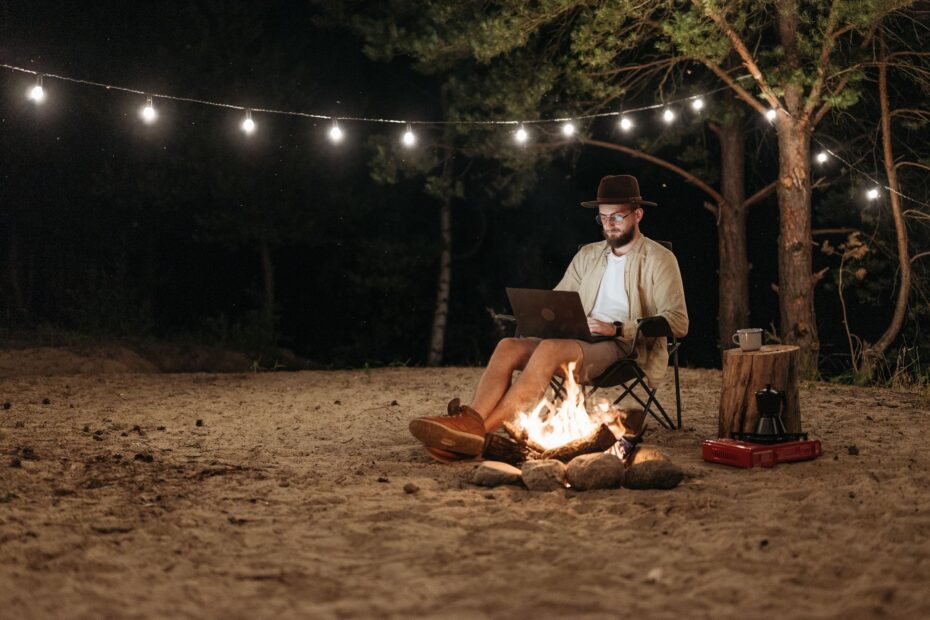
On public land, overnight stays outside developed campgrounds are allowed only where the managing agency permits them. You camp without assigned pads, water, toilets, trash pickup, reservations, or a camp host, so your route, supplies, waste plan, and site choice carry more weight.
This explanation is for campers who need a legal place to stay and a clear method for preparing without damaging the ground or getting stranded.
Dispersed Camping Happens Beyond Developed Sites
A numbered pad, picnic table, vault toilet, and brown campground sign point to a developed site. Outside those facilities, you can find primitive places for overnight stays, but only in areas the land manager has opened for camping.
Your spot is not assigned, and some locations have no nightly fee. That does not mean every patch of public ground is open. A county road can cross national forest land while its roadside corridor remains closed to overnight use.
Primitive Sites Have Few Services
Expect bare ground rather than a level tent pad. Potable water, trash cans, picnic tables, marked boundaries, cell service, and a camp host can all be absent, so you need gear and judgment that cover those gaps.
For example, a Forest Service road in Colorado can pass several worn pullouts. Tire tracks do not make a pullout legal, and a stone fire ring does not show that you can stay overnight or light a fire there.
Public Ownership Does Not Equal Permission
Land status controls your answer. A national forest, Bureau of Land Management parcel, state trust tract, tribal land, county preserve, private inholding, and protected watershed can sit beside one another with little change in the roadside view.
Confirm permission for your exact location rather than relying on a map color. That detail shapes your route, stay limit, campfire decision, and the distance your vehicle can travel from an open road.
Once you leave developed facilities behind, water, toilets, and trash collection may no longer be available.
Solitude Comes With Fewer Campground Services
A quiet site can feel spacious until rain turns an ungraded road into mud or your water jug runs dry. Developed campgrounds trade some privacy for facilities, predictable access, and clearer site boundaries.
| Feature | Dispersed Site | Developed Campground |
|---|---|---|
| Privacy | You have greater spacing and no assigned pad. | You may have nearby campsites and marked boundaries. |
| Nightly fee | Your site can have no nightly fee. | You will commonly pay a nightly fee. |
| Reservations | You will not have reserved space. | You can reserve some sites through Recreation.gov. |
| Amenities | You bring water, a toilet solution, and trash storage. | You can find water, vault toilets, tables, and dumpsters. |
| Road access | You may travel rough forest or desert roads. | You will find entrance roads suited to more vehicle types. |
| On-site oversight | You should not expect a host or routine staff presence. | You can see hosts or staff checking the grounds. |
Your vehicle matters more than the label on a map. A tent camper carrying two gallons of drinking water and walking a short distance from a legal road faces different limits than you do in a 32-foot motorhome with low branches, deep ruts, and no turnaround.
For a dispersed camping vs campground choice, a developed site fits a new trip, a family stay that needs toilets, or work that depends on reliable calls. A remote site fits you better when your van, RV, or tent setup can handle self-sufficient travel on permitted roads.
Self-sufficiency makes remote travel feasible, yet it does not determine whether a particular place is legal to camp.
Road width, surface, slope, and turnaround space matter more than a destination pin. A large rig can block a narrow road for hours after one bad turn.
Land Managers and Local Designations Set Legal Sites
That road and turnaround need several rule checks before they become a legal overnight stop. Federal ground managed by the U.S. Forest Service (USFS) and Bureau of Land Management (BLM) contains much of the land open to primitive stays, though local offices can set tighter limits.
Agency Boundaries Change the Rulebook
National parks follow a separate system from national forests and BLM land. Backcountry stays inside a National Park Service (NPS) unit can require designated areas or camping permits, while state parks, wildlife refuges, military land, and tribal land follow their own rules.
Your national forest map can show a broad green block, yet a ranger district can close corridors near towns, watersheds, trailheads, or busy recreation areas. Habitat protection and restoration work can close ground that was open during a prior season.
Maps and Alerts Confirm a Legal Location
Start with the local field office or district website. Motor Vehicle Use Maps, known as MVUMs, show permitted motorized travel on many national forests and can show roadside camping limits that a general road map leaves out.
- District notices: Read closure notices for flood damage, seasonal gates, construction, and road work that affect your route.
- MVUM symbols: Check vehicle classes, seasonal dates, and roadside travel markings before leaving paved roads.
- Field alerts: Review BLM notices before choosing a desert route with washes, soft sand, or restricted travel corridors.
- Boundary lines: Use a detailed map to avoid private parcels, protected areas, and tribal land beside public acreage.
- Local office call: Ask about details maps cannot show, such as a washed-out crossing or a locked gate.
That verification answers where can you disperse camp with more accuracy than a destination pin beside a road. It gives you a local contact for weather changes, road closures, and campfire restrictions.
Pre-Trip Checks Cover Access, Stay Limits, and Fire Rules
Map confirmation does not end the planning. A legal road can lead to a closed gate by noon because wet-road closures, hunting activity, construction, or wildfire response can change access quickly.
Stay Limits and Permits Vary by District
Many federal areas use a 14-day stay limit within a 28-day period. Your local office sets the actual limit, reset period, and any distance you must move before returning to the same area.
A camping permit or advance registration can be required in high-use corridors, backcountry zones, and restricted seasons. Recreation.gov lists some permits and reservations, while ranger districts and BLM field offices handle others.
How long can you stay at a dispersed campsite depends on the local order, not a rule borrowed from another forest. Record your arrival date in a phone or paper log so you leave before the posted limit.
Fire Rules Can Change Overnight
Dry grass beside a fire ring can ignite from a single escaping ember. Campfire restrictions can ban wood fires, charcoal, or every form of open flame while tents and vehicles remain allowed at the site.
Check the active fire order shortly before departure and again near the road entrance. Your stove can face limits during severe restrictions, so bring food that does not depend on a flame.
Fire restrictions and road conditions can change what a workable camp requires, especially for cooking, water, and waste.
A metal fire ring does not grant permission to burn. Follow the active fire order, and skip a fire when wind, dry fuel, or local conditions make control doubtful.
Self-Sufficiency Shapes a Functional Camp
Once services disappear, small omissions create larger problems. A forgotten water container can force an unnecessary drive, while a missing headlamp can turn a short walk after dark into a search through brush.
Gear Covers Basic Needs
Pack drinking water for your full stay, cooking, cleanup, and an unexpected delay. Bring weather-ready shelter, warm layers, lighting, a first-aid kit, food storage, and offline maps rather than relying on a cell signal.
- Extra water: Carry enough water because creeks can be seasonal, contaminated, or unreachable from your site.
- Offline maps: Download your route back to paved roads before cell service fades.
- Trip details: Share your roads, camp area, return date, and vehicle description with a trusted contact.
- Recovery basics: Pack a tire gauge, spare tire, shovel, and traction gear suited to your route.
- Food storage: Secure food and scraps so odors do not draw wildlife into your sleeping area.
Existing Impacts Limit New Damage
Choose an existing disturbed site instead of clearing grass, moving rocks, or cutting branches for a new tent pad. Your tent leaves less impact on compacted ground than on a meadow that has not absorbed repeated use.
Keep your vehicle on roads and routes open to it. A shortcut across dry soil can leave ruts that channel rainwater, damage plants, and give land managers a reason to close access later.
For example, a van parked in a signed pullout and a tent set on bare soil leave less damage than a vehicle pushed through sagebrush for another 50 yards of privacy. That remote-looking spot can carry the greater cost to the ground.
Leave No Trace Practices Protect Public-Land Access
Trash in a fire ring does more than spoil your view. Food scraps teach wildlife to search campsites, while garbage gives land managers visible evidence for stricter closures.
Waste Needs a Site-Specific Plan
Pack out trash, food scraps, damaged gear, bottle caps, and pet waste. Leave No Trace calls for pack-in, pack-out waste disposal because a remote pullout has no cleanup crew after you leave.
Human-waste rules depend on the ground and local order. Some areas direct you to a vault toilet, some require a waste bag, and some allow burial under stated conditions. Confirm the method required for your site before setting up camp.
Water, Wildlife, and Cultural Sites Need Distance
Stay away from riparian areas, the green strips beside streams, springs, and wetlands. These places hold fragile soil, concentrate wildlife, and supply water downstream from your camp.
Pottery fragments, rock structures, old cans, mine features, and carved trees should remain untouched. Archaeological sites receive legal protection, and disturbing material can lead to penalties beyond a camping citation.
Extinguish permitted fires with water until the ashes are cold to your touch. During unsafe conditions, skip the fire ring and enjoy the dark without adding smoke, sparks, or heat to dry ground.
Bottom Line
Without campground services, campers must check rules, carry water, plan waste disposal, assess roads, and avoid causing new damage. Solitude does not exempt you from regulation. Your strongest setup starts with a confirmed legal site and ends with ground that shows no sign of your stay.
FAQ
What is dispersed camping?
It is an overnight stay outside a developed campground on land where the managing agency allows camping. You stay without assigned pads or standard services, so your water, sanitation, route planning, and trash removal become your responsibility.
Is there a nightly fee for dispersed camping?
Some public-land sites have no nightly fee, but payment does not make your stay legal. Your location can still require a pass, permit, registration, or reservation near crowded recreation areas and restricted backcountry zones.
Can you camp anywhere in a national forest?
No. National forests can contain private land, closed roads, wildlife protections, day-use areas, trailhead corridors, watersheds, and designated no-camping zones. Your local U.S. Forest Service ranger district can confirm the dispersed camping rules that apply to your chosen location.
How do you find legal dispersed camping sites?
Contact the local U.S. Forest Service or Bureau of Land Management office, read closure notices, and study the applicable MVUM or field map. Your route needs a review for vehicle limits, road conditions, stay limits, and active campfire restrictions.
Do you need a permit for dispersed camping?
High-use areas and seasonal zones may require permits, even though many locations do not. Contact the local land manager before departure, then carry any permit, pass, or registration confirmation required for your selected area.