
Every wrapper, leftover, and piece of gear should be contained, carried out, and placed in the appropriate disposal system. Your wrappers, food scraps, hygiene items, and dishwater solids can affect wildlife and water long after camp is packed up, so you need a plan before departure.
This practical approach covers trash, food, human waste, greywater, fire-ring debris, and final cleanup for tent campers, vehicle campers, and backcountry travelers. Its core practices reflect the Leave No Trace Seven Principles.
Pack-Out Rules Keep Campsites Clean
Small debris causes lasting problems because foil corners, bottle seals, citrus peels, and twist ties blend into dirt and pine needles. The Leave No Trace Center for Outdoor Ethics applies the same pack-out rule to a dropped wrapper as to a full trash bag.
Pack it in, pack it out means every item that enters your site leaves with you unless a marked campground station accepts it. Camping waste management includes landfill trash, food scraps, hygiene items, toilet paper, wipes, recyclables, wastewater solids, and microtrash.
- Food scraps: Place peels, bones, coffee grounds, and leftovers in sealed bags instead of soil or fire rings.
- Hygiene waste: Put wipes, menstrual products, tissues, and toilet paper in a separate sealed bag for transport.
- Microtrash: Gather torn wrapper edges, gear tags, fishing line, and bottle seals during cleanup.
- Recyclable containers: Sort cans and bottles only at stations that accept clean materials.
- Dishwater solids: Strain food particles from wash water and pack those particles out with trash.
Food scraps are not forest compost. They can alter animal feeding habits, draw rodents into camp, and leave debris exposed after rain or digging.
Unsecured waste teaches bears, raccoons, foxes, and rodents that campsites contain food. That pattern raises the chance that your next overnight stop will have animal activity near tents, tables, and vehicles.
The phrase pack it in pack it out also covers items that seem harmless, such as orange peels and paper towels. Your campsite should not show edible remains, loose packaging, or scented debris after you leave.
Avoiding disposable packaging before departure prevents many of the scraps that otherwise linger after a campsite is cleared.
Pre-Trip Packing Cuts Waste at the Source
A full trash bag on day two usually starts with excess packaging at home. Portion meals into reusable containers, remove cardboard, and pack only the amount of food your group expects to eat during each night away.
Your sorting system works better when bags are separated before camp begins. A food-waste bag, hygiene-waste bag, and general-trash bag stop wet coffee grounds from soaking paper products or spreading odor through your gear.
Bring a Small Waste Kit
- Four sealable bags: Carry separate bags for landfill trash, food scraps, hygiene waste, and accepted recyclables.
- Rigid food container: Use a lidded container for leftovers, greasy packaging, and scraps that could leak.
- Fine mesh strainer: Catch rice, pasta, grounds, and food bits before greywater leaves your wash basin.
- Spare liner: Bring an extra heavy-duty bag for a torn liner or wet garbage bag during transport.
- Pickup pouch: Keep a small pouch near your tent or vehicle for bottle caps, tags, and wrapper fragments.
Local rules decide where each waste stream belongs. Review directions from the National Park Service, U.S. Forest Service, state park, or local land manager before you leave, because some campgrounds collect trash but not recycling.
Sites with black bears can require bear-resistant food storage, while rocky areas can require human-waste pack-out systems. Your chosen destination, not a routine from a prior trip, sets the disposal method.
For example, two reusable meal containers produce less loose film and cardboard than six single-serving meals. That smaller volume leaves you with less odor, less clutter, and fewer chances for a bag seam to split.
Less packaging also makes the remaining waste easier to contain without leaks, odors, or wildlife access.
Food and Trash Need Secure Storage
Buried peels do not disappear on a camper’s schedule. Dry, cold, rocky, and high-use ground slows decomposition, while animals can uncover scraps within hours.
Camping food waste disposal means packing out scraps unless a marked facility accepts them. Burying food moves the mess into the soil, while burning it leaves residue, smoke, and food scent in the fire ring.
Scented Items Belong in Protected Storage
Store food, empty wrappers, cooking grease, toothpaste, sunscreen, and trash in a vehicle, bear-resistant container, or site-required storage system. Wildlife follows scent rather than your label for garbage, so your empty food bag needs the same protection as your cooler.
Close the container except during cooking and cleanup. A greasy skillet on a picnic table can draw raccoons or black bears as readily as a full cooler.
Food waste and wildlife safety depend on removing scent sources from sleeping and cooking areas. At bear-managed sites, follow the posted storage rules even if your food is inside sealed packaging.
Fire Rings Are Not Waste Bins
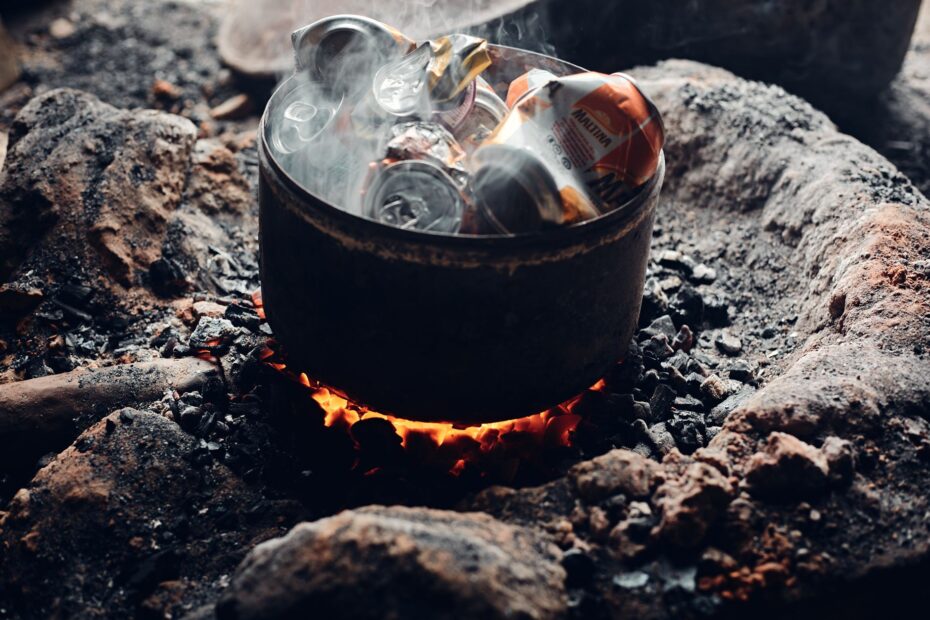
Burning trash leaves material behind. Foil, plastic coatings, food residue, and partly burned paper remain in ash, and wind can scatter light fragments beyond the fire ring.
Fire limits add another reason to carry waste out. A campfire meant for warmth does not dispose of packaging safely, and smoke from burning material can expose you and nearby campers to harmful fumes.
Seal greasy packaging before bedtime. A zipper bag inside a hard-sided container controls odor better than a loose bag tied to a picnic table.
Never place plastic, foil, cans, glass, food scraps, batteries, wipes, or treated wood in a campfire. Your ashes should contain only burned firewood from the fire itself.
Human-Waste Choices Follow Site Conditions
An established restroom is the cleanest option because it keeps waste out of soil and away from water. Use toilets at campgrounds, trailheads, and backcountry zones whenever they are available, then follow posted directions for toilet paper and hygiene products.
Where no toilet exists, ground conditions and local rules set the method. Alpine terrain, desert soil, shorelines, shallow rock, snow, and heavily visited corridors can require a pack-out system rather than burial.
| Site condition | Human-waste method | Your disposal action |
|---|---|---|
| Campground or trailhead with restroom | Established toilet | Place waste in the restroom system and pack out hygiene items where posted rules require it. |
| Backcountry land where burial is permitted | Cathole | Dig 6 to 8 inches deep, at least 200 feet from water, camp, and trails, then cover the hole fully. |
| Rocky, alpine, desert, river, or high-use terrain | WAG bag or portable toilet | Seal the waste kit and take it to the location named by the land manager. |
Pack-Out Systems Protect Fragile Ground
A cathole is a small hole for human waste, not a disposal spot for toilet paper or wipes. Pack out toilet paper, wipes, and menstrual products because animals can expose them and dry soil can leave them intact for a long period.
A WAG bag contains human waste for later disposal, making it suitable where catholes are prohibited. Cleanwaste sells a well-known version, while a portable camping toilet can suit vehicle-based sites with access to a legal dump station.
For human waste disposal, follow the method posted for your exact location. Your route can cross land with different requirements in a single day, even between nearby trailheads.
How to dispose of human waste when camping depends on the restroom, cathole, WAG bag, or portable toilet option available at that site. Your route, soil, distance from water, and land-manager rules all shape that choice.
Greywater Needs Separation From Food Solids
A few oily noodles in a creek can move farther than your campsite. Keep dishwashing, bathing, and soap away from lakes, streams, springs, and wetlands, including soap labeled for outdoor use.
Greywater is water left after washing dishes, hands, or cookware. It carries food particles, grease, and soap, so your disposal routine starts by straining solids instead of pouring a full basin onto the ground.
Strain and Disperse Dishwater Correctly
- Scrape dishes: Remove visible food with a spatula or paper towel before adding wash water.
- Wash sparingly: Use a small basin and a modest amount of water to limit the greywater your camp produces.
- Strain solids: Pour wash water through a fine mesh strainer and place captured particles in packed-out trash.
- Disperse water: Scatter strained greywater broadly and far from water sources where local rules allow it.
- Choose facilities: Use campground sinks or dump stations where they are set aside for dishwater.
Do not pour one concentrated basin beside your tent or at the base of a tree. Broad dispersal reduces pooling, but a campground rule requiring sink use takes priority over backcountry practice.
Soap does not make lake washing acceptable. Shoreline plants, fish habitat, downstream campers, and drinking-water sources should not receive your dishwater.
How to dispose of greywater at a campsite starts with removing food particles and ends with following site rules. Your strainer protects the ground from scraps, while the disposal location protects water sources from residue.
Departure Cleanup Finds What Bags Miss
The final five minutes at camp catch small debris that a full trash bag misses. Walk through the cooking area, tent footprint, vehicle floor, picnic table, and fire ring before loading your vehicle.
Your last sweep needs a close look beneath camp chairs, inside cup holders, under logs, and along tarp edges. A flashlight helps during a dawn departure, especially around dark soil and leaf litter.
Use a Departure Checklist
- Clear food storage: Remove food, scented wipes, grease containers, and empty packages from the site.
- Seal transport bags: Close each waste bag before loading so moisture and odor stay inside your vehicle.
- Inspect fire ash: Leave no food scraps, foil, plastic, or fresh trash mixed into ashes.
- Sort recycling: Place only clean materials accepted at that specific recycling and campground waste station in its bin.
- Scan for microtrash: Pick up twist ties, bread clips, tape, tags, caps, and wrapper fragments.
- Inspect the ground: Look below your tent and tarp for stakes, cord ends, tissues, and dropped gear parts.
Contaminated recyclables can spoil a collection load, so dirty cans, greasy foil, and food-stained paper belong with trash. This final routine turns camping waste management into a repeatable habit that protects the site after your vehicle leaves.
Closing Take
The cleanest campsite is not the one with the fewest visible bags. It is the site where your food, hygiene waste, dishwater solids, recyclables, and microtrash all have a clear destination before arrival.
Carry that plan through the final sweep. Your choices leave water, wildlife, and the next camper with far less debris and scent to contend with.
FAQ
What is a sound way to manage waste while camping?
Bring separate sealed containers for food scraps, landfill trash, hygiene waste, and recyclables, then pack out everything a designated facility does not accept. Your strongest routine starts with less packaging, protected scented waste overnight, and a ground sweep before departure.
What does pack it in, pack it out mean?
Items brought to camp, along with scraps and small debris created there, must leave with you. Your trash does not belong in a fire ring, cathole, creek, or shallow hole, even at a remote site.
Can you bury food scraps while camping?
Food scraps should never be buried at a campsite. Peels, bones, coffee grounds, and leftovers can attract wildlife, get dug up, and break down slowly in dry or cold soil.
Seal scraps with your trash and take them to a proper disposal station after the trip. That practice keeps wildlife from linking campsites with food.
Where do you dispose of human waste when camping?
Use an established toilet wherever one is available. On land that permits catholes, place human waste in a 6- to 8-inch hole at least 200 feet from water, camp, and trails.
Restricted or fragile terrain calls for a WAG bag or portable toilet system. Your land manager’s posted directions control the disposal location.
How do you dispose of greywater at a campsite?
Strain dishwater through a fine mesh screen, pack food particles out, and disperse the remaining water far from lakes, streams, springs, and wetlands where local rules allow it. Your campground sink or dump station takes priority where those facilities are available.
What should you do with trash and food waste while camping?
Seal trash and food waste in containers that limit leaks and odor, then take them to a marked waste station or home with you. Never bury scraps, leave bags near a tent, or place waste in a fire ring.