
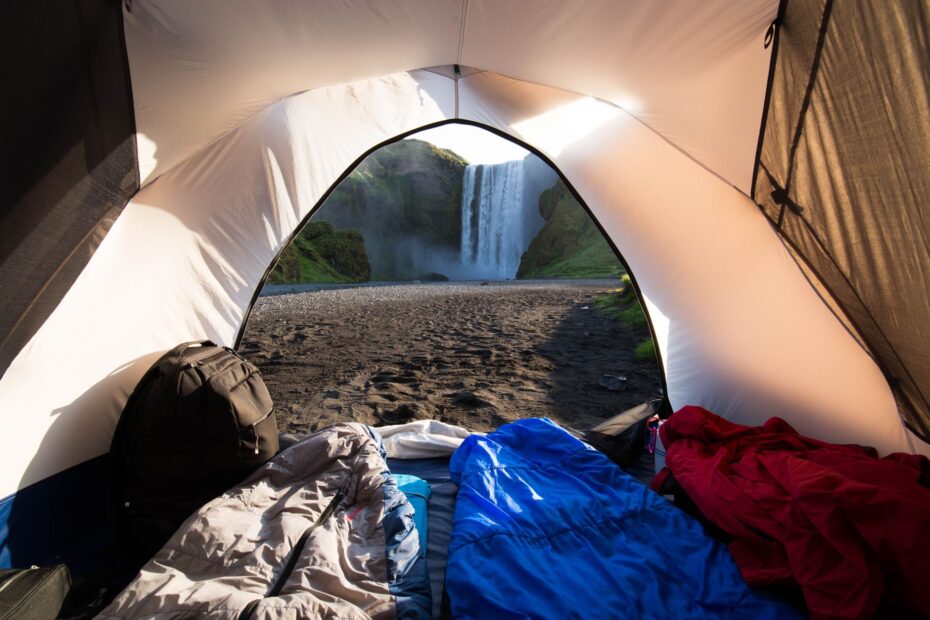
After a rainstorm, prevent further moisture, blot surface water, and expose the bag to moving air with brief sun or sheltered tent ventilation. Wet insulation loses loft, or trapped air, so your bag feels colder long before its shell looks fully soaked.
You’ll learn how to judge the type of dampness, dry down or synthetic fill in changing weather, and decide whether your sleep system still offers enough warmth overnight.
Identify the Type of Moisture Before Drying
Start at the hood, foot box, side seams, and baffles. Surface dew leaves the shell cool and damp, while soaked insulation feels heavy, flat, cold, or lumpy beneath the lining. Your hands reveal more than a visual check.
Condensation from tent walls tends to wet broad outer areas, especially near the foot end. Rain, spilled water, or a wet tent floor leaves sharper patches or a soaked underside. The source matters because moisture will return until you stop it.
Surface dampness needs a lighter response
A damp shell may need only airflow and a short airing period. Saturated insulation needs blotting, careful handling, and more time because water sits inside the baffles rather than on the fabric surface.
- Check the hood: Feel around the face opening, where breath moisture and tent condensation collect overnight.
- Probe the foot box: Press between the inner and outer fabrics, since wet tent walls and pooled water reach this area quickly.
- Feel each baffle: Heavy, compressed fill points to wet insulation rather than a damp shell.
- Inspect the floor: Wet grass, snow, or a damp tent floor can keep feeding moisture into the bag.
- Trace the source: Rain, dew, spills, damp clothes, and body moisture call for different fixes.
Do not judge warmth from the shell alone. A bag can look nearly dry yet hold soaked insulation inside its baffles, where lost loft matters most.
Loft shows how much warmth remains
Loft is the trapped air inside down sleeping bags and synthetic sleeping bags. That air slows heat loss. Flattened fill leaves little air space, so your body warms wet fabric instead of a protective layer of insulation.
Your sleeping pad matters just as much as the bag beneath you. A dry insulated pad limits heat loss to the ground, but it cannot restore soaked upper insulation. After locating the wet area, stop new water from reaching it.
Remove Excess Water Without Stressing the Bag
A soaked bag becomes heavy, and that weight pulls on lightweight shell fabric and baffle stitching. Lay down a dry groundsheet, tarp, or tent footprint before moving it. Wet grass or snow can undo your progress in minutes.
Spread the bag flat and unzip it wide. Humid air trapped inside the lining slows drying, while an open bag lets air reach more fabric and insulation.
Gentle pressure protects fill and seams
Shake the bag lightly from end to end, then spread the fill with open hands. Press wet sections between a camp towel, dry shirt, or spare fleece. Your goal is to move liquid water into the absorbent layer without crushing the insulation.
- Lay it flat: Place the bag on a dry tarp with the wettest side facing upward.
- Open the zipper: Unzip the bag so humid air can leave the lining.
- Shake lightly: Lift broad sections and use gentle shakes to loosen compressed fill.
- Blot wet zones: Press a camp towel or dry clothing against saturated panels for several seconds.
- Carry it broadly: Gather the bag across both forearms instead of lifting it from a hood loop or drawcord.
Twisting damages seams and baffles
Do not wring out a sleeping bag. Twisting can strain seam tape, pull baffle stitching, and force down into hard knots. Your down sleeping bag is especially vulnerable while soaked because dense fill shifts toward low points.
Picture a rain-soaked bag on a 40-degree morning. A camp towel press and broad carry protect the shell, while a tight twist can leave a stretched seam for the rest of your trip. After loose water leaves the bag, weather becomes the next factor.
Set Up Drying for the Weather You Have
Moving air dries fabric more reliably than a warm but sealed tent. Drape the bag loosely over a clothesline, two trekking poles, a broad branch, or a tarp ridge. Broad contact spreads weight and leaves both sides open to air circulation.
Do not hang a heavy wet bag from narrow hood loops, zipper pulls, or drawcords. Those attachment points were not made to hold water-heavy insulation, and your shell can stretch under the load.
Sun and breeze speed moisture loss
Short sun exposure warms damp fabric and helps water leave the insulation. Turn the bag every 15 to 30 minutes, open folded sections, and reverse the foot box. Long direct sun exposure can weaken lightweight nylon shells and water-repellent coatings, so shift between sun and shade.
| Camp condition | Drying position | Your main task |
|---|---|---|
| Sunny and breezy | Loose over a line or ridge | Turn it every 15 to 30 minutes and separate damp clumps. |
| Overcast with wind | Under a tarp edge | Favor airflow, keep the bag off ground, and leave the zipper open. |
| Active rain | Inside sheltered vestibule space | Blot water, vent the shelter, and wait for a dry break in the weather. |
| Humid or foggy air | Raised under shelter | Reposition the bag regularly because damp air slows evaporation. |
| After dark | Suspended inside a ventilated tent | Separate wet clothing and resume outdoor airing at daylight. |
Tent drying limits additional soaking
An enclosed tent holds humid air, so drying a sleeping bag without a dryer takes patience after dark. Open high vents and leave a sheltered door gap where weather allows. Tent ventilation moves moist air out without exposing your bag to rain.
For example, a bag damp from condensation can rest over two trekking poles beneath a raised tarp edge. That position keeps it off wet ground, catches passing air, and separates it from damp tent walls.
Inside a tent, hang the bag away from your sleeping area and leave room for air to pass around it. Wet clothing belongs outside the sleep system because it adds humidity near the bag.
Restore Loft for Down and Synthetic Fill
Dry fabric alone does not restore warmth. Insulation must expand again before it can trap air around you. Down and synthetic fill react differently after soaking, so your hand work should match the material inside the baffles.
Down needs repeated clump separation
Wet down forms dense clusters that feel like cold marbles. Pinch each clump gently through the shell and roll it apart with your fingers. Repeat this each time you turn the bag instead of waiting until the shell feels dry.
Down needs more active loft restoration because clumps block the air spaces that hold warmth. Work from the hood through the torso and toward the foot box, using light pressure rather than hard kneading.
Nikwax and Gear Aid sell cleaning and repair products for outdoor fabrics, yet field drying still depends on airflow and gentle handling. A durable water-repellent finish sheds light moisture, but it does not keep down dry after saturation.
Synthetic fill retains more warmth while damp
Synthetic sleeping bags resist collapse better than down, which gives you more margin during a damp night. Still, flattened synthetic fibers trap less air and feel colder than dry, lofty insulation.
Separate compressed areas with your hands and keep air moving through the open bag. Synthetic fill may dry faster than down, yet wet sections still reduce warmth enough to change your overnight plan.
| Insulation type | Wet behavior | Field drying focus |
|---|---|---|
| Down insulation | Clumps, loses loft quickly, and dries slowly | Break apart clumps each time you turn the bag. |
| Synthetic insulation | Retains more warmth but still flattens while wet | Air it thoroughly and separate compressed fiber sheets. |
Keep your bag far from campfire heat, stoves, tent heaters, and vehicle exhaust. High heat can melt shell fabric, damage coatings, ignite fabric, or leave you without usable insulation.
GORE-TEX rain shells can keep rain off camp clothes, but wet layers still belong outside your sleeping bag. Once loft returns, the remaining issue is whether your bag has enough warmth for the night ahead.
Choose a Conservative Plan for a Damp Night
A lightly damp bag with restored loft can work during mild weather, but its printed temperature rating no longer reflects your real margin. Wear dry base layers, a dry hat, dry socks, and extra insulation around your torso. Your sleeping pad must stay dry and insulated beneath you.
Light dampness has clear limits
You can sleep in a damp sleeping bag during mild conditions when the fill remains lofty and your clothing and pad are dry. Cold rain, wind, and near-freezing air shrink that margin quickly.
- Dry base layers: Change out of damp camp clothes before entering the bag, even when fabric feels only slightly cool.
- Dry head coverage: Wear a dry hat to reduce heat loss around the hood opening.
- Insulated pad: Keep your sleeping pad beneath the bag with a dry barrier under the pad.
- Extra dry layers: Place a fleece or puffy jacket over your torso without compressing the baffles.
- Morning air plan: Resume active drying during the earliest dry weather window.
Soaked insulation needs a new sleep plan
A heavy, flattened, clumped bag is not dependable cold-weather insulation. Move to drier shelter, borrow suitable bedding, share shelter where appropriate, or change travel plans before cold stress develops. Hypothermia prevention starts with dry insulation and shelter, not stubbornness.
Drying a sleeping bag in a tent is a holding action during rain. Hang it away from your sleep area, place a dry barrier beneath it, and keep wet clothing outside the sleep system. Your breath and body moisture also add condensation, so vent the tent as weather permits.
Keep the Sleep System Dry for the Trip
Your next dry night starts with packing habits during the day. Put the bag inside a waterproof stuff sack or waterproof liner within your backpack. A water-resistant stuff sack sheds splashes, while a true waterproof barrier gives your insulation more protection during steady rain or water crossings.
Camp layout limits moisture buildup
Choose a site with drainage instead of a low hollow where rain collects. Pitch the tent with a taut floor, then place a groundsheet so it does not extend beyond the tent edges. An exposed groundsheet lip catches rain and channels it under your shelter.
Sea to Summit makes dry bags and liners used on wet trips, but packing habits matter more than a logo. Roll damp clothes into a separate bag, not beside insulation. Your sleeping bag liner also takes body oils and light moisture more easily than the bag itself.
Morning airing stops light dampness from spreading
Open the bag during breakfast and drape it where air reaches both sides. Ten minutes of breeze can clear light overnight dampness before it settles deeper into the fill. Keep the bag shaded after the surface dries.
The Leave No Trace Center for Outdoor Ethics promotes low-impact camping practices that fit this routine. Use existing poles, a portable clothesline, or a tarp ridge rather than stripping branches for drying racks. You can dry a wet sleeping bag while camping without damaging vegetation or leaving debris behind.
Final Thoughts
Warmth comes from loft, not from a shell that merely looks dry. Stop incoming water, blot instead of twisting, hang the bag broad and loose, and work air through the insulation until it expands. Your safest choice is conservative: light dampness may fit mild weather, while soaked or clumped insulation calls for drier shelter or another sleep plan.
FAQ
How do you dry a sleeping bag while camping?
Move your bag onto a dry tarp, shake it gently, blot wet sections with a camp towel or dry clothing, and hang it loosely where air reaches both sides. Turn it every 15 to 30 minutes, open folded sections, and separate damp insulation clumps as the bag dries.
Can you dry a sleeping bag in direct sunlight?
Brief sun exposure can warm a damp bag and speed moisture loss. Rotate it regularly and move it into shade after brief exposure because long sun exposure can weaken lightweight shell fabric and water-resistant coatings over repeated trips.
How do you dry a down sleeping bag in the wilderness?
Hang your down bag loosely in moving air, then break apart wet clumps gently with your fingers each time you reposition it. Down needs time and repeated loft restoration because damp clusters block the air spaces that keep your body warm during sleep.
Is it safe to dry a sleeping bag near a campfire?
No. Campfire heat can melt nylon, scorch coatings, ignite shell fabric, and damage insulation before the problem is visible. Keep your bag well away from flames, hot stoves, heaters, and sparks, then rely on moving air, shelter, and short sun exposure instead.
What should you do if your sleeping bag gets wet from condensation?
Move the bag away from wet tent walls, open sheltered vents, and suspend it where air can circulate under cover. Keep damp clothing outside the bag, inspect the foot box for wet fill, and air the bag again during the next dry weather break.