
A bad night’s sleep ruins a trip faster than almost anything else. Self-inflating sleeping pads solve the worst of it: open the valve, the foam expands, and you get a cushioned surface without the lung-busting effort of a pure air mat. The six options below cover everything from ultralight backcountry missions to overlanding and car camping, with clear notes on who each one suits.
A Side-By-Side Look
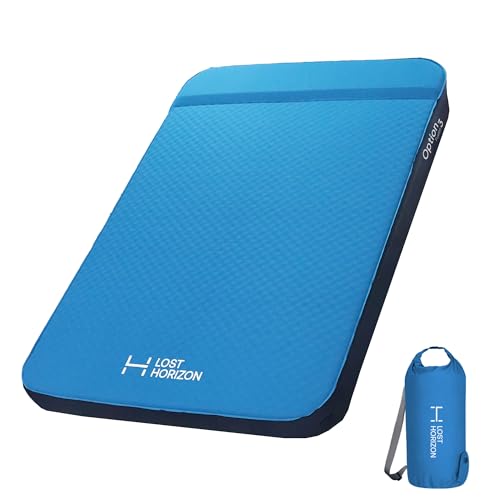
Lost Horizon Self-Inflating Foam Camping Mattress, Full, 3″ Thick

Lost Horizon Self-Inflating Foam Camping Mattress for Model Y

Exped Ultra Ultralight Inflatable Backpacking Sleeping Pad

Self Inflating Sleeping Pad with Electric Pump, 4″ Thick, 9.5 R-Value

Lost Horizon Self-Inflating Foam Camping Mattress, Single, 3″ Thick

Lost Horizon Option3 Self-Inflating Foam Camping Mattress, Full, 4.5″
More On The Choices That Made The List
Pair campers who actually share a tent know the math: two single pads leave a cold gap down the middle, and most “double-wide” air mats feel like waterbeds. This full-size Lost Horizon sidesteps both problems with a 3-inch foam-and-air build that fills the floor of a standard three-person tent.
The foam core, weighing roughly 10 pounds total, does the structural work while you crack a valve and let ambient air fill the remaining volume. For most family basecamps set up once and left for a week, that trade-off feels reasonable. You trade some pack size for a flat, supportive surface that handles restless kids and tall partners without bottoming out.
Strengths Worth Knowing
- Full-size footprint eliminates the gap problem between two single pads
- Open-valve self-inflation means no pump or lung effort at camp
- 3-inch profile keeps sleepers off cold ground in mild shoulder seasons
- Foam core adds stability for side sleepers and fidgety tent partners
- 400-pound capacity handles two average adults plus a child or dog
Things To Consider
- Rolled volume is bulky for backpacking, even split between two packs
- Heavier than ultralight air mats, which matters on long trail approaches
- Foam takes longer to dry if packed away damp, so airing it out matters
Best Suited To
Couples and small families running a car-camping or short-hike basecamp who want one shared surface instead of patching two singles together.
A Better Fit Elsewhere
Solo backpackers counting every ounce should look at the Exped Ultra instead, since it cuts weight dramatically.
Tesla Model Y owners who camp from the back of their car know the usual workaround: fold the seats, throw in a generic pad, and hope nothing slides. This Lost Horizon pad is cut specifically for the two-row Model Y cargo area, which makes car-bed setups feel intentional rather than improvised.
The 4.5-inch thickness is the headline. It sits noticeably higher off the cargo floor than a typical 3-inch pad, so restless sleepers don’t feel the seat fold creases underneath. The 9-pound foam core and 440-pound capacity cover two adults comfortably, and the self-inflating design keeps setup to a matter of minutes once the tent or hatch is open.
Noteworthy Benefits
- Custom-cut dimensions slot directly into the two-row Model Y cargo area
- 4.5-inch loft masks the uneven seat-folding creases underneath
- Open-valve inflation means no pump to store or charge in a packed cabin
- Foam-and-air build keeps both sleepers stable rather than rocking like a balloon
Points To Keep In Mind
- Tailored dimensions mean it does not work well outside a Model Y two-row
- Bulky to store when the car is in daily-driver mode
- Heavier than an ultralight air mat, which is fine in a vehicle but limiting on foot
Made For
Tesla Model Y owners running road trips, festival weekends, or backseat sleepovers who want a pad shaped for their cargo floor.
Skip It When
Anyone without a two-row Model Y should look at the Lost Horizon full-size 3-inch pad instead, since the dimensions will not fit other vehicles.
Thru-hikers and bikepackers measure comfort in grams, not inches. The Exped Ultra sits at the feather end of the category, built for warm-weather trips where weight matters more than plush loft. It is the lightest pad on this list by a wide margin.
Instead of an open-cell foam core, the Exped Ultra uses air-filled chambers running head-to-toe, with 3 inches of cushioned depth once inflated. The result feels closer to an air mattress than a foam pad, but rolls down to a fraction of the bulk. For multi-day trails and bike tours where every liter counts, that trade is usually worth it.
Everyday Advantages
- Sub-1-pound weight barely registers on a loaded pack or bike setup
- Air-chamber construction packs down smaller than any foam-based pad
- 3-inch loft gives side sleepers enough cushion for warm nights
- Exped’s air-mat design is stable enough for restless sleepers compared to basic air pads
Less Ideal Details
- Thin summer-season construction lacks insulation for cold shoulder-season trips
- Requires breath-inflation or a separate pump, unlike open-foam pads
- Air-only design is easier to puncture on rocky tent sites without a groundsheet
Quick Facts
Who Should Grab It
Long-distance hikers and bikepackers prioritizing weight savings for warm-season trips over plush cushion or insulation.
Reach For A Different Pick When
Car campers and shoulder-season sleepers will get more value from the LLUAII 4-inch self-inflating pad, since its foam core adds warmth and cushion.
Anyone who has wrestled a foam pad open in a cold campground will appreciate what the LLUAII brings: a one-touch electric pump that inflates the pad in roughly a minute, with no breath, no foot pump, and no sore cheeks by tent-time.
Beyond the pump, the 4-inch foam-and-air profile delivers noticeably more loft than the 3-inch Lost Horizon picks above, and the 9.5 R-value (a measure of how well a pad insulates from cold ground) makes it usable well into shoulder-season conditions. The integrated pillow is a small touch, but it removes one more thing to pack on car-camping trips.
Positive Takeaways
- Built-in electric pump handles inflation and deflation with one button
- 4-inch loft gives side sleepers and restless kids better clearance from the ground
- 9.5 R-value extends usable season into cold nights for most sleepers
- Integrated pillow saves packing space for car camping and overlanding
- Works in tents, cots, truck beds, and SUVs according to the product design
Honest Caveats
- Built-in pump adds weight and bulk compared to pump-free foam pads
- Vacuum-packed foam needs a full first-use inflation and a 30-minute rest to reach its final thickness
- Bulkier than the 3-inch Lost Horizon pads, which matters in small tents
Feature Snapshot
The Right Fit
Car campers, overlanders, and cold-weather sleepers who want maximum convenience and don’t mind the extra bulk of a pump-equipped pad.
Consider Something Else When
Backpackers will find the Exped Ultra better suited, since the LLUAII is too bulky and heavy for trail carry.
First-time campers usually want the simplest possible setup: open the valve, watch the pad puff up, roll it out. This single-size Lost Horizon delivers exactly that, with a 5.5-pound foam core that’s light enough for short hikes from car to campsite.
The 3-inch profile and 220-pound capacity are well-matched to a single sleeper under six feet. It cuts the weight roughly in half compared to the full-size version above, which matters when one person is carrying everything. For weekend car camping and festival sleep setups, it does the job without overcomplicating the night.
Good Reasons To Consider
- 5.5-pound foam core is light enough to haul from the car to a tent spot
- Open-valve self-inflation needs no pump, ideal for first-time campers
- 3-inch loft keeps a single sleeper off cold ground for three-season use
- Rolls down compactly enough for motorcycle and small-hatchback storage
Small Caveats
- 220-pound weight capacity limits heavier sleepers and restless tossing
- Single size leaves a gap when paired with another single pad for couples
- 3-inch profile offers less cold-weather insulation than the 4-inch LLUAII
Key Product Details
Whose Shelf It Belongs On
Solo beginners running weekend car-camping trips who want a no-fuss pad without the bulk of a full-size or pump-equipped option.
Swap It Out When
Sleepers pushing past the 220-pound capacity should consider the full-size Lost Horizon 4.5-inch pad, since it offers more structural support.
Van-dwellers and cabin hosts usually need the same thing: a pad so thick and supportive that nobody notices it’s there. The Lost Horizon Option3 is the most substantial pick on this list, with a 12-pound foam core and 4.5-inch loft that mimics the feel of a home mattress more than a camp pad.
The 440-pound capacity handles two adults, a dog, and the occasional kid bouncing onto the bed without bottoming out. The trade-off shows up immediately, though: this is a heavy, bulky pad that lives in the vehicle or shed. For dedicated basecamps and stationary setups where the pad never moves once deployed, that weight is a non-issue.
A Strong Showing
- 4.5-inch thickness delivers the closest-to-home sleep feel on this list
- 12-pound foam core stays rigid and supportive for restless sleepers
- 440-pound capacity covers two adults plus gear or pets comfortably
- Full-size dimensions eliminate the gap problem of paired single pads
Practical Considerations
- Heaviest foam pad in this roundup, which matters even on short carries
- Rolled bulk requires serious cargo space, impractical for small cars
- No electric pump, so setup time is longer than the LLUAII above
Technical Highlights
Built With In Mind
Van-lifers, glampers, and stationary basecamp hosts who treat their sleeping setup as a semi-permanent fixture rather than trail gear.
Look Elsewhere When
Anyone carrying a pad any distance will find the Exped Ultra far easier on the back, since the Option3 is essentially a stationary platform.
Picking a Pad That Actually Matches How You Camp
A self-inflating pad earns its place by blending foam structure with air volume, so a cracked valve does most of the inflation work. Start with thickness and loft: 3 inches is the everyday baseline, 4 inches and above suits side sleepers and restless movers, and anything thinner usually trades comfort for pack size.
Weight and packed volume matter more than most people expect. The Lost Horizon pads above range from roughly 5.5 to 12 pounds, which is fine for car camping but heavy on a multi-day trek. The Exped Ultra, by contrast, comes in under a pound and rolls down small, so it makes sense when the trail is part of the trip.
R-value, a standardized insulation rating for sleeping pads, deserves real attention too. Higher numbers mean more resistance to ground cold, and 9.5 on the LLUAII opens up genuine four-season use, while summer-only pads lean thinner and colder. Match the rating to the coldest nights you actually expect.
Finally, sizing shapes daily use. Single pads work for solo trips but leave a thermal gap when paired for couples. Full-size pads solve that gap but demand a tent with the floor space to hold them, and specialty cuts like the Model Y version only fit specific cargo areas.
Key Considerations Across These Picks
Pitfalls Shoppers Hit
The most common mistake is buying a pad built for backpackers when the use case is car camping, or vice versa. Ultralight air-only mats feel great at under a pound but leave cold air under the sleeper in shoulder-season conditions. Heavy foam pads feel luxurious at basecamp but punish anyone carrying them more than a few hundred yards.
Another misstep is ignoring the difference between single and full-size footprints. A pair of singles leaves a cold line down the middle of the tent, and a single oversized pad is awkward for solo trips where pack size matters more than surface area.
Where The Extra Money Goes
Spending up usually buys thicker foam, better cold-weather insulation, and convenience features like the LLUAII’s electric pump. The jump from a 3-inch to a 4.5-inch profile makes a noticeable difference for side sleepers, and a higher R-value genuinely extends the usable season. For dedicated cold-weather or full-time use, those upgrades pay off. For summer-only weekend trips, a thinner, lighter pad covers the same nights at a fraction of the cost.
Final Verdict
The right self-inflating sleeping pad depends almost entirely on how the night ends up. Backpackers and bikepackers should start with the Exped Ultra for its weight savings. Car campers and family basecamp hosts will get the most value from the full-size Lost Horizon 3-inch or the 4.5-inch Option3, while Tesla Model Y owners have a tailored fit waiting for them. Cold-weather sleepers and convenience-focused campers will appreciate what the LLUAII brings to the setup. Match the pad to the trip, and the rest of the night takes care of itself.