
Camping sleep setups make or break a trip, and the mattress under everything else carries more weight than most people expect. A good self-inflating pad rolls out, fills with air on its own, and keeps a restless sleeper off cold ground for the whole night. The picks below cover everything from car-camping luxury to in-vehicle setups and four-season insulation, so matching the right mattress to the right trip becomes a quick decision rather than a guessing game.
The Essentials At A Glance
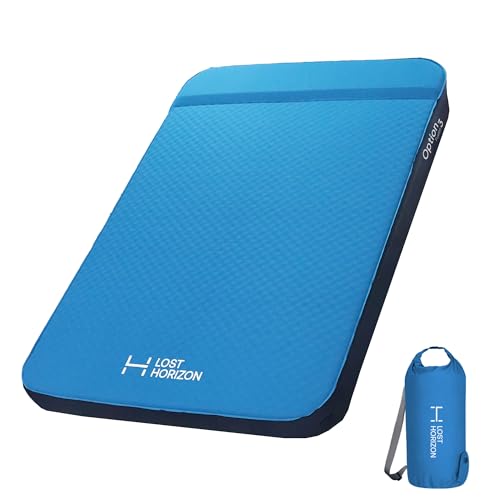
Lost Horizon Self-Inflating Foam Camping Mattress, Full, 3″

Lost Horizon Self-Inflating Foam Camping Mattress for Model Y

LLUAII Self Inflating Sleeping Pad with Electric Pump, 4″

Lost Horizon Self-Inflating Foam Camping Mattress, Single, 3″

Lost Horizon Option3 Self-Inflating Foam Camping Mattress, Full, 4.5″

Elegear 4″ Thick Sleeping Pad for Camping, 9 R-Value
A Breakdown Of The Leading Choices
The Full-size Lost Horizon lands in the middle of the brand’s lineup, and that middle ground is precisely where many weekend campers end up shopping. At three inches of foam-filled loft and roughly 10 pounds of fill mass, it sits between the lighter single-person option and the chunkier 4.5-inch model reviewed further down.
For couples sharing a two-person tent or a parent rolling out beside a kid, the full footprint keeps shoulders on the pad. Self-inflating means unrolling, cracking the valve, and letting the open-cell foam do most of the work. A few manual breaths finish the job on most nights.
Notable Upsides
- Three-inch loft cushions hips and shoulders on rocky or root-strewn tent floors
- Full size fits side-by-side sleepers without forcing anyone onto the ground
- Open-cell foam structure handles repeated roll-outs without losing loft quickly
- Compatible with standard tent footprints and most cot platforms
Points To Note
- Stowed size runs bulky compared to the single-person version, so packing space matters
- First-inflation foam smell is common and usually needs a night of airing before use
Feature Card
Made For
Car campers and tent sleepers who want one pad that handles both solo and paired use across mild-season weekends.
Look Elsewhere When
The Lost Horizon Single, 3″ is a tighter fit for backpack-style packing and shorter solo trips where stowed size matters more than shared space.
The Model Y pad looks like a camping mattress at first glance, but it is purpose-built for the cargo area of the 2-row Tesla Model Y. That specificity runs through the dimensions, the foam profile, and the way it lays flat across the folded seats.
Self-inflating foam removes the need for a separate pump, which matters when the only available power source is the vehicle itself. For overlanders running a long weekend from a campsite or a trailhead, that simplification is the main selling point.
Useful Touches
- Custom-cut shape follows the Model Y cargo floor for a flat sleep surface
- 4.5-inch loft sits well above factory carpet and folded seat edges
- No pump required, which keeps setup simple at remote trailheads
- Sturdy foam profile resists the lumps created by seat folds underneath
Practical Considerations
- Fit is locked to the 2-row Model Y, so it does not transfer to other vehicles
- Stowed roll is large, and storage inside the cargo area while driving takes planning
Feature Card
Right Fit For
Tesla Model Y owners running car-camping trips who want a pad that drops into the cargo area without trimming or shimming.
Skip It When
The Elegear 4″ Sleeping Pad is a stronger match for tent campers chasing high R-value insulation across changing weather.
The LLUAII pad leans hard into automation with a built-in electric pump, a direction the category has been moving toward for a few seasons now. Where the Lost Horizon pads rely on open-cell foam and gravity to fill, this option adds a one-touch inflation and deflation cycle.
For campers who set up and break camp in the dark, or anyone who values arriving at a flat sleeping surface in under a minute, the pump changes the experience. The built-in pillow adds another small simplification, removing a loose item from the gear list.
Where It Delivers
- Built-in pump cuts inflation time to roughly a minute from valve-open to flat surface
- Four-inch foam loft creates a stable platform for restless sleepers
- Integrated pillow eliminates one loose item from the kit
- 9.5 R-value targets four-season use, including shoulder-season camping
Some Limits To Know
- Electric pump requires charging, so power management matters on multi-day trips
- Heavier overall than non-pumped self-inflating pads because of the integrated hardware
Built With In Mind
Campers who want fast, no-manual-effort setup and four-season versatility from a single pad.
A Better Fit Elsewhere
The Lost Horizon Option3, 4.5″ Full is a stronger pick for shoppers who prefer manual inflation and want a more traditional foam profile.
At the lighter end of the Lost Horizon family sits the single-size 3-inch pad, and it is the most pack-friendly option in the brand’s tent lineup. Compared to the full-size 3-inch model reviewed earlier, the stowed roll comes in noticeably smaller.
Solo backpackers, bike-packers, and minimalist weekenders care about grams and rolled diameter, and a 5.5-pound foam fill sits comfortably in that conversation. The 220-pound weight capacity is the honest ceiling here, and it shapes who the pad suits.
Where It Helps
- Lighter foam fill keeps stowed size manageable for backpack-style packing
- Three-inch loft still cushions the hips and shoulders for side sleepers
- Same self-inflating valve logic as the larger Lost Horizon pads
Worth Bearing In Mind
- 220-pound weight capacity rules out heavier sleepers and combined loads
- Single-person width means no sharing space with a partner or child
- Less insulation depth than the 4.5-inch models, so winter use is limited
Feature Card
Best Suited To
Solo backpackers and minimalist weekenders under the 220-pound weight limit who want a manageable roll and a familiar self-inflating setup.
Consider Something Else When
The Elegear 4″ Sleeping Pad is a better fit for solo campers who want stronger cold-weather insulation.
Lost Horizon’s Option3 is the heavyweight in the family, and the name reads like an internal model label more than a marketing line. The 4.5-inch profile adds loft, and the 12-pound foam fill signals a denser construction than the lighter pads reviewed earlier.
For sleepers who treat camping like a bed at home, or couples sharing a platform tent, the extra thickness and weight capacity justify the bulk. The trade-off is a stowed roll that takes up more space in a vehicle or a gear closet.
A Favorable Mix
- 4.5-inch profile creates real mattress-like depth for restless sleepers
- 440-pound capacity handles two adults plus gear weight on the pad
- Full footprint shares cleanly inside two-person family tents
- Denser foam resists bottoming out on rocky tent platforms
Honest Caveats
- Stowed roll is the largest in the lineup, so packing space is a real consideration
- Higher foam mass means longer first-inflation time than thinner pads
Feature Card
Whose Shelf It Belongs On
Heavier sleepers and couples running longer trips who want a thicker, more mattress-like sleep surface.
Swap It Out When
The LLUAII 4″ pad with electric pump is a better match for campers who want faster setup and integrated inflation.
The Elegear pad lands at the high-insulation end of the spectrum, and that focus shapes everything about how it performs. R-value is the standard measurement of how well a sleeping pad blocks heat loss to the ground, and 9 sits well above what most three-season pads reach.
Where the Lost Horizon pads target general car camping and the LLUAII targets fast setup, the Elegear targets cold ground. For shoulder-season trips, high-elevation nights, and winter tent use, insulation matters more than loft thickness alone.
Useful Strengths
- 9 R-value insulation handles cold ground across shoulder seasons and winter nights
- Four-inch profile gives a stable sleep platform under the insulated layers
- Solo-friendly format fits one-person tents without wasted width
- Designed for high-elevation and winter camping where ground chill is severe
Factors To Consider
- Higher insulation layering adds bulk compared to a basic three-season pad
- Solo size does not serve couples sharing a two-person tent
Feature Card
Who Should Grab It
Solo campers running shoulder-season trips, high-elevation routes, and winter tent nights where ground chill is the dominant comfort problem.
Reach For A Different Pick When
The Lost Horizon Option3, 4.5″ Full is a stronger choice for couples who want shared width rather than single-person insulation.
What Matters Most When Picking A Self-Inflating Pad
Insulation Comes First On Cold Trips
R-value measures how well a pad blocks heat loss to the ground, and a higher number means warmer sleep on cold nights. A pad with R-value 9 like the Elegear covers winter and high-elevation use, while basic three-season pads sit lower and lean on a warm sleeping bag to compensate. Match R-value to the lowest expected ground temperature, not the average.
Thickness Changes Sleep Posture
Three inches of foam cushions the average side sleeper, and four inches gives restless sleepers a more mattress-like feel. Thicker pads also resist the pressure points that show up over rocky tent platforms. Heavier sleepers benefit from extra thickness because thinner pads bottom out under more weight.
Footprint And Weight Capacity Set The Ceiling
Single pads save weight and pack size, but full-size pads share cleanly between two sleepers and handle higher weight capacities. Weight capacity is the honest ceiling on who can use the pad, and exceeding it reduces loft and comfort. Match the footprint to tent size and the weight capacity to the heaviest sleeper who will use it.
Self-Inflating Means Setup Is Mostly Hands-Off
Open-cell foam expands on its own once the valve opens, which removes the lung-power required by traditional air pads. Pads that add a built-in electric pump trade weight and charging for a faster inflation time. Both styles rely on a final few breaths or pump cycles to top off the loft.
Real Trade-Offs Across These Picks
Where Shoppers Go Wrong
The most common misstep is buying a pad based on loft thickness alone, then discovering that insulation is the real limiter on cold nights. Another frequent trap is underestimating stowed size, since a 12-pound foam pad takes up far more cargo space than its inflated size suggests. Weight capacity is a third, often-overlooked number, and exceeding it flattens the loft quickly.
When Paying More Pays Off
Higher-tier pads in this category buy two things that matter: denser foam that resists bottoming out, and stronger insulation systems for cold-weather use. The upgrade is worth it for campers who run multi-day trips, sleep cold, or carry heavier body weight. For warm-weather car camping with light use, the basic pads cover the ground without the extra cost.