
A buggy evening can flatten a camping trip faster than bad weather, and most people don’t realize how loud and persistent insects get until they’re sitting in a swampy campsite without a screen between them and the swarm. A good screen tent turns that mess into a calm lounge, a gear-drying room, and a kid-safe play space in one move. This roundup covers five different shelter styles, from full standing-height gazebos to personal bed canopies, so the right match for a different campground or backyard shows up below.
The Main Contenders

CLAM Venture Screen Tent 9 x 9 Ft Pop Up Gazebo Gray

Sportneer Pop-Up Mosquito Net Tent Instant Setup

SANSBUG Screen Tent Instant Pop up

Gazelle T4 Waterproof 4 Person Portable Polyester Pop Up
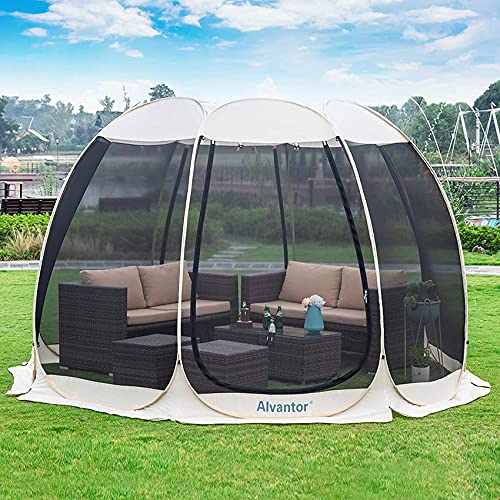
Alvantor Pop Up Screen House Tent UPF 50+
Meet The Standout Selections
Car campers packing a sedan or small SUV will appreciate how compact the CLAM Venture folds down, yet it opens into a roomy standing-height shelter with no assembly. The pop-up frame (a pre-attached skeleton that springs open when released) sets up in under a minute, and the 9 x 9 footprint seats four adults with camp chairs and a small table.
For families who mostly camp at developed sites with a picnic table, this shelter fits over the table and turns the kitchen area into a bug-free zone. Mesh walls keep mosquitoes, no-see-ums (tiny biting midges that slip through standard window screen), and flies out, while the gray fabric cuts glare on sunny afternoons.
Notable Gains
- Setup takes seconds, so late arrivals still make it before sundown.
- Standing room inside lets adults move without crouching.
- Seats four with chairs, ideal for a couple with kids.
- Mesh walls allow airflow on hot summer nights.
Things To Consider
- Wind resistance depends on staking, so soft soil or hard ground calls for extra guy lines.
- Storage bag is bulky, requiring real trunk space between trips.
Right Fit For
Family campers who prioritize fast setup and want a shared lounge space rather than a personal sleeping bubble.
Skip It When
Backpackers needing a featherlight personal net will do better with the Sportneer Pop-Up Mosquito Net Tent, which folds smaller and weighs far less.
Unlike the family-scale CLAM Venture above, the Sportneer is a personal pop-up bed canopy sized to fit over a cot or directly on the ground. The mesh shell springs into shape when tossed into the air, then folds back into a flat disc for travel. Breathable mesh keeps airflow steady through muggy nights.
For backpackers, festival sleepers, or anyone dreading mosquito-heavy regions, this collapses into a side pouch and adds almost no bulk to a pack. It also works indoors over a bed for households dealing with open windows in bug season, doubling as a year-round utility.
A Strong Showing
- Pops open in seconds and folds flat without poles.
- Light enough for backpacking and festivals.
- Fits over a cot or directly on the ground.
- Doubles as an indoor bed canopy for bug-prone homes.
Trade Offs
- Refolding takes practice, and first attempts can feel like wrestling a coiled spring.
- No floor, so ground debris and crawling insects can enter from below.
- Single-occupant only.
Best Suited To
Solo travelers and festival campers who want bug protection without hauling a full shelter.
Swap It Out When
Campers needing an enclosed floor for ground sleep should look at the SANSBUG Screen Tent, which seals off crawl-through insects entirely.
Where the Sportneer leaves the floor open, the SANSBUG adds a sewn-in tarp that seals the entire shelter from crawling intruders. The mesh is a tight no-see-um weave that filters out gnats, spiders, and scorpions. Free-standing design means it holds shape without staking, useful on wooden bunks and indoor floors.
Bunkhouse campers, dorm-room travelers, and anyone sleeping on a cot or pad will appreciate the fully enclosed feel. Setup is identical to other pop-ups here: release the strap and toss, and the tent snaps into shape ready for use.
What Earns Its Place
- Fully enclosed mesh and tarp floor block crawling pests.
- Free-standing frame works on cots, beds, or hard surfaces.
- No-see-um mesh filters gnats other screens miss.
- Pops open in roughly one second.
Points To Note
- Tarp floor can feel warm on humid nights without ventilation tweaks.
- Refolding requires the figure-eight technique, which frustrates first-time owners.
Who It Suits Best
Sleepers in heavily infested areas who want a sealed personal sleep chamber rather than a shared gazebo.
Consider Something Else When
Groups needing a standing lounge should pivot to the CLAM Venture Screen Tent, which trades the floor for usable headroom and chair space.
Compared to the bare-bones mesh shelters earlier in this list, the Gazelle T4 layers a full rain fly over a polyester body for serious weather coverage. Pre-assembled hub design (rigid X-shaped joints that lock open without pole threading) brings the shelter to standing height in roughly 90 seconds, and a removable floor lets owners convert it from a tent to an open pavilion.
For coastal campers, rainy shoulder-season travelers, or beach days where wind kicks up sand, this is the most weather-hardy option here. Mesh windows still breathe when the fly is deployed, and the integrated floor pulls out for easy cleaning after muddy weekends.
Points In Its Favor
- Full-coverage rain fly handles wet-weather camping.
- Hub-frame pops up in about 90 seconds.
- Removable floor converts between tent and open shelter.
- Seats four adults comfortably for dining or sleeping.
Honest Caveats
- Heavier than pure mesh shelters, so car camping fits better than backpacking.
- Higher price tier in this category.
- Larger packed footprint takes up trunk space.
Feature Snapshot
Made For
Campers in damp climates or coastal sites who want a four-person shelter that handles rain as well as bugs.
A Better Fit Elsewhere
Dry-weather travelers chasing lighter weight will prefer the Alvantor Pop Up Screen House Tent, which trims bulk at the cost of full waterproofing.
The Alvantor trims weight compared to the rain-ready Gazelle T4 by skipping the heavy fly and focusing on airy mesh with a UPF 50+ top panel. UPF 50+ means the fabric blocks 98% of UV rays, making the shelter comfortable in direct sun. It pops into shape like the others and packs into a flat carry bag with a roughly 39-inch diameter.
Backyard loungers, patio diners, and small camping crews who mostly deal with bugs and sun rather than rain will find the light frame easier to handle. It works as a toddler-safe play space, a picnic screen room, or an evening hangout zone.
Strong Points
- Light enough for one person to carry and deploy.
- UPF 50+ top blocks harsh midday sun.
- Mosquito netting on all sides for full ventilation.
- Sets up in seconds with no assembly.
Small Caveats
- Mesh-only design offers no rain protection.
- Needs staking or weighting in breezy conditions.
Who Should Grab It
Patio and backyard users who want bug-free airflow and sun shade more than storm coverage.
Not Your Match When
Stormy-weather campers should choose the Gazelle T4 instead, since its rain fly handles weather the Alvantor cannot.
Picking The Right Screen Shelter For Your Setup
Match Capacity To Crew, Not Just Headcount
A 9 x 9 gazebo sounds roomy until a family of four loads in with chairs, coolers, and a dog. Real-world sizing means thinking about gear footprint alongside people. Two adults with a picnic setup fit comfortably in a 9 x 9, but a family of four plus chairs and a pack-n-play will want to size up. For solo sleepers, a personal bed canopy beats hauling a full gazebo for any reason other than the social space.
Capacity labels vary by maker, so think in usable square footage per person rather than just the count. As a rough guide, plan around 8 to 10 square feet per adult for seated comfort, more if there’s a table involved.
Decide What You’re Sheltering From
Bugs and sun are the baseline. Once rain enters the picture, the shelter category shifts toward hybrid tents with rain flies, like the Gazelle T4. Pure mesh designs breathe better in humid climates but offer no defense against pop-up storms.
Floor presence matters too. Sealed tarp floors protect from crawling insects and damp ground, while open floors allow easy entry, foot traffic, and cleaning but let ants and spiders wander in.
Weigh Setup Style Against Frequency
Pop-up frames trade structural simplicity for ease: no poles to thread, no instructions to follow. The trade-off shows up in refolding, which can be tricky on the first attempts, and in wind tolerance, since pop-ups tend to act like umbrellas in stiff gusts.
Frequent setup and takedown rewards a shelter that refolds cleanly. Weekend warriors leaving a shelter up all summer can ignore that detail entirely.
Storage And Transport Reality Check
A 9 x 9 gazebo packs into a disc roughly the size of a large camping chair bag. That’s manageable in an SUV trunk but eats space in a sedan. Personal bed canopies fold much flatter and slide into a backpack.
Weight is the second transport factor. Pop-up gazebos typically run 15 to 25 lbs, fine for car camping, marginal for hiking. A shelter that’s too heavy to carry twice will get left at home on short trips.
Comparing The Shelter Tiers
Pitfalls Shoppers Hit
Buying by capacity alone is the most common slip: a shelter that seats four with no room for gear or chairs creates the same cramped feeling a too-small tent does. Ventilation also gets overlooked, and a fully sealed shelter without airflow turns into a sauna on humid nights.
Another miss is ignoring staking. Pop-up shelters act like kites in wind, so owners skipping stakes or guy lines (cords that anchor the shelter to the ground at an angle for extra stability) often find their shelter across the campsite after a gusty afternoon.
Where The Extra Money Goes
Higher-tier models in this category buy weather protection, stronger frames, and larger footprints. The Gazelle T4’s hub design and rain fly account for much of its premium over the CLAM Venture. Those upgrades pay off for campers in wet climates, coastal sites, or shoulder-season trips where weather shifts fast.
Lower-priced picks focus on the core bug-screen function and skip rain readiness, making them a strong match for dry summer camping and backyard use where weather risk is low.
Bottom Line
The right screen tent depends less on features than on the camping style. Family car campers get the most value from a standing-height pop-up like the CLAM Venture or Gazelle T4. Solo sleepers chasing bug protection without weight should look at personal canopies like the Sportneer or SANSBUG. Backyard loungers who want shade and airflow will find the Alvantor fits the bill. Match the shelter to the actual campsite and weather, not the spec sheet.