
An RV water hose isn’t glamorous gear, but it’s the difference between a functional rig and a frozen mess. Travelers chasing shoulder-season camping, full-timers working remote lots, and winter hosts in the northern states all face the same core problem: standard hoses split, kink, or ice up the moment temperatures dip. The right hose also matters in mild weather, where lead content, fitting strain, and length change how pleasant a setup feels. The five picks below cover the practical range, from a brass fitting saver for any season to heated lines rated for serious cold.
A Quick View Of The Lineup

Camco 90-Degree Hose Elbow For RVs (Solid Brass)
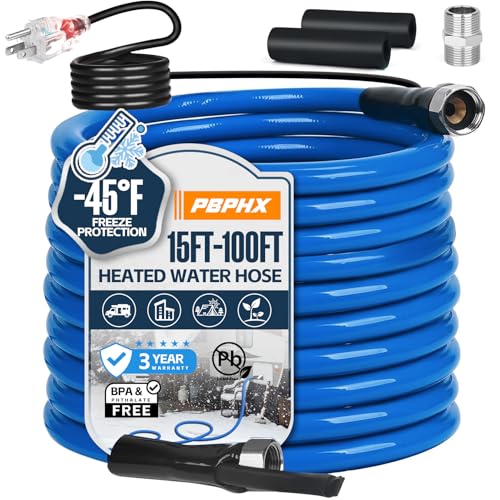
25FT Heated Water Hose for RV

50FT Heated Water Hose for RV
75FT Heated Water Hose for RV
100FT Heated Water Hose for RV
The Picks, Examined More Closely
Not every RV hose problem is about the hose itself. Tight hookups behind a wet bay door force the line to bend sharply at the spigot, which slowly destroys both the hose and the fitting. The Camco 90-degree elbow solves that by rerouting the connection at a clean right angle, taking the bending load off the hose end. Solid brass body construction and a certified lead-free rating make it suitable for potable water lines, which matters for anyone drinking or cooking from the tap.
The swiveling easy-grip connector threads onto standard 3/4″ to 11.5 NH fittings, the same thread pattern used across most RV and residential outdoor spigots. That makes it just as useful at a backyard hose bib as it is on a coach. For anyone whose hose kinks at the wall, this little brass fitting tends to outlast several hose replacements.
Features That Help
- Solid brass body resists corrosion across many seasons of outdoor use
- Lead-free certification supports safe drinking and cooking water at the tap
- Swiveling easy-grip connector simplifies hand-tightening, no tools required
- Fits the standard 3/4″ NH thread used by most RV and residential spigots
- Doubles as a residential outdoor faucet accessory, not just RV-only hardware
Things To Consider
- One elbow per pack, so dual-line setups or spare locations require more than one purchase
- Brass adds a small amount of weight compared with plastic alternatives
At A Glance
Made For
RVers and homeowners dealing with tight hookup angles behind a wet bay, cabinet, or outdoor faucet.
Consider Something Else When
Anyone camping in hard freezes should pair this fitting with the PBPHX 50FT Heated Water Hose for RV, since the elbow alone won’t stop water from icing inside the line.
Short sites call for short hoses. The PBPHX 25-foot heated hose covers the typical weekend rig parked a few feet from a camp spigot, without dragging extra length across the ground. Built to keep water flowing down to roughly -40°F, it suits shoulder-season campers, ski-trip travelers, and anyone wintering in a mild southern climate where the occasional hard snap still shows up.
Unlike the brass elbow above, this is the full hose, with internal heating elements that warm the line as temperatures drop. At 25 feet it stores compactly in a small exterior compartment, leaving room for other gear. For owners who rarely need more than a direct connection, the short run also pulls less power than longer heated options.
The Good Stuff
- Cold-rated to roughly -40°F for hard-freeze conditions
- Short 25-foot length coils small for tight exterior bays
- Pulls less power than the longer heated options in the lineup
Worth Noting
- 25 feet may fall short when the spigot sits farther from the rig
- Heated hoses require a working GFCI outlet at the supply end, which not every site provides
- Owners commonly report coiling the hose carefully to avoid kinking the internal heating wire
Who It Suits Best
Weekend campers in cold climates with rigs parked close to a frost-free supply.
Where Another Pick Suits Better
Full-time winter campers on long, sprawling sites will get more reach out of the 75FT Heated Water Hose for RV.
For most winter RVing, 50 feet is the sweet spot. The PBPHX 50-foot heated hose reaches across typical back-in and pull-through sites without leaving yards of extra hose coiled behind the tires. It carries the same cold-rated build as the shorter 25-foot version, so the trade-off is purely about reach versus storage.
This middle pick fits a broad reader profile: full-timers who don’t want to wrestle a 100-footer every move, snowbirds who park in different site layouts each week, and owners of larger fifth wheels who need extra slack. The heated line keeps water moving when overnight temps plunge, and the length covers most real-world setups without resorting to extensions.
Real Benefits
- 50-foot length matches the typical reach at most RV sites
- Cold-rated to roughly -40°F for sub-freezing overnight stays
- Versatile across back-in, pull-through, and odd-angle hookups
- Compatible with the Camco 90-degree elbow at the spigot for tight installations
Honest Caveats
- Heavier and bulkier to coil than the 25-foot version
- Still needs a powered outlet at the supply end to run the heating element
Quick Facts
Right Fit For
Snowbirds and part-time winter RVers running varied sites that demand flexible reach.
Look Elsewhere When
Anyone running a tight 15-foot hookup will save weight and storage space with the 25FT Heated Water Hose for RV.
Long sites and remote hookups are where short hoses turn into problems. The PBPHX 75-foot heated hose reaches far enough to cover awkward site layouts, water spigots placed at the rear of a long driveway, and rustic setups where the supply sits well away from the camper. The internal heating keeps the line from freezing along the entire stretch.
At 75 feet the hose becomes a real piece of gear to manage, so it makes the most sense for owners who actually need the length rather than buying it as insurance. It works well for farm properties, large private lots, and winterized cabins where a longer heated run solves a daily hassle.
The Upside
- 75-foot reach covers long runs from distant spigots
- Cold-rated to roughly -40°F across the full length
- Suits remote properties, farm setups, and rear-of-driveway hookups
- Removes the need to splice two shorter hoses together, which can introduce weak spots
Points To Keep In Mind
- Storage requires a larger exterior bay or dedicated bin
- Adds noticeable weight to the rig’s water gear
- Coiling cleanly matters, as owners commonly report internal heating damage from sharp kinks
Best Suited To
Owners on sprawling rural lots where the supply sits far from the camper in winter.
Skip It When
Compact rigs at tight urban campgrounds will be better served by the 50FT Heated Water Hose for RV.
Maximum reach solves maximum problems. The PBPHX 100-foot heated hose is the longest in the lineup and exists for full-time winter campers, large acreage properties, and unusual site geometries where the supply and the rig sit far apart. It uses the same cold-rated heating concept as the shorter versions, just stretched across more real estate.
This is specialty gear rather than a casual purchase. At 100 feet, the hose is heavy, takes up significant storage, and requires more careful handling during coiling. For the right owner it eliminates daily frustration, but anyone running typical 30-foot site hookups won’t tap into its strengths.
The Helpful Details
- 100-foot length covers the most demanding winter site layouts
- Cold-rated to roughly -40°F across the full run
- Replaces a chain of joined hoses that often leak at the fittings
- Works as a long cold-season garden hose for large rural properties
Trade-Offs
- Bulky to store, requiring a dedicated compartment or bin
- Heavier to lift and maneuver than any other pick in the roundup
- Must be coiled gently to protect the internal heating element from damage
- Pulls more power than shorter heated options, depending on outlet capacity
Who Should Grab It
Full-time winter RVers and rural landowners who genuinely need the extra length every single trip.
Another Choice May Suit
Anyone running typical weekend camps will find the 50FT Heated Water Hose for RV easier to live with day to day.
What To Weigh Before Choosing Rv Hoses
Length And Real Site Layout
The honest starting point is measuring the typical gap between the spigot and the RV inlet. A 25-foot hose works for tight sites, but anything beyond 35 feet of reach typically needs 50 feet of hose to allow slack. Buying too short forces unsafe stretching, while buying too long means hauling extra weight for no reason. For most travelers the 50-foot option is the practical sweet spot.
Climate And Freeze Risk
A standard garden hose splits when water freezes inside it, and that same failure mode hits RV hoses. Heated hoses rated for deep sub-zero temperatures solve that, but only when a powered outlet exists at the supply end. Travelers in mild climates can skip heating entirely, while anyone camping below freezing regularly should treat a heated line as essential gear.
Fitting Quality And Drinking Water Safety
The threaded fittings at each end of a hose take the most physical abuse. Brass fittings last longer than plastic, and lead-free certification matters for anyone drinking or cooking from the RV’s freshwater tap. Pairing a heated hose with a 90-degree brass elbow at the spigot can also extend hose life by reducing constant bending stress.
Storage And Handling Reality
A 100-foot hose sounds appealing until it has to live in a small exterior bay. Weight, coil size, and stiffness all affect how often the hose actually gets deployed. Picking a length that matches the storage space available prevents the gear from staying home because it’s too much trouble to use.
Key Considerations Across These Picks
Mistakes Worth Dodging
The most common slip is buying a heated hose without confirming a powered outlet at the spigot end. Many older campgrounds lack electricity at the water tap, and a heated hose without power is just a heavier standard hose. Another frequent miss is underestimating length. Stretching a too-short hose across a site adds stress to both ends and often leads to split fittings within a season.
Where The Extra Money Goes
Spending up in this category typically buys longer reach, deeper cold ratings, and more durable fittings. The longer PBPHX hoses in the lineup cost more mostly because of added heating wire length and jacket material, not because of smarter technology. The brass elbow is a different kind of upgrade: a small accessory that prevents hose failure and pays for itself by extending hose life across many seasons.
Closing Remarks
Match the hose to the actual climate, site layout, and storage space rather than the longest option on the shelf. Cold-weather travelers who need fewer than 30 feet can save weight with a compact heated line, while full-time winter campers usually benefit from the 50- or 75-foot options. The brass elbow earns its place in almost any RV hose setup, regardless of season.