
Cooking outdoors from an RV demands a grill that respects tight storage, low clearances, and the kind of heat that makes a weekend stop taste like home. The seven grills and smokers below cover everything from a portable charcoal tabletop to full offset rigs that can handle a rack of ribs and a pack of burgers at once. Each one fits a different traveling style, so the right choice depends on the rig, the menu, and how often the galley is the heart of the trip.
A Side-By-Side Look

Oklahoma Joe’s Rambler Portable Charcoal Grill 218 sq. in.
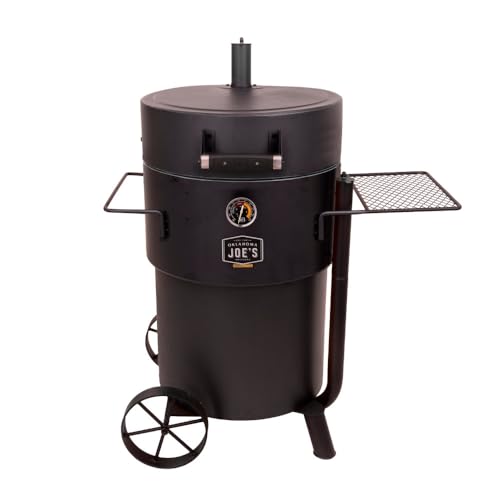
Oklahoma Joe’s Bronco Pro Drum Smoker and Grill 366 sq. in.

Weber Q 2800N+ Propane Portable Grill Midnight Black

Oklahoma Joe’s Firecraft Barrel Charcoal Grill 480 sq. in.

Oklahoma Joe’s Highland Reverse Flow Offset Smoker and Grill 1093 sq. in.
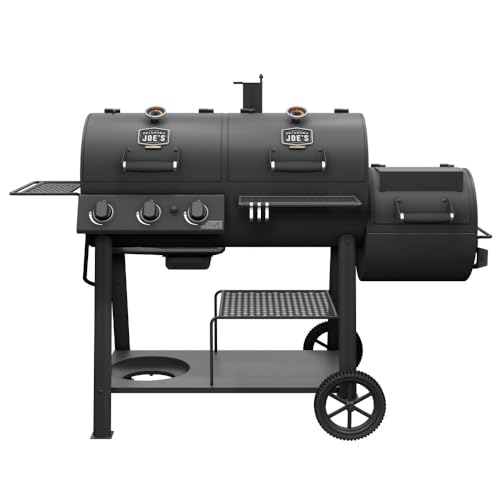
Oklahoma Joe’s Canyon Combo Dual Fuel Grill and Smoker 1031 sq. in.

Oklahoma Joe’s Longhorn Offset Charcoal Smoker and Grill 1060 sq. in.
The Strengths Of Each Pick
The Rambler sits at the smallest end of the lineup and earns that position honestly. Travelers working out of a Class B van or a popup trailer usually need something that stows in a 2-foot compartment and lights without a learning curve. The charcoal tray adjusts up and down to change the heat gap between coals and food, which is the most useful control on any small charcoal grill.
Compared to the larger drum and offset models later in this list, the Rambler gives up cooking area and smoke volume for portability. That trade-off makes sense when campsite storage rules matter more than menu ambition.
Useful Touches
- Height-adjustable charcoal tray for direct and indirect heat
- 218 sq. in. cooking area fits 6-8 burgers or a pair of small steaks
- Compact body stows in most RV exterior compartments
- Straightforward charcoal lighting keeps setup time short
Things To Consider
- No lid, so wind protection and flare-up management fall on the cook
- Smoke-heavy cooks last much shorter than the bigger models below
- Smaller grate means rotating food more often on larger meals
Made For
Weekend travelers who want real charcoal flavor from a tabletop unit without giving up half their storage bay.
Swap It Out When
Step up to the Weber Q 2800N+ for propane convenience, or to the Bronco Pro drum smoker when low-and-slow cooks become the priority.
The Bronco Pro is the first serious smoker in this group, and it shows up built for long hours rather than quick weeknight burgers. Drum-style designs (a cylindrical barrel with a side firebox area) hold heat and smoke more evenly than a kettle, and this one carries a sealed lid that holds tight over a full day of cooking.
The 366 sq. in. grate puts it between the Rambler and the larger offsets, making it realistic for a 4-6 hour brisket or a full pack of chicken thighs. The body weight is the obvious trade-off: this is not a casual tailgate grill.
Well-Handled Touches
- Oversized charcoal basket for extended burning with fewer refuels
- Sealed drum lid holds steady smoke and heat for hours
- Side-mounted controls keep airflow simple for first-time smokers
- Lower profile than full offsets, easier to mount on a slide-out tray
Honest Caveats
- Heavier than tabletop options, plan for two adults to lift it
- Ash cleanup at the bottom of the drum takes longer than a kettle
- Charcoal-only, so quick propane weeknights need a backup plan
Feature Snapshot
Whose Shelf It Belongs On
RV owners who camp for several nights in one place and want a real low-and-slow smoker they can leave burning while they set up camp.
Look Elsewhere When
Skip to the Highland reverse flow if 1000+ sq. in. and overnight capacity matter more than footprint.
Propane changes the math on the road: light, twist a knob, and dinner is on the grate in ten minutes. The Q 2800N+ is the only propane unit in this lineup and the most approachable for renters, condo lots, or parks that restrict open fires. A wide heat range from low and slow baking up to high-heat searing makes it more capable than older portable propane grills.
Where the Bronco Pro and the offset smokers reward patience, this Weber rewards people who want a hot meal fast after a long travel day.
Advantages To Know
- Wide temperature range from low oven-style roasts to high sears
- Porcelain-enameled cast-iron grates retain heat for stronger grill marks
- No charcoal, no ash, faster cleanup at the campsite
- Compact body with folding sides for easier stowing
Practical Considerations
- Requires a propane tank, which adds weight and a refill stop
- Smoke flavor is milder than charcoal or offset options
- Cooking area is smaller than full-size outdoor grills
Right Fit For
Travelers who pull into camp late, want dinner fast, and prefer twist-and-go propane over charcoal management.
Reach For A Different Pick When
Switch to the Rambler for charcoal purists or the Canyon Combo when both propane speed and charcoal smoke flavor are needed in one rig.
The Firecraft barrel is the odd one out, and that is the point. The open firebox design turns the grill into a live-fire pit when the cook is done, so the same unit pulls double duty as a backyard gathering piece after dinner ends. The two round grates lift out for tending the fire or adding wood, which is a real advantage over fixed-barrel designs.
Its 480 sq. in. splits evenly between the two grates, so cooking for a small crowd feels manageable. Compared to the Bronco Pro, the Firecraft trades sealed-drum efficiency for open-flame character.
Notable Upsides
- Open firebox allows 360-degree access for fire tending
- Doubles as a fire pit after the cook for evening relaxation
- Twist-lock handle releases grate height for varied heat zones
- Heavy-gauge wire grates resist corrosion across seasons
Some Limits To Know
- No lid, so smoke and heat control rely on grate height alone
- Charcoal consumption is higher than closed-drum smokers
- Larger footprint needs a stable camp spot or patio area
Who Should Grab It
RVers who treat the grill as part of the evening atmosphere and want the option to keep the fire going after the food comes off.
A Better Fit Elsewhere
Pick the Longhorn offset when lid-controlled smoking is the main goal, or the Rambler when storage is the top concern.
The Highland is the largest and most refined offset on this list, with a reverse-flow baffle system that routes smoke across the meat before it exits the stack. That pattern is meant to even out temperature across the grate, which matters on overnight brisket cooks where one side of the chamber runs hot.
Its 1093 sq. in. of grate real estate handles two pork shoulders plus a row of ribs without crowding. The trade-off is weight and footprint: this is a destination smoker, not a quick-grill option.
The Practical Payoff
- Removable baffles flip between reverse flow and traditional offset modes
- Large charcoal basket supports long burns with fewer refuels
- Adjustable smokestack positions fine-tune draft
- 1093 sq. in. handles full-meal cooks for groups
Points To Weigh
- Heavy and bulky, best left set up at a base camp
- Longer learning curve for first-time offset cooks
- Charcoal and wood splits must be stocked ahead of time
Quick Facts
Best Suited To
Serious pit cooks who travel with a full-size rig or stay at one campground long enough to justify a heavy offset smoker.
Where A Sibling Pick Shines
Reach for the Canyon Combo if propane and charcoal are both needed on the same trip, since the Highland is strictly charcoal.
Dual fuel solves a real argument on the road: smoke ribs low on the charcoal side and crank burgers hot on the propane side without splitting gear between two appliances. The Canyon Combo pairs a 750 sq. in. charcoal chamber with a 3-burner propane grill for that exact workflow.
For mixed menus where half the group wants ribs and the other half wants steak, this rig handles both at once. The propane side heats fast and stays even, while the charcoal side keeps the traditional smoke profile on duty.
The Good Stuff
- Charcoal side supports traditional low-and-slow cooks
- Propane side reaches grilling heat in minutes
- 1031 sq. in. total area handles full family meals
- Dual-purpose layout avoids hauling a second grill
Trade Offs
- Larger body needs a dedicated exterior mount or storage bay
- Propane tank is sold separately
- Heavier than single-fuel options
Who It Suits Best
RV owners hosting mixed-grill menus where both smoke flavor and fast grilling heat are needed in the same cook session.
Skip It When
Choose the Longhorn offset instead if charcoal-only smoking is the priority, or the Weber Q 2800N+ when propane simplicity matters more than capacity.
The Longhorn closes the list as the most familiar offset shape: a horizontal barrel with a side firebox and a chimney stack. It is a classic design that has anchored cookouts for years, and the dual chamber layout of 751 sq. in. primary plus 309 sq. in. secondary gives real working room for ribs, shoulders, and a tray of vegetables at the same time.
Compared to the Highland above, the Longhorn uses a traditional smoke path rather than reverse flow, which means more attention to fire management but a more direct flavor profile. For most cooks, that balance is exactly right.
A Strong Showing
- Large primary grate fits brisket flats or multiple pork shoulders
- Secondary chamber doubles as a warming rack or grilling surface
- Traditional offset smoke flow produces classic BBQ flavor
- Workhorse design has been proven across years of use
A Few Limitations
- Charcoal-only fuel requires fire management throughout the cook
- Hot spots across the grate call for periodic position rotation
- Size makes it less suited to small campsite footprints
At A Glance
Perfect Match For
Family cooks planning full daylong BBQ sessions who want traditional offset character without the reverse-flow complexity.
Consider Something Else When
Step up to the Highland reverse flow for even heat across the grate, or move down to the Bronco Pro for a smaller smoker footprint.
Factors Worth Weighing on the Road
Storage and Footprint
An RV galley, basement bay, or pickup bed has limits that a backyard does not. Tabletop units like the Rambler and the Weber Q fit where offsets cannot, and that single constraint often decides the choice before flavor or capacity is even considered.
For rigs with slide-out trays, the offset smokers and the Canyon Combo can ride out for the cook and roll back in afterward. Weight still matters for any rig subject to cargo limits, so factor in the listed unit weight before locking in a large smoker.
Fuel Choice and Refill Stops
Charcoal and hardwood splits reward planning, since fuel has to come along or be sourced in small-town stores. Propane bottles are easy to swap at most campgrounds, but a 1-lb tank burns out faster than most travelers expect during longer cooks.
For trips that pass through rural stretches, dual-fuel units like the Canyon Combo offer flexibility, while charcoal-only rigs suit travelers who stock up at warehouse stores before departure.
Heat Range and Menu Style
Some rigs only need to grill burgers and hot dogs, which a small portable handles comfortably. Others plan briskets and pulled pork, and those menus benefit from sealed drums or offsets that hold steady low temperatures for hours. The temperature range a grill can sustain decides the menus it can host.
Versatility on a single unit often comes at the cost of size, which loops back to the storage question above.
Avoiding the Easy Mistakes
Where Shoppers Go Wrong
Underestimating how often the grill will sit idle on travel days is a common slip-up. A full-size offset smoker is overkill for travelers who mostly cook quick dinners, while a tabletop unit frustrates hosts planning family-sized spreads. Matching the rig to the most frequent cook, not the biggest imagined one, keeps frustration low.
Fuel logistics get overlooked just as often. Travelers sometimes pick a charcoal smoker without confirming they have a place to store bags of lump and hardwood, only to discover the limitation at the first campsite.
The Case For Spending Up
Higher-tier options like the Highland and the Canyon Combo earn their larger price tags through thicker steel, larger cooking areas, and dual-fuel flexibility that mid-size units cannot match. For cooks who plan to use a grill weekly at the same campground, that extra surface area and material thickness translates into fewer temperature swings and a longer service life.
The honest read is that spending up pays off for cooks who actually run long sessions, while casual weeknight users get plenty from the smaller portable options further down this list.
Wrap Up
The right RV BBQ grill is the one that fits the storage bay, matches the most common cook, and stays out of the way on travel days. Portable charcoal and propane units cover quick dinners, while drum smokers and full offsets serve the longer cookouts that anchor a trip. Pick the level of cooking ambition first, then match the build to the rig.