
Serious outdoor cooking, the kind that pulls a crowd around the driveway, asks more of a burner than a backyard gas grill ever could. Propane-powered single burners have become the workhorse for home brewers, seafood boils, and wok nights on the deck. This lineup focuses on seven cast iron options built for that workload, with practical notes on fit, output, and the trade-offs that show up after a few seasons of use.
The Lineup, Simplified
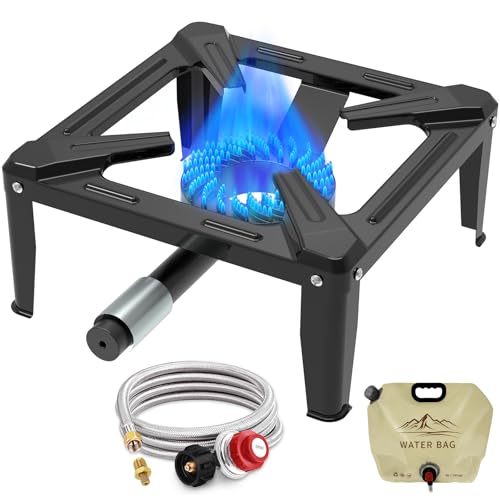
BESTFIRE Portable Single Burner Cast Iron Propane Stove

Bestfire 13″ Single Propane Burner Stove 90,000 BTU

BESTFIRE 200,000 BTU Heavy Duty Propane Burner
Bestfire High Pressure Propane Burner 26,000 BTU
BESTFIRE Single Burner Propane Gas Stove 13,000 BTU

BESTFIRE Propane Burner 100,000 BTU with Heat Shield

Bestfire 260,000 BTU Outdoor Propane Gas Stove
A Deeper Look At The Lineup
A cast iron frame and broad legs define the first pick in this lineup, and the design choice shows up where it counts: stability under a heavy load. The build is aimed at cookware that weighs as much as a full seafood boil pot, which is exactly the scenario this burner keeps appearing in. Compared with the slimmer wok specialty unit that follows, this one leans into brute support rather than pure stir-fry geometry.
The included regulator hose keeps setup close to a one-tank-and-go job, which matters on tailgate mornings when nobody wants to dig through a parts bin. It pairs nicely with round-bottom woks and stockpot diameters common to crawfish boils. For shoppers who already own a tank, the outlay stays modest and the learning curve stays shallow.
Features That Help
- Wide stance supports heavy pots without the wobble common to lighter burners
- Cast iron construction holds up to repeated high-heat sessions
- Comes ready to connect to a standard propane tank out of the box
- Frame geometry accepts both flat-bottom pots and rounded woks
Worth Noting
- The raw cast iron finish needs a light oil rub after washes to discourage surface rust over time
- No flame control knob on the unit itself, so fine-tuning happens at the tank
Who It Suits Best
Backyard hosts running crawfish boils or wok nights on a deck, where weight and stability matter more than dialed flame control.
Look Elsewhere When
Home brewers wanting precise PSI adjustment should reach for the BESTFIRE 200,000 BTU Heavy Duty Propane Burner instead, which ships with a built-in regulator for finer tuning.
The 13-inch head on this unit is the giveaway: it exists for the rounded-bottom wok, not the flat-bottom skillet. A built-in burner rack cradles the curve, and that geometry changes how heat moves up the wok wall. Where the cast iron workhorse in spot one supports any shape, this one is opinionated about cookware, and that is the point.
Output sits at a useful middle ground, plenty of fire for a smoking-hot stir fry without burning through a tank in a hurry. The CE-certified regulator and four-foot line come in the box, so the install job is mostly a matter of attaching a tank. For cooks who already rotate between flat pans and rounded woks, this model earns its place by doing one job especially well.
The Case For It
- Curved rack gives rounded woks a stable, centered flame
- 90,000 BTU output handles classic restaurant-style wok heat
- Included regulator and hose cut the setup down to a single connection
- Cast iron body absorbs and radiates heat evenly across the burner ring
Trade Offs
- Rounded wok focus means flat-bottom skillets sit higher than ideal, costing some efficiency
- Footprint and weight make it less convenient for tailgate transport than lighter options further down the list
Made For
Home stir-fry enthusiasts who want authentic wok heat and already cook with traditional rounded pans on a regular basis.
Swap It Out When
Outdoor cooks juggling a mix of stockpot, skillet, and turkey fryer work should look at the BESTFIRE Propane Burner 100,000 BTU with Heat Shield, which leans toward versatility over wok specialization.
Where earlier picks stay in the medium-output lane, this unit pushes past it. The adjustable regulator runs from zero to twenty PSI (pounds per square inch, a measure of gas line pressure), so flame control spans a low simmer to a fierce blue blaze in a single twist. That kind of range tends to matter most when the cooking changes mid-evening, from a long mash boil down to a controlled finish.
The target shopper is the home brewer or turkey-fry crowd, where a kettle that needs to hold a rolling boil for an hour is the usual test. Output also handles large seafood pots without forcing the burner to redline. It is the kind of tool that earns its keep by being able to drop down low when the cook asks it to, not just roar when the gas is wide open.
Everyday Advantages
- PSI-rated regulator lets flame size match the cooking phase
- 200,000 BTU ceiling covers nearly every large-pot scenario
- Heavy-duty hose stands up to long outdoor sessions
- Cast iron head spreads heat across the full bottom of a large pot
Honest Caveats
- Higher output burns through standard 20-pound tanks faster than smaller burners in this list
- Learning the regulator range takes a few sessions to dial in confidently
Key Specs
Right Fit For
Home brewers running full-boil mashes and hosts who want one burner that handles a turkey fryer, a crawfish pot, or a kettle with equal confidence.
Another Choice May Suit
Cooks who mostly work with smaller pans and want lower fuel draw should consider the Bestfire High Pressure Propane Burner at 26,000 BTU for a more measured pace.
Stepping down from the heavy-duty tier, this burner keeps things modest in the best possible sense. Output at 26,000 BTU is enough for a campsite kettle, a kettle of corn, or a small fry job, without burning fuel at the rate of the 200,000 BTU model. The included regulator and roughly four-foot hose keep the install job to a single hookup.
It is the kind of burner that makes sense for a tailgate that mostly runs on skillet work, or a car-camping setup that does not need to feed a small army. Where the bigger BESTFIRE units earn their place with sheer output, this one earns its place by being easy to live with. Fuel cost over a season tends to stay manageable, and the lighter build is friendlier to pack.
What Stands Out
- 26,000 BTU output suits smaller pots without overworking the burner
- Adjustable regulator offers practical flame tuning in a compact package
- Cast iron head holds heat for steady cooking over a single tank
- Lighter total weight simplifies transport to campsites and parking lots
Points To Keep In Mind
- Output tops out below what a serious seafood boil demands, so big-batch cooks will feel limited
- Hose length is shorter than the longer-line models further down the lineup
Best Suited To
Weekend campers and casual tailgaters cooking for small groups, where portability and fuel efficiency matter more than maximum heat.
Consider Something Else When
Anyone running a crawfish boil for twenty-plus people will want to step up to the Bestfire 260,000 BTU Outdoor Propane Gas Stove for the headroom it provides.
At 13,000 BTU, this is the gentlest entry in the lineup, and the design language reflects that. A red knob mounted to a steel-braided hose gives cooks a comfortable distance from the burner when adjusting flame, which is the kind of detail that helps newcomers build confidence. The cast iron head has a high-temperature-resistant coating, and the frame is built for outdoor use without the weight of larger units.
For someone getting started with outdoor cooking, the burners earlier in the list can feel intimidating. This one trades raw output for a friendlier interface. Cooks planning pancakes on a cast iron griddle, a kettle of soup, or a small pot of pasta will find the heat range easy to manage. It is the burner that says, start here, learn the feel of outdoor flame, and move up later.
Real Benefits
- Adjustable regulator dial sits on the hose, away from the burner
- Steel-braided hose resists kinks during setup and teardown
- Cast iron head with heat-resistant finish holds up to repeated sessions
- Output level is approachable for first-time outdoor cooks
Less Ideal Details
- 13,000 BTU ceiling rules out any serious wok or boil work
- Single-burner setup means no headroom for larger cookware
Feature Snapshot
Who Should Grab It
First-time outdoor cooks who want a manageable, well-protected burner for simple meals before stepping up to the high-output workhorses in this category.
A Better Fit Elsewhere
Anyone already planning crawfish boils or turkey frying should look at the BESTFIRE Propane Burner 100,000 BTU with Heat Shield, which carries the output a real cookout demands.
Heat management is the design center of this burner, and the upgraded shield is the visible proof. A heightened front shield contains the fire and protects the hose connection from flame contact, which is a real concern over a long boil when the hose sits close to the burner. The bottom shield adds another layer between the burner and the surface beneath it.
Output at 100,000 BTU puts it in the middle of this lineup, well above the everyday 26,000 BTU unit and well below the 260,000 BTU flagship. That middle ground is where most outdoor cooking actually lives, large enough for a turkey fryer or a small seafood pot, gentle enough to keep the propane tank from emptying mid-session. The roughly four-foot adjustable hose rounds out the package.
What Works In Its Favor
- Extended front heat shield reduces flame spillover near the hose
- Bottom shield protects surfaces under the burner from heat damage
- Mid-tier 100,000 BTU output suits the most common outdoor cooking tasks
- Cast iron body keeps heat steady across long cookouts
Practical Considerations
- Heat shields add to the footprint, so storage in a small garage takes some planning
- Shield surface runs hot during use, so placement near foot traffic deserves attention
Built With In Mind
Outdoor cooks running hour-long boils and turkey fries who want a burner that actively manages heat exposure to the hose and surrounding surfaces.
Reach For A Different Pick When
Cooks who mostly want maximum flame output for big batches should consider the Bestfire 260,000 BTU Outdoor Propane Gas Stove, which trades shield design for top-end power.
The 260,000 BTU ceiling defines this unit, and it is the kind of output reserved for serious volume cooking. The 0-20 PSI adjustable regulator sits alongside a steel-braided hose, and that combination gives the cook the same fine flame tuning found on the 200,000 BTU model reviewed earlier. The cast iron burner head sits in a high-temperature powder-coated steel frame, so the body holds up under sustained high-output work.
For shoppers running turkey fryers for a holiday crowd, large-batch crawfish boils, or home brewing kettles that need a hard rolling boil, the extra headroom over the 200,000 BTU model matters. Tanks empty faster at this output, so plumbing in a larger tank or a spare is worth considering. For cooks who know they need the ceiling, that trade is easy to accept.
Where It Helps
- 260,000 BTU output covers the largest outdoor pots without slowing down
- Steel-braided hose tolerates the heat exposure of long sessions
- Powder-coated steel frame resists corrosion across many seasons
- Same 0-20 PSI regulator range as the 200,000 BTU sibling for consistent tuning
Some Limits Worth Weighing
- Fuel draw is significant, so a backup tank or larger tank is a smart add-on
- Frame weight makes it a stationary setup rather than a tailgate option
At A Glance
Whose Shelf It Belongs On
Outdoor cooks running turkey fryers, large seafood boils, or home brewing setups who need the highest output available and plan to keep the burner in a fixed outdoor spot.
Where Another Pick Suits Better
For more portable use cases, the BESTFIRE Portable Single Burner Cast Iron Propane Stove offers similar cookware support in a friendlier package for tailgate transport.
What To Weigh Before Choosing A Propane Burner
Output matters, but it is not the whole story. The first question to settle is what cookware will sit on the burner, because a rounded wok and a flat stockpot behave very differently over the same flame. Rounded woks want a burner rack that cradles the curve, while flat-bottomed stockpots benefit from a broader ring that spreads heat evenly across the base.
Tank and hose setup quietly shapes ownership. Most units ship with a regulator and a roughly four-foot hose, which is plenty for a single-tank setup. Cooks planning long boils should think about whether to add a larger propane tank or keep a spare ready, especially on higher-output units where fuel draws climb fast. The PSI range on the regulator also influences how cleanly the flame tunes across the cooking range, and a 0-20 PSI adjustable regulator gives noticeably more room to work than a fixed-output valve.
Materials and finish tell the long-term tale. Cast iron burner heads hold heat well and survive repeated high-temperature sessions, but raw cast iron wants a light rub of oil after washes to stay rust-free. Powder-coated steel frames around the burner add weather resistance, and steel-braided hoses resist kinking during setup and teardown. Heat shields, especially the elevated front shields on safety-focused models, extend hose life during long sessions by keeping flame away from the connection.
Output Tiers And Who They Fit
Burners under 30,000 BTU suit smaller pans, simple meals, and cooks who want lower fuel draw. The middle tier, around 90,000 to 100,000 BTU, covers most outdoor cooking scenarios from wok work to moderate seafood boils. Above 200,000 BTU lives the home brewing and large-batch territory, where a rolling boil across a ten-gallon pot is the real test. Matching output to cookware size keeps fuel use honest and flame control responsive.
Footprint And Portability
Tailgate setups favor lighter, more compact units that ride easily in a trunk. Stationary backyard rigs benefit from heavier frames with wider legs and built-in heat shields. Storage space matters too, since a folded burner with a four-foot hose still takes up real shelf room, and the highest-output units tend to live outdoors rather than in a closet.
Key Considerations Across These Picks
Where Shoppers Go Wrong
The most common slip is choosing a burner on BTU alone, then discovering that the frame cannot safely hold the cookware that BTU was meant to heat. Output and pot support need to match, otherwise the burner either underuses its potential or runs in an unsafe configuration. A second trap is skipping the regulator check. Fixed-output valves feel simpler, but adjustable regulators earn their keep the first time a recipe calls for a long, gentle finish.
The Upgrade Payoff
Higher-output models cost more because they add PSI-rated regulators, steel-braided hoses, and cast iron frames built for stationary use. The case for spending up is clearest when cooking regularly scales beyond a single skillet meal, large pots, long boils, or brewing setups push a basic burner past its comfort zone. The trade-off is fuel draw and storage footprint, so the upgrade makes sense for committed outdoor cooks more than occasional users.
Final Verdict
The right burner comes down to scale, cookware, and how often the cookout happens. For wok nights and tailgate boils, the rounded-rack unit earns its place. For home brewing and turkey frying, the adjustable 200,000 BTU and 260,000 BTU models give the headroom that those jobs demand. Smaller meals and first-timers get a friendly start with the gentler 13,000 and 26,000 BTU options. Match the burner to the pot, and the rest of the cooking tends to take care of itself.