
Steep, uneven ground turns a routine mow into a workout. Anyone managing a hillside lawn, a sloping acre, or rough terrain needs equipment that holds traction, resists tip-overs, and won’t quit halfway up the grade. The seven machines below cover a wide spectrum, from quiet manual reel push mowers to a full gas riding mower with a 42-inch deck. Walk-behind options work well on small patches and terraces, while the riding tractor handles multi-acre yards where slope and size both matter. Each pick earns its place for a specific yard, and the right call depends on slope angle, lawn size, and how much physical effort feels reasonable on a Saturday morning.
The Choices Worth Comparing
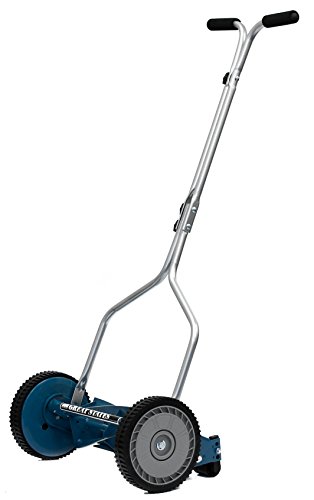
Great States 204-14 Hand Reel Push Mower

PowerSmart 21-Inch Gas Push Lawn Mower

PowerSmart EasyGlide 3-in-1 Push Gas Mower
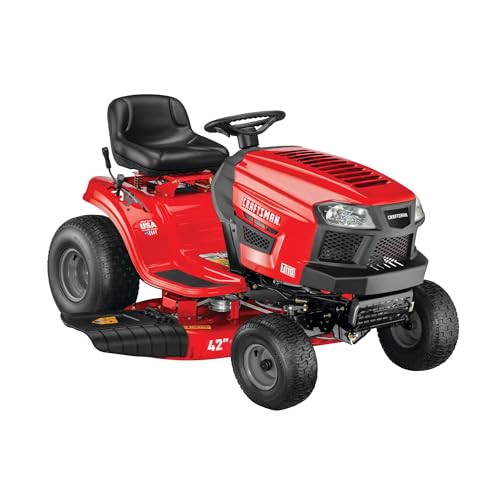
CRAFTSMAN 42-Inch Gas Riding Lawn Mower
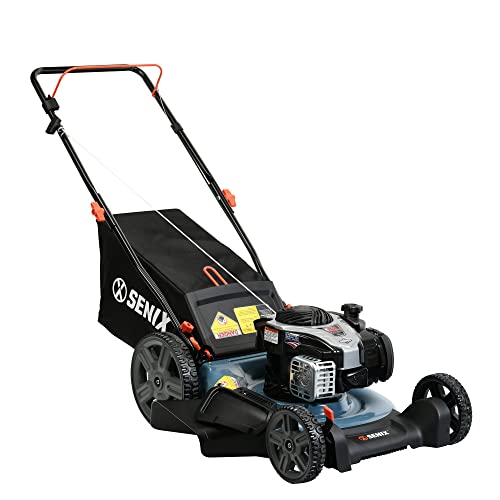
SENIX LSPG-M7 21-Inch Gas Push Lawn Mower
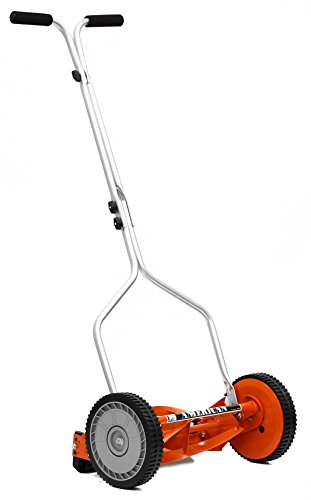
American Lawn Mower 1204-14 Push Reel Mower
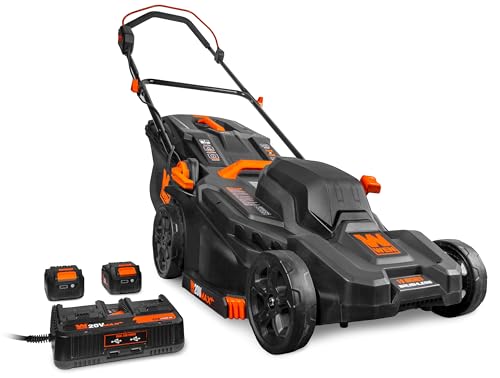
WEN 20V Max 19-Inch Cordless Lawn Mower
Taking A Closer Look At The Options
The Great States 204-14 is a manual reel mower, which means it relies on push power and a scissor-style cutting reel rather than a motor. That sounds old-fashioned, yet on small, sloped patches of lawn it’s quietly effective. There’s no engine noise, no fuel, and no cord to drag uphill, which is genuinely liberating on a tight terrace where every extra pound matters.
Because it cuts with a reel of curved blades against a fixed bedknife (the stationary lower blade that snips against the spinning reel), grass is sliced rather than torn, which tends to leave a cleaner cut on cool-season turf. The trade-off shows up on tall or weedy grass, where a reel can flatten the blades instead of cutting them.
Where It Excels
- Silent operation means early-morning mowing won’t wake the household or neighbors
- No gas, oil, or battery means storage is simple and annual maintenance is almost nonexistent
- Light enough to push up modest inclines without overheating or stalling
- Clean scissor-cut action is gentler on turf than rotary blades, which can help grass stay greener in dry spells
Trade Offs
- Grass taller than the mower’s effective cutting height can bunch up against the reel, demanding a second pass
- Pure push power, so a large sloped lawn becomes genuinely tiring within twenty minutes
Who It Suits Best
Owners with a small, well-kept lawn on gentle-to-moderate slopes who want silent, zero-fuel mowing and don’t mind the workout.
Where Another Pick Suits Better
Anyone mowing more than a quarter acre, or anyone with thick, fast-growing turf, will get more done with the PowerSmart 21-Inch Gas Push Lawn Mower covered below.
Where the Great States reel mower demands elbow grease, the PowerSmart 21-inch gas push mower hands the work to a 144cc OHV (overhead valve) engine. OHV design positions the valves above the combustion chamber, a layout that typically runs cooler and burns cleaner than older side-valve engines. That extra muscle makes a real difference on a sloped yard, where tall grass can stall a weaker motor.
The 21-inch steel deck (the mower’s outer shell that houses the blade) covers ground faster than the 14-inch reel, so a mid-size slope gets finished in noticeably fewer passes. Auto-choke simplifies starting, which matters on a cold morning when nobody wants to fight a pull cord. For anyone stepping up from a manual reel, this is the natural middle ground.
Everyday Perks
- 144cc engine delivers enough torque to push through thick patches on inclines without bogging down
- Six cutting heights let users dial in the right length for seasonal growth or uneven slope conditions
- Side-discharge and mulching modes, where clippings are chopped finely and dropped back into the lawn as natural fertilizer, give flexibility for different mowing strategies
- Auto-choke removes one of the most common frustrations with small gas engines
Worth Noting
- Gas power means routine oil checks, spark-plug swaps, and fuel stabilizer at season’s end
- Push-only design still requires real effort on steep grades; no rear-wheel drive assist
- Engine noise is louder than the WEN cordless option further down the list, which can matter in close-knit neighborhoods
At A Glance
Made For
Homeowners with quarter-acre to half-acre sloped yards who want a real engine under the hood without stepping into riding-mower territory.
Consider Something Else When
Tackling a full acre or more of slope calls for the CRAFTSMAN 42-Inch Gas Riding Lawn Mower reviewed below.
Sharing the same 144cc OHV engine family as Item 2, the PowerSmart EasyGlide layers in a third cutting mode: rear bagging. That single addition reshapes how a sloped yard gets mowed, because bagging keeps clippings off the lawn entirely, useful on a hillside where loose clippings can wash downhill during the next rain and clump in unwanted spots.
The stabilized body structure is the quiet selling point. Push mowers on uneven ground take a beating, and a stiffer chassis tends to hold its alignment season after season. Combined with the same 21-inch deck and auto-choke system as its sibling, this EasyGlide variant earns its place wherever lawn finish matters more than raw speed.
Useful Highlights
- 3-in-1 design (mulching, bagging, side-discharge) gives owners real flexibility as seasons and grass types change
- Stabilized frame resists flex on bumpy slopes, which helps the blade stay at a consistent height
- Auto-choke plus primer makes cold starts predictable, even after a long winter in storage
- 21-inch deck balances speed of coverage with maneuverability around landscape beds on hillside contours
Points To Keep In Mind
- Bagging adds a step to every mow and means emptying clippings regularly on thick spring grass
- Still a push mower, so long uphill traverses are physically demanding without self-propel
- Shares the same gas-engine maintenance schedule as other walk-behind options on this list
Feature Snapshot
Right Fit For
Anyone managing a slope who wants bagging for a tidy finish and mulching for routine cuts, all in one machine.
A Better Fit Elsewhere
On multi-acre properties the SENIX LSPG-M7 21-Inch Gas Push Lawn Mower covers similar walk-behind duties, but the CRAFTSMAN riding mower is the right call when slope plus acreage outpaces any push mower.
This is the only true riding mower on the list, and it changes the conversation entirely. A 17.5 HP Briggs and Stratton single-cylinder engine drives a 42-inch stamped steel deck, the kind of width that finishes a multi-acre hillside in a fraction of the time a walk-behind would take. The 7-speed transmission lets operators dial back ground speed on steeper climbs, which is where traction matters most.
For most homeowners with a full acre or more of sloped ground, a riding mower like this one is the honest answer to a problem walk-behinds cannot solve efficiently. The seat, steering wheel, and foot pedals turn a sweaty uphill slog into a routine chore. Owners should still respect the slope ratings in the operator’s manual, but for moderate-to-steep grades on open ground, the deck width and horsepower make short work of tall grass.
Where It Helps
- 42-inch deck cuts a wide swath, finishing large sloped lawns in fewer passes than any walk-behind
- 7-speed manual transmission lets operators match pace to slope, helping the rear wheels hold traction
- Single-cylinder Briggs and Stratton engine is a familiar platform with widely available service parts
- Riding position reduces fatigue considerably compared with pushing a mower up a long hill
Honest Caveats
- Single-cylinder engines tend to produce more vibration than twin-cylinder equivalents on long jobs
- Riding mowers require careful slope management; very steep or uneven terrain can still be unsafe
- Storage footprint is substantial, and routine maintenance is more involved than a walk-behind
Quick Facts
Best Suited To
Property owners with one to several acres of sloped terrain who want to finish mowing in well under an hour without exhausting themselves.
Skip It When
Anyone working with a small yard, narrow gates, or tight storage should stay with the PowerSmart EasyGlide 3-in-1 Push Gas Mower, which fits through standard walk gates and parks in a corner of the garage.
The SENIX LSPG-M7 steps in with a Briggs and Stratton 140cc engine, just a touch smaller than the PowerSmart 144cc options above, but backed by a brand known for long service life and low vibration. On a sloped yard, vibration matters more than people expect: less buzzing through the arms translates into better control and less grip fatigue on long uphill passes.
The 3-in-1 cutting system pairs a 16-gallon grass bag with mulching and side-discharge, and the 6-position dual-lever height adjustment lets users raise the deck for taller spring grass or drop it low for a manicured summer cut. Prime N’ Pull starting keeps the ignition process predictable for owners who don’t want to fiddle with a choke knob.
The Helpful Details
- Briggs and Stratton engine platform is widely serviced, with parts available at most outdoor power equipment shops
- Large 16-gallon grass bag reduces emptying trips, useful on a sloped yard where stopping mid-pass is inconvenient
- Dual-lever height adjustment lets each wheel be set independently, which helps on uneven terrain
- 21-inch cutting width balances coverage with control around landscaping features
Possible Compromises
- Push-only drive means the operator supplies all uphill propulsion
- Gas engine noise and emissions rule it out for noise-restricted communities
- Maintenance is similar to other gas walk-behinds: oil, air filter, spark plug
Feature Card
Who Will Love This
Owners who already trust the Briggs and Stratton name and want a versatile walk-behind that handles bagging, mulching, and discharge on a sloped yard.
Look Elsewhere When
Anyone seeking a quiet, emission-free experience should look at the WEN 20V Max 19-Inch Cordless Lawn Mower instead.
At roughly 19 pounds with a 14-inch cutting width and four-blade reel, the American Lawn Mower 1204-14 is the lightest push reel on this list by a comfortable margin. Polymer wheels, a tough plastic compound that shrugs off rust and stays light, roll easily over uneven ground, and the adjustable blade height from 0.5 to 1.75 inches covers most cool-season turf situations.
The narrower profile and lighter weight make sense on a slope because gravity is working against the operator with every step. A heavy mower becomes a slog uphill; a light one just rolls. Owners commonly find this reel mower surprisingly nimble on hillside terraces where a gas walk-behind would feel oversized.
Practical Advantages
- At 19 pounds, it’s light enough for most adults to push uphill without strain
- Four-blade reel cuts a clean scissor-style edge that rotary mowers can struggle to match
- Polymer wheels resist corrosion, helpful in damp climates or wet-season mowing
- Adjustable cutting height from 0.5 to 1.75 inches covers the most common turf lengths
Where It Is Less Suited
- Cuts a 14-inch path, which is narrow on larger yards and means more passes per mow
- Reel design performs poorly on grass above 4 inches tall, requiring more frequent mowing
Perfect Match For
Anyone with a small lawn or hillside strip who values simplicity, silence, and low effort over speed.
Another Choice May Suit
For a wider cut with the same zero-fuel approach, the Great States 204-14 reel mower above is a logical step up.
The WEN 20V Max brings cordless convenience to the slope, with a brushless motor (which uses electronic controllers instead of carbon brushes, meaning less friction and longer motor life) and a 19-inch deck that lands between the 14-inch reels and the 21-inch gas push mowers. Two 5Ah batteries and a dual-port charger come included, so charging downtime stays short between mowing sessions.
On a hillside, the appeal is real: no fuel spills on a slope, no engine oil to top off, and a quieter experience than any gas option. The collapsible handle and lighter build also make storage easier in a garage that already holds a snowblower and patio gear.
Well-Handled Touches
- Brushless motor delivers longer life and quieter operation than brushed alternatives
- Two batteries plus a dual-port charger reduce downtime on multi-pass mowing sessions
- No fuel or oil means zero engine maintenance, which simplifies ownership considerably
- Collapsible handle makes storage in tight garage spaces much easier
Factors To Consider
- Battery run time on a thick, uphill lawn may force a mid-mow recharge on larger properties
- Push-only drive means the operator still supplies uphill effort
- 19-inch deck is wider than reels but narrower than 21-inch gas mowers, so mid-size yards take more passes
Built With In Mind
Suburban homeowners with small to mid-size sloped lawns who want a quieter, cleaner mowing experience without sacrificing cutting width.
Reach For A Different Pick When
Anyone managing a full acre or steeper terrain for hours at a stretch will get more reliable power from the SENIX LSPG-M7 gas push mower.
What To Weigh Before Choosing A Mower For Hilly Ground
Slope angle and yard size are the two filters that matter most. Anything under 15 degrees and under a quarter acre is fair game for a manual reel, but steeper or larger properties quickly outpace what arms alone can deliver. Engine power, deck width, and weight all shift with the size of the job, and the right machine on a gentle terrace is rarely the right machine on a steep acre.
Self-propelled drive (where the mower’s rear wheels pull the unit forward under engine power) and rear-wheel drive are the two features that change a sloped yard from a chore into a manageable task. Push mowers demand real effort uphill, while self-propelled or riding models let the machine do much of the work. For very steep grades, look for low center of gravity, wide wheel bases, and clear manufacturer guidance on maximum slope ratings; those specs protect both the operator and the equipment.
Cutting modes matter more than they seem. Mulching returns fine clippings to the lawn as a natural nutrient layer, bagging keeps the yard tidy and stops clippings from washing downhill in heavy rain, and side-discharge handles thick growth quickly when finish isn’t the priority. Walk-behind mowers with 3-in-1 versatility adapt as seasons and grass types change, which is why several picks on this list offer that flexibility.
Finally, storage and maintenance shape long-term satisfaction. Gas engines need oil changes, spark-plug swaps, and winter fuel care, while cordless electric mowers trade engine upkeep for battery management. Riding mowers demand the most storage space and the most involved service schedule, but they also cut mowing time more than any other category. Match the maintenance commitment to the time realistically available across a season.
Key Considerations Across These Picks
Pitfalls Shoppers Hit
A common mistake is matching the mower to lawn size while ignoring slope. A wide-deck riding mower that handles a flat two-acre yard beautifully can struggle or even become unsafe on a sharp grade, while a light push reel that excels on a small terrace will exhaust the operator on anything larger. Buyers also underestimate how often grass gets wet on hills, which affects both traction and cut quality. Skipping the manual’s slope rating and tire-pressure guidance is another shortcut that ends badly, especially on riding equipment. Look at the specific yard, not just the abstract acreage, before committing.
Where The Extra Money Goes
The price spread across this list reflects three real differences: engine power, drive type, and deck construction. A riding mower with a 17.5 HP engine costs more because it brings an actual drivetrain, a transmission, and a fabricated deck built to absorb years of vibration. Cordless models sit in the middle because battery and motor technology carry their own premium, even without an engine. Reel mowers sit at the entry level because the cutting mechanism is simple and durable, though the operator absorbs the labor savings through physical effort. For yards that demand a riding mower, the upgrade typically pays off in time saved and reduced physical strain; for tight terraces, a simpler machine does the job just as well.
Bottom Line
A sloped yard doesn’t have to mean a punishing Saturday. Reel mowers handle small terraces with quiet efficiency, gas push mowers cover mid-size slopes with real muscle, the WEN cordless option bridges the gap for cleaner operation, and the CRAFTSMAN riding mower takes over once acreage and slope both grow serious. Match the machine to the actual yard, and the work stops feeling like a workout.