
Rough terrain punishes ordinary mowers. Slopes, ruts, soft ground, and tall grass turn a Saturday chore into an all-afternoon wrestling match, which is why the right equipment matters more than raw horsepower. This list covers both complete remote-control mowers built for steep, uneven yards and replacement tire upgrades that transform an existing tractor into a steadier climber. Most shoppers here are dealing with acreage, slopes over 20 degrees, or soil that shifts under wet conditions, so the picks below lean toward traction, slope handling, and rugged construction over lawn-stripe aesthetics.
An Overview Of The Picks

HALBERD 15×6.00-6 Tractor Tires 4PR (Set of 2)

Mowrator S1 4WD 18Ah Remote Control Lawn Mower (37° Slope)

PetMigo 20×8-8 Lawn Mower Tires with Rim (2 Pcs)
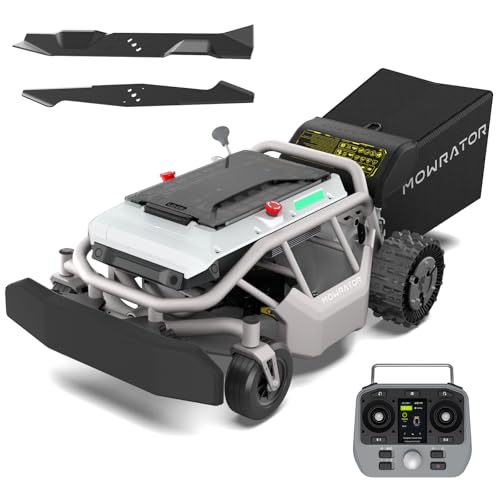
Mowrator S1 2WD 12Ah Remote Control Lawn Mower (24° Slope)
More On The Choices That Made The List
Front tires carry the steering on most garden tractors, and when the turf turns soft or the slope kicks up, the OEM (original equipment manufacturer) rubber tends to spin before it grips. HALBERD’s 15×6.00-6 pair steps in as a direct-fit replacement built for the rough stuff, with a 4-ply rating (the ply rating is a strength indicator: higher numbers mean thicker, tougher sidewalls) that shrugs off the bruises of root-laced ground.
The herringbone tread pattern (a V-shaped lug layout that grips when moving forward or backward) deserves a closer look. Tapered shoulder bars keep the lugs from digging into tender lawn areas, while the muted depth helps the tires stay useful on finished grass as well as in the rougher patches. For shoppers with aging front wheels on a smaller lawn tractor, this set tends to be a clean swap once the existing rims are still in good shape.
What Stands Out
- Herringbone lug design balances traction on slopes with care for finished turf.
- 4-ply construction resists punctures from sticks, stones, and root stubs.
- Tubeless format simplifies roadside repairs and removes one maintenance chore.
- Speed rating A3 suits typical garden-tractor operating paces without complaint.
- Max load of 565 lbs per tire covers most residential rider and garden-tractor applications.
Things To Consider
- Wheels are not included, so the existing rims must be serviceable.
- 6-inch rim requirement limits compatibility to smaller-format garden tractors.
- Mounting may call for a tire shop, depending on the home toolkit.
Who It Suits Best
Owners of compact garden tractors with worn front tires who manage modest slopes and mixed turf.
Consider Something Else When
Riders needing a complete rear-wheel refresh should look at the PetMigo 20×8-8 set covered later in this list.
Where a standard ride-on mower would white-knuckle its way down a 37-degree grade, the Mowrator S1 4WD sends power to all four wheels and lets the operator step aside. For homeowners who treat mowing like a workout they would rather skip, the remote-control format reframes the chore as a guided walk around the yard instead of a ride along the contour line.
The 21-inch cutting deck covers meaningful ground on each pass, while the 18Ah battery pack (amp-hours measure how long a battery can deliver power: higher numbers mean longer runtime between charges) gives enough runtime for most suburban-to-rural lots. Seasonal versatility adds real value: an optional tow hitch in spring, a mulching blade for fall leaves, and a snow plow with chains for winter storms, turning one machine into a year-round groundskeeper.
Why It Works Well
- Four-wheel-drive layout handles advertised slopes up to 37 degrees without spinning out.
- Remote operation removes the operator from uneven ground entirely, a meaningful safety upgrade.
- 21-inch deck strikes a balance between maneuverability around trees and fast coverage on open stretches.
- All-season accessory ecosystem extends usefulness well beyond summer mowing.
Honest Caveats
- Full-year flexibility depends on buying optional attachments separately.
- Remote-control workflow has a learning curve compared with a traditional steering wheel.
Feature Snapshot
Made For
Hillside property owners who want maximum slope capability and remote-control safety on rough ground.
Look Elsewhere When
Shoppers on gentler terrain with a tighter budget will find the Mowrator S1 2WD covered in pick four a more comfortable fit.
Big rear tires do the heavy lifting on a garden tractor, and PetMigo’s 20×8-8 pair ships with rims already mounted, which removes the most annoying part of a tire swap. For owners of larger riders with tired rear wheels, this is closer to a bolt-on upgrade than a full garage project, especially compared with the HALBERD set in pick one that requires reusing existing rims.
The pneumatic, 4-ply tubeless build (a pneumatic tire is filled with air rather than solid rubber, which cushions rough ground and protects the rim) carries roughly 965 lbs per tire and uses a 3/4-inch bore with a 3/16-inch keyway (the keyway is a small slot cut into the hub hole that locks the wheel to the axle so it cannot spin freely). Shoppers should confirm axle dimensions, hub length, and offset before ordering, since a mismatch turns a 30-minute swap into a return trip.
The Good Stuff
- Pre-mounted rims cut installation time and skip a separate tire-shop visit.
- 4-ply pneumatic construction cushions ruts and absorbs impact from hidden rocks.
- Load rating near 965 lbs per tire handles heavier riders and loaded carts.
Worth Noting
- Requires careful measuring of bore, keyway, hub length, and offset before purchase.
- Tubeless design still benefits from a valve and pressure check at the start of each season.
Perfect Match For
Owners of larger garden tractors who need rear-tire replacement and want rims included in the box.
Swap It Out When
Compact tractors needing a smaller 15-inch front format suit the HALBERD 15×6.00-6 pair covered in pick one.
The 2WD sibling of the steeper-climbing 4WD model, this Mowrator S1 targets yards that have bumps, mild slopes, and the occasional obstacle, without demanding the heavier price tag of full four-wheel drive. The 24-degree slope rating handles real hills while staying within a manageable budget for most homeowners.
The 21-inch deck and 12Ah battery pack keep the machine lighter than the 4WD version, which helps on soft turf where a heavier mower sinks and scars the lawn. A mulching blade ships in the box for leaf season, and a trailer hitch kit can be added for spring hauling chores. For shoppers who like the remote-control concept but do not actually need 37-degree capability, this is the version most yards realistically call for.
Standout Benefits
- Lighter build reduces lawn compaction and tire sinkage on soft ground.
- 24-degree slope rating covers the majority of residential hillside terrain.
- Remote operation keeps the operator off uneven spots and on stable footing.
- Three-season accessory lineup extends usefulness across spring, summer, and fall.
Points To Keep In Mind
- 2WD layout will struggle on slopes the 4WD model handles confidently.
- Smaller battery pack may require mid-session charging on larger lots.
Right Fit For
Homeowners with rolling, obstacle-filled yards who want remote-control mowing without the 4WD price step.
Reach For A Different Pick When
Tackling true 37-degree grades points back to the Mowrator S1 4WD covered in pick two.
What Matters Most Before Choosing Riding Mowers For Rough Terrain
Slope Capability and Drive Configuration
Rough terrain begins where flat lawns end, and slope rating is the first filter. A 24-degree rating covers most residential hillsides, while anything over 30 degrees pushes into four-wheel-drive territory. Two-wheel-drive mowers work on gentler slopes and lighter terrain, but traction drops fast on wet grass. Four-wheel-drive layouts keep all four tires pulling, which is the difference between steady progress and a stuck machine halfway up a hill.
Tire Tread, Ply Rating, and Load Capacity
Ply rating (the number of fabric layers inside a tire) and tread pattern matter as much as engine size on rough ground. Herringbone and chevron-style treads bite in both directions, which helps on climbs and descents. Higher ply ratings resist punctures from hidden debris, and load capacity per tire should exceed the rider’s curb weight plus any towed load. Tubeless designs simplify repairs in the field, while pneumatic (air-filled) construction cushions impacts better than solid rubber.
Deck Size vs. Maneuverability
A wider deck covers more ground per pass but struggles in tight, obstacle-rich yards. A 21-inch deck is the common middle ground for remote-control mowers, large enough to be efficient and small enough to weave around trees and beds. Shoppers with wide-open acreage can step up; shoppers with narrow side yards should stay closer to 21 inches.
Battery Runtime and Seasonal Attachments
For electric and remote-control models, runtime comes down to amp-hours and terrain. Steep, thick grass drains packs faster than flat lawns. Seasonal attachments, including tow hitches, mulching blades, and snow plows, extend a single machine across the calendar year, which matters when storage space only allows one tool.
Where Shoppers Go Wrong and Where The Extra Money Goes
Hidden Buying Traps
The most common mistake is assuming any riding mower handles rough terrain. Many consumer-grade riders are rated for flat, finished lawns and lose traction the moment a slope exceeds 15 degrees. Another trap is buying replacement tires without measuring bore, keyway, hub length, and offset. A mismatch forces a return, and a tire shop visit still costs time. Finally, shoppers sometimes pick a 4WD model for a yard that never breaks 20 degrees, paying for capability they will not use.
The Upgrade Payoff
Stepping up to a 4WD remote mower buys steeper-slope capability, year-round versatility through attachments, and the safety of stepping off the machine on uneven ground. Higher-tier picks also bring larger batteries, which means fewer mid-session charges on larger lots. For yards with real elevation change, wet ground, or multiple seasons of work, that upgrade tends to earn its keep. For flat suburban lawns, the entry-level tier handles the job without overpaying.
Closing Remarks
The right pick depends on whether the goal is replacing tired tires on an existing tractor or stepping up to a remote-control machine that handles the rough stuff from a safer distance. Front-wheel traction gets a boost from the HALBERD set, rear-tire refreshes land on the PetMigo pair, and full-machine upgrades split between the steep-slope Mowrator 4WD and the gentler 2WD sibling. Match the slope rating, drive layout, and tire format to the actual yard, and the rest of the decision tends to fall into place.