
A dead battery on the first warm Saturday of spring turns a quick mow into a tow truck call. Riders logging weekly hours through summer put real stress on a small box most owners never think about until it quits, and cold snaps hit lead-acid chemistry the hardest. The right replacement turns a key into an instant start instead of a guessing game, and the wrong fit costs a season. This shortlist focuses on U1 group batteries, the form factor most residential riders actually use, and weighs chemistry, cranking amps, terminal layout, and real fitment against the brands sitting in suburban garages.
How The Shortlist Stacks Up
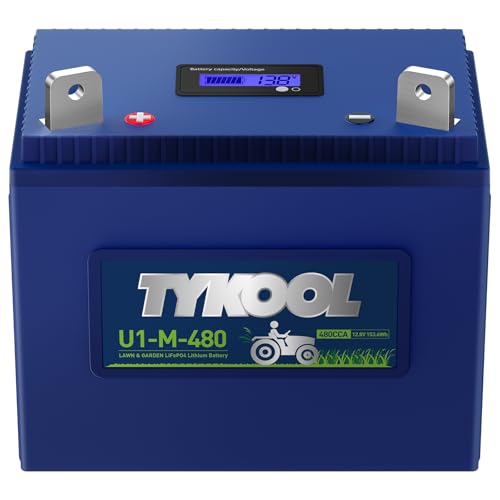
TYKOOL 480CCA Group U1 Lithium LiFePO4 Lawn Mower Battery

Mighty Max Battery 12V 35AH SLA Battery 2 Pack

MARXON U1 Riding Lawn Mower Battery 12V 330CCA

UPLUS U1 Riding Lawn Mower Battery 12V 330CCA

SDULIBITIY Lithium YTX30L-BS 12.8V 12AH Battery
The Strengths Of Each Pick
Lithium iron phosphate (LiFePO4) chemistry is the headline here, and the 480 CCA rating sets this battery apart from the lead-acid competition on the rest of the list. CCA, or cold cranking amps, measures how much current a battery can deliver at 0°F for 30 seconds while staying above a minimum voltage. The higher that number, the harder the battery can push a starter motor on a cold morning when oil thickens and battery chemistry slows down.
For owners in northern zones where the rider sits outside all winter, that extra cranking headroom can be the difference between turning a key on the first try and dragging out a charger. TYKOOL also lists broad fitment across John Deere, Cub Cadet, Craftsman, and Troy-Bilt, which covers a large slice of residential garages.
Why It Works Well
- LiFePO4 chemistry resists voltage sag in cold weather, so the engine turns over faster on frosty mornings
- Lightweight construction makes lifting the battery in and out of the tray easier than wrestling a comparably sized lead-acid unit
- Long cycle life means fewer replacements over the life of the mower, which offsets the higher upfront spend
- Broad fitment list covers most popular residential tractor brands in a single SKU
- Stable voltage output keeps headlights and accessories running strong while the engine is off
Things To Consider
- Lithium pricing runs noticeably higher than the SLA and AGM options on this list
- Some older charging systems are not lithium-compatible, so a brief check on the mower’s voltage regulator is worth the ten minutes
- Replacement can be less forgiving if the battery is ever fully drained and left sitting
Key Product Details
Who Should Grab It
Riders in cold climates who want stronger cold-start performance and a longer service life between swaps will get the most from this chemistry upgrade.
Consider Something Else When
The Mighty Max Battery 12V 35AH SLA two-pack suits shoppers on a tighter budget who would rather stock two batteries than invest in one lithium unit.
The standout feature on this listing is the two-pack. Households running a rider and a backup generator, or shops maintaining a fleet, get a matched pair that can sit on the shelf ready to swap. SLA stands for sealed lead-acid, the same chemistry family used in most garden tractors for decades, and 35 amp-hours (Ah) gives plenty of capacity for typical residential mowing loads.
Compared to the TYKOOL lithium option at pick 1, this SLA pair trades lighter weight and longer cycle life for a friendlier price and proven chemistry that any older charging system will accept without complaint. The 7.76 x 5.12 x 7.01 inch footprint follows the U1 group standard, so it drops into common John Deere trays without spacer tricks.
The Helpful Details
- Two batteries in one listing means a ready spare sits in the garage when the next failure hits
- Sealed construction means no acid spills during transport or installation
- Higher 35Ah capacity than the typical 25-30Ah U1 unit, supporting accessories and longer accessory runtime
- UL certification on the listing adds a layer of verified manufacturing oversight
Points To Keep In Mind
- Heavier than the lithium picks, which matters when lifting in and out of a tight battery tray
- Listing ships the battery and terminal screws only, so any existing wiring harness needs to be reused
- Sealed lead-acid still loses capacity in deep cold, just not as dramatically as flooded cells
Built With In Mind
Multi-mower households and small property owners who want a backup on hand without paying for lithium will find solid utility in the two-pack format.
Look Elsewhere When
Single-mower owners with no spare battery habit would do better with the MARXON U1 12V 330CCA, which puts the budget into one well-fit unit rather than two.
MARXON’s pitch is the compatibility list. The brand targets a wider roster of equipment than the John Deere-focused picks elsewhere on this list, covering commercial names like Bob-Cat, Exmark, Ferris, and Gravely alongside the usual residential names. For owners of older or mixed-brand tractors whose original battery has been cross-referenced one too many times, that wider list removes the guesswork.
The 330 CCA rating is the standard U1 benchmark and is plenty for typical residential single-cylinder engines. Polarity is positive on the left and negative on the right when the terminals face you, which matches the most common U1 layout. The 7.68 x 4.92 x 6.14 inch footprint is also a touch shorter than the Mighty Max unit, helping it fit tighter battery trays found on some compact riders.
The Good Stuff
- Broad brand compatibility covers commercial and residential machines in one listing
- Sealed lead-acid chemistry is universally compatible with stock charging systems
- Compact footprint drops into tighter battery boxes that some riders have
Honest Caveats
- SLA weight is similar to other lead-acid options, so expect a heavier lift than the lithium picks
- Listing ships battery and screws only, so existing terminal hardware gets reused
- Lower 25Ah-class capacity than the Mighty Max unit, which matters for heavily accessory-loaded riders
Right Fit For
Owners of older or commercial-grade riders with tight trays will find the form factor and compatibility list click into place.
Skip It When
The UPLUS U1 12V 330CCA AGM suits homeowners who prefer a sealed AGM format with a longer listed service life over a slightly higher entry price.
AGM, short for absorbed glass mat, is the maintenance-free upgrade over traditional flooded lead-acid. The electrolyte sits in fiberglass mats instead of free liquid, which means no water to top off, no acid to spill, and a more vibration-tolerant package that suits a bouncing riding mower. UPLUS leans into that practical story with a 12V 330 CCA spec that matches the standard U1 benchmark used across most residential tractors.
The brand also lists fitment for John Deere, Cub Cadet, Husqvarna, Craftsman, Toro, Ariens, and Poulan Pro, which covers nearly every residential tractor brand sitting in suburban driveways. Compared to the MARXON SLA at pick 3, this AGM sibling trades a slightly lower Ah rating for the maintenance-free convenience and tighter terminal layout.
Real Benefits
- Sealed AGM format means no water checks and no acid spills during transport
- Wide residential fitment list covers the brands most homeowners already own
- Standard U1 footprint at 7.68 x 4.92 x 6.93 inches drops into stock battery trays
Trade Offs
- 25Ah capacity is on the lower end for the category, so accessory-heavy setups should size up
- AGM pricing typically runs a hair above basic SLA options
- Listed lifespan depends heavily on storage temperature and winter charge maintenance
Whose Shelf It Belongs On
Set-and-forget homeowners who want a sealed, no-maintenance replacement that just sits in the tray and works will appreciate this AGM format.
Another Choice May Suit
The SDULIBITIY Lithium YTX30L-BS suits shoppers running multiple vehicles from one battery who want a cross-compatible lithium option.
This listing breaks the U1 group convention entirely. The YTX30L-BS form factor started in motorcycles and ATVs, and SDULIBITIY pushes it as a cross-vehicle solution for ATVs, UTVs, jet skis, scooters, tractors, generators, and riding mowers. For a garage running multiple small-engine machines from one shelf, that versatility matters more than exact OEM fitment.
The 12.8V lithium chemistry and 850 CCA claim give it serious cranking headroom, while a built-in BMS, or battery management system, monitors for overcharge, overdischarge, short circuits, and overheating. The 6.61 x 5 x 6.96 inch footprint and 5.29-pound weight make it noticeably smaller and lighter than any lead-acid pick on this list.
Useful Touches
- Cross-vehicle compatibility means one battery can back up the rider, ATV, or jet ski over time
- 850 CCA claim gives the highest cold-cranking rating in this roundup for harsh climates
- Built-in BMS adds a layer of protection against common failure modes
- Lightweight 5.29-pound package makes swaps easier than lead-acid equivalents
Possible Compromises
- Lower 12Ah capacity is fine for starting duty but limits deep accessory draw
- YTX30L-BS form factor may require tray shimming or terminal adapter work to fit some U1-style boxes
- Charging system compatibility should be checked on older mowers
Best Suited To
Garages running several small-engine vehicles will appreciate one lithium battery that can rotate between machines as needed.
Swap It Out When
The TYKOOL 480CCA LiFePO4 is a better fit for owners who want a true U1 drop-in for a residential rider and do not need cross-vehicle versatility.
Picking The Right Battery For Your Mower
Group size comes first. Most residential riders use the U1 group, a roughly 7.5 x 5 x 7 inch box with terminals on top, so matching that footprint avoids spacer work and tray modifications. Cranking amps matter more in cold zones, where a 330 CCA baseline covers most needs and 480 CCA or higher gives extra insurance on frosty mornings.
Chemistry drives cost and lifespan. Sealed lead-acid is the familiar, affordable option with a service life that depends heavily on storage temperature and winter charge maintenance. AGM upgrades cut out water checks and resist vibration better, while LiFePO4 lithium stretches cycle life into the thousands of cycles and sheds meaningful weight, at a higher entry price.
Terminal polarity catches a lot of owners off guard. A positive-on-left layout is standard on most U1 batteries, but always check the existing terminals before swapping. Fitment lists vary by brand, so matching the brand roster against the mower’s make closes the loop on compatibility before the order arrives.
Key Considerations Across These Picks
Pitfalls Shoppers Hit
Skipping the group-size check is the most common slip. A battery that physically fits but has reversed polarity can fry a charging system on first start, and the warranty rarely covers that damage. Owners should also avoid storing a battery on concrete floors in unheated sheds through winter, since deep cold saps capacity faster than any spec sheet suggests.
Where The Extra Money Goes
The jump from a basic SLA to AGM or lithium pays back in three places. Maintenance disappears with sealed formats, so there is no topping off cells or cleaning corrosion. Cycle life stretches from a few hundred to several thousand deep cycles, pushing replacement intervals out by years. Weight drops sharply with lithium, which sounds small until lifting a battery out of a tight tray in August heat. For riders used weekly, those savings add up across a few seasons.