
Remote canister stoves are the quiet workhorses of backcountry cooking: a burner connected by a fuel line to a gas canister that sits separately on the ground. That separation lowers the center of gravity, keeps the canister off wet or cold surfaces, and lets the burner tuck beneath a windscreen or small pot stand. Cold-weather campers, winter backpackers, and anyone who cooks for two or more on the trail get the most out of them.
The Lineup, Simplified

CAMPINGMOON XD-2F Canister Top Stove (Silver)

Optimus Vega 4-Season Backpacking Stove

OPTIMUS Vega Gas Stove

SVNVIOZ 3800W Windproof Backpacking Stove
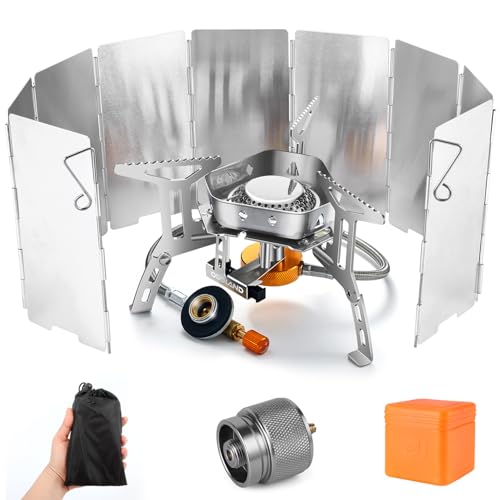
Odoland 3500W/6800W Windproof Camp Stove
A Closer Look At Each Pick
The CAMPINGMOON XD-2F fits the bill for backpackers who want canister-top simplicity without giving up pressure regulation, a feature that steadies flame output as fuel pressure drops over the life of a canister. At roughly 3.2 ounces with a folding pot support that detaches for storage, the stove shrinks down small enough for a side pocket on a 50-liter pack.
The micro regulator, a small internal valve that holds burner pressure constant as the canister cools, keeps the flame behaving the same from the first boil to the last. Compared to the larger remote-canister options later in this list, the XD-2F trades raw BTU output for packability, a swap that suits three-season trips where weight matters more than snow-shoulder performance.
The Case For It
- Foldable design with removable pot support stores compactly in the included bag
- Built-in pressure regulator delivers steady flame output across the canister’s usable life
- Integrated igniter removes the need to carry a separate lighter for routine use
- Low pack weight at roughly 92 grams keeps kit totals in ultralight territory
- Simple top-mount threading pairs quickly with standard backpacking fuel canisters
Things To Consider
- Canister-top layout puts the fuel higher off the ground, which can tip on uneven slabs
- Output of about 3.3 kW is plenty for boiling but slower for simmering or cooking for three or more
- Sub-freezing trips may see reduced canister pressure that no regulator fully overcomes without liquid feed
Quick Facts
Whose Trail Kit It Belongs In
Three-season backpackers prioritizing pack weight and a regulated flame over raw BTU output will find this a natural fit.
Where Another Pick Suits Better
For shoulder-season and winter trips, the Optimus Vega 4-Season Backpacking Stove’s liquid-feed capability handles cold weather with far more headroom.
The Optimus Vega earns its 4-season label by solving the single biggest problem remote canisters hit in cold weather: gas that won’t vaporize fast enough to feed the burner. An integrated stand lets you invert the canister so liquid fuel feeds the line, a setup that keeps the stove firing reliably below the freezing line where upright canisters stall out.
The low burner profile widens the footprint on the snow or a rocky ledge, and the package weighs just 178 grams. For campers who hit shoulder-season trails or full winter, this layout outperforms the CAMPINGMOON’s regulated canister-top approach because it draws liquid fuel rather than relying on canister pressure alone.
Everyday Wins
- Liquid-feed inversion mode delivers reliable flame below freezing
- Low-profile burner resists tipping on uneven ground or compacted snow
- Up to 160 minutes of burn time at maximum output with a 220g canister
- Folding design packs small despite the remote layout
- 3,700W output in 4-season mode handles larger pots and faster boils
- 1,400W efficient mode stretches canister life for simmering and rehydrating meals
Trade-Offs To Consider
- Heavier than canister-top stoves, so ultralight kit builders may flinch
- Liquid-feed inversion requires attention during setup to avoid spills
- Priced above basic remote stoves, a reality that fits serious cold-trip use more than casual summer camping
Right Fit For
Winter backpackers and shoulder-season campers who cook in temperatures below freezing on a regular basis get the strongest return from this design.
Look Elsewhere When
For sub-freezing trips with a tighter budget, the OPTIMUS Vega Gas Stove offers similar liquid-feed cold-weather function at a lower tier of build quality.
The OPTIMUS Vega Gas Stove shares its sibling’s liquid-feed cold-weather logic but steps up the materials. A stainless steel and aluminum hybrid construction shrugs off the rough handling that comes with multi-day trips, and integrated support legs on the valve housing eliminate loose parts that can roll off a tarp or vanish in pine needles.
The hose-linked layout keeps the lowest center of gravity in its class, a quiet advantage when the burner is firing under a large pot of snow-melt water. Where the Optimus Vega 4-Season leans on raw output for boiling speed, this version prioritizes stable footing and ruggedness for crews that cook in tough conditions.
Everyday Perks
- Stainless steel and aluminum construction improves durability over all-aluminum builds
- Integrated support legs remove loose parts from the setup routine
- Class-low center of gravity reduces tip risk under heavy pots
- Cold-weather liquid feed via inverted canister keeps flame alive below freezing
- Hose-linked layout allows the burner to sit beneath a windscreen or pot support
Honest Caveats
- Heavier than the standard Optimus Vega with the same burner output
- Bulkier packed profile fills more pack space than canister-top options
- Premium material upgrade lands at a higher price tier than basic remote stoves
Feature Snapshot
Best Suited To
Group cooks and expedition-style campers who need a stable, rugged remote stove for high-volume cooking on demanding trips will appreciate the build upgrade.
Skip It When
Solo three-season backpackers will get more value from the lighter CAMPINGMOON XD-2F, which skips the liquid-feed feature most won’t use.
Fuel flexibility is the SVNVIOZ’s signature trait: included adapters cover 8-ounce camping fuel canisters, the common 7/16-threaded monobutane and butane cartridges, and even 1-pound propane tanks fitted with the EN417 Lindal valve, a standard threaded output found across most camping fuel canisters. That versatility means a trip can switch fuels at the trailhead based on availability rather than a stove’s stubborn preference.
The 3,800W rating puts it near the top of the burner-output bracket on this list, behind only the dual-rated Odoland for sheer heat. For trips where fuel type is uncertain, especially international or international-bordered routes where canister standards shift, this layout removes one more variable from the planning checklist.
Where It Delivers
- Adapter set covers three common fuel formats for route flexibility
- 3,800W output handles larger pots and faster boil times
- Lightweight, compact build slips into a side pocket of most packs
- Windproof design features improve flame stability in breezy conditions
- Works with widely available 1-pound propane tanks for car-camping transitions
Points To Keep In Mind
- Three adapter formats means more parts to keep track of between trips
- Higher-output burners tend to consume fuel faster at full throttle
- Build quality sits below the Optimus Vega line in long-term durability, a tradeoff common at the price
Who Will Love This
Backpackers and car-campers who switch between fuel types across trips or share gear with people carrying different canisters will value the adapter range most.
Reach For A Different Pick When
For trips locked into standard isobutane canisters in mild weather, the CAMPINGMOON XD-2F offers simpler one-canister operation with less setup.
The Odoland packs in the most accessories of any stove here: a 25.9 by 5.3-inch nine-plate windscreen, a piezo igniter (a spring-loaded sparker built into the burner), and a fuel canister adapter all in the box. The dual 3,500W and 6,800W output rating depends on the fuel source connected, with the higher figure typically linked to a 1-pound propane tank rather than a small backpacking canister.
The aluminum alloy and stainless steel construction handles daily use well, and the flame controller adds simmer control that some remote stoves in this list skip. For car campers transitioning into backpacking who want a single stove for both, this all-in-one setup reduces the kit count without skimping on essentials.
Useful Touches
- Included nine-plate windscreen improves flame stability in breezy conditions
- Piezo ignition removes the need for a separate lighter on routine trips
- Flame controller adds simmer capability beyond simple on-off burners
- All-in-one accessory bundle reduces the gear list for new campers
- Aluminum alloy and stainless steel construction handles daily wear
A Few Limitations
- The bundled windscreen adds bulk that some backpackers prefer to skip
- Higher 6,800W output requires a propane tank rather than a small backpacking canister
- Piezo igniters can fail over time in wet conditions, a common wear point on this style of burner
Made For
New campers and car-campers who want a fully bundled stove with windscreen, igniter, and adapter included will get the most out of this package.
A Better Fit Elsewhere
For ultralight backpackers trimming every accessory, the CAMPINGMOON XD-2F drops the windscreen and adapter to save pack weight.
What Matters Most Before Choosing Remote Canister Stoves
Weight Versus Output Trade-Off
The single biggest decision in this category sits at the intersection of pack weight and burner output. A canister-top stove like the CAMPINGMOON XD-2F cuts weight to roughly 92 grams but caps out around 3.3 kW. A remote stove with hose and stand adds 80 to 150 grams but unlocks higher output and the option to invert the canister for cold-weather performance. For trips under three days in mild weather, the weight savings usually win. For longer routes or shoulder-season trips, the extra ounces pay for themselves in reliability.
Cold-Weather Capability
Sub-freezing trips change everything because upright isobutane canisters lose vapor pressure as temperatures drop, which starves the burner of fuel. Stoves with an integrated canister stand, such as the Optimus Vega line, allow the canister to flip upside down so liquid fuel feeds the line, a configuration called liquid feed. Campers who expect temperatures below freezing should prioritize this feature over output ratings.
Stability On Uneven Ground
Remote canisters sit low to the ground by design, which widens the stove’s footprint and resists tipping. That advantage shows up on rocky ledges, in snow, or on tilted tent platforms where canister-top stoves wobble. Low center of gravity also matters when cooking with a tall pot of melting snow, since the lever arm of a heavy pot pulls harder on a high-mounted canister.
Fuel Compatibility And Adapter Sets
Standard 7/16-threaded isobutane canisters work with most remote stoves, but international trips or shared gear pools sometimes need adapters. The SVNVIOZ bundles adapters for three fuel formats, a feature that simplifies route planning when canister availability is uncertain. For trips locked to a single fuel type, a basic remote stove without adapters keeps the kit leaner.
Key Considerations Across These Picks
Pitfalls Shoppers Hit
A common mistake is choosing a remote canister stove purely by burner output without checking fuel format compatibility. A 6,800W rating means nothing without the right canister or adapter to feed it. Another trap is overlooking windscreen needs: most remote stoves here bundle a windscreen, but the Odoland’s plate-style screen adds bulk that some backpackers find unnecessary in calm valleys.
Where The Extra Money Goes
Higher-tier remote stoves like the Optimus Vega line add stainless steel components, integrated canister stands for liquid-feed cold-weather use, and tighter machining that holds up to repeated trips. The premium is paid back in cold-weather reliability, fewer loose parts, and longer service life. For year-round campers, the upgrade typically earns its keep over two or three seasons of regular use.
Closing Thoughts
The right remote canister stove depends on the season, the trip length, and the cook’s tolerance for pack weight. Three-season backpackers get the most from a regulated canister-top option, while winter campers gain the most from a liquid-feed design with an integrated stand. Match the stove to the conditions and the rest tends to fall into place.