
Hitting the trail in a convoy means staying in touch through dust, canyons, and stretches with zero cell signal. The right radio turns guesswork into coordination, whether spotting a winch line on a steep shelf or flagging a hazard two vehicles back. This roundup walks through handheld, mobile, and cellular-network options, each matched to a different kind of off-roader and budget.
A Side-By-Side Look

Carrborg Lifetime Free Global Walkie Talkies
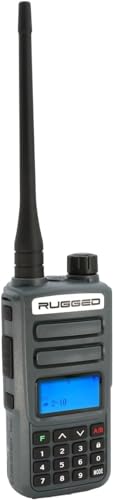
Rugged Radios GMR2 Plus Handheld Radio

Midland MXT275 Jeep Branded GMRS Radio
POCLINK Lifetime Free Global Walkie Talkies
Poclink POC-1 Lite Global Walkie Talkies

Poclink 6-Unit Multi Charger

Icom IC-2730A Dual Band Mobile Radio
More Details On Our Top Picks
Carrborg’s cellular-network radio sidesteps the line-of-sight limit that constrains traditional GMRS (General Mobile Radio Service) handhelds. Because it rides on 4G LTE signals through a built-in SIM (the small subscriber chip that ties the device to a carrier), a lead rig and a chase vehicle can stay connected across state lines where terrain would normally swallow a UHF signal. Trail leaders running multi-day overland routes, where dust plumes and canyon walls kill radio waves, may find this approach far more practical than chasing antenna upgrades.
Setup is the lightest part of ownership. Power on, register the device, and the radio joins the network without channel programming. That convenience matters for groups whose members aren’t licensed radio operators. The trade-off, of course, is total dependence on cellular coverage, which thins out across remote basins of Nevada or Utah.
What Makes Sense
- No subscription or monthly data fees for the life of the device
- Push-to-talk simplicity, no channel chart to memorize
- Range extends anywhere 4G LTE signal exists, useful for cross-state trail rallies
- Works between brands and models that share the POC (push-to-talk-over-cellular) standard
Things To Consider
- Requires cellular signal; deep canyons and remote basins cut comms entirely
- Charging routine matters: owners commonly report daily top-ups on long trips
Who It Suits Best
Convoy leaders running routes that weave in and out of cell coverage and want zero monthly bills.
Where Another Pick Suits Better
Trails deep in radio-shadow terrain favor the Rugged Radios GMR2 Plus, which runs on dedicated GMRS frequencies unaffected by cell gaps.
The GMR2 Plus sits in the handheld sweet spot most weekend groups actually want. It’s a dedicated GMRS radio (a UHF band licensed for short-range two-way use, no test required) with 22 channels and 121 privacy codes, which means a club can split off from a busy channel without crosstalk from other groups on the same trail. Compared with the Carrborg above, this radio needs no cellular signal at all; it transmits directly between units.
A tuned antenna ships in the box, and the form factor is friendly to grab while spotting a tire on a rocky ledge. Privacy codes (sub-audible tones that mute other conversations on the same frequency) help filter out other trail users. For most weekend trips, the GMR2 Plus covers the basics without overkill.
A Favorable Mix
- 22 GMRS channels with 121 privacy codes for cleaner group comms
- Optimized transmitter and tuned antenna raise usable range on rough trails
- Universal compatibility with any standard GMRS radio
- Compact handheld form fits in cup holders and door pouches
Worth Noting
- Handheld power limits range compared with vehicle-mounted units
- GMRS requires a simple FCC license in the United States, a small extra step before use
- Antenna durability under brushy tree limbs is a commonly reported weak point
Feature Snapshot
Made For
Weekend groups who want simple, license-friendly comms without monthly fees.
Consider Something Else When
The Midland MXT275 suits overlanders who need higher transmit power and an in-cab mount.
The MXT275 brings vehicle-mounted muscle to a Jeep’s dashboard. Output climbs to 15 watts on high-power GMRS channels, far beyond what a handheld can push through a dust storm. A fully integrated control microphone (the handset that mounts on the dash) lets the main base hide under a seat or behind a panel, which matters in a Wrangler where dash real estate is already spoken for.
Split-tone repeater support and 8 repeater channels extend reach when a local repeater (a higher-elevation relay station that re-broadcasts signals to extend range) sits within line of sight. For Jeep owners building out a serious overland rig, this is the radio to anchor a permanent install. The catch is the install itself, which usually means running a fused power lead and mounting an external antenna.
What Helps Most
- 15W high-power output on key GMRS channels for cleaner long-range comms
- Integrated control microphone saves dash space in tight Wrangler cabins
- Repeater support extends effective range where local relays exist
- Vehicle-mounted format pairs naturally with a roof or hood-mounted antenna
Honest Caveats
- Installation requires a fused 12V lead and routed coax (the antenna cable), more work than a handheld
- External antenna placement affects range dramatically; a misplaced mount disappoints
- Larger form factor than the GMR2 Plus means it’s a fixed-vehicle solution
Quick Facts
Right Fit For
Jeep owners committed to a permanent in-cab install and longer trail transmissions.
Skip It When
Overlanders who need true nationwide reach should consider the Poclink POC-1 Lite, which rides cellular networks.
POCLINK’s flagship radio extends push-to-talk across thousands of miles through 4G and Wi-Fi. The pitch is straightforward: anywhere there’s a data signal, the radio talks, no matter the distance. That opens cross-country rally support, where a chase truck in one state can coordinate with a lead rig two time zones over without channel charts or repeater directories.
Unlike the GMR2 Plus above, which runs on a single UHF band (ultra-high frequency, roughly 450–470 MHz), this device treats the cellular network as the backbone. Setup involves creating a private group through the companion ecosystem and pairing devices. Owners commonly report that the user-controlled group system simplifies fleet comms at scale.
What It Does Well
- Theoretical range up to 25,000 miles across cellular and Wi-Fi networks
- Lifetime free service removes ongoing subscription pressure
- No permits, license tests, or frequency charts to manage
- User-managed groups allow private channels for clubs and families
Points To Keep In Mind
- Coverage gaps in true backcountry mirror cellular dead zones
- Battery life drops faster than traditional handhelds when searching for signal
Best Suited To
Expedition crews crossing regions where cellular coverage stays reliable.
A Better Fit Elsewhere
Backcountry drivers heading into cellular dead zones get stronger service from the Icom IC-2730A, a 50W dual-band mobile.
The POC-1 Lite layers Bluetooth and a companion app on top of the same cellular push-to-talk engine as the larger POCLINK radio. That opens phone-based group management, a real perk for tech-forward clubs who already organize through chat apps. The 3000mAh battery (milliamp-hour, a measure of capacity that translates to longer runtime) is sized for a full day of moderate use, which most trail leaders find adequate.
Self-group creation through the app removes the friction of a web portal. Trail teams that include younger members tend to gravitate toward this model, since the controls match what they already use on a phone. As with the POCLINK flagship above, signal coverage is the make-or-break factor on truly remote runs.
Points In Its Favor
- Bluetooth pairing adds headset and app integration without extra adapters
- 3000mAh battery supports a full day of moderate transmissions
- Self-group creation through the app simplifies setup
- No permits or license fees to operate
Trade Offs
- Same cellular dependency as the larger POCLINK radio, dead zones still drop signal
- Companion app adds a learning step for less tech-oriented users
Feature Rundown
Who Will Love This
Trail groups who already coordinate through smartphone apps and want that workflow on the radio.
Reach For A Different Pick When
Runners heading far outside cell coverage should pick the Icom IC-2730A for its dedicated VHF/UHF mobile power.
The 6-Unit Multi Charger isn’t a radio; it’s the accessory that keeps a fleet of POC-1 or POC-1 Ultra handhelds topped off between trail days. A single compact base accepts six devices, replacing the cable sprawl that hits a shop bench or staging area once a club grows past two or three units. Owners running organized overland events appreciate the visual at-a-glance confirmation that every radio is ready.
Compatibility covers both POC-1 models, which means a shop staging area can mix generations without juggling separate chargers. The honest read is that this dock is most useful for clubs and outfitters running four or more Poclink devices, not solo drivers. Storage footprint is modest, fitting on a shelf or workbench corner.
Useful Strengths
- Charges six units from one outlet, cutting bench clutter
- Compatible with both POC-1 and POC-1 Ultra handhelds
- Single compact base keeps staging areas tidy
- Useful for clubs, guides, and outfitters running multiple radios
Where It Is Less Suited
- Limited value for solo drivers with a single handheld
- Tied to Poclink hardware, no cross-brand flexibility
Whose Shelf It Belongs On
Clubs, guides, and outfitters running multiple Poclink handhelds in rotation.
Another Choice May Suit
Solo weekend drivers may find individual USB charging on the Carrborg radio perfectly adequate for their routine.
The IC-2730A is a serious piece of hardware aimed at licensed amateur radio operators (often called “hams”) who want full VHF/UHF capability in a vehicle. Dual-band means the radio can monitor VHF (very high frequency, roughly 136–174 MHz) and UHF (ultra-high frequency, 400–470 MHz) at once, with independent volume and squelch (the noise-gate that mutes static between transmissions) knobs for each side. At 50 watts of output, it dwarfs the Midland MXT275 above and reaches repeaters the smaller radio cannot.
Bluetooth headset support with the optional VS-3 module turns the cabin into a quieter place to coordinate, useful on long highway transfers between trailheads. The trade-off is steeper: amateur radio requires a license exam, and the price tag reflects pro-grade components. This is the right radio for operators who already know their stuff and want a permanent in-cab command center.
Where It Delivers
- 50W output reaches distant repeaters and covers long highway stretches
- Dual-band simultaneous receive monitors two frequencies at once
- Independent volume and squelch controls for each band
- Optional Bluetooth module adds hands-free headset control
Potential Drawbacks
- Requires an amateur radio license, a real study commitment
- Higher cost than GMRS-only mobile units
- External antenna and proper installation are essentially mandatory
Spec Overview
Who Should Grab It
Licensed amateur radio operators building a permanent in-cab communications hub.
Not Your Match When
Groups without an amateur license will find the Midland MXT275 easier to deploy on GMRS.
What Matters Most Before Choosing Radios For Off Roading
Band And Licensing Reality
GMRS radios (the Midland and Rugged Radios entries here) operate on UHF frequencies that don’t require an exam, just a one-time FCC license registration. Cellular-network POC radios (the Carrborg and Poclink options) sidestep licensing entirely but trade that freedom for carrier coverage. Amateur radios like the Icom reach farther through VHF/UHF repeaters but require passing an exam. Choose the band that matches your group’s commitment level.
Power Output Versus Portability
Handheld units push 1–5 watts and earn their keep when spotting lines or signaling between vehicles in close convoy. Mobile units (the Midland MXT275, Icom IC-2730A) push 15–50 watts and shine across ridgelines and open desert. The honest tradeoff is installation: more power means a permanent mount, a fused power lead, and an external antenna that takes real estate on the vehicle.
Range Beyond Line Of Sight
Traditional UHF radios depend on terrain. Cellular radios depend on towers. The right choice depends on where trails run. Rocky canyons kill UHF, while remote basins kill cellular. Matching the radio to the geography beats chasing the most powerful model.
Charging And Fleet Logistics
Multi-day runs drain any radio. A 3000mAh battery covers a typical day, but fleet operators running six or more units benefit from the 6-Unit Multi Charger. Solo drivers can rely on USB top-ups between camp and trailhead without extra hardware.
Key Considerations Across These Picks
Pitfalls Shoppers Hit
A common trap is assuming more watts always mean more range. In a dense forest or sharp canyon, terrain eats signal regardless of power, and a cellular radio may outperform a 50-watt mobile. Another slip is buying a mobile unit without planning the install. Running a fused lead and routing coax through a vehicle takes an afternoon and some patience; skipping the antenna mount kills the radio’s potential.
Where The Extra Money Goes
Premium picks like the Icom IC-2730A earn their price through dual-band receive, independent controls, and 50W output that reaches distant repeaters. That upgrade pays off for licensed operators running long highway transfers between trailheads. For most weekend groups, the Midland MXT275 strikes a more useful balance between power, GMRS simplicity, and dashboard-friendly footprint. Paying more only helps when the use case genuinely demands the extra capability.