
A cold tent floor at 2 a.m. has a way of turning a fun trip miserable. Anyone who’s tried to sleep on a thin pad after a long hike knows the cost: stiff hips, a sore back, and a foggy morning that follows. Queen size camping mattresses solve the square-footage problem two sleepers always hit, where a standard rectangle pad leaves someone dangling off the edge. The seven options below cover foam self-inflators, a roll-up memory foam pad, and one raised air bed, so the right pick depends on how the gear gets stored and how soft the surface needs to feel.
The Picks In Brief
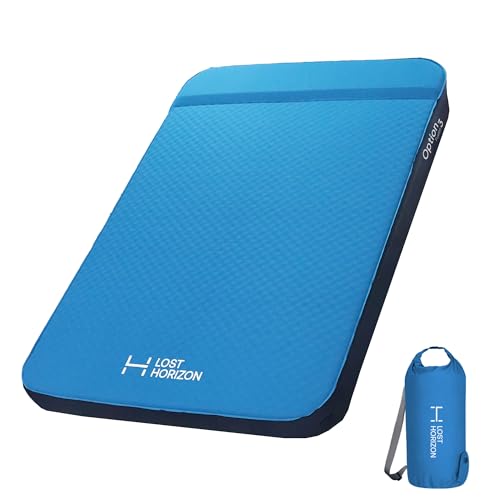
Lost Horizon Self-Inflating Foam Camping Mattress, Full, 3″

Lost Horizon Self-Inflating Foam Mattress for Model Y

Kingfun 3 Inch Memory Foam Camping Mattress Pad

PineHike 2 Person Queen Size Camping Sleeping Pad, 4″ Memory Foam Mat

Intex Dura-Beam Plus 18″ Queen Air Mattress

Lost Horizon Option3 Self-Inflating Foam Mattress, Twin, 4.5″
Lost Horizon Option3 Self-Inflating Foam Mattress, Full, 4.5″
The Details Behind The Selections
The 3-inch profile on this Lost Horizon self-inflating foam mattress hits a comfortable middle ground for casual campers. Open the valve, walk away for ten minutes, and the open-cell foam (a sponge-like material that expands when air enters) draws in enough air to reach usable firmness without any extra pumping. For weekend car camping, that’s the kind of low-effort setup that matters when the sun’s going down and dinner still needs grilling.
Compared with the heavier 4.5-inch pads later on this list, the trade-off is less loft off the ground. Side sleepers on rocky sites may feel a hip pressure point that the thicker options absorb. For two adults sharing a tent floor, the Full size gives each person roughly the width of a standard camp cot, which is workable but not sprawling.
The Case For It
- No pump needed; the foam expands on its own once the valve opens
- Compact roll-down size fits in most car trunks without rearranging cargo
- Foam interior distributes weight evenly, reducing pressure points for back sleepers
- Lower price point than the thicker 4.5-inch Lost Horizon options
Things To Consider
- 3 inches of loft may feel thin on uneven ground or sharp rocks
- Self-inflation takes several minutes, then a few breaths top it off to full firmness
- Full size is roomy for one and tight for two; couples may want the PineHike pick instead
At A Glance
Who It Suits Best
Car campers and weekend hikers who want foam comfort without hauling extra weight or gear.
Consider Something Else When
Couples sharing a tent should look at the PineHike 2 Person Queen Size Camping Sleeping Pad, which is sized for two adults without the squeeze.
Tesla Model Y owners looking to sleep inside their vehicle have a different geometry problem than standard tent campers, and this pad is cut specifically for the cargo area of the 2-row version. The 4.5-inch thickness delivers noticeably more cushioning than the 3-inch Lost Horizon that opened this list, especially against the hard plastic floor of a vehicle cabin.
The trade-off is obvious: this pad is a niche fit. Anyone without a Model Y won’t get full use out of the shape. For Model Y owners who camp in their vehicle regularly, however, the tailored dimensions eliminate the gap-filling guesswork that a generic rectangle pad creates.
What Stands Out
- Custom-cut for the Model Y cargo area, so it lays flat without bunching
- 4.5-inch foam loft is the brand’s premium thickness
- Up to 440 lb weight capacity handles two adults
- Self-inflating design keeps setup hands-free at the campsite
Worth Noting
- Only fits the 2-row Model Y configuration
- Higher weight from the thicker foam fill adds to pack weight if carried outside the vehicle
Feature Snapshot
Made For
Tesla Model Y owners who regularly sleep in their vehicle and want a foam pad that fits without improvisation.
Look Elsewhere When
Tent campers should consider the Lost Horizon Option3 Self-Inflating Foam Mattress, Full, 4.5″ instead, since it’s shaped for traditional tent footprints.
Memory foam behaves differently from the open-cell foam used in self-inflating pads: it warms against body heat, softens, and contours rather than springing back. The Kingfun pad brings that body-cradling feel into a camping-friendly roll-up package with a removable travel bag, which is the kind of comfort upgrade car campers and SUV sleepers appreciate over a standard air mattress.
Compared with the Lost Horizon options above, the trade-off is setup time. Roll-up foam pads don’t inflate; they need to be unrolled and given a few minutes to decompress before use. In a hurry, that pause can feel like an extra chore.
Benefits That Matter
- CertiPUR-US certified foam (tested for content and emissions) for sleepers concerned about material safety
- Waterproof surface layer helps block tent-floor moisture
- High-density foam holds its shape across multiple trips
- Included travel bag keeps the pad clean during storage between trips
Honest Caveats
- Heavier than self-inflating foam pads of the same thickness
- Requires unrolling and decompression time before use
- Memory foam can feel firm in cold weather until body heat warms it
Right Fit For
Side sleepers and comfort-focused campers who want a softer feel than self-inflating pads offer.
Skip It When
Backpackers who count every ounce should consider the Lost Horizon Self-Inflating Foam Camping Mattress, Full, 3″, which packs smaller and lighter.
Couples camping in a 6-person tent know the familiar problem: one person rolls onto the pad’s edge while the other drifts into dead space. The PineHike queen-size pad sizes the surface properly for two adults, with a 4-inch cut 50D sponge filling that absorbs more of the rocky ground variance than thinner foam does.
Unlike the Lost Horizon pads above, which use self-inflating open-cell foam, PineHike leans on a 50D sponge (a denser foam measured in kilograms per cubic meter) and a one-button pump system. That hybrid approach trades the pure hands-free setup of a self-inflator for firmer inflation control, with the manufacturer noting noise reduction as a side benefit for late-night sleepers.
The Helpful Details
- Queen-size surface fits two adults without overlap
- 50D high-resilience sponge holds shape across nights
- One-button inflate and deflate reduces setup hassle
- Reportedly quieter than traditional air mattresses when shifting
Some Limits To Know
- Bulkier than single-sleeper pads in transport
- Sponge-based pads take time to fully decompress on first use
- Not designed for backpack carry; car camping only
Quick Facts
Best Suited To
Couples and base-campers with vehicle access who want a properly sized shared sleeping surface.
Reach For A Different Pick When
Solo campers will overpay for the second-person width and should choose the Lost Horizon Self-Inflating Foam Camping Mattress, Full, 3″ instead.
The Intex Dura-Beam Plus goes in a different direction from the foam pads above, offering an 18-inch raised profile with a built-in electric pump. Campers who treat their gear like an at-home bedroom will appreciate sitting on the edge to pull off boots, or having the surface near chair height for less awkward climbs. The built-in pillow rest adds another touch that the foam options don’t include.
The honest trade-off is leak risk. Foam handles a thorny site with more grace than an air chamber, and owners commonly report that air mattresses need a top-up every couple of nights as the material stretches. For car campers with access to power and a flat site, though, the convenience factor is hard to beat.
What Earns Its Place
- Built-in pump means no extra gear to pack or remember
- 18-inch raised profile is easier on older knees and hips
- Queen surface fits two adults at full camping width
- Velvety top layer reduces sleeping-bag slip
Practical Considerations
- Air mattresses can lose firmness over multi-night trips and need topping off
- Built-in pump requires access to power or a portable battery
- Puncture risk on rough ground without a footprint tarp underneath
Whose Shelf It Belongs On
Car campers and occasional guest-room sleepers who want a raised, bed-like surface without hauling foam rolls.
Swap It Out When
Backcountry campers without power should choose the PineHike 2 Person Queen Size Camping Sleeping Pad for a foam-based alternative that doesn’t need electricity.
The 4.5-inch Option3 in Twin shifts the brand’s thicker foam profile into a single-sleeper footprint. Solo campers who want genuine loft without paying for a second-person width get a pad that still spreads enough to roll around at night without falling off, while packing smaller than the Full-size siblings in this list.
Compared with the 3-inch Full at the top of this roundup, the extra 1.5 inches noticeably softens hip pressure on the rocky sites solo backpackers and bikers tend to encounter. The smaller foam fill weight (8.5 lb versus the larger pads’ heft) is also easier to manage on a motorcycle or bike-camping setup.
Useful Strengths
- 4.5-inch loft cushions hips and shoulders on rough ground
- Twin footprint packs smaller than Full or Queen foam pads
- Self-inflating foam eliminates the pump requirement
- 300 lb capacity handles most solo sleepers
A Few Limitations
- Width is tight for restless sleepers who move at night
- Not designed to share; couples will outgrow this quickly
- Higher cost than the thinner Lost Horizon Full at item one
Perfect Match For
Solo tent campers and bike-packers who want maximum cushioning in a single-sleeper package.
Another Choice May Suit
Couples should pick the PineHike 2 Person Queen Size Camping Sleeping Pad instead, since this Twin is too narrow for two.
The Full-size Option3 brings the brand’s 4.5-inch thickness into a wider footprint, with a 12-pound foam fill that holds up well under regular use. Frequent campers and heavier sleepers get the same generous loft as the Twin above, but with room to spread out or share with a smaller partner or child.
The honest read is that this pad is the heaviest in the Lost Horizon lineup. Anyone hauling gear to a remote site on foot will feel that 12-pound foam weight over a long hike. For car campers and base-camp setups, however, the support and durability more than justify the extra mass.
Reasons It Performs
- 4.5-inch foam provides the brand’s deepest cushioning
- 12 lb foam fill resists permanent compression over years of use
- Up to 440 lb weight capacity handles heavier sleepers or pairs
- Full-size footprint offers more sleeping room than the Twin version
Trade-Offs To Consider
- Heaviest foam option in this roundup; not backpack-friendly
- Bulky rolled profile needs vehicle cargo space
- Higher price than the 3-inch Lost Horizon alternatives
Spec Overview
Who Should Grab It
Frequent campers and heavier sleepers who drive to base camp and want a foam pad that won’t bottom out.
Where A Sibling Pick Shines
Backpackers should choose the Lost Horizon Option3 Self-Inflating Foam Mattress, Twin, 4.5″, which trims weight by cutting the foam fill.
What Matters Most Before Choosing Queen Size Camping Mattresses
Thickness Versus Pack Size
Thickness is the single biggest predictor of how well a pad handles uneven ground. A 3-inch pad works on flat, grassy sites. A 4- or 4.5-inch pad absorbs the variance of roots, rocks, and sloped tent floors. The catch is that thicker foam pads weigh more and roll into bigger cylinders. Car campers rarely notice the bulk; backpackers do. Match thickness to how the gear actually moves from storage to site.
Foam Type And Feel
Open-cell foam in self-inflating pads springs back when pressure releases, giving a firmer, supportive surface. Memory foam softens with body heat and contours to shape, giving a plusher, cradling feel. Side sleepers tend to prefer memory foam because it fills the shoulder and hip hollows. Back sleepers usually find open-cell foam more supportive. Both work; the question is which sleep position dominates the night.
Size And Sleep Setup
Full pads work for solo sleepers who like room. Queen pads fit two adults without the edge fight. Twin pads pack smallest and weigh least. For couples, the geometry matters more than the foam type; choose by body count first, comfort second.
Key Considerations Across These Picks
Where Shoppers Go Wrong
A common trap is buying the thickest pad without checking the packed size. A 4.5-inch foam pad rolls into a cylinder that won’t fit in a small sedan trunk once other gear is loaded. Another slip is assuming memory foam works like self-inflating foam: it doesn’t inflate, and skipping the decompression time leaves a pad that feels half-thick on the first night. Always check the packed dimensions and the setup method before clicking through to the listing.
The Case For Spending Up
The jump from a 3-inch foam pad to a 4.5-inch option costs more in weight and pack size, but it buys real-world sleep quality on uneven sites. Heavier sleepers especially feel the difference; thinner pads bottom out under higher body weight, leaving hips on the ground. For frequent campers who already know they want foam over air, the upgrade pays off in fewer stiff mornings.