
A push spreader saves the average homeowner hours of back-breaking work each season, whether feeding a small lawn, overseeding bare patches, or laying down ice melt on a long driveway. The right tool keeps granular material evenly distributed, which means greener grass, fewer wasted inputs, and less time walking the same rows twice. This guide covers six options worth considering for 2026, from full-size push models down to ATV-mounted broadcast units and complementary aerators that pair nicely with any spreader routine.
A Quick View Of The Lineup

Landzie Rolling Lawn Aerator, Manual Core Plug Aerator

Rittenhouse Lesco Spreader Impeller Ultra Plus 3-Pack

Rittenhouse Lesco Spreader Impeller 2-Pack

Landzie Tow Behind Spike Roller Aerator
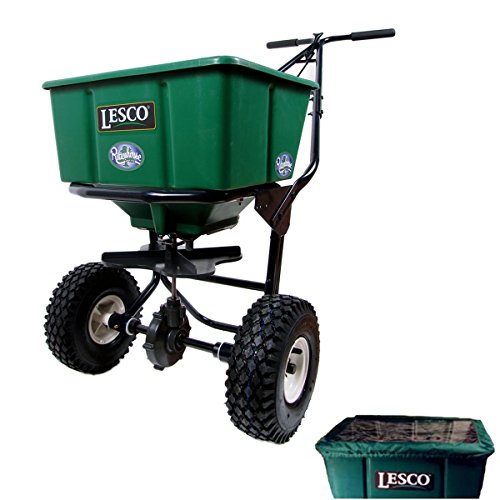
Lesco 50 lb Push Spreader 092807 with Hopper Cover Bundle

MAXXTUFF ATV Spreader 100 lb Broadcast Seeder 12V
More On The Choices That Made The List
Aerating before a fertilizer pass lets nutrients, water, and air actually reach the root zone instead of sitting on compacted topsoil. The Landzie rolling aerator handles that prep work with a drum fitted with seven hollow stainless steel tines that pull small soil plugs with each pass. For homeowners who plan to push a broadcast spreader across the same lawn later that week, that core-plug action matters because it relieves compaction the spike-style tools cannot.
The rolling drum design spreads the workload across both arms rather than concentrating force on a single stabbing motion, which makes it more approachable for anyone without upper-body strength to spare. For most backyards under a quarter acre, a single slow pass in two directions opens enough channels for overseeding or top-dressing to take hold.
Useful Strengths
- Seven hollow stainless steel tines lift actual plugs rather than just poking holes, which improves seed-to-soil contact for overseeding projects.
- Rolling-drum construction means steady forward motion does the work, easing strain on shoulders and wrists.
- Hollow-tine output doubles as lawn-thatch indicator; the removed cores show where compaction sits worst.
- Compatible with hand-push use or tow-behind setups on small garden tractors for larger properties.
Things To Consider
- Wet, heavy clay lawns may clog the tines between passes, so a leaf rake or flat shovel is often needed to clear the drum every few rows.
- Storage footprint is wider than a handheld dethatcher, which matters for anyone with a cramped garage corner.
Who It Suits Best
DIYers prepping a tired lawn for fall overseeding or spring feeding who want a manual tool without renting a powered machine.
Consider Something Else When
The Landzie Tow Behind Spike Roller Aerator makes more sense for anyone with a riding mower and several acres to cover.
Anyone who already owns a LESCO broadcast spreader knows the impeller is the heart of the whole machine. The Ultra Plus replacement (part N2320) swaps out the older 030317 design with upgraded material meant to resist wobble, breakage, and the fertilizer crust that slowly builds up on older plastic fins. Buying three at a time keeps a working spare on the shelf for the day a fin cracks mid-application.
The N2320 fits several popular LESCO models, including the 101186 high-wheel broadcast spreader and the 50 lb push spreader (092807), so households with more than one LESCO machine can standardize on a single replacement part. For anyone tired of streaky, uneven coverage from a worn impeller, swapping in a fresh Ultra Plus usually restores the wide, consistent fan pattern the spreader had when new.
Well-Handled Touches
- Three-pack format covers a primary, a spare, and a backup without needing to reorder mid-season.
- Upgraded materials are designed to cut down on fertilizer build-up, which simplifies end-of-day cleaning.
- Direct replacement fit for the original 030317 impeller means no drilling or modification.
- Compatible with multiple LESCO models, making it a flexible part to keep in a service drawer.
Points To Keep In Mind
- Only useful for owners of compatible LESCO spreaders; non-LESCO machines require a different part number.
- Impeller swaps require basic hand tools and a willingness to empty the hopper, which may slow first-time installers.
Made For
LESCO spreader owners who service their own equipment and want to avoid downtime during peak feeding windows.
Look Elsewhere When
The Rittenhouse 2-pack version suits anyone who just wants a single spare on hand without stocking extra inventory.
The 2-pack version of the same Ultra Plus N2320 impeller targets the homeowner who runs a single LESCO machine and just wants one reliable spare. Streaks, bald patches, and uneven throw patterns are the classic symptoms of a worn impeller, and waiting weeks for a replacement part usually means missed application windows. Having two on hand lets one go in immediately while the other waits in the garage.
Compatibility stays consistent with the 3-pack option, covering the 101186 high-wheel spreader, the 50 lb push spreader (092807), and the 705699 and 091186 broadcast models. For property managers running one or two LESCO units, this 2-pack is the right balance between overstocking and running dry at the wrong moment.
What Stands Out
- Two-unit format fits a primary install and one spare without overbuying.
- Same upgraded N2320 build that resists fertilizer caking on the fins.
- Replaces the original 030317 impeller with no adapter or shim required.
Honest Caveats
- Not a universal fit; verify your LESCO model in the manual before ordering.
- Worn hardware on the impeller shaft can complicate removal, so penetrating oil and patience help on older units.
Feature Snapshot
Best Suited To
Single-machine LESCO owners who want a backup ready before the next fertilizer season starts.
A Better Fit Elsewhere
The 3-pack option suits anyone running multiple LESCO units or wanting long-term shelf stock.
Spike aerators and core-plug aerators do different jobs: spikes punch narrow holes for quick water and air movement, while core-plug tools actually remove soil. The Landzie Tow Behind Spike Roller falls into the lighter, faster category, towing behind a garden tractor, mower, or ATV to cover large lawns without breaking a sweat. The drum fills with water for added down-pressure, letting the weight dial in based on lawn softness.
Because the unit flips wheels-up for use, transport to and from the lawn is simple and the storage profile stays narrow. For properties where a hand-push tool would mean hours of walking, this drum turns aeration into a slow tractor ride instead of a workout.
What Works In Its Favor
- Water-fillable drum lets users tune weight for soft turf without buying ballast blocks.
- Tow-behind design frees up time on anything over half an acre, since the tractor does the pacing.
- Spike pattern works well for overseeding prep, where fast seed-to-soil contact matters more than deep core removal.
Trade-Offs
- Spike aerators compact soil slightly around each hole, so very compacted clay lawns may need a core-plug pass first.
- Requires a compatible towing vehicle with a hitch pin, which adds setup steps for smaller mowers.
Perfect Match For
Riding-mower owners with open, flat lawns who want aeration without renting a powered machine.
Skip It When
Small, tight lawns make more sense with the Landzie Rolling Lawn Aerator, since towing a drum around obstacles is awkward.
The Lesco 092807 has been a workhorse push spreader in the lawn-care world for years, and the bundled hopper cover keeps the granular material dry during a sudden shower or an overnight rest in the yard. A powder-coated carbon steel frame gives the unit the kind of heft that resists flex when the hopper is fully loaded, and the 4.10/3.50-4 tires roll smoothly across uneven turf without bogging down.
At 50 lb of hopper capacity, this spreader covers mid-size lawns in fewer refills than entry-level push units. The 48-inch overall length keeps it maneuverable enough for gate passes and tight corners, and the included hopper cover protects pricy fertilizer or seed from clumping when weather shifts mid-application.
A Few Highlights
- 50 lb hopper capacity cuts down on refill stops for lawns up to about a quarter acre.
- Powder-coated carbon steel frame handles rough yard work without flexing at the seams.
- Hopper cover bundle keeps material dry through brief weather changes.
- 4.10/3.50-4 tires roll cleanly over uneven ground, reducing operator fatigue.
Worth Noting
- Empty weight of 31 lb means the unit feels substantial at first push, especially on slopes.
- Hopper cover adds a step when opening and closing, which can interrupt a fast application rhythm.
Quick Facts
Who Should Grab It
Homeowners with mid-size lawns who want a serious push spreader without stepping up to a tow-behind unit.
Another Choice May Suit
The MAXXTUFF ATV Spreader fits larger properties where a riding mount covers ground faster than walking.
Once a property stretches past a couple of acres, walking a push spreader becomes a full-day chore, and the MAXXTUFF ATV-mounted broadcast seeder takes that labor off the operator’s legs. A 12V motor drives the broadcast disc, and the manual feed gate with an adjustment stop lets the rider dial in application rates without leaving the seat. With a 100 lb hopper, the unit holds enough seed or fertilizer to clear sizeable sections before a refill.
The tapered plastic hopper sheds material cleanly toward the impeller, and the abrasion-resistant deflection shield keeps the broadcast pattern aimed at the ground instead of the operator’s back. A quick-release mount means the spreader comes off the ATV rack when the job ends, freeing the vehicle for other chores.
Real Benefits
- 100 lb hopper capacity covers food plots, large lawns, and pasture sections in fewer fill-ups.
- 12V motor provides consistent disc speed for even broadcast patterns.
- Manual feed gate with adjustment stop allows on-the-fly rate changes for seed versus corn versus fertilizer.
- Deflection shield protects the rider and directs material downward for cleaner coverage.
- Quick-release mount swaps the spreader on and off an ATV rack in minutes.
Possible Compromises
- Requires a 12V power source on the ATV or UTV, so owners of older machines without a battery hookup will need an adapter.
- Large hopper capacity means the loaded unit is heavy; lifting it back onto the rack is a two-person task for some riders.
At A Glance
Built With In Mind
Rural property owners with ATVs who manage food plots, pasture overseeding, or winter ice melt across long driveways.
Reach For A Different Pick When
The Lesco 50 lb Push Spreader fits small suburban lawns where a riding mount is overkill and a push unit is plenty.
Picking a Spreader That Fits the Yard
Choosing the right push spreader starts with honest measurement of the space involved, not just the closest model on the shelf. A half-acre suburban lawn rarely justifies the same machine that works for a five-acre homestead, and overspending on capacity means dragging extra weight around for no real return.
Match the spreader type to the job. Push spreaders work best for lawns under a quarter acre where maneuverability matters more than coverage speed. Tow-behind and ATV-mounted broadcast units make more sense once the lawn stretches past a few thousand square feet, because walking that much ground gets old fast. Rotary broadcast spreaders throw material in every direction, which speeds things up but reduces precision along edges.
Check hopper material and frame construction. Poly hoppers resist corrosion and clean up easily with a rinse, while steel hoppers handle rougher treatment but may need a wipe-down after wet fertilizer use. Frames built from powder-coated steel or aluminum hold up better over time than thin tubular stock, especially on bumpy ground where the unit takes repeated jolts.
Look at the impeller and gate system. An impeller (the spinning disc inside the hopper that flings material outward) and the feed gate work together, and a smooth gate action with a clear calibration dial saves real frustration mid-application. Stainless or hardened-plastic impellers outlast basic plastic fins, particularly with coated or granular fertilizer that wears down soft parts.
Plan for storage and maintenance. A spreader left out in the rain corrodes fast, so a covered storage spot matters for any push or tow model. Rinsing the hopper and impeller after each use, drying the unit off, and checking tire pressure once a season keeps the tool ready when feeding windows arrive.
Key Considerations Across These Picks
Where Shoppers Go Wrong
The most common slip is buying a spreader that is either too small or too large for the property, leading to endless refill stops or exhausting pushes across oversized turf. Another trap is overlooking impeller compatibility: replacement parts only fit specific machines, so confirming part numbers before ordering saves a return trip. Newcomers also tend to skip calibration, applying too much or too little material on the first pass and burning through fertilizer before the pattern evens out.
Where The Extra Money Goes
Higher-tier spreaders earn their premium through tougher frames, more precise gate controls, and impellers designed to resist fertilizer build-up. For anyone managing a mid-size lawn professionally or feeding a larger property several times a season, those upgrades pay back through longer service life and fewer calibration headaches. Entry-level push units handle small yards fine, but a serious user gets cleaner coverage and lower maintenance over time by stepping up.
Bottom Line
The right spreader matches the lawn, the operator, and the material being applied, and the lineup covers everything from a hand-push core aerator up to an ATV-mounted 100 lb broadcast seeder. Start with property size, then weigh hopper capacity and frame quality before chasing features. A well-matched tool turns seasonal feeding into a quick, even pass instead of a long, frustrating day.