
A dull blade tears grass, leaving ragged edges prone to disease. Replacing push mower blades on a regular basis keeps the cut clean, the lawn healthier, and the mower working less hard. The seven options below cover the major mower platforms people actually run at home, from gas walk-behinds to battery decks.
The Essentials At A Glance

GICOOL 942-0741A 21 Inch Lawn Mower Mulching Blades

Bularie 72531-VR8 Microcut High Lift Mulching Blades

Oregon 596-344 Gator G5 Blade 18″

GICOOL 942-0741A Mulching Mower Blade 1 PK

GICOOL 406712 Mulching Blade 21″ Deck
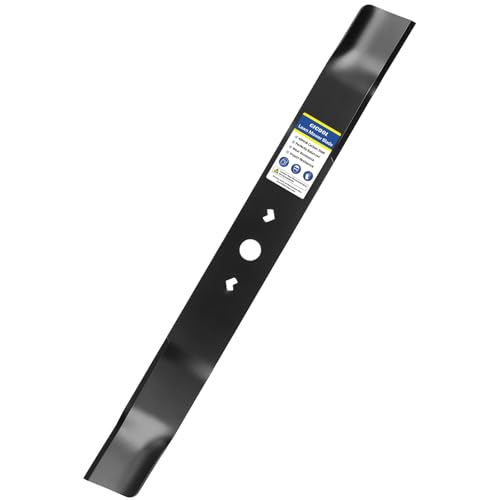
GICOOL 21″ Lawn Mower Blade Greenworks Fit

GICOOL 21″ Deck Lawn Mower Blade Fits EGO LM2114
The Details Behind The Selections
Plenty of suburban yards run a 21-inch MTD or Cub Cadet walk-behind, and this blade targets exactly that crowd. It is built as a direct replacement for the OEM part numbers that show up across Troy-Bilt, MTD, and Cub Cadet’s mid-tier walk-behinds, so installation generally means unbolting the old steel and dropping the new one in.
The mulching profile handles weekly spring and early-summer cuts cleanly, chopping clippings fine so they drop back into the turf without clumping. Compared with the Bularie twin-blade option later in this list, this one runs as a single piece, which simplifies sharpening and balancing over time.
Useful Highlights
- Cross-references a long list of MTD and Cub Cadet OEM part numbers, simplifying the fit-check before ordering.
- 21-inch cutting sweep matches the deck size on most mid-range walk-behinds in this category.
- Mulching geometry produces fine clippings that disappear into the lawn rather than forming visible rows.
- Single-blade format makes future sharpening and balancing straightforward.
Things To Consider
- Single blade construction means slightly coarser clipping size than the dual-blade Bularie set.
- Steel edge will dull over a season, so budget for a fresh blade or sharpening service yearly on heavy-use lawns.
Quick Facts
Right Fit For
Homeowners running a 21-inch MTD, Cub Cadet, or Troy-Bilt push mower who want a single-blade replacement that drops in without modification.
Look Elsewhere When
Honda HRX owners chasing the finest possible clipping size should reach for the Bularie 72531-VR8 Microcut High Lift Mulching Blades instead.
Honda’s HRX and HRN series decks use a stacked twin-blade system, where an upper blade and lower blade work together to recirculate clippings. This Bularie pack replaces both the 72531-VR8-M00 upper and the 72511-VR8-M00 lower in one purchase, which matters because buying them separately usually costs more.
Where the GICOOL single-blade options above rely on one wide steel profile, this set leans on microcut geometry, repeatedly slicing clippings inside the deck. The “high lift” portion of the name refers to the curved airfoil shape that pulls grass upright before the cut, useful on lawns that get a little tall between mowings.
Benefits That Matter
- Twin-blade microcut design produces finer clippings that disappear into the turf.
- High-lift airfoil improves cutting performance on grass that has grown past the usual weekly window.
- Buying the pair together avoids sourcing upper and lower blades from separate listings.
- Direct cross-reference to common Honda OEM part numbers simplifies fit verification.
Honest Caveats
- Twin-blade systems add a few extra minutes to installation and balancing compared with a single blade.
- Compatibility is limited to Honda walk-behinds, so it is not a universal swap.
Built With In Mind
Honda HRB, HRR, HRS, HRM, HRN, and HRT walk-behind owners who want OEM-style microcut mulching without paying dealer-level pricing.
Swap It Out When
Anyone running an MTD, Troy-Bilt, or Cub Cadet deck should skip this and consider the GICOOL 942-0741A 21 Inch Lawn Mower Mulching Blades reviewed earlier.
Oregon’s Gator line has a recognizable look, with a toothed, almost alligator-style edge rather than a smooth curve. This 18-inch version of the G5 targets smaller walk-behinds and fits a different size class than the 21-inch options above.
The serrated profile chews through thicker patches and rougher grass more aggressively than a plain lift blade. For yards that occasionally get ahead of the mower, the added bite helps keep the deck from bogging down.
Standout Benefits
- Serrated Gator edge chews through thick or slightly wet grass with less bogging.
- 18-inch length suits compact walk-behinds and smaller lawn footprints.
- Oregon’s aftermarket presence means broad compatibility across multiple deck brands.
- Toothed profile continues cutting after the leading edge dulls, extending usable service.
Points To Keep In Mind
- Shorter 18-inch length will not fit 21-inch decks, so this only applies to smaller mowers.
- Serrated edges sharpen differently than smooth lift blades, requiring a different file or grinder technique.
Quick Facts
Who Should Grab It
Owners of smaller 18-inch walk-behinds who cut occasionally overgrown grass and want a more aggressive edge than a standard lift blade.
Reach For A Different Pick When
Anyone with a 21-inch Craftsman or Husqvarna deck should look at the GICOOL 406712 Mulching Blade 21″ Deck covered later in this guide.
At first glance, this blade looks identical to the first entry in this list. The difference comes down to packaging and the brand’s longer Troy-Bilt compatibility list, which includes specific TB series walk-behinds that some Troy-Bilt owners run in older garages.
It remains a single-blade mulching design, so installation is the same straightforward unbolt-and-swap routine. For someone who only needs one replacement blade and wants to keep costs modest, this single-pack format works well.
Why It Works Well
- Single-pack pricing suits one-off replacement needs without paying for a multi-pack.
- Compatibility list covers a wide range of Troy-Bilt TB series walk-behinds.
- Standard mulching profile handles typical suburban grass without fuss.
Worth Bearing In Mind
- Compatibility overlaps heavily with the GICOOL 942-0741A listed earlier, so verify your exact OEM part number first.
- Single blade means slightly coarser clipping output than the Bularie twin-blade set.
Best Suited To
Troy-Bilt TB series owners on a tighter budget who just need a single replacement blade rather than a multi-pack.
Skip It When
Honda HRX owners chasing finer microcut performance should choose the Bularie twin-blade pack instead.
Craftsman and Husqvarna walk-behinds share much of their parts DNA, which is why this blade cross-references a long list of AYP, Husqvarna, and Poulan OEM numbers. The 5/8-inch circle center hole is the key spec to match against the existing blade before ordering.
Compared with the Oregon Gator earlier, this is a smooth mulching profile rather than a serrated one, so it cuts cleanly without the more aggressive tearing action. For lawns that get mowed weekly, that usually produces a tidier finish.
Everyday Advantages
- Cross-references AYP, Husqvarna, and Poulan part numbers in one listing, simplifying fit verification.
- 5/8-inch round center hole matches the common Craftsman and Husqvarna mounting pattern.
- Smooth mulching profile leaves a clean cut on routinely mowed lawns.
- 21-inch length fits the most common walk-behind deck size.
Trade Offs
- Smooth edge dulls faster than the Oregon Gator’s toothed profile under heavy or sandy mowing conditions.
- Requires careful measurement of the existing center hole before ordering to confirm the 5/8-inch fit.
Feature Snapshot
Who Will Love This
Craftsman and Husqvarna 21-inch walk-behind owners who want a clean mulching cut on a lawn that gets mowed every week.
A Better Fit Elsewhere
EGO Power+ 56V battery mower owners should pick the GICOOL 21 Inch Deck Lawn Mower Blade Fits EGO LM2114 covered later in this roundup.
Greenworks battery walk-behinds have grown into a sizable installed base, especially in the 60V and 80V lines. This blade focuses squarely on those 21-inch Greenworks decks, which is a narrower fit profile than the multi-brand options earlier in the list.
Because battery mowers run at lower blade tip speed than gas equivalents, a sharp, well-balanced blade matters even more for runtime and cut quality. The OEM-style replacement geometry helps the deck maintain the airflow it was designed around.
Useful Strengths
- Targets Greenworks 60V and 80V 21-inch decks directly, reducing fit guesswork.
- Maintains the original airflow profile, which matters on lower-RPM battery motors.
- Direct cross-reference to common Greenworks part numbers simplifies ordering.
Some Limits To Know
- Fit is limited to Greenworks, so it does not double as a spare for other brands.
- Battery mower users commonly find that blade balance has an outsized effect on runtime, so handle installation carefully.
Feature Rundown
Made For
Greenworks 60V and 80V battery mower owners who want an OEM-style replacement without paying dealer pricing.
Consider Something Else When
EGO Power+ owners should look at the GICOOL 21 Inch Deck Lawn Mower Blade Fits EGO LM2114 reviewed next.
EGO’s 21-inch battery mowers, including the LM2100, LM2101, LM2102SP, and LM2142SP, share a common replacement blade designated AB2101. This GICOOL blade slots into that family, giving EGO owners a third-party path instead of ordering direct from the manufacturer.
The 2-in-1 design supports both bagging and mulching modes, so owners do not need to swap blades when changing how they handle clippings. For most backyards running weekly cuts, that flexibility is genuinely useful.
What Helps Most
- Direct AB2101 replacement for EGO Power+ 56V 21-inch mowers.
- 2-in-1 design works for both bagging and mulching without swapping blades.
- High lift profile supports stronger airflow for bagging in denser grass.
- Spec sheet includes exact dimensions, simplifying visual confirmation before install.
Less Ideal Details
- Fit is specific to EGO 21-inch decks, so it cannot double as a spare for other brands.
- High lift profile draws more battery power than a flat mulching blade, which may matter on larger lawns.
Feature Snapshot
Perfect Match For
EGO Power+ 56V 21-inch mower owners who want a flexible blade that handles both bagging and mulching without swapping parts.
Not Your Match When
Greenworks battery mower owners should turn to the GICOOL 21″ Lawn Mower Blade Greenworks Fit covered earlier.
Choosing Push Mower Blades That Actually Fit
Measure The Deck And Match The Center Hole
The single most important step happens before any purchase: measure the deck size and the blade’s center hole. Deck size determines blade length, and the center hole shape, whether round, star, or hex, plus its diameter must match the spindle adapter exactly. Getting either wrong means a blade that will not bolt up safely, regardless of brand cross-references.
Match The OEM Part Number First
Every mower brand prints a replacement part number for its blades, usually stamped on the original blade or listed in the operator’s manual. Cross-referencing that number against a replacement blade’s compatibility list eliminates guesswork. Blades with overlapping part numbers, like the GICOOL 942-0741A options earlier, can save money, but only after the OEM number is confirmed.
Match The Profile To The Mowing Style
Smooth lift or mulching profiles cut cleanly on routinely mowed lawns. Toothed profiles, like the Oregon Gator earlier, chew through thicker or occasionally overgrown grass. Picking the wrong profile usually means either a torn cut on a fine lawn or a bogging deck on a rougher one.
Factor In Mower Power Source
Battery mowers run at lower blade tip speeds than gas engines, so blade balance and sharpness matter more for runtime and cut quality. Sticking with OEM-style replacement profiles, as the EGO and Greenworks picks above do, preserves the airflow the deck was designed around.
What Push Mower Blade Shoppers Get Wrong
Pitfalls Shoppers Hit
The most common mistake is trusting the deck size alone. A 21-inch deck does not guarantee every 21-inch blade fits, because center hole patterns differ across brands. Always verify the OEM part number and the center hole dimensions before clicking order. Skipping this step is how returns pile up in the category.
When Paying More Pays Off
Premium-tier blades in this category usually add upgraded steel hardening, more precise factory balancing, or toothed profiles that hold an edge longer. For larger yards with thick grass, that upgrade pays off through fewer replacements per season. For a small weekly-mowed lawn, a budget single blade handles the job just fine, and the extra money rarely buys a meaningful difference.
Closing Thoughts
A fresh blade transforms how a mower performs, often more than any other maintenance task. The right pick comes down to matching deck size, center hole, and OEM part number first, then choosing a profile that suits the mowing style. For most suburban lawns mowed weekly, any of the seven options above will deliver a noticeably cleaner cut than a worn edge.