
A tired lawn doesn’t need louder machines. It needs the right contact with the soil: rollers that press seed into place, reel mowers that scissor-cut without fumes, and gas units that muscle through tall patches. The six picks below cover compact reel models, tow-behind rollers, and a gas workhorse, so there’s a fit whether the yard is a postage-stamp garden or a half-acre lot.
The Choices Worth Comparing

YITAMOTOR 18″ x 24″ Tow Behind Poly Lawn Roller

14-Inch 5-Blade Push Reel Mower with Catcher, Blue

Manual 14″ 5-Blade Push Reel Mower, Green Alloy Steel

Outvita 13-Gallon Water/Sand Lawn Roller, Green

BGSHKAL Manual Reel Mower with Adjustable Handle
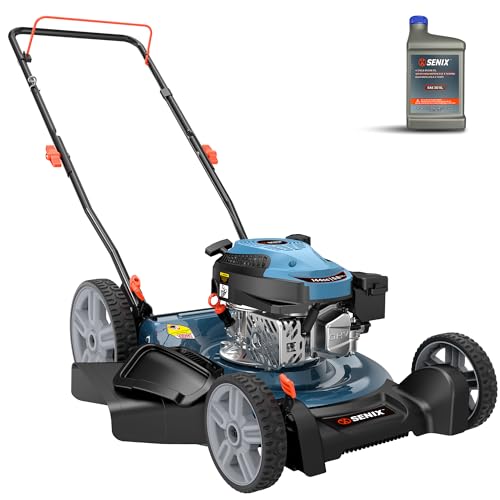
SENIX 21-Inch Gas Push Mower, 144cc, Mulching
Why These Options Stand Out
For owners who already own a ride-on mower, this is the kind of roller that pulls double duty without forcing a second piece of equipment into the garage. The 18-by-24-inch poly drum holds enough weight to press seed and flatten mole runs across a substantial lawn, while the push-and-tow design means the same tool works on a narrow side yard where the tractor simply cannot reach.
Compared to the Outvita roller reviewed later, this one trades manual effort for raw coverage. Homeowners with food plots, parks-style lots, or freshly graded areas will appreciate how quickly the work moves once a UTV or garden tractor takes over.
Points In Its Favor
- Doubles as a walk-behind roller or a tow-behind unit, so one tool covers small beds and open fields.
- Poly drum resists the rust and denting that often shows up on steel rollers after a few seasons.
- Wide 24-inch rolling face finishes a typical lawn in fewer passes than narrower rollers.
- Rounded edges protect established turf from tearing at the turn points.
Where It May Fall Short
- Poly drums need to be drained before freezing weather, which adds an end-of-season step.
- Without a hitch pin rated for towing, smaller ATVs can struggle to pull the filled drum across soft ground.
The Right Fit
Owners with a riding mower or ATV who need to roll seed beds, smooth out rough patches, or pack down new sod on a sizable lot.
Reach For A Different Pick When
The Outvita 13-Gallon Lawn Roller suits a smaller yard where towing is overkill and a manual walk-behind covers the job.
Reel mowers reward routine. This blue 14-inch model cuts with a scissor action rather than tearing grass the way a rotary blade does, and the included catcher spares the lawn from a second raking pass. In most backyards under 2,000 square feet, the 14-inch deck and 8-inch polymer wheels cover ground without feeling like a workout.
Where the SENIX gas mower later in this list solves the problem of speed and power, this one solves the problem of simplicity. There is no fuel mix, no pull cord, and a far quieter cut that neighbors on Saturday mornings will appreciate.
Real-World Strengths
- Cuts down on noise, making early-morning mowing easier to live with for nearby neighbors.
- Zero fuel or charging means no ongoing fuel costs or battery degradation to plan around.
- Lower blades mean less risk of throwing rocks at pets or garden furniture.
- Built-in catcher streamlines cleanup on small lawns where clippings would otherwise smother thin turf.
Honest Caveats
- Tall, wet grass stalls the reel, so weekly mowing during peak growth is the practical cadence.
- Uneven ground forces the operator to back up and re-cut thicker patches.
- The catcher’s small opening fills quickly on dense turf, so expect frequent stops.
Who Will Love This
City-dwelling owners with a flat, tidy lawn under a quarter-acre who mow often enough that grass never gets tall.
Consider Something Else When
The SENIX 21-Inch Gas Push Mower handles uneven or overgrown lots where a reel mower would bog down.
The green sibling to the previous reel model swaps the polymer vibe for an alloy-steel blade bed, which tends to hold an edge longer through a season of weekly cuts. The 14-inch deck, 5-blade reel, and polymer wheel set remain familiar, so handling on a flat city lawn feels essentially the same.
For homeowners who already like the manual reel format and simply want a tougher blade bed, this one’s job is to keep doing the same work with less frequent maintenance. Storage in a small garden shed stays easy, since neither model demands fuel cans or charging docks.
Useful Strengths
- Alloy-steel reel resists dulling longer, which matters for lawns with tougher grass varieties.
- Same scissor-style cut as the blue reel, so the lawn stays neat without torn brown tips.
- Light enough to hang on a wall hook for compact shed storage.
- Eight-inch polymer wheels handle curb edges without scraping the reel.
A Few Limitations
- Same 0.6-to-1.8-inch height range as the blue model, so overgrown turf still requires multiple passes.
- Alloy steel needs a quick dry wipe-down after wet cuts to keep surface rust at bay.
Best Suited To
Owners committed to weekly manual mowing who want a sturdier blade bed without stepping up to a powered mower.
Skip It When
The BGSHKAL Manual Reel Mower suits anyone who wants a wider cutting range for variable-length grass.
Steel construction, powder-coated finish, and a 13-gallon drum that takes water or sand: this is the kind of roller that earns its keep during seed-bed prep and early-spring repairs. The 47-inch U-shaped handle keeps posture comfortable for most adults, which matters when a yard takes a few passes to settle.
Where the YITAMOTOR roller covers wide lots behind a tractor, the Outvita roller is the right scale for a homeowner with a small-to-medium yard who wants to do it on foot. After seeding, the weight packs the seed into contact without crushing the soil structure underneath.
A Favorable Mix
- Steel drum holds more weight per fill than typical poly rollers, which helps on stubborn high spots.
- Powder coating fights corrosion in damp storage sheds.
- U-shaped handle reduces wrist torque when turning at the end of a row.
- Drain plug makes seasonal water changes straightforward before freezing weather.
Practical Considerations
- Filled with water, the drum adds substantial weight, so check the handle hardware after the first season.
- Steel drums can dent if dropped on hard surfaces during storage.
Who Should Grab It
Homeowners seeding a new lawn or repairing winter damage on a small-to-medium yard who want a fillable, walk-behind roller.
Not Your Match When
The YITAMOTOR 18-by-24-Inch Roller fits anyone needing a wider drum that can hitch to a riding mower for large lots.
Adjustability is the headline feature here. A nine-position height range from roughly 1.3 to 2.5 inches lets owners raise the deck when grass shoots up fast in spring and dial it back for a tidy summer cut. The pentamanganese steel reel takes heat treatment for hardness, which is a technical way of saying the blades stay sharp through a season of regular mowing.
Compared to the tighter 0.6-to-1.8-inch range on the smaller reel models earlier in this list, this one’s range is more forgiving on first-time push-mower owners who haven’t yet learned how short to cut their turf.
What Earns Its Place
- Nine positions of height adjustment cover everything from a crew-cut to a longer summer setting.
- Heat-treated steel reel keeps an edge through regular use.
- Adjustable handle height lets different family members share the chore without hunching.
- No fuel or batteries means storage takes up less shed space than a powered unit.
Worth Bearing In Mind
- A taller cut height means more frequent mowing in peak growth weeks.
- Manual reel format still struggles in overgrown or wet grass, regardless of blade quality.
Key Product Details
Whose Shelf It Belongs On
First-time reel-mower owners and multi-user households who want a forgiving height range without stepping up to a powered unit.
Look Elsewhere When
The SENIX 21-Inch Gas Push Mower makes more sense for overgrown, uneven lots where a manual reel would bog down.
A 144cc four-stroke gas engine and a 21-inch deck change the conversation for larger yards. Where the manual reel models earlier in the list ask the operator to keep pace, this one uses torque to push through dense turf and gentle slopes without bogging down. The 2-in-1 design lets clippings either drop as mulch or bag for later cleanup.
Half-acre lots and patchy spring growth are where this mower earns its keep. Pull the cord, set the height, and the deck eats through a thick stand of grass that would have stalled any reel model on this list.
What Helps Most
- 144cc engine keeps RPMs up in thick turf, so dense patches finish without repeated stops.
- 21-inch deck reduces pass count on larger lots.
- Mulching mode returns clippings to the lawn, cutting down on bagging trips to the compost.
- Gas power handles uneven ground that would snag manual reel mowers.
Trade-Offs To Consider
- Gas engines require fuel storage, oil checks, and off-season carburetor care.
- Louder than any reel on this list, so early-morning use may bother nearby neighbors.
- Heavier to push on slopes than manual reel models, especially at low throttle.
Feature Snapshot
Made For
Homeowners with half-acre lots, gentle slopes, or thick turf who want the cutting speed of gas without stepping up to a self-propelled unit.
A Better Fit Elsewhere
The 14-Inch 5-Blade Push Reel Mower suits flat, tidy city lawns where quiet, manual mowing is the priority.
Picking the Right Tool for the Yard
Match the mower to the lot, not the other way around. Lawn size is the first filter: under a quarter-acre, a 14-inch reel mower handles weekly cuts without fuel or noise. Push rollers cover seed-bed prep without needing a tractor. Tow-behind rollers earn their keep on larger lots where a riding mower already lives. Gas push mowers bridge the gap for owners who want wider decks and the torque to handle dense or weedy turf.
Cutting height range matters more than people expect. Reel mowers with a tighter range (around 0.6 to 1.8 inches) reward frequent mowing on already-short turf, while a wider range (around 1.3 to 2.5 inches) forgives the irregular cadence that comes with summer travel or a busy schedule.
Storage and maintenance shape long-term ownership. Poly drums need draining before freezing weather, steel rollers need a quick wipe-down to prevent rust, and gas engines need fuel care during the off-season. Reel models skip most of that, which is part of why they remain popular in smaller yards and shared storage spaces.
Finally, terrain dictates the call. Flat, tidy lawns are reel-mower territory. Uneven ground, gentle grades, and thick grass push the decision toward a gas push mower with enough torque to maintain RPMs through the rough patches.
Key Considerations Across These Picks
Traps First Timers Fall Into
Buying the widest deck on a small lot wastes money and storage space. A 21-inch gas mower on a postage-stamp lawn fights itself around every shrub, while a 14-inch reel handles tight corners without scalping the edges. Conversely, picking a small reel for a half-acre lot turns mowing into an exhausting chore. Match the deck to the yard before anything else.
Overlooking the height range is another common slip. Reel mowers with a narrow range punish anyone who skips a week, since the blades cannot raise up to chew through taller growth. A wider range buys flexibility during peak spring growth and during travel weeks.
What The Higher Tier Buys
Stepping up from a manual reel to a gas push mower buys two things: cutting speed and torque. The wider deck finishes a half-acre in fewer passes, while the engine keeps the blades turning through dense patches that would stall a reel. The trade-off is fuel storage, louder operation, and a heavier machine to push on slopes.
Stepping up from a walk-behind roller to a tow-behind roller buys coverage. The wider drum and the ability to hitch to a riding mower turn seed-bed prep into a short chore rather than an afternoon of pushing. The trade-off is needing a compatible towing vehicle and a place to store a larger drum.
Wrap Up
The right push mower aerator depends on lot size, terrain, and how often mowing actually happens. Reel models keep small lawns tidy without noise or fuel costs. Rollers handle seed-bed prep and seasonal repairs. A gas push mower covers larger or tougher lots where manual tools bog out. Match the tool to the yard, store it well, and the season gets shorter in the best possible way.