
Clearing leaves, pine needles, and grass clippings by hand wears out the back faster than it wears out the lawn. The right push sweeper turns a Saturday cleanup into a brisk walk around the yard, picking up debris as it rolls. For homeowners with modest lawns, artificial turf, or a tractor already hitched up, there is a sweeper built for the job.
The Choices Worth Comparing

SWIPESMITH Artificial Turf Sweeper Power Brush
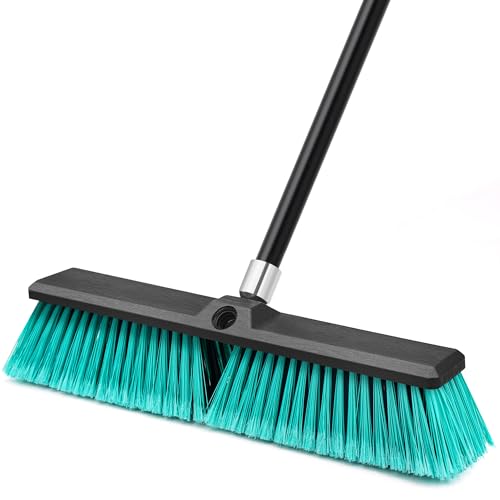
TidyBliss 18” Push Broom Outdoor Heavy Duty
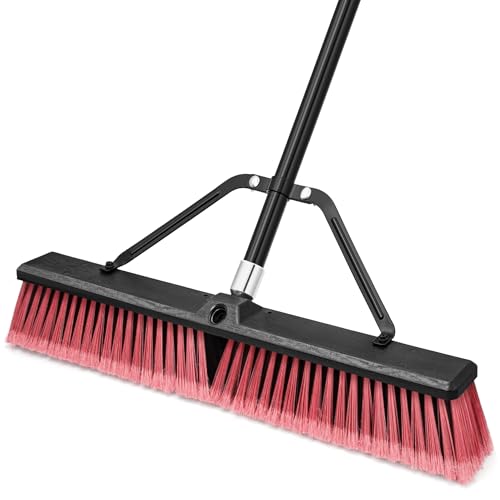
TidyBliss 24” Large Push Broom with 63” Long Handle
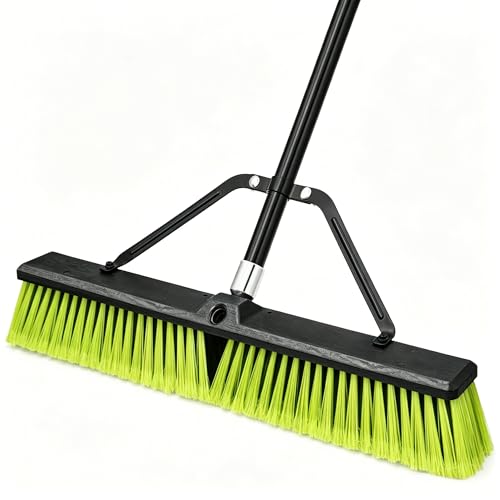
TidyBliss 24” Wide Push Broom Outdoor Heavy Duty with 63” Long Handle

Roll & Comb 502E Artificial Grass Sweeper, Electric Power Brush

Ohio Steel 4222V2 Lawn Sweeper, 22 cu.ft, Gray

Agri-Fab 45-0456 44-Inch Smart Sweep Tow Lawn Sweeper
The Picks, Examined More Closely
Artificial turf looks tidy for about a week, then pollen, dust, and leaves start settling into the fibers. The SWIPESMITH walks a 16-inch brush head across the surface, lifting debris while grooming flattened blades back upright. Power comes from a 15 AMP motor, which sits in the upper range for residential turf tools and helps drive the stiff bristles through matting.
For most homeowners with a small synthetic lawn or pet area, the unit handles routine upkeep without dethatching. Unlike the tow-behind sweepers later in this roundup, this one operates independently and plugs into a standard outlet, so no tractor is required.
The Practical Payoff
- 16-inch brush width covers a narrow turf strip in a handful of passes
- 12-gallon removable bag collects leaves and pet hair as it sweeps
- Corded setup means steady power without battery run-time worries
- Light enough to push across a backyard without fatigue
Things To Consider
- Does not include dethatching capability, so deeply matted turf needs separate treatment
- Cord length may limit reach on larger lawns without an outdoor extension
At A Glance
Who It Suits Best
Owners of small synthetic lawns or pet runs who want regular brushing without renting a machine.
Consider Something Else When
Large turf fields benefit more from the Roll & Comb 502E Electric Power Brush and its higher-capacity motor.
Garage floors, shop aisles, and patio slabs need a broom that actually moves debris instead of flicking it sideways. The TidyBliss 18-inch push broom uses a six-layer bristle build with split-end tips on the outer row, which catches fine dust the inner layers push forward. Compared to the SWIPESMITH, this broom targets hard floors rather than turf.
For homeowners and shop owners managing sawdust, grass clippings, or sidewalk grit, the head width fits through standard doors and tight corners without dragging. The narrower profile is a real benefit when sweeping around workbenches or parked equipment.
Standout Benefits
- Six-layer bristle design sweeps fine and coarse debris in fewer passes
- Compact 18-inch head reaches tight spots a 24-inch broom misses
- Stiff construction handles outdoor grit and shop debris
Worth Noting
- Wider areas take noticeably more passes than the wider TidyBliss siblings
- Storage requires hanging or standing the bristle head upright to prevent bending
Made For
Garage, shop, and patio owners who want a maneuverable broom for tight spaces.
Skip It When
Large garage floors or warehouse-style spaces benefit from the TidyBliss 24” Large Push Broom and its broader sweep.
The 24-inch head gives this TidyBliss a clear speed advantage over the 18-inch version in wide-open floor areas. Same six-layer bristle build, same split-end outer row, but the added width means each stroke pushes more debris forward. Side-by-side with the smaller sibling, the difference shows up fast in a two-car garage.
The 63-inch handle is the other quiet win. Tall users stop hunching, which matters during long sweeping sessions. For homeowners and small-shop owners clearing sawdust, dirt, or clippings from broad concrete pads, the geometry reduces effort.
Where It Delivers
- 24-inch head covers a two-car garage in roughly half the passes of an 18-inch broom
- 63-inch handle supports upright posture for taller users
- Same split-end bristle row as the smaller TidyBliss for fine-particle pickup
- Sturdy enough for outdoor grit and shop debris
Points To Note
- Head width makes tight corners harder to navigate
- Bristles can flatten with heavy commercial use and may need replacement sooner
Feature Snapshot
Right Fit For
Homeowners with larger garage floors or shop owners sweeping wide aisles regularly.
Look Elsewhere When
Reaching corners and narrow doorways calls for the TidyBliss 18” Push Broom instead.
Functionally close to the previous TidyBliss entry, this variant leans harder into outdoor heavy-duty framing. The 24-inch head and 63-inch handle are the same geometry, but the heavy-duty tuning makes a difference on rougher surfaces. Driveways, weathered patios, and workshop slabs are where this broom earns its keep.
For anyone already leaning toward a 24-inch push broom but expecting to sweep cracked concrete or coarse outdoor surfaces, the heavier bristle build is a sensible choice. The trade-off shows up in weight, which makes longer sessions more tiring.
Strengths Worth Knowing
- Heavy-duty tuning handles cracked concrete and weathered patio slabs
- Wide 24-inch path shortens outdoor sweeping sessions
- 63-inch handle keeps posture upright during extended use
Honest Caveats
- Heavier than the standard 24-inch TidyBliss, which can tire arms faster
- Head width limits use inside tight indoor corners
Best Suited To
Shop owners and homeowners clearing rough outdoor surfaces like driveways and weathered patios.
Swap It Out When
Sweeping smooth indoor floors benefits more from the lighter TidyBliss 24” Large Push Broom with the same 63-inch handle.
Bigger synthetic lawns, putting greens, and commercial turf installations push lighter sweepers to their limit. The Roll & Comb 502E answers with a 1600W motor, which is a noticeable step up from the SWIPESMITH’s 15 AMP residential build. The brush lifts flattened fibers while pulling embedded dirt, leaves, dust, and pet hair off the surface.
For property managers or homeowners with extensive artificial turf, the added power speeds up cleanup without bogging down. Compared to push brooms earlier in the roundup, this is firmly turf-only territory and not interchangeable with garage sweeping.
Reasons It Performs
- 1600W motor drives bristles through heavily matted turf fibers
- Lifts flattened grass blades while collecting debris in one pass
- Suited to larger synthetic lawns and putting-green-scale surfaces
- Removes pet hair and dust that lighter brushes leave behind
- Electric power delivers consistent output without manual fatigue
Some Limits To Know
- Overkill for small backyard turf patches where the SWIPESMITH is enough
- Corded electric design restricts reach on very large fields without extension planning
Technical Sheet
Who Will Love This
Owners of large synthetic lawns, putting greens, or pet-friendly turf areas needing serious revival power.
A Better Fit Elsewhere
Smaller residential lawns can step down to the SWIPESMITH and skip the extra motor capacity.
For homeowners with a riding mower and a few acres to clear, the tool changes entirely. The Ohio Steel 4222V2 hitches behind a tractor and sweeps a 42-inch path with a spiral brush, which Ohio Steel designed to lift debris more efficiently than straight brushes. The 22 cu.ft hopper means fewer stops to dump, a meaningful detail on a big property.
Unlike the SWIPESMITH or Roll & Comb, this sweeper does not brush synthetic turf and instead rolls across natural grass, picking up leaves, pine needles, and clippings. The numbered height adjustment, which locks without slipping, keeps brush depth consistent across uneven ground.
The Case For It
- 42-inch sweeping path clears large lawns in fewer passes
- 22 cu.ft hopper holds significant debris before needing to empty
- Patented spiral brush reduces gear strain for longer service life
- Numbered height adjustment stays locked during operation
Trade Offs
- Requires a riding tractor to pull, unlike push or electric sweepers
- Storage footprint is larger than a push broom or turf brush
- Less useful on small lawns where maneuverability matters more than capacity
Quick Facts
Perfect Match For
Homeowners with large natural lawns and a riding mower already in the shed.
Reach For A Different Pick When
Smaller yards without a tractor should consider the Agri-Fab Smart Sweep if a tow-style unit is still wanted.
Agri-Fab has been building tow-behind sweepers long enough that the Smart Sweep feels like a known quantity. The 44-inch path covers ground quickly, and the universal offset hitch is the quiet highlight, allowing simultaneous mowing and sweeping in one pass. For riding-mower owners who already cut and sweep on separate trips, that overlap saves real time.
The 25 cu.ft hopper is generous, and emptying happens from the seat. Compared to the Ohio Steel earlier in the roundup, this unit offers slightly more width but trades the spiral brush for a straight one. For most homeowners, the offset hitch alone justifies a close look.
Practical Pluses
- 44-inch sweeping width covers broad lawns in fewer passes
- 25 cu.ft hopper empties from the seat without dismounting
- Universal offset hitch allows cutting and sweeping in one pass
- Stores compactly when not in use
- One-button brush height adjustment simplifies setup
Where It Is Less Suited
- Requires a riding mower to tow, ruling out push-broom shoppers
- Straight brush design may be less efficient on heavy wet leaves than spiral alternatives
Who Should Grab It
Riding-mower owners with broad lawns who want mowing and sweeping in a single pass.
Another Choice May Suit
Those prioritizing hopper capacity over mowing overlap should consider the Ohio Steel 4222V2 with its larger 22 cu.ft bag.
What to Weigh Before Choosing a Push Lawn Sweeper
Sweeping Path and Surface Type
The working width matters more than most shoppers expect. An 18-inch push broom fits tight garage corners where a 24-inch head keeps bumping into workbenches. On a natural lawn, a 42-inch or 44-inch tow sweeper covers ground fast but cannot navigate garden beds. Match the sweep width to the largest open area the tool will face, then check that it still works in the smaller spaces. Synthetic turf is a separate category entirely, where brush design and motor power matter more than width.
Power Source and Effort
Push brooms cost almost nothing to run and never need charging, but require physical effort on every stroke. Corded electric turf sweepers deliver steady power without battery anxiety, though the cord limits reach on large properties. Tow-behind units use the tractor’s engine and remove nearly all manual effort, but only make sense for owners who already have a riding mower. The honest trade-off is effort versus flexibility.
Hopper and Collection
Lawns that drop heavy leaf volume in autumn need a hopper measured in cubic feet, not gallons. A 22 or 25 cu.ft bag means fewer stops to empty. Synthetic turf tools use smaller removable bags because the debris volume per session is lower. For garage and shop brooms, there is no bag at all, which keeps the broom light but requires a dustpan at the end.
Storage and Long-Term Care
Tow sweepers fold or store compactly, but still take up shed space. Corded turf sweepers store easily in a garage corner. Push brooms last longest when hung or stood bristle-side up, since leaning bristles against a wall eventually bends them out of shape. Bristle wear is the most common durability issue across every category.
Smart Choices Across These Picks
Mistakes Worth Dodging
A common first-time mistake is buying a tow sweeper for a yard too small to justify the setup time. Another is choosing a turf sweeper for natural grass, since the brushes and motors target different surfaces. Shoppers also tend to over-focus on sweeping width without checking whether the head fits through gates, doors, or between garden beds. Measure the tightest opening before ordering.
When Paying More Pays Off
The premium tier in this category earns its keep through motor strength, hopper size, and hitch engineering. The Roll & Comb 502E delivers turf revival that cheaper brushes cannot match, while the Agri-Fab Smart Sweep saves time through offset-hitch mowing overlap. For homeowners with the workload to justify the cost, the upgrade pays back through fewer passes and longer service life.
Closing Remarks
The right sweeper depends almost entirely on the surface and the equipment already on hand. Synthetic turf calls for a powered brush, hard floors call for a wide push broom, and large natural lawns call for a tow-behind unit. Match the tool to the job, and yard cleanup becomes a quick walk instead of a long afternoon.