
Camping meals hit different when there’s actual flame involved, but hauling a full backyard rig into the woods defeats the purpose. The picks below run the gamut: charcoal grills that travel light, drum and offset smokers for slow cooks, dual-fuel combos that swing from propane to charcoal, and one propane griddle built for grab-and-go breakfasts. Every option here earns its space in a truck bed or cargo bin without forcing trade-offs on real cooking performance.
A Side-By-Side Look

Oklahoma Joe’s Rambler Portable Charcoal Grill 218 sq. in.
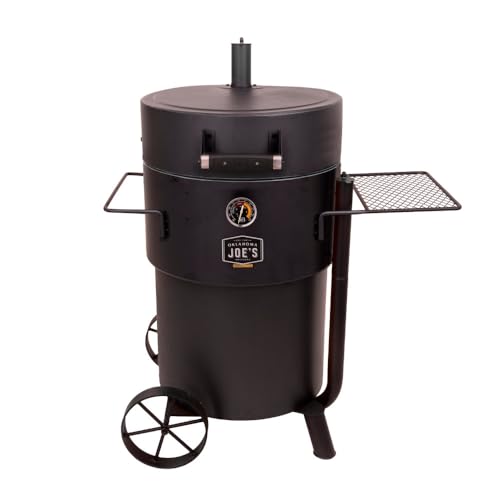
Oklahoma Joe’s Bronco Pro 21.5 in. Drum Smoker and Grill

Oklahoma Joe’s Firecraft Series Modular Open Fire Barrel Grill

Oklahoma Joe’s Highland Offset Reverse Flow Smoker and Grill
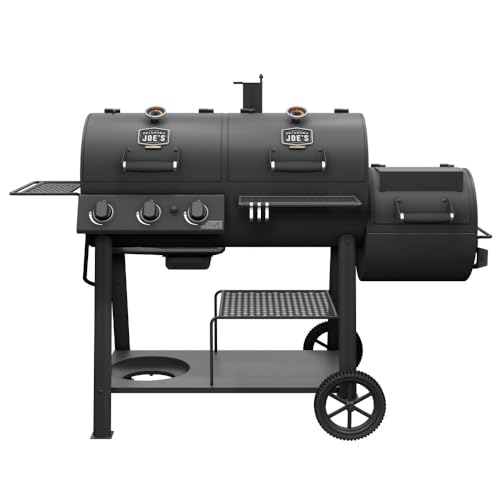
Oklahoma Joe’s Canyon Combo Dual Fuel Smoker and Grill

Oklahoma Joe’s Longhorn Offset Charcoal Smoker and Grill

Blackstone 22 in. Tabletop Propane Griddle 2 Burners
Why These Options Stand Out
Tabletop charcoal grilling has a low ceiling for gear complexity, and the Rambler keeps things simple by design. It pairs a 218-square-inch grate with a height-adjustable charcoal tray, meaning heat moves up and down rather than relying on vents alone. That’s a smart move for campers who switch from searing steaks to slow roasting without rebuilding the fire each time.
The compact build fits a tailgate, a picnic table, or a small camp platform without dominating the space. Beginners get a forgiving introduction to live-fire cooking, and seasoned charcoal fans get a no-fuss secondary grill for quick trips.
Points In Its Favor
- Height-adjustable tray lets owners raise or lower coals to control heat without moving food around
- Tabletop footprint fits small spaces like picnic tables, tailgates, and fold-out camp kitchens
- Authentic charcoal flavor in a portable package, ideal for weekend trips where real fire matters
- Steel body holds up well to transport and rough handling at campsite
Things To Consider
- Charcoal requires extra fuel packing and ash cleanup at the site
- Smaller grate limits cooking for groups larger than three or four
- Open design means wind can shift cooking temperatures during exposed setups
Feature Snapshot
Made For
Solo campers and small groups running quick weekend cooks on a picnic table or tailgate.
A Better Fit Elsewhere
The Blackstone 22 in. Tabletop Propane Griddle suits travelers who want instant ignition and flat-top versatility over charcoal’s longer setup.
Where the Rambler stops at portable simplicity, the Bronco Pro steps into serious low-and-slow territory. Its sealed drum design and purpose-built airflow system (intake vents and an exhaust stack that work together to maintain steady heat) deliver the consistent temperatures that long smokes demand. The oversized basket reportedly supports well over 15 hours of cook time per load, which matters on overnight briskets or pulled pork.
Unlike the Rambler’s open-top approach, this one runs vertical, freeing up camp space and keeping the heat contained in windy conditions. It’s heavier and demands a real vehicle commitment, but anyone transitioning from casual grilling to competition-style smoking will appreciate what the sealed drum pulls off.
Notable Gains
- Extended burn capacity supports overnight cooks with fewer fuel refills
- Sealed drum and engineered airflow give competition-style precision
- 366 sq. in. cooking area handles multiple racks of ribs or two whole chickens
- Vertical drum design shields fire from wind in exposed camp setups
Trade Offs
- Weight and bulk make it a poor fit for backpack or motorcycle camping
- Charcoal-and-wood cooks demand more prep time than propane setups
Key Product Details
Best Suited To
Campers who drive to a fixed site and want authentic smoke flavor on long cooks.
Swap It Out When
The Oklahoma Joe’s Rambler makes more sense for travelers prioritizing low setup time and small-scale cooks.
The Firecraft barrel breaks the campfire-vs-grill divide by acting as both. Its open firebox design delivers 360-degree access for stoking (adding fuel and rearranging coals) without disturbing food, and the two round heavy-gauge wire grates (240 sq. in. each) support grilling, fire-pit use, or open-fire cooking depending on the evening. Twist-lock handles let owners adjust grate height as coals shift.
Modularity is the real story here. Campers who treat the fire pit as the social center of camp will appreciate that this doubles as a heat source after dinner. For pure grilling performance, the Bronco Pro still wins on seal and airflow, but the Firecraft brings something those specialized cookers don’t: atmosphere.
Useful Strengths
- Doubles as fire pit and cooking station, reducing gear at camp
- Open firebox permits 360-degree access without moving food
- Two 240 sq. in. grates offer 480 sq. in. of total cooking surface
- Heavy-gauge wire grates resist corrosion over multiple seasons
Honest Caveats
- Open design exposes fire to wind and limits temperature precision for smoking
- Barrel size and weight reduce portability for backcountry trips
- Ash management requires extra attention compared to enclosed smokers
Whose Camp It Belongs In
Family or group campers who want a fire-pit experience that pulls grill duty after dark.
Another Choice May Suit
The Oklahoma Joe’s Highland Offset Reverse Flow Smoker fits cooks who need tight temperature control for true low-and-slow barbecue.
Reverse flow smoking routes heat and smoke under a sealed baffle plate, then back up and out through a smokestack on the opposite side, evening out hot spots that plague traditional offsets. The Highland offers that configuration with removable baffles, meaning owners can switch from reverse flow to traditional offset cooking depending on the cook. With 1,093 sq. in. of total cooking space, this is the rig for serious campsite production.
Compared to the Bronco Pro’s vertical drum, the Highland’s horizontal layout fits more food per square foot of grate but demands more floor space at camp. It’s overkill for quick dinners, exactly right for full-packer-brisket weekends.
Standout Benefits
- 1,093 sq. in. handles full-pack briskets, multiple pork shoulders, and family meals
- Removable baffles let owners toggle between reverse flow and traditional offset setups
- Large charcoal basket supports long, uninterrupted burns with less babysitting
- Adjustable smokestack positions fine-tune airflow for different wood types
Worth Bearing In Mind
- Footprint and weight rule out anything but truck or trailer transport
- First-time offset owners face a real learning curve with airflow tuning
- Hardwood splits and chunks are sold separately, raising total setup cost
Feature Card
Who Should Grab It
Camp pitmasters running overnight or weekend-long smokes who want competition-style control.
Not Your Match When
The Oklahoma Joe’s Bronco Pro is a smarter pick for smaller groups working with limited cargo space.
The Canyon Combo is the only entry here that runs on both propane and charcoal, which changes the campsite math. The propane side fires up fast for weeknight dinners, while the charcoal side handles serious smoke sessions when there’s time. The 36,000 BTU 3-burner propane setup (a measure of heat output, where BTU stands for British Thermal Unit) reaches cooking temperature without the 30-minute charcoal wait, and the charcoal chamber covers long, indirect cooks.
Total cooking area spans 1,031 sq. in., enough to smoke two pork shoulders on one side while grilling burgers on the other. Propane tank is sold separately, so factor that into the build. For campers who split time between quick weeknight meals and weekend smokes, the dual-fuel setup eliminates the need for two separate rigs.
Everyday Perks
- Propane side delivers fast startup and easy temperature control for weeknight cooking
- Charcoal side handles low-and-slow smoking without a separate rig
- 1,031 sq. in. fits two pork shoulders plus a row of burgers simultaneously
- 36,000 BTU output reaches grilling heat quickly
Points To Note
- Propane tank is not included, so plan for that separate purchase
- Combined footprint is significant for tighter camp platforms
- Charcoal and hardwood fuel sold separately adds to ongoing cost
Spec Overview
Right Fit For
Car campers and weekenders who want a single rig that covers both quick grills and longer smokes.
Look Elsewhere When
The Blackstone 22 in. Tabletop Propane Griddle fits travelers needing a smaller, propane-only footprint for fast breakfasts and simple dinners.
The Longhorn is the workhorse offset that built Oklahoma Joe’s reputation. Its 751 sq. in. primary chamber plus 309 sq. in. secondary rack add up to 1,060 sq. in., enough to handle brisket, ribs, multiple chickens, or a mixed cook for a hungry crowd. Classic offset design routes smoke and heat across the chamber for that traditional barbecue profile.
Without the Highland’s baffle system, the Longhorn runs a more straightforward setup that newer smokers find easier to learn. You may find it runs slightly hotter near the firebox than reverse flow designs, which actually suits some traditional barbecue styles where bark formation matters.
What It Does Well
- 1,060 sq. in. handles family-sized cooks with room to spare
- Classic offset design supports traditional barbecue technique
- Straightforward layout is approachable for first-time offset owners
- Heavy-gauge construction stands up to repeated camp transport
Worth Noting
- Lacks reverse flow baffle, so temperature tuning is more hands-on
- Hardwood splits and chunks sold separately
- Footprint limits it to vehicle-based camping setups
Who Will Love This
Traditionalists and group campers who want proven offset performance for family meals.
Where A Sibling Pick Shines
The Oklahoma Joe’s Highland Offset Reverse Flow Smoker offers tighter temperature control for cooks prioritizing precision over simplicity.
The Blackstone stands apart as the only true flat-top griddle in the roundup, and that distinction matters. Two H-style burners (a burner configuration designed for even heat distribution across the cooking surface) deliver 24,000 BTUs across 352 sq. in. of cooking plate, with independently adjustable heat zones for simultaneous searing and warming. The rear grease trap catches runoff during bacon, eggs, hash browns, and burger patties.
Unlike the charcoal picks above, propane ignition means breakfast hits the plate in minutes. The trade-off is flavor. Charcoal smokes, griddles sear. Campers who want pancakes, smash burgers, and stir-fried vegetables will find the Blackstone irreplaceable; those chasing bark and smoke rings should look elsewhere.
Good Reasons To Consider
- Instant propane ignition reaches cooking temperature in minutes
- Two independently controlled zones allow simultaneous high-heat and warming
- Flat top handles pancakes, eggs, smash burgers, and stir-fry
- Rear grease trap simplifies cleanup during fatty cooks
- Tabletop form factor fits most camp tables and tailgates
A Few Limitations
- No hood, so wind and weather affect performance in exposed setups
- Propane tank sold separately adds to total setup cost
- Flat top doesn’t replicate the smoky flavor of charcoal or offset cooking
Built With In Mind
Road-trippers, tailgaters, and tent campers prioritizing speed and breakfast versatility over smoke flavor.
Consider Something Else When
The Oklahoma Joe’s Rambler Portable Charcoal Grill suits travelers who want authentic charcoal flavor in a similarly sized package.
Picking a Camp Grill That Actually Earns the Space
Camp cooking has its own gravity, and the gear that works in a backyard often falls apart once wind, weight limits, and ash cleanup enter the equation. A few realities worth thinking through before committing to a rig.
Fuel choice sets the tone for every cook. Propane offers fast ignition and clean shutdown, which is hard to beat for short trips or quick dinners. Charcoal and hardwood reward patience with real smoke flavor, but they require fuel packing, longer preheats, and ash disposal at the site. Dual-fuel combos split the difference at the cost of size and complexity.
Cooking area matters more than the raw square-inch number suggests. A 200 sq. in. tabletop grill feeds two to three people comfortably; once groups hit five or six, look for 700 sq. in. or more. Offset and drum smokers trade footprint for vertical or horizontal cook space, which works at fixed camp platforms but penalizes backpackers.
Weight and footprint decide whether the rig actually gets used. A 100-pound offset smoker that stays home because loading it feels like work is worse than a 25-pound tabletop that lives in the truck. Match the rig to the trip, not the other way around.
Portability features like fold-down legs, carry handles, and latching lids transform how often a grill gets loaded up. Compare transport dimensions against cargo space, not just cooking capacity on paper.
Maintenance and cleanup at camp are easy to underestimate. Charcoal ash, grease traps, and soot-covered lids all demand attention at the end of a long day. Designs with accessible ash pans and removable grates save real time when water is limited and fatigue is high.
Key Things To Weigh Across The List
Pitfalls Shoppers Hit
First-time buyers often grab the largest grill they can afford and end up with something that doesn’t move. Size should match the typical group, not the biggest party on the calendar. Another common mistake is ignoring fuel logistics: charcoal and hardwood require packing, dry storage, and ash disposal that propane tanks eliminate, but propane requires a separate tank purchase and steady fuel supply.
Wind exposure catches people off guard too. Open grills lose heat fast in gusty campsites, which extends cook times and frustrates charcoal temperature control. A windbreak or enclosed design saves real cooking time when conditions turn.
Why Top Tier Costs More
Premium camp grills like the Highland reverse flow smoker earn their higher tier through airflow engineering, sealed construction, and gauge steel that holds heat steadily. Those features translate to less babysitting during long cooks, more even bark on brisket, and tighter temperature control when ambient conditions shift. The upgrade pays off for campers running overnight smokes or feeding larger groups, but casual weekenders cooking burgers may not notice the difference against simpler offsets or the Blackstone griddle. Spending up makes sense when the cook style actually demands precision, not just because a higher tier exists.