
Picking a grill-and-smoker combo used to mean settling. Most dual-fuel rigs either smoke well or sear fast, rarely both, and far too many shoppers overpay for a name while walking past quieter contenders. This list sorts through seven charcoal grills, offset smokers, and true dual-fuel combos worth a serious look, from a tailgate-friendly tabletop to a backyard-sized offset that handles a full brisket. The picks below lean on build materials, cooking area, fuel versatility, and how each cooker handles the kind of meals most people actually cook.
How The Shortlist Stacks Up

Oklahoma Joe’s Rambler Portable Charcoal Grill (Black)
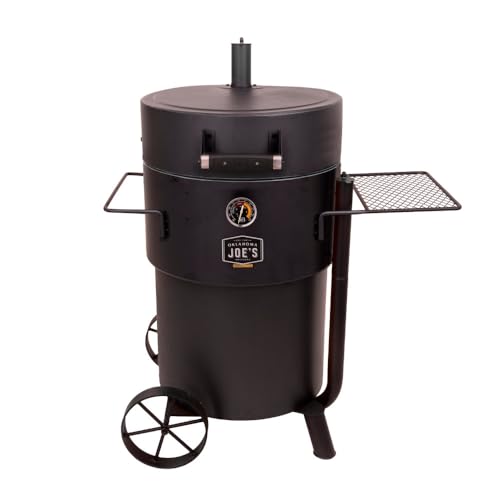
Oklahoma Joe’s Bronco Pro Drum Smoker and Grill

PK Grills PK300-SCX Portable Charcoal Grill and Smoker (Silver)

Oklahoma Joe’s Firecraft Series Modular Open Fire Barrel Grill

Oklahoma Joe’s Highland Offset Reverse Flow Smoker and Grill
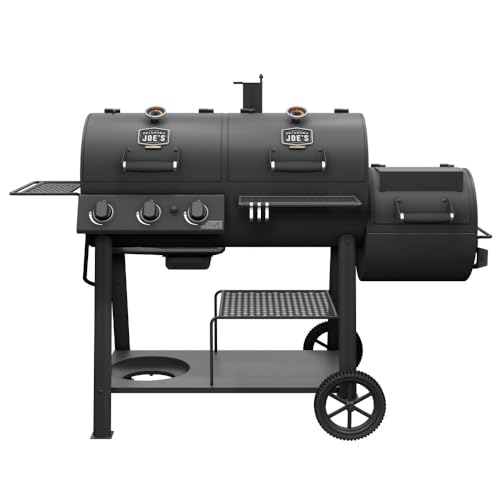
Oklahoma Joe’s Canyon Combo Dual Fuel Propane and Charcoal Grill

Oklahoma Joe’s Longhorn Offset Charcoal Smoker and Grill
What Each Pick Brings To The Table
The Rambler earns its spot for apartment dwellers and tailgaters who want real charcoal flavor without a full-size kettle in the trunk. Its 218-square-inch grate handles a pack of burgers or a couple of small steaks in one pass, and the whole unit slides onto a picnic table or a tailgate pad without ceremony.
Compared with the heavier drum and offset smokers later in this list, the Rambler is a day-trip cook, not an overnight one. For grilling sessions where set-and-forget charcoal cooking matters more than smoke volume, it fits the bill.
The Upside
- Compact footprint fits small patios, truck beds, and folding tables
- Height-adjustable charcoal tray lets you raise or lower the fire for sear marks or gentler heat
- Straightforward charcoal cooking with no propane tank, regulator, or ignition parts to store
- Light enough to move one-handed once cool, useful for renters who store it indoors
Things To Consider
- Cooking area is tight for a family of four cooking full meals at once
- Ash cleanup is manual, and the small firebox fills up faster than larger grills
Who It Suits Best
Tailgaters, renters, and small-household cooks who want straightforward charcoal grilling without dedicating patio space to a full-size kettle.
Consider Something Else When
Shoppers wanting long smoke sessions should look at the Oklahoma Joe’s Bronco Pro drum smoker and grill instead, which burns far longer per load.
The Bronco Pro steps up to a sealed drum design (a cylindrical chamber where smoke and heat circulate around the food) built around long, low-temperature cooks. Its oversized charcoal basket is the headline: enough fuel for over 15 hours of smoke before a reload, which is the difference between tending a fire and walking away for the afternoon.
Where the Rambler is a quick grill, the Bronco Pro is for pork shoulders and ribs. The 21.5-inch drum footprint needs a corner of the patio, and the cooking surface is purpose-built for indirect heat (cooking with the fire beside the food, not directly under it) rather than open flame.
Practical Advantages
- Oversized charcoal basket supports long cooks without mid-cook refueling
- Sealed drum design keeps smoke contained for consistent low-and-slow results
- 366-square-inch grate holds multiple racks of ribs or two pork shoulders at once
- Heavy-gauge steel body handles repeated hot-coal cycles season after season
Trade Offs
- Drum design is less versatile for high-heat searing than open-grate cookers
- Bulk and weight make it a stationary patio piece, not portable
Made For
Backyard pitmasters running overnight or all-day smoke sessions who want a set-and-forget cooker that doesn’t need babysitting.
Look Elsewhere When
Households wanting both propane searing and charcoal smoking in one rig should look at the Oklahoma Joe’s Canyon Combo Dual Fuel instead.
The PK300-SCX is the odd one out here, and deliberately so. Its cast aluminum body (a one-piece molded shell that conducts heat roughly four times faster than steel) spreads heat more evenly than steel cookers, which is why PK has a long cult following among people who actually cook on portable grills.
The capsule shape with four vents gives real airflow control, useful for everything from a hard sear on steaks to a slow pork shoulder. Versus the steel-body Rambler earlier in this list, the PK runs lighter, cooks hotter, and shrugs off rust far better. The trade-off is the price tag.
Good Reasons To Consider
- Cast aluminum construction resists rust, a real plus near coastlines or in humid climates
- Four-point venting system supports both direct grilling and indirect smoking in one cooker
- Durahinge design adds stability to the lid when opening and closing during long cooks
- Light enough to load into an SUV for camping or tailgating
Honest Caveats
- Premium price tier compared with steel-bodied charcoal cookers
- Smaller primary grate limits how many burgers or racks of ribs fit at once
Who Will Love This
Campers and tailgaters who want a portable cooker that lasts decades and rewards cooks willing to learn proper airflow management.
A Better Fit Elsewhere
Shoppers on a tighter budget chasing raw charcoal smoke volume should look at the Oklahoma Joe’s Bronco Pro drum smoker and grill instead.
The Firecraft barrel grill is less a smoker and more a controlled campfire. Its open-fire design lets you cook over flame or convert the rig into a fire pit after dinner, which is the selling point for households who want one backyard feature instead of three.
The 480-square-inch total cooking area splits across two round wire grates, and the twist-lock handle drops the grates down to adjust fire height without fishing around with tools. Compared with the sealed Bronco Pro, the Firecraft prioritizes open-flame cooking over slow smoke retention.
Where It Helps
- Doubles as a fire pit, cooking station, and open-flame grill in one footprint
- 360-degree grate access stokes the fire without lifting the food or disturbing coals
- Two heavy-gauge wire grates handle direct heat and rotate easily during cooking
- Twist-lock handle adjusts grate height mid-cook without tools
Points To Keep In Mind
- Open-fire design loses heat and smoke faster than sealed smokers like the Bronco Pro
- Larger barrel footprint requires dedicated patio or yard space
Best Suited To
Backyards where the grill is also a gathering spot, and owners who want grilling, fire pit, and conversation around a single feature.
Reach For A Different Pick When
Strict low-and-slow barbecue cooks get more reliable results from the Oklahoma Joe’s Highland offset smoker and grill.
The Highland is where this roundup shifts into serious territory. Reverse-flow smoking (a baffle plate routes smoke around the cook chamber before it exits, evening out heat from end to end) plus adjustable smokestack baffles let owners flip between reverse-flow mode and traditional offset smoking in one rig. The 1,093-square-inch total grate is competition-scale without crossing into trailer-sized hardware.
Compared with the simpler Longhorn later in this list, the Highland adds the reverse-flow baffle system for tighter heat consistency. That extra control costs in complexity and footprint, and pays off for cooks who notice uneven bark (the seasoned crust on smoked meats) across a full grate.
A Strong Showing
- Removable baffles let owners switch between reverse-flow and traditional offset smoking
- 1,093 square inches of total cooking area handles brisket, multiple racks, and whole chickens
- Large charcoal basket supports extended burns with fewer interruptions
- Offset firebox design supports true wood-fired flavor from splits and chunks
A Few Limitations
- Learning curve for managing baffle positions and stack damper (the vent on the smokestack that controls airflow)
- Heavy and best treated as a permanent backyard piece
The Right Fit
Experienced offset cooks who want reverse-flow option without stepping up to a full competition trailer.
Skip It When
First-time offset owners will find the simpler Oklahoma Joe’s Longhorn offset smoker and grill easier to learn on.
Key Specs
The Canyon Combo is the only true dual-fuel rig in this roundup: a 36,000 BTU (British thermal units, a measure of heat energy) three-burner propane side that lights on the first try, plus an offset charcoal chamber on the other end for actual smoke. For households that want a weekday propane sear and a weekend charcoal brisket in one footprint, it sidesteps the usual either-or trade-off.
Compared with the all-charcoal Highland earlier in this list, the Canyon trades reverse-flow refinement for genuine propane convenience. The propane side hits grilling temperatures fast, while the offset chamber handles a couple of pork shoulders and twelve burgers across the total 1,031-square-inch area.
Positive Points
- Side-by-side propane and charcoal cooking in one rig, no fuel compromise
- 36,000 BTU propane output brings water to a boil and sears steaks without long preheating
- 750-square-inch primary charcoal chamber holds two pork shoulders with room to spare
- Total 1,031-square-inch cooking area handles full cookout spreads
Some Limits To Know
- Propane tank sold separately, an extra purchase step
- Larger footprint needs a dedicated patio corner for both sides
Perfect Match For
Households that genuinely use both fuels, hosting weeknight propane dinners and weekend smoke sessions on the same grill.
Swap It Out When
Charcoal-only purists will prefer the simpler operation of the Oklahoma Joe’s Longhorn offset smoker and grill.
Feature Snapshot
The Longhorn is the classic entry point into offset smoking. It drops the reverse-flow baffle system of the Highland in favor of a simpler traditional offset layout, which is easier to learn and produces solid results with straightforward fire management. The 1,060-square-inch total grate handles a brisket flat plus a few chickens comfortably.
Where the Highland rewards experience, the Longhorn rewards patience. It’s the right rig to cut teeth on wood-fired offset cooking without paying for features a first-time owner won’t use yet.
Where It Excels
- 751-square-inch primary plus 309-square-inch secondary grate cover family-scale cooks
- Traditional offset firebox design offers a more approachable learning curve
- Hardwood splits and chunks produce authentic wood-fired smoke flavor
- Proven Oklahoma Joe’s build used by entry-level competitors and home cooks
Practical Considerations
- Heat consistency across the full grate is less even than the Highland’s reverse-flow system
- Heavy steel construction makes repositioning a chore once placed
Who Should Grab It
First-time offset owners learning fire and airflow management on a forgiving, well-documented platform.
Another Choice May Suit
Cooks wanting both propane and charcoal in one rig should step up to the Oklahoma Joe’s Canyon Combo Dual Fuel instead.
At A Glance
What Matters Most When Choosing A Grill And Smoker Combo
Fuel versatility defines this category more than any other feature. A propane side gets dinner on the table in twenty minutes, while a charcoal chamber delivers the smoke profile most people picture when they say “barbecue.” Combo units like the Oklahoma Joe’s Canyon Combo answer both calls in one footprint, while dedicated smokers like the Bronco Pro or Highland trade versatility for stronger smoke performance.
Cooking area matters more than most shoppers expect. A 200-square-inch grate sounds roomy until you try to fit two racks of ribs and a chicken at once, while 1,000+ square inches lets a single cook handle a full brisket with sides. Match grate size to how many people you’re actually feeding on a typical weekend, not the holiday crowd.
Build material changes ownership more than brand does. Cast aluminum, the kind used in the PK300-SCX, resists rust and distributes heat evenly but costs more upfront. Steel cookers handle rough use and high heat cycles for years but need a cover and occasional paint touch-up to stay sharp. Drum smokers seal tight for long burns, while offset smokers offer easier access for adjusting fire and adding splits mid-cook.
Portability vs permanence is the silent trade-off. Tabletop rigs like the Rambler travel but limit batch size. Full-size offsets and dual-fuel combos stay put and reward cooks with capacity and fuel flexibility, but they’re not moving once placed.
Key Considerations Across These Picks
Common Shopping Slip Ups
The biggest miss in this category is buying for the holiday crowd instead of the typical week. A 1,000-square-inch rig sounds necessary until you realize most Tuesday-night cooks only need a fraction of that. Equally common is choosing a propane-and-charcoal combo for the name alone, then never lighting the propane side; a dedicated offset or drum smoker often produces better results at a lower price for charcoal-only cooks.
Where The Extra Money Goes
Higher-tier picks like the Highland reverse-flow or the PK300-SCX spend the premium on heat consistency and material longevity. Reverse-flow baffles even out temperature swings across the grate, which translates to more uniform bark and fewer rotated pans. Cast aluminum costs more than steel but resists rust indefinitely, useful in humid climates or near the coast. For households that cook outdoors weekly rather than monthly, those upgrades pay back in results and durability.
Bottom Line
Seven cookers, seven different answers to the same question. The Canyon Combo handles both propane weeknights and charcoal weekends. The Highland delivers competition-style offset performance for cooks willing to learn reverse-flow fire management. Smaller rigs like the Rambler and PK300-SCX earn their keep for tailgates and camping trips. Pick based on the cook you actually do most often, not the one you’re chasing.