
A good camp stove quietly shapes the trip. It determines whether breakfast happens before the trailhead crowds, whether the post-hike ramen actually tastes good, and whether the morning coffee ritual survives a windy ridge. For backpackers counting grams, car campers chasing a base-camp kitchen, or anyone tired of fiddling with unreliable flames, the right setup matters more than the latest gadget. The picks below cover a range of approaches, from two-burner classics that anchor a family site, to ultralight systems that vanish into a side pocket. Each one earns its place for a specific kind of outdoor cook.
The Leading Options At A Glance
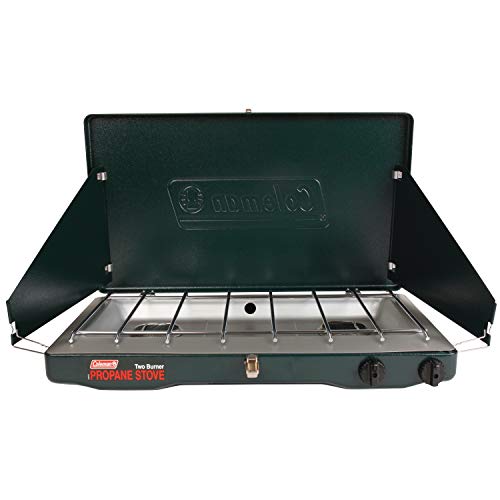
Coleman Classic Propane Stove, 2 Burner

Jetboil MightyMo Ultralight Camping Stove

Fire-Maple Petrel G2 Ultralight Camping Pot, 750ml

Fire-Maple Greenpeak 1 Camping Stove

Fire-Maple Antarcti Camping Kettle, 1L

Fire-Maple Petrel Pour-Over Kettle, 350ml

Fire-Maple Petrel G3 Ultralight Camping Pot, 600ml
Taking A Closer Look At The Options
The Coleman Classic is the kind of stove that anchors a family picnic table at a state park, where someone is making eggs on one burner while coffee warms on the other. Its two independently controlled burners put out up to 20,000 BTUs combined, enough to run a 12-inch pan and a 10-inch pan at the same time. The wide footprint gives the cook plenty of working space, and the wind-blocking side panels do real work when the breeze picks up across an exposed site.
Compared to the compact backpacking picks below, the Coleman Classic is heavier and bulkier, but that’s the trade for cooking real meals. The pressure regulator helps the flame stay steady as the propane cylinder cools, which matters more than it sounds on a chilly morning.
A Strong Showing
- Two adjustable burners let one cook handle a full breakfast without juggling a single flame
- Wind-blocking side panels protect the burners in exposed sites, reducing fuel waste and uneven cooking
- Pressure regulator keeps performance stable even as the propane cylinder temperature drops
- Wide surface accommodates a 12-inch and a 10-inch pan side by side for real meal prep
- Simple knob controls mean no learning curve, helpful for occasional campers and group cooks
Worth Noting
- Size and weight rule it out for any pack-in trip; this is a car-camping stove only
- Runtime on a single 16.4 oz cylinder is roughly one hour on high, so multi-day cooking needs extra fuel on hand
- Owners commonly recommend keeping the burner ports clear of debris, since wind-blocked panels can trap spills
Feature Snapshot
Made For
Families and car campers who want a simple two-pan setup at a picnic table and don’t mind the extra weight in the trunk.
Skip It When
Anyone hiking more than a few hundred yards from the car will find the Jetboil MightyMo a far more practical tool.
The MightyMo is Jetboil’s answer to backpackers who want more than boiled water. It’s an open platform design, meaning it works with a regular pot rather than locking into Jetboil’s proprietary canisters, but it keeps the brand’s reputation for fuel efficiency. A rolling boil arrives in roughly three minutes, and the four-turn regulator lets the simmer dial down low enough for sauce work without the flame cycling on and off.
The catch is that the MightyMo favors precision over raw output, so it’s not the right tool for searing a heavy skillet. For trail cooks who treat dinner as a real meal rather than freeze-dried mush, that trade is usually worth it.
Useful Highlights
- Open platform accepts most standard backpacking pots, which makes meal prep less restrictive
- Four-turn regulator delivers genuine simmer control for sautéed greens and sauces
- Fuel consumption reportedly runs about half of older canister systems, a real advantage on long routes
- Boil speed around three minutes means less waiting at altitude or in cold weather
Trade Offs
- Not designed for heavy cast-iron or large pans; the focused flame suits smaller cookware
- Higher upfront price than basic canister stoves, though fuel savings add up over time
- Wind exposure can reduce efficiency without a separate windscreen, which adds a piece of gear to manage
Right Fit For
Thru-hikers and multi-day backpackers cooking real meals in the backcountry and willing to pay for better fuel economy.
Look Elsewhere When
Day hikers packing light for quick boil-and-go will find the Fire-Maple Greenpeak 1 easier to justify.
The Petrel G2 is a pot more than a stove, but it’s the pot that pairs with many of the canister stoves on this list. The 750ml capacity lands in a sweet spot: enough room for a real meal for one hungry hiker, light enough at roughly 184g to forget it’s in the pack. The foldable handle folds flat for storage and locks in place during cooking, which matters more than it sounds when the pot is full of boiling water.
Where this pot pulls ahead of the Fire-Maple Antarcti Kettle below is weight and packability, at the cost of stainless steel’s toughness. The aluminum construction heats fast, which is a real backcountry advantage when fuel is limited.
Positive Takeaways
- Weight around 184g keeps the pack light without giving up usable cooking volume
- Aluminum body heats quickly, reducing fuel consumption on short meals
- Foldable handle folds flat for tidy packing and stays cool enough to grip during cooking
- 750ml capacity handles ramen, dehydrated meals, or a small portion of real food
Small Caveats
- Aluminum is lighter than steel but dents more easily on rough trails
- Not a standalone stove: factor in a separate burner or canister system
- Smaller capacity limits group cooking or generous portion sizes
Quick Facts
Who Should Grab It
Solo backpackers running lightweight kits who want a reliable cooking vessel without adding bulk.
Not Your Match When
Campers feeding two or more people will appreciate the larger Fire-Maple Petrel G3 instead.
The Greenpeak 1 is the kind of stove that lives in a daypack or an emergency kit, ready when a trail-side coffee or a quick freeze-dried meal calls. At roughly 85g, it disappears into a side pocket, and the piezo igniter means no lighter or matches needed. The mixed-material build uses stainless steel, ceramic, and aluminum alloy, which sounds like a parts list but translates into a small, durable burner that handles real trail use.
Versus the Jetboil MightyMo above, the Greenpeak trades simmer range for size and price. That’s a fair trade for short trips and emergency setups.
Practical Advantages
- Weight around 85g makes it easy to add to almost always any kit without weighing it down
- Piezo igniter built in removes the need to pack a separate fire-starter
- Stainless steel, ceramic, and aluminum construction holds up to repeated trail use
- Compact folding form slips into a pack pocket or a vehicle glovebox
Honest Caveats
- Not designed for heavy pots or large meals; smaller pots work best
- Piezo igniters can weaken in cold or wet conditions, so a backup lighter still helps on serious trips
Built With In Mind
Day hikers, anglers, and emergency-prep folks who want a reliable, tiny burner that fires up without fuss.
Reach For A Different Pick When
Multi-day backpackers cooking proper meals will want the simmer control of the Jetboil MightyMo.
The Antarcti is for campers who treat their cookware like cast iron: heavy, durable, and worth the weight. The 1-liter stainless steel body holds enough water for two generous mugs of coffee or a pot of dehydrated stew for two, and the 18-8 food-grade steel holds up to bumps and drops that would dent aluminum. Heat retention is noticeably stronger than thin aluminum, which means the kettle stays hot longer off the burner.
Pair the Antarcti with one of the small canister stoves on this list for a base camp coffee setup that lasts years.
What Pays Off
- Stainless steel construction resists dents and corrosion over years of use
- 1-liter capacity suits two-person meal prep or several rounds of hot drinks
- Strong heat retention keeps contents hot after the burner shuts off
- Simple shape and wide base sit securely on most small stoves
Points To Note
- Heavier than aluminum alternatives, so it’s a base camp pick rather than a pack item
- Stainless steel takes longer to bring water to a boil than thinner aluminum
Feature Snapshot
Whose Shelf It Belongs On
Base campers and overlanders who want a rugged kettle that doubles as a backup water-boiling vessel.
Swap It Out When
Backpackers counting every gram will find the Fire-Maple Petrel G2 a far lighter match.
The Petrel Pour-Over is a niche tool for serious trail coffee drinkers. The gooseneck spout gives genuine pour control, which is the difference between a balanced bloom and a sloppy pour over a flat filter. At roughly 126g and folded down to a compact 91 × 86 × 120.6mm, the kettle disappears into a pack, and the aluminum body heats quickly on a small burner.
This is a specialist pick: choose it for the coffee ritual, not for general cooking.
The Practical Payoff
- Gooseneck spout delivers controlled pours for proper coffee extraction
- Weight around 126g keeps it manageable on long routes
- Compact folded dimensions fit inside most ultralight kits
- Aluminum build heats fast on small canister stoves
Less-Strong Areas
- 350ml capacity serves one cup, not a group, which limits versatility
- Specialty pour-over shape is less useful for boiling water for meals
Who It Suits Best
Campers who care about morning coffee quality and want a purpose-built kettle that pulls its weight in the pack.
A Better Fit Elsewhere
Campers who want a multi-purpose pot should look at the Fire-Maple Petrel G3 instead.
The Petrel G3 is the upgrade to the G2 above, and the upgrade is all about the heat exchanger on the bottom. That finned base captures waste heat from the flame and routes it back into the pot, which means faster boils and noticeably less fuel used per meal. For long routes where fuel canisters are heavy and resupply is far away, that adds up fast. The hard-anodized aluminum body keeps the weight honest despite the extra hardware.
The trade is a slightly heavier pot and a price bump. For multi-day trips, both are easy to justify.
What Works In Its Favor
- Heat exchanger base cuts fuel use, an advantage on multi-day routes with limited resupply
- Hard-anodized aluminum resists scratches and corrosion on rough trips
- Foldable handle folds flat for packing and locks securely during cooking
- 600ml capacity handles generous single-serving meals or a small shared portion
Worth Bearing In Mind
- Slightly heavier than the G2 above; ultralight purists may still prefer the lighter pot
- Heat exchanger fins need gentle cleaning to keep fuel performance consistent over time
Quick Technical Notes
Best Suited To
Long-distance backpackers running week-plus routes who want to stretch every fuel canister.
Consider Something Else When
Day hikers and weekend campers will do fine with the lighter Fire-Maple Petrel G2.
What Matters Most Before Choosing Propane Camp Stoves
Weight And Pack Volume
For backpackers, weight and pack size drive almost every decision. Ultralight canister stoves like the Fire-Maple Greenpeak 1 disappear into a kit, while the Coleman Classic earns its bulk at a picnic table, not on a trail. Decide honestly where the stove will live most of the time.
Heat Output And Simmer Control
Higher BTU output, the British Thermal Unit rating that measures how much heat a burner produces, sounds appealing, but simmer control matters more for real cooking. The Jetboil MightyMo shows the difference: a regulator that dials down to a true simmer handles sauces and sautés, where raw flame-on just scorches.
Fuel Compatibility And Efficiency
Most backpacking stoves run on isobutane-propane canister fuel, while car-camping stoves use larger refillable propane cylinders. Fuel-efficient designs like the Petrel G3’s heat exchanger stretch each canister, which adds up on long routes where carrying extra fuel means carrying extra weight.
Build Material And Durability
Aluminum heats fast and weighs little, but stainless steel like the Antarcti kettle holds up to years of rough use. Hard-anodized aluminum strikes a middle ground, offering decent durability with low weight.
Key Considerations Across These Picks
Where Shoppers Go Wrong
A common mistake is matching the stove to the trip instead of the cook. Ultralight setups look appealing in product photos but frustrate anyone who actually wants to cook real food, while heavy car-camping stoves drag down a backpack trip. Honest use-case thinking beats spec-sheet comparisons. Another trap is ignoring fuel availability: an ultralight canister stove is useless on a trip with no way to refill canisters along the route.
When Paying More Pays Off
The premium tier in this category usually buys better regulators, more efficient heat exchangers, and tougher materials. The Jetboil MightyMo earns its price through real simmer control and fuel savings, while the Petrel G3’s heat exchanger pays off over a long season of use. For weekend warriors, the extra money is harder to justify; for thru-hikers and frequent travelers, the math flips the other way.
Final Takeaway
The right propane camp stove is the one that matches the trip and the cook. For car-camping meals with the family, the Coleman Classic handles the workload. For backpackers chasing lighter packs and faster boils, the Jetboil MightyMo and Fire-Maple G3 are tools that earn their weight. Specialty cooks will appreciate the Petrel Pour-Over for what it does best. Pick the one that fits how the stove will actually get used, and the rest falls into place.