
A great grill shapes how often a household actually cooks outside. Some shoppers want a small unit for a balcony and burgers after work; others host a dozen people every weekend and need real heat, side burners, and storage. This list sorts seven current propane models by who they genuinely serve, from a portable two-burner camp griddle up to a six-burner modular system with a side burner and griddle inserts.
The Shortlist At A Glance

Weber Q 2800N+ Portable Propane Grill (Midnight Black)

Monument Grills 35633 Propane Grill with Cover Bundle

BLACKSTONE 1924 28-Inch Camp Gas Griddle with Hard Cover
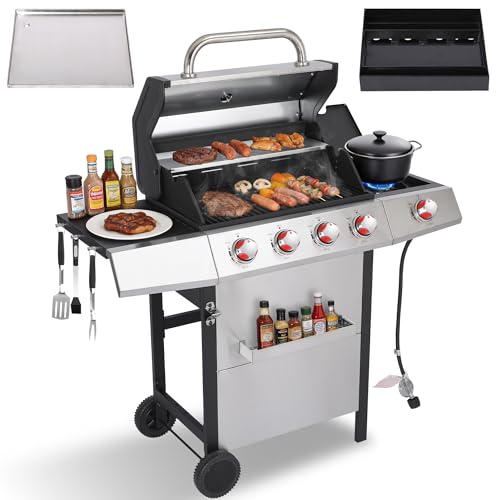
LMNOCHM 4-Burner Gas and Charcoal Combo Grill with Side Burner

LMNOCHM 4-Burner Propane Grill and Griddle Combo

LMNOCHM 6-Burner Propane Grill and Griddle Combo

LMNOCHM 3-Burner Propane Grill with Side Burner, 39,000 BTU
More On The Choices That Made The List
The Weber Q 2800N+ lives in the gap between a tiny camp stove and a full backyard rig. Its stand-alone propane frame folds down small enough to live in a trunk, yet the cooking surface handles a real dinner for three or four. That makes it a natural fit for renters with a balcony, tailgaters who want steakhouse marks, and anyone cooking on a covered patio where a full-size cart would dominate the space.
The signature Plus burner (+) is the headline feature: it spreads heat across the entire grate so food cooks evenly without the hot-and-cool spots common on cheaper portables. Porcelain-enameled cast-iron grates hold and release heat well, so a hard sear is genuinely achievable. Compared with the larger Monument Grills 35633 reviewed next, it sacrifices raw cooking area but wins on portability and precision.
Positive Takeaways
- Wide temperature range supports slow roasting and high-heat searing in the same cook
- Portable footprint suits balconies, RVs, and tailgates where a full cart is impractical
- Enameled cast-iron grates retain heat, so a proper sear is realistic on a small frame
- Single burner design removes cold zones, useful for fish or vegetables that need gentler treatment
Things To Consider
- Single primary burner means no true two-zone cooking for simultaneous low- and high-heat items
- Compact size caps the meal count; large gatherings will require batching
Feature Snapshot
Built With In Mind
Balcony cooks, tailgaters, and renters who want real grill marks without dedicating patio square footage to a full cart.
Where Another Pick Suits Better
Hosts feeding eight or more at a time will find more room on the LMNOCHM 6-Burner Propane Grill and Griddle Combo.
The Monument Grills 35633 is the heavyweight on this list, designed for the household that runs the grill like a second kitchen. The included custom-fit cover is a quiet win: it protects the exterior through off-seasons and storms without a separate purchase. For anyone setting up a permanent patio station, that bundled cover saves the usual weekend spent hunting for a matching aftermarket cover.
Where the Weber Q 2800N+ is a one-burner precision tool, this grill is a six-burner production line. The large primary cooking area plus the warming rack let a cook run burgers, vegetables, and buns simultaneously without crowding. The dedicated side burner handles sauces or a pot of corn, freeing the main grates for the proteins. Stainless steel main burners also promise reasonable longevity with routine cleaning.
The Case For It
- Generous total cooking area supports large gatherings without constant batching
- Included cover extends the life of the exterior through rain and off-season storage
- Dedicated side burner keeps sauces and sides off the primary cooking surface
- Stainless steel burners balance heat output and durability for frequent use
Worth Noting
- Full-size cart requires dedicated patio space and is not realistic for small balconies
- Multiple burners raise cleaning time; grease management benefits from a steady routine
Who Will Love This
Frequent hosts and large households cooking for eight or more on a regular basis.
Skip It When
Small-patio cooks should look at the LMNOCHM 3-Burner Propane Grill with Side Burner instead.
The BLACKSTONE 1924 is the odd one out in this lineup: it is a griddle, not a traditional slatted grill. For anyone whose weekend mornings mean a dozen pancakes, crispy hash browns, or a long run of smash burgers, a flat top is genuinely the better tool. The 28-inch cooking surface handles family-sized breakfasts without the usual juggling act.
The hard cover is the practical touch. Unlike a soft fabric cover, it shields the steel plate from rain and debris during transport, which matters for campers and tailgaters hauling the unit in a truck bed. The two side shelves fold out as prep stations for dicing onions or holding spatulas, so the cook is not balancing ingredients on a tailgate. Compared with the Weber Q 2800N+, this unit is bulkier but trades grill marks for the even crust a flat top delivers.
The Upside
- Flat-top surface excels at pancakes, smash burgers, and vegetables that fall through grates
- Hard cover protects the cooking plate during transport and storage
- Side shelves create usable prep space at the cook site
- Tabletop footprint fits camp tables and tailgate setups
Trade Offs
- Flat top does not produce open-flame grill marks or charcoal-style char
- Steel plate requires seasoning and careful drying to prevent surface rust over time
Feature Snapshot
Right Fit For
Campers, tailgaters, and home cooks who want a flat-top breakfast station more than a traditional grill.
A Better Fit Elsewhere
Anyone chasing steakhouse grill marks should pick the Weber Q 2800N+ Portable Propane Grill.
This LMNOCHM unit solves a familiar problem: the household that wants the convenience of propane but still craves the smoky depth of charcoal. The interchangeable module swaps between a gas burner system, two enameled charcoal trays, and a stainless steel griddle pan. That kind of flexibility is rare at this size, and it lets one frame handle pancakes, smash burgers, and a low-and-slow rib rack over real coals.
Compared with the Monument Grills 35633, this model is smaller but more versatile per square inch. The double-wall insulated lid helps the charcoal side hold steady temperatures for longer cooks, which is the usual weak spot of hybrid grills. The side burner rounds out the setup for sauces and sides, so the main grates stay focused on the main event.
Positive Points
- Swappable modules let one frame handle gas, charcoal, and griddle cooking
- Insulated double-wall lid improves charcoal temperature stability for longer cooks
- Side burner adds a separate cooking zone without crowding the main surface
- More compact footprint than the six-burner Monument Grills 35633
Minor Gripes
- Module swaps involve more handling than a single-purpose grill, so it rewards cooks who like to plan ahead
- Charcoal trays require ash cleanup after each cook
Best Suited To
Cooks who want genuine smoky flavor without giving up weeknight propane convenience.
Reach For A Different Pick When
Pure-grill households who never plan to light charcoal will do better with the LMNOCHM 4-Burner Propane Grill and Griddle Combo.
This LMNOCHM four-burner combo focuses purely on propane versatility. The design swaps between two grill grates and a dual-sided reversible griddle, so a single frame adapts to whatever the cook plans to make. For households splitting time between seared steaks and weekend pancake duty, that modularity removes the need to own a separate flat top.
The total output sits comfortably mid-pack on this list, behind the six-burner LMNOCHM and the Monument Grills 35633 but well ahead of the Weber Q 2800N+. The side burner handles the predictable side jobs: warming a pan of beans, melting butter, or boiling corn. Compared with the LMNOCHM gas and charcoal combo reviewed earlier, this one trades charcoal capability for a cleaner propane-only experience and a reversible griddle.
Useful Touches
- Reversible griddle adds flat-top versatility without a second appliance
- Four burners create real two-zone cooking for simultaneous high and low heat
- Side burner keeps sauces and sides off the main cooking surface
- Modular layout lets the cook reconfigure the surface per meal
Points To Keep In Mind
- Module swaps require a moment of reconfiguration mid-cook
- Cast iron components need routine oiling to prevent surface rust
Feature Snapshot
Whose Shelf It Belongs On
Hosts who routinely switch between grilled mains and griddled sides in the same cook.
Look Elsewhere When
Anyone who only grills steaks and burgers can save space with the Weber Q 2800N+ Portable Propane Grill.
The six-burner LMNOCHM is the highest-output propane option on this list. Where the four-burner sibling handles a busy family meal, this one is built for full cookouts running multiple proteins, vegetables, and sides at the same time. The modular layout carries over from the smaller LMNOCHM combo, so the surface still reconfigures between grill grates and a reversible griddle.
Total output puts it in the same range as the Monument Grills 35633, but the design language is more flexible because of the swap-in griddle. A cook can run a hard sear on one half and pancakes on the other during a brunch, then convert the whole surface to grates for an evening cookout. Compared with the Weber Q 2800N+, this is a permanent installation with serious capacity, not a portable.
What Pays Off
- Six burners handle large groups without batching or waiting turns
- Modular griddle-and-grate layout adapts to brunch, lunch, and dinner service
- Side burner adds an independent zone for sauces and sides
- High total output supports aggressive searing at scale
Possible Compromises
- Larger footprint demands a permanent patio spot with adequate clearance
- More burners mean more cleaning time after each cook
The Right Fit
Frequent hosts running full cookouts for ten or more guests on a regular basis.
Swap It Out When
Smaller households who rarely entertain will find the LMNOCHM 3-Burner Propane Grill with Side Burner a more comfortable fit.
The 3-Burner LMNOCHM closes the list as the most approachable cart grill for everyday use. It strips back the modular complexity of the larger LMNOCHM combos in favor of straightforward propane cooking. Three main burners are enough for a typical family dinner, and the side burner absorbs the small jobs that would otherwise crowd the main grates.
Cast iron grates hold heat well for a proper sear, and piezo ignition lights the unit with a press-and-twist, no matches required. Compared with the Weber Q 2800N+, it is a permanent cart rather than a portable, so it suits someone who has decided the patio is the grill’s home. Compared with the six-burner LMNOCHM, it gives up real estate but wins on weeknight convenience.
Points In Its Favor
- Compact cart footprint fits smaller patios and apartment balconies
- Side burner keeps sauces and sides from crowding the main surface
- Cast iron grates hold heat for solid sear marks on weeknight cooks
- Piezo ignition fires the burners without an open flame
Honest Caveats
- Three main burners limit simultaneous cooking for larger gatherings
- Cast iron grates need routine oiling to maintain their nonstick seasoning
Made For
Small households and weeknight cooks who want a capable propane cart without oversizing their patio.
Consider Something Else When
Anyone regularly feeding a crowd should step up to the LMNOCHM 6-Burner Propane Grill and Griddle Combo.
Choosing the Right Propane Grill for the Way You Cook
BTU ratings tell part of the story, but total output alone is a misleading number. A 39,000 BTU grill spread across three burners behaves very differently from the same rating crammed into a single burner. The most useful framing is output per burner, because that determines how aggressively a single zone can sear versus how evenly the heat spreads across the full cooking surface.
Construction materials deserve real scrutiny too. Porcelain-enameled cast iron holds heat well for searing and resists rust with basic care, but it does add weight. Plain steel warms faster but cools faster. Stainless steel burners tend to last longer under frequent use; painted steel is more common on budget units and may show wear sooner. Looking at the burner count alongside the cooking area tells a more honest story than the headline BTU figure.
Footprint and storage matter more than spec sheets suggest. A six-burner cart is wonderful for July 4th but miserable on a narrow balcony. For apartment cooks, a portable like the Weber Q 2800N+ or a compact three-burner cart delivers most of the experience without dominating the patio. Measure the space and the storage spot before falling for a large cooking surface.
Who Each Style Actually Suits
Traditional cart grills fit homeowners with a permanent patio spot and a household that grills several times a week. Portable units serve renters, tailgaters, and anyone hauling the grill to a vacation property. Flat-top griddles belong with cooks who treat breakfast and smash burgers as a serious pursuit. Hybrid units with charcoal and griddle modules reward cooks who genuinely rotate between fuel types; otherwise the complexity outweighs the flexibility.
Cleaning and Maintenance Reality
Cast iron grates need a light oil after each cook to hold their seasoning, and grease trays should be emptied on a regular schedule. Flat-top griddles require their own seasoning routine and careful drying to prevent surface rust. Any grill left outside benefits from a fitted cover; the Monument Grills 35633 ships with one, while most others do not. Setting a five-minute cleaning habit right after the cook turns a heavy chore into a light routine.
Mistakes Worth Dodging in the Propane Grill Aisle
Pitfalls Shoppers Hit
The most common slip is chasing the highest BTU number on the box. Raw output without burner distribution usually means hot spots and burned edges, not better cooking. Output per burner, grate material, and overall cooking area tell a more honest story.
Another trap is ignoring the footprint, both for cooking and storage. A six-burner cart grill that blocks the back door or does not fit the cover spot becomes a constant annoyance. Measure the patio, measure the storage shed, then compare.
The Case For Spending Up
The price gap between budget and mid-tier grills typically buys three things: thicker grates that hold heat, stainless steel burners that last longer, and a sturdier frame that resists wobble after a few seasons. For households grilling two or three times a week, those upgrades usually pay back in longevity and more consistent cooking.
Premium tiers add side burners, larger cooking areas, and modular layouts. Those features earn their keep for serious hosts who entertain often or cook full meals on the grill. For occasional weeknight cooks, that extra spend rarely gets used.
The Takeaway
A good grill is the one that matches the household’s habits, not the one with the biggest spec list. Small-space cooks get the most out of portable or three-burner carts, mid-size households do well with four-burner modular combos, and frequent hosts should size up to six-burner systems. Match the tool to the routine, and the rest of the season sorts itself out.