
Backyard movie nights hinge on one thing: a projector that can fight ambient light and survive the trip outside. The picks below pair high-lumen output with smart streaming, so movie night doesn’t require a stick, a soundbar, and a prayer. For anyone hosting patio screenings, dorm tailgates, or garage game-day setups, these projectors trade lamp-bulb fragility for sealed LED light engines and built-in apps.
The Essentials At A Glance

WiMiUS K14 4K Outdoor Projector with VIDAA Smart TV

VOPLLS 4600 ANSI Smart 4K Projector

HAPPRUN 2500 ANSI Outdoor Projector with Streaming Apps
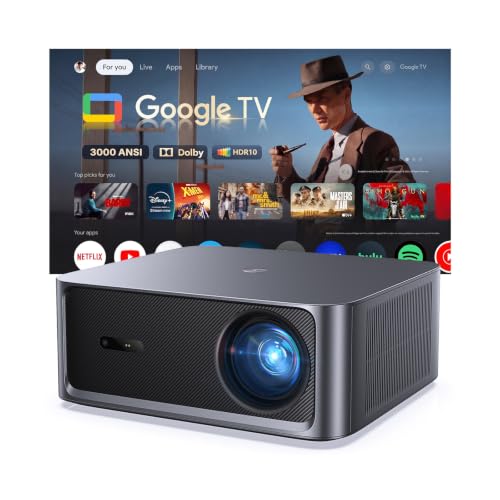
HAPPRUN 3000 ANSI Google TV Projector, 4K HDR

HAPPRUN 4K Outdoor Smart Projector with Google TV

TOPTRO Portable Smart Projector with Google TV 14
HAPPRUN Native 1080P Outdoor Smart Projector
More On The Choices That Made The List
The WiMiUS K14 arrives as the most complete package on this list, pairing a sealed LED light engine with a VIDAA Smart OS that drops you straight into Netflix without a streaming stick. At 1450 ISO lumens (a brightness measurement standardized against ambient conditions), it pushes enough light to survive the dusk-to-dark transition that often kills outdoor screenings.
Built-in 60W Dolby audio means a single box handles both picture and a room-filling soundtrack, which matters when the alternative is stringing outdoor speakers across a backyard. AI auto-focus plus HDR10 round out a spec sheet aimed at households skipping the trial-and-error setup phase. Compared with the HAPPRUN 2500 ANSI unit below, the K14 leans harder on smart-platform polish than raw lumen output.
The Practical Payoff
- VIDAA Smart OS runs Netflix, Prime Video, and YouTube natively, eliminating the streaming-stick clutter that tangles outdoor setups.
- 1450 ISO lumen output stays watchable as twilight fades, extending the window when you can fire up the projection screen.
- Auto-focus and AI image tuning reduce setup friction, helpful for households that move the projector indoors and out.
- Dolby-tuned 60W speakers deliver enough volume for a backyard, sparing the trip to drag out a separate audio rig.
Things To Consider
- VIDAA’s app catalog is narrower than Google TV, so niche streaming services may need a workaround.
- Owners commonly report the auto-focus benefits from occasional re-calibration after the unit has been moved between locations.
Key Specs
Built With In Mind
Households wanting one projector for living-room streaming and backyard movies, with minimal setup tweaking between uses.
A Better Fit Elsewhere
For shoppers chasing top-end brightness, the VOPLLS 4600 ANSI pushes considerably more light for late-afternoon use.
Brightness is the headline number here, and 4600 ANSI lumens (a brighter measurement standard than ISO, typically rated higher numerically) is unusual at this end of the projector aisle. The VOPLLS is built for the household that has tried dimmer units and watched them wash out the moment a neighbor’s porch light flips on.
Full 4K support pairs with HDR10+ for a picture that holds color depth under residual daylight, while auto-focus and WiFi/Bluetooth round out a smart-home-friendly package. The trade-off shows up in size and fan noise: that much light demands more cooling, so the chassis runs larger than the HAPPRUN units further down the list.
A Few Highlights
- 4600 ANSI lumen output stands as the brightest in this roundup, supporting screenings before full dark.
- HDR10+ widens contrast range, deepening shadows in dimly lit scenes and brightening highlights.
- 4K signal support keeps text crisp for sports broadcasts and animated films.
- Auto-focus saves time when the unit gets bumped between viewing sessions.
Points To Note
- Larger chassis footprint than most units here, which matters for tight shelf storage.
- Higher lumen output typically means more audible cooling, a relevant factor for quiet dialogue scenes.
- At this brightness tier, color accuracy can drift and benefits from periodic calibration in owners’ experience.
Feature Snapshot
Whose Shelf It Belongs On
Patios with strong ambient light, including homes where neighbors’ lighting and string lights compete with the screen.
Reach For A Different Pick When
Shoppers prioritizing a compact, grab-and-go form should consider the TOPTRO Portable Smart Projector instead.
HAPPRUN occupies the sweet spot for first-time projector households that want smart features without overspending. At 2500 ANSI lumens, this unit sidesteps the dim-room-only limitation that traps cheaper projectors, and the built-in streaming apps save the cost of a separate stick.
Dolby Audio, WiFi 6, and Bluetooth 5.2 cover the modern connectivity checklist, while 4K decoding (the projector accepts a 4K input signal and downscales it for display) keeps content sharp on screens up to 150 inches. The honest read: this is the projector to beat at the entry tier, though serious cinephiles may want more headroom than 2500 lumens provides.
Where It Delivers
- Built-in streaming covers Netflix, Prime Video, YouTube, and Hulu without extra hardware, trimming setup steps.
- 2500 ANSI lumens stay viewable well past sunset, before neighbor lights wash out dimmer units.
- Dolby Audio provides a fuller soundstage than typical projector speakers at this tier.
- WiFi 6 smooths high-bitrate streaming when the household network gets crowded during prime time.
Small Caveats
- Lacks Google TV’s licensed app depth, which means some specialty apps may need a workaround.
- Internal fans work harder at peak brightness, so placement matters for noise-sensitive viewing.
Who Should Grab It
Beginners and budget shoppers who want smart-streaming convenience plus enough brightness for typical backyard evenings.
Consider Something Else When
Shoppers wanting Google TV’s larger app catalog will get more use out of the HAPPRUN 3000 ANSI Google TV Projector.
The HAPPRUN 3000 leans on Google’s official smart-TV platform, which is the real differentiator over the brand’s non-Google sibling above. For households already invested in Google’s app ecosystem, this projector acts as a giant external display rather than a foreign device.
3000 ANSI lumens keep the image watchable in mild ambient light, and 4K HDR support delivers stronger contrast than entry-tier units. Auto-focus simplifies repositioning, while integrated streaming covers the long tail of niche services. Compared with the WiMiUS K14, this unit trades Dolby-grade audio for more raw light output.
Everyday Advantages
- Google TV’s licensed app store includes streaming services that proprietary platforms sometimes miss.
- 3000 ANSI lumen output tolerates modest ambient light, extending usable viewing hours.
- 4K HDR decoding sharpens detail, especially noticeable on nature documentaries and animated films.
- Auto-focus removes a common setup annoyance, helpful for casual users.
Honest Caveats
- Fan output climbs at peak brightness levels, so placement away from seating helps during dialogue scenes.
- Google TV’s recommendation interface can feel cluttered to viewers preferring simpler menus.
Quick Facts
Best Suited To
Streaming households that already use Google TV in the living room and want continuity outdoors.
Look Elsewhere When
Tight budgets call for the HAPPRUN Native 1080P Outdoor Smart Projector at a noticeably lower cost.
The HAPPRUN 4K Outdoor Smart Projector adds officially licensed Google TV, sidestepping the sideloaded-app quirks that plague some Android knockoffs. For households that simply want Netflix, Prime, and YouTube to work without hunting for APKs, this is the path of least frustration.
Google Voice Assistant handles the remote duties, so searching for a show or pausing playback doesn’t require memorizing button layouts. The 4K signal support keeps detail high, though real-world brightness sits below the 3000 ANSI unit above. Where it shines: casual weekend screenings where ease of use matters more than pushing peak lumen output.
The Good Stuff
- Officially licensed Google TV sidesteps the app-installation friction common on budget projectors.
- Voice search through Google Assistant simplifies finding content hands-free, useful during setup.
- Direct app access to Netflix, Prime Video, and YouTube without external streaming devices.
- Outdoor-tuned chassis handles intermittent patio use without complaint, based on spec profile.
Trade Offs
- Brightness rating falls below the 3000 ANSI sibling, so daylight screenings suffer.
- Licensed Google TV adds a small premium over generic Android builds at this brightness tier.
Feature Card
Made For
Casual weekend hosts prioritizing app reliability over peak brightness.
Skip It When
Shoppers chasing top lumen output will find more headroom in the VOPLLS 4600 ANSI Smart 4K Projector.
Short-throw designs throw large images from short distances, making them ideal for apartments and bedrooms where a long projection distance isn’t practical. The TOPTRO Portable Smart Projector carves out a niche for renters, dorm dwellers, and tight-space households that want big-screen feel without dedicating a whole wall to a permanent setup.
Google TV 14 delivers access to 10,000+ apps, including Netflix, YouTube, and Disney+, plus live TV services that round out a cord-cutter’s lineup. Auto-focus and keystone correction (digital image alignment that squares the picture even when the projector sits at an angle) handle awkward placement, while WiFi and Bluetooth round out modern connectivity. Compared with the larger HAPPRUN units, this one fits in tighter spots but trades raw brightness.
Practical Advantages
- Short-throw design suits tight patios and bedrooms where long-distance projection won’t work.
- Google TV 14 brings the largest app catalog in this roundup, including live TV options.
- Auto-focus and keystone correction handle off-center placement, useful for ceiling mounting.
- HDR10 support sharpens detail across bright and dark scenes.
Points To Keep In Mind
- Compact size limits peak lumen output, so this unit is best for darker viewing environments.
- Short-throw optics can show distortion at extreme angles without proper keystone calibration.
Perfect Match For
Apartment renters, dorm rooms, and ceiling-mount scenarios where space matters more than maximum brightness.
Swap It Out When
Backyard hosts running screenings in brighter conditions should consider the WiMiUS K14 with its 1450 ISO lumen rating.
The HAPPRUN Native 1080P fills the entry-level slot without pretending to be more than it is. Native 1920×1080 resolution (the panel’s true pixel count, not a downscaled 4K signal) delivers a sharper, more honest image than projectors that accept 4K input but display at lower resolution.
Compact dimensions make this unit backpack-friendly, a real advantage for camping trips, dorm moves, and spontaneous patio setups. The trade-off shows up in brightness, which sits well below the higher-lumen units above. For first-timers testing whether outdoor projection suits their household, this one lowers the entry cost without gutting the experience.
Real-World Strengths
- Native 1080p resolution avoids the softness that plagues upscaled 4K-claim units at this tier.
- Portable chassis fits in a backpack, simplifying trips between home, dorm, and campsite.
- Smart features handle streaming without extra hardware, a plus for renters avoiding device clutter.
- Lower cost lowers the risk for households unsure whether outdoor projection will stick.
Less Ideal Details
- Brightness rating lags the 2500+ ANSI models, restricting use to dusk or darker hours.
- Plastic chassis requires careful handling during transport; the unit is portable but not rugged.
- Fan noise becomes more prominent in quiet scenes at higher brightness levels.
Spec Overview
The Right Fit
First-time projector owners and renters who want to test outdoor movie nights without a major investment.
Where Another Pick Suits Better
Households needing brighter performance for earlier-evening screenings will benefit more from the HAPPRUN 2500 ANSI Outdoor Projector.
Factors To Weigh Before Choosing Projectors For Outdoor Movies
Brightness And Ambient Light
Brightness is the single most important spec for outdoor use. Look for ANSI or ISO lumen ratings (industry-standardized brightness measurements, where higher numbers resist ambient light better) of at least 2000 for dusk-to-dark viewing, with 3000+ for early-evening screenings. Anything below 1000 lumens essentially requires pitch-black surroundings, which limits scheduling flexibility.
Smart Platform And App Support
Built-in smart platforms save the cost and clutter of an external streaming stick. Google TV offers the broadest licensed app catalog, while proprietary platforms may miss niche services. Consider what your household already uses; continuity between living-room and backyard screens simplifies muscle memory.
Audio Quality And Connectivity
Built-in speakers matter more outdoors, where sound dissipates faster than in enclosed rooms. Dolby-tuned audio and higher wattage translate directly to usable volume at patio distances. Bluetooth output lets you pair outdoor speakers for larger gatherings.
Portability And Form Factor
Short-throw projectors suit tight patios and apartment walls, while standard-throw models offer more flexible placement at the cost of distance. Weight and chassis size matter if the unit moves between indoor and outdoor locations regularly.
Smart Choices That Save Headaches
Pitfalls Shoppers Hit
Underestimating brightness is the classic error: indoor-rated projectors look fine in a dark basement but wash out the moment a porch light flips on. Pairs that skip wireless connectivity force extra streaming-stick purchases, adding cost and complexity. Ignoring fan noise is another common slip; projectors running at peak brightness often sound louder than expected in quiet outdoor scenes.
The Upgrade Payoff
Higher-tier models buy meaningful gains in three places: lumen output for daylight flexibility, licensed smart platforms for app reliability, and stronger audio that fills outdoor space. For households hosting weekly screenings or running events, these upgrades translate to fewer workarounds and a more consistent experience across viewing conditions.
Closing Verdict
Each projector here covers a distinct slice of the outdoor-movie market, from the VOPLLS 4600 ANSI pushing peak brightness to the HAPPRUN 1080P lowering the entry cost. The honest match between projector and patio decides whether movie nights become a tradition or a one-time experiment. Pick by the conditions you’ll actually face: ambient light, app needs, and how often the unit moves between rooms.