
Off-grid living, RV weekends, and unexpected blackouts all share one quiet worry: how do you keep essentials running when the grid isn’t an option? Modern portable solar power generators now pack serious capacity into a frame that fits in a trunk or garage corner, and they recharge from the sun when fuel isn’t practical. This list focuses on seven current options built for home backup, campsite comfort, and workshop independence, with honest notes on where each one earns its place and where a different pick might suit better.
Your Options, Compared
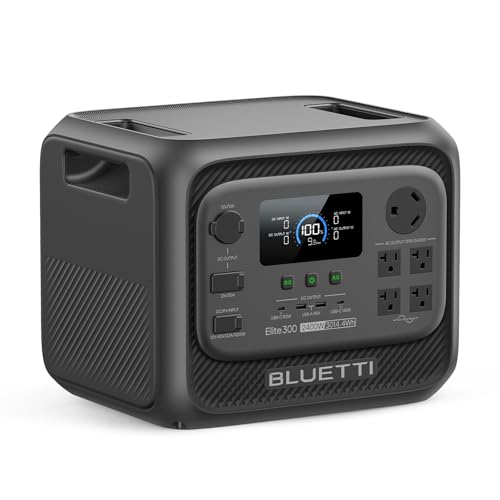
BLUETTI Elite 300 Portable Power Station 3014.4Wh

EF ECOFLOW Delta 3 Portable Power Station 1024Wh
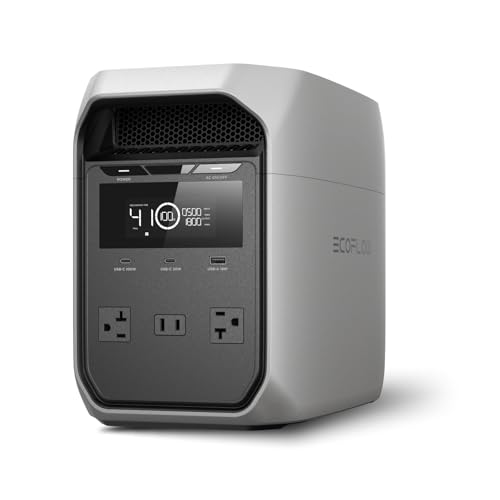
EF ECOFLOW Delta 3 Classic Portable Power Station 1024Wh

BLUETTI Elite 100 V2 Portable Power Station 1024Wh

BLUETTI AC200L Portable Power Station 2048Wh 2400W

Jackery HomePower 3000 with Hand Truck & 2x200W Solar Panels

BLUETTI Elite 200 V2 Portable Power Station 2073.6Wh 2600W
Why These Options Stand Out
The Elite 300 targets the awkward middle ground between compact 1kWh units and full home battery walls. With a stated 3014.4Wh capacity (watt-hours, the standard battery-size measurement), it can keep a fridge humming through a long evening outage or power a full RV setup overnight without breaking a sweat. Compared with the smaller Delta 3 reviewed below, this BLUETTI trades portability for genuine whole-room capability.
Storage is the underrated strength. The chassis is engineered to take up roughly 59% less space than traditional large-format stations of similar capacity, which matters in a garage, closet, or RV bay where every cubic inch counts. For households that want one unit to cover emergency backup and weekend trips, the Elite 300 earns its place at the top of the list.
What Makes Sense
- 3014.4Wh capacity handles fridges, routers, lights, and CPAP machines through multi-hour outages
- Compact footprint for the capacity class, easing garage or RV bay storage
- Suited to both whole-home backup and mobile RV use without swapping gear
- LiFePO4-style longevity implied by the BLUETTI Elite line, supporting thousands of cycles
Things To Consider
- Heavier than 1kWh-class units, so lifting into a truck bed benefits from a second set of hands
- Recharge speed depends heavily on solar panel wattage and available sunlight hours
Feature Snapshot
Made For
Households in storm-prone regions who want one station to bridge multi-hour outages and RV owners who refuse to rough it on longer trips.
Look Elsewhere When
The Jackery HomePower 3000 fits better when 3600W output and a built-in UPS mode matter more than footprint.
The Delta 3 is built around speed. ECOFLOW pairs 1500W max AC input with up to 500W solar input, so a complete wall recharge takes roughly 56 minutes and an 80% top-up arrives in about 30. That kind of turnaround changes how a portable station fits into daily life: it can be drained during an evening outage and ready again before morning coffee.
The 1024Wh capacity sits comfortably in the mid-size range, enough for a CPAP machine through the night, several laptop charges, and a small fridge for a few hours. Expandability with extra battery packs pushes total storage toward 5kWh, which makes the Delta 3 a flexible foundation rather than a fixed-size tool.
Standout Benefits
- Sub-hour full wall recharge removes overnight anxiety during frequent outages
- 1024Wh base capacity suits a couple of days of light home essentials
- Expandable up to 5kWh with compatible ECOFLOW battery packs
- 1800W AC output handles most kitchen appliances and power tools in normal use
Trade Offs
- Fast charging pulls significant wall current, so older home circuits may struggle
- Full ecosystem value only unlocks with extra battery packs, sold separately
Best Suited To
Commuters and homeowners who cycle the unit daily and want a station that recharges during a single lunch break.
Skip It When
The BLUETTI Elite 100 V2 suits campers better, since it carries 11 ports in a slightly more travel-friendly layout.
The Delta 3 Classic strips the flagship down to the essentials without gutting what matters. You still get the 1800W output (3600W surge, meaning the brief spike above rated power that motors need to start) and the X-Boost feature allowing loads up to 2600W, which covers microwaves, kettles, and induction cooktops that would shut down smaller stations. For homeowners who want one reliable mid-size unit, the Classic earns a quiet spot in the lineup.
AC charging is the headline number: 0–80% in about 45 minutes through X-Stream technology, ECOFLOW’s fast AC-input system. That speed is genuinely useful for families rotating the station between daily backup duty and weekend camping, since the unit can sit plugged in most of the time and stay topped off.
Notable Gains
- 1800W continuous / 3600W surge handles heavy kitchen appliances
- 45-minute AC top-up to 80% minimizes downtime between uses
- X-Boost extends supported loads up to 2600W for high-draw devices
- 1024Wh capacity strikes a practical balance for couples and small households
Honest Caveats
- Does not include the higher-end Delta 3’s extra-battery expandability
- Fast AC charging generates noticeable fan noise at full tilt
- Solar input ceiling is lower than the flagship Delta 3, slowing off-grid recharges
Quick Facts
Right Fit For
Small households and weekend campers who want a single unit that doubles as both home backup and travel power.
Consider Something Else When
The BLUETTI Elite 300 fits better when 3kWh of capacity is the priority over recharge speed.
The Elite 100 V2 leans into the camping and tailgate side of the market. With 11 output ports and a 1024Wh capacity, it can charge a drone, run a portable cooler, power string lights, and top off a phone all at once without anyone waiting in line. The 1800W rated output (with 2700W Power Lifting mode for heavier startup loads) covers roughly 90% of common household appliances.
TurboBoost AC charging and up to 1000W solar input make this an unusually quick mid-size unit. The catch is that “fast” for solar depends on having enough panel surface area deployed in good light, which not every campsite offers.
Points In Its Favor
- 11 ports cover phones, laptops, lights, and small appliances simultaneously
- 70-minute TurboBoost AC charging fits a quick pre-trip top-up
- 1800W rated / 2700W lift output handles kitchen appliances and small heaters
- 1024Wh capacity aligns with overnight CPAP, cooler, and lighting needs
Points To Keep In Mind
- Solar input speed depends on panel count, angle, and clean sunlight
- Not expandable the way the larger BLUETTI Elite 300 or AC200L are
Feature Rundown
Whose Shelf It Belongs On
Campers, van-lifers, and tailgaters who want many ports and travel-friendly dimensions without sacrificing output.
A Better Fit Elsewhere
The BLUETTI Elite 200 V2 fits better when 2073.6Wh and 3900W lift mode are needed for heavier gear.
The AC200L is the modular workhorse in BLUETTI’s lineup. At 2048Wh with a 2400W output, it already runs heavier appliances than typical mid-size units, including induction cooktops, small air conditioners, and shop tools. Where it pulls ahead is the expansion path: pairing with B300K, B210, B300, or B230 battery packs scales total capacity up to roughly 8192Wh.
For homeowners who want a station they can grow over time, that flexibility is the main reason to pick the AC200L over a fixed-capacity competitor. The 45-minute fast recharge window keeps the unit usable even after deep discharges.
Why It Works Well
- 2048Wh / 2400W handles heavy appliances and shop equipment
- Modular expansion up to 8192Wh with BLUETTI battery packs
- LiFePO4 cell chemistry supports long cycle life (the chemistry’s hallmark)
- 45-minute fast recharge via AC for quick turnarounds
Practical Considerations
- Full expandability requires separate battery purchases
- Heavier than 1kWh units, so placement matters more than for compact picks
Spec Overview
Who Should Grab It
Homeowners planning a long-term backup setup who want to add battery capacity over time instead of replacing the unit.
Another Choice May Suit
The Jackery HomePower 3000 fits better when a built-in UPS function and 3600W output matter more than modularity.
The HomePower 3000 is built for the moment the lights go out. With 3600W output (7200W surge) and a 3072Wh capacity, it claims enough headroom to power household essentials for up to 15 hours, and Jackery rates fridge runtime at roughly 1–2 days. The included hand truck and a pair of 200W solar panels make this a turnkey home-backup kit rather than a bare unit.
The ≤20ms UPS (uninterruptible power supply) function is the quiet highlight. In a UPS configuration, the station takes over from grid power within about 20 milliseconds, fast enough that WiFi routers and home-office gear stay live through brief outages without rebooting.
What Works In Its Favor
- 3600W output runs full-size fridges, sump pumps, and small AC window units
- 3072Wh capacity supports multi-hour essential coverage
- ≤20ms UPS transfer keeps computers and routers alive through grid blips
- Bundle includes hand truck and 200W panels for easier deployment
A Few Limitations
- Bundle size and weight make it a stationary solution more than a travel one
- Solar recharging speed depends on deploying both panels in clean sunlight
Perfect Match For
Households needing whole-essentials backup with UPS-grade transfer for home offices and medical devices.
Reach For A Different Pick When
The BLUETTI Elite 300 suits RV travel better, since it packs comparable capacity into a more compact chassis.
The Elite 200 V2 sits in a sweet spot for power-hungry appliances. The 2600W continuous AC output pairs with BLUETTI’s HyperWatt tech to deliver up to 3900W in Power Lifting mode, a category-leading ceiling that handles hair dryers, coffee makers, and refrigerators without tripping. Nine simultaneous devices are supported, which makes this a sensible pick for small events, food trucks, or large families.
Capacity lands at 2073.6Wh, a comfortable mid-upper range that covers overnight use for most households without the bulk of a 3kWh unit. For shoppers comparing to the Delta 3 Classic above, the trade is roughly double the capacity and substantially higher output for heavier gear.
Practical Pluses
- 2600W continuous / 3900W lift handles high-draw kitchen and personal-care gear
- 9-device simultaneous output suits small events and large households
- 2073.6Wh capacity covers overnight essentials without 3kWh-class bulk
- Strong fit for outages, road trips, and off-grid cabin use
Where It May Fall Short
- Heavier and bulkier than 1kWh units, complicating transport without wheels
- Solar charging speed depends on panel array size and sun angle
Details At A Glance
Built With In Mind
Small-event hosts, food-truck operators, and homeowners running high-draw appliances during outages.
Where A Sibling Pick Shines
The BLUETTI AC200L fits better when modular expansion up to 8kWh is the long-term plan.
What Matters Before Choosing a Portable Solar Power Generator
Capacity vs Real-World Loads
Watt-hours tell the headline story, but the number that matters is daily consumption. A household running a fridge (about 150W continuous), a WiFi router, a few lights, and a phone charger pulls roughly 2kWh over a 12-hour outage. Stations in the 2–3kWh range cover that scenario with margin to spare, while 1kWh units suit shorter outages or trimmer essentials lists. Choosing a smaller unit than the load demands is the most common ownership regret.
Output Wattage and Surge Tolerance
Continuous AC output (1800W, 2400W, 3600W) sets the steady-state ceiling. Surge or “lift” mode covers the brief spike that motors and compressors need to start, which is why a fridge drawing 150W running may need 1200W at startup. Picking a station whose lift ceiling exceeds the heaviest appliance’s startup draw is the single most overlooked detail.
Recharge Path and Solar Input Ceiling
Wall charging speed matters for daily cycling, while the maximum solar input wattage matters for off-grid replenishment. Higher solar ceilings shorten recharge time when sunlight is available, but require proportionally larger panel arrays. Matching the station’s input ceiling to a realistic panel setup prevents the common mistake of buying fast-charging hardware that the panel array can’t feed.
Form Factor and Cell Chemistry
LiFePO4 cells (lithium iron phosphate) outlast standard lithium-ion by a notable margin in cycle count, which suits long-term backup duty. Physical dimensions matter for RV bays, apartment closets, and trunk storage. For stationary home backup, wheels or a hand truck shift the equation from awkward to practical.
Key Considerations Across These Picks
Common Slip Ups Worth Dodging
The most frequent mistake is buying on watt-hours alone and forgetting startup surges. A second is underestimating the panel array required to actually use a fast solar input ceiling. A station rated for 1000W solar input needs roughly five 200W panels in good light to feed it, which is more hardware than many shoppers anticipate. Plan the full system, not just the box on the listing.
Where The Extra Money Goes
Higher-tier portable solar power generators add larger capacity, faster wall charging, and stronger surge handling, which together cover more appliances and longer outages. They also typically ship with LiFePO4 cells for longer cycle life, plus UPS-grade transfer for sensitive electronics. The upgrade earns its keep for households with medical devices, home offices, or real outage exposure, while lighter use cases do fine with mid-size picks.
The Takeaway
Seven solid portable solar power generators now sit within reach of mainstream shoppers, and the honest read is that any of these will outperform a noisy gas generator in the roles that matter most: indoor use, low maintenance, and silent overnight coverage. Match capacity to your essential-load list, then verify the surge ceiling covers the heaviest appliance. That two-step filter narrows the field faster than any spec sheet alone.