
A long weekend off-grid means different things to different people. Some want a quiet phone charger at the tent. Others need to run a coffee maker, a fan, or a CPAP machine for several nights. The right portable battery depends entirely on the gear in the bag and the silence you want to keep. This lineup covers everything from pocketable day-trippers to base-camp powerhouses, so it’s easier to match a unit to the way the outdoors actually gets used.
The Essentials At A Glance

Honda EU2200i Companion Inverter Generator

EF ECOFLOW Delta 3 Portable Power Station 1024Wh

MARBERO 200W Portable Power Station 148Wh
MARBERO Portable Power Station 88Wh 120W Surge
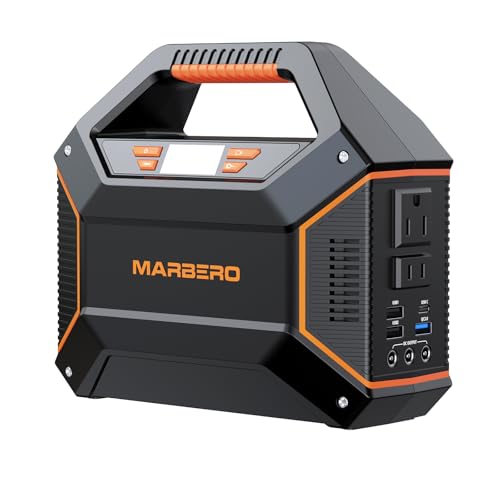
MARBERO Portable Power Station 155Wh 100W

MARBERO 155Wh Solar Generator with 30W Panel Kit

EF ECOFLOW River 3 Plus Extra Battery EB600
A Deeper Look At The Lineup
Gasoline inverters live in a different category than battery stations, and the Honda EU2200i Companion is the benchmark for campers who simply need more of everything. Built-in 30A outlet support makes it easy to plug an RV shore cord straight in, while parallel-ready ports let two units combine for higher draw.
Inverter technology (a system that cleans up the electrical waveform so sensitive electronics run safely) means laptops and phone chargers stay protected, which matters more than it sounds at a noisy campsite. Noise lands in the 48 to 57 dB(A) range at typical loads, comparable to a quiet conversation, so neighboring campers tend to be far happier. The trade-off is fuel, weight, and refueling trips, but for long base-camp stays the runtime advantage is hard to beat.
Useful Strengths
- 2200W output handles microwaves, refrigerators, hair dryers, and small AC units without strain
- Clean inverter power keeps laptops, phones, and camera batteries safe from surges
- RV-friendly 30A outlet simplifies shore-power hookups at the campsite
- Parallel capability lets two units team up for heavier draw
- Quiet enough for shared campgrounds, even on eco throttle
Trade Offs To Consider
- Fuel-dependent, so trips into the backcountry require jerry cans and storage
- Heavier and louder than any battery station in this lineup
- Engine maintenance (oil changes, spark plugs) adds an ownership task pure battery units skip
Key Specs
Built For
RVers and base-camp hosts who run full appliances and want gasoline runtime that batteries cannot match.
Consider Something Else When
The EF ECOFLOW Delta 3 Portable Power Station 1024Wh suits campers who want silent, indoor-safe power without managing fuel.
The ECOFLOW Delta 3 sits at the high-capacity end of the battery-station market, and the spec sheet reflects it. With 1024Wh of stored energy and 1800W of continuous AC output, this unit can handle everything from induction cooktops to power tools without breaking a sweat.
Recharge speed is the headline feature. Combined AC and solar input can move from empty to full in roughly 56 minutes under ideal conditions, with an 80% top-up reachable in around half an hour. Modular expansion up to 5kWh with extra battery packs means a household that starts small can scale up over time. For families running a car fridge, lights, and devices across a long weekend, that flexibility matters more than raw output alone.
Benefits That Matter
- 1024Wh capacity covers multi-day fridge and lighting duty
- 1800W output drives induction burners and small kitchen appliances
- Ultra-fast AC recharge keeps downtime minimal between sessions
- Modular design grows with the household’s energy needs
Points To Note
- Heavier and bulkier than mid-size stations, so it’s a base-camp piece, not a hiking one
- Solar charging depends on panel wattage and angle, so real-world recharge times vary
Feature Snapshot
Made For
Family campers and group base-camp cooks running a fridge plus cooking gear on a quiet, fuel-free setup.
Swap It Out When
The Honda EU2200i Companion Inverter Generator suits travelers who prefer unlimited fuel-driven runtime over battery silence.
For campers who want genuine AC outlet capability without hauling a heavy base-camp unit, the MARBERO 148Wh hits a useful middle ground. The 200W output rating means it can drive laptops, camera battery chargers, and small appliances that smaller power banks simply cannot.
Built-in LED flashlights add a quiet emergency feature that becomes more than a gimmick on a real trip. USB QC3.0 ports handle phones quickly, while the 110V AC outlet covers the gear that needs a wall-style plug. The compact footprint makes it easy to slide into a backpack or car trunk, and the lighter weight keeps solo campers mobile. It’s the kind of station that quietly handles a weekend without drawing attention to itself.
What Pays Off
- 200W AC output handles laptops and chargers that smaller banks cannot
- Compact form factor fits daypack and trunk storage
- QC3.0 USB ports fast-charge phones and tablets efficiently
Some Limits To Know
- 148Wh capacity runs out quickly under heavier appliance loads
- Not suited for induction cooking or hair tools, which exceed the 200W ceiling
Right Fit For
Solo campers and short-trip travelers who need a true AC outlet without committing to a full base-camp unit.
Where Another Pick Suits Better
The MARBERO Portable Power Station 155Wh 100W serves shoppers wanting similar capacity in a slightly simpler configuration.
The 88Wh MARBERO is the smallest station worth bringing on a real trip, and it earns that role by staying out of the way. At roughly 24,000mAh of capacity, it covers phone recharges, headlamp top-ups, and small electronics with room to spare.
Wall charging hits 80% in around two hours, which means a quick kitchen-counter refill before heading out. Owners can also pair it with a dedicated 30W or 60W solar panel for off-grid top-ups during longer stays. The compact shape slides into a daypack without complaint. Compared to the 148Wh MARBERO reviewed earlier, this one trades runtime for portability, a fair swap for backpackers and ultralight travelers.
Well-Handled Touches
- Lightweight design fits daypacks and small carry-ons
- Fast 80% wall recharge in roughly two hours
- Solar panel compatibility supports longer off-grid stays
Things To Consider
- 88Wh capacity runs out fast under anything beyond phone charging
- Not suited for AC appliances above the 120W surge limit
- Battery cells lose noticeable capacity in extreme cold, common during shoulder-season camping
Perfect Match For
Backpackers and emergency-prepared travelers who value light weight over multi-day runtime.
Not Your Match When
The MARBERO 200W Portable Power Station 148Wh is the better call for campers running laptops and camera gear.
The 155Wh MARBERO is built for the camper who likes to know the math. A simple runtime formula (155Wh divided by device wattage) means there’s no guessing how long a laptop, fan, or CPAP will run, and that clarity matters on multi-day trips where every watt counts.
With 100W of continuous output, it handles most personal electronics without stress, though heavier appliances push past the limit. The mid-size capacity hits a sweet spot for two-night car-camping weekends where lights, phones, and small devices dominate the load. Compared to the ECOFLOW Delta 3 reviewed earlier, this unit is much simpler, but the trade-off is real portability and a much lighter pack weight.
Why It Works Well
- Predictable runtime math simplifies packing and trip planning
- Mid-size capacity covers typical two-night personal electronics loads
- Reasonable weight for backpack-to-base-camp transitions
Worth Bearing In Mind
- 100W output caps exclude induction cooking and most small heaters
- Higher-capacity options deliver more comfort for extended base-camp cooking
Quick Facts
Best Suited To
Car campers and weekend travelers running personal electronics without kitchen-style cooking loads.
Skip It When
The EF ECOFLOW Delta 3 Portable Power Station 1024Wh is the stronger pick for campers running fridges and induction cooking.
Buying a battery station and a solar panel separately is the usual route, but this kit skips that step entirely. The 155Wh MARBERO comes paired with a 30W panel and power converter in one box, which is helpful for first-time solar buyers who don’t yet know which panel specs match their station.
The integrated 6.5-foot cable is the small detail that quietly improves real-world setup. It lets the panel sit in full sun while the station stays shaded under a tarp or inside a tent, which matters because battery cells last longer when kept cool. Compare that to the smaller 88Wh MARBERO reviewed earlier: this kit offers more capacity and a complete off-grid package, with the trade-off being a heavier pack weight and slower recharge rates from a modest 30W panel.
Real Benefits
- All-in-one kit removes panel-compatibility guesswork for first-time buyers
- Long integrated cable improves panel placement in real campsite layouts
- Complete off-grid setup straight out of the box
A Few Limitations
- 30W panel recharges slowly compared to higher-wattage options
- Heavier total pack weight than the station alone
Details At A Glance
Made For
Off-grid campers and cabin visitors who want a complete solar setup without matching components manually.
A Better Fit Elsewhere
The MARBERO Portable Power Station 155Wh 100W is the better match for campers who already own compatible panels or rarely use solar.
The EB600 expansion battery is a different kind of product on this list. It is not a standalone station; it’s a 572Wh add-on designed to stack onto an existing ECOFLOW River 3 Plus, lifting total capacity to 858Wh for longer outings or backup use.
Pogo-pin connection means no extra cables or screws, just a clean stack that goes together in seconds. Run independently, and the EB600 still functions as its own smaller power source for lighter loads. Real-world estimates land around 10.8 hours for a car fridge and roughly an hour for a travel kettle, useful benchmarks for trip planning. The honest read: it’s a smart upgrade path for ECOFLOW owners who already like their base station and want more runtime without replacing the whole rig.
Bright Spots
- 572Wh of additional capacity extends River 3 Plus runtime significantly
- Tool-free pogo-pin connection stacks in seconds
- Independent use option adds flexibility for short errands
Possible Compromises
- Only compatible with the River 3 Plus base station, so brand lock-in is real
- More practical for current ECOFLOW owners than first-time shoppers
- Battery cells degrade gradually over years, so expansion units need occasional cycling
Who Should Grab It
Current ECOFLOW River 3 Plus owners who want more runtime without replacing their existing setup.
Not Your Match When
The MARBERO 200W Portable Power Station 148Wh is the smarter starting point for first-time portable battery shoppers.
What To Weigh Before Picking A Camping Battery
Capacity Versus Portability
Watt-hours (Wh) measure how much energy a battery can store, and that number drives runtime. A 100Wh station handles phones and small lights for a night, while 1000Wh covers a car fridge and lights across a long weekend. The honest trade-off is weight: every additional Wh adds grams to the pack. Backpackers tend to land between 80 and 200Wh, while car campers often push past 1000Wh for comfort.
Output Wattage And Surge Limits
Continuous output (in watts) sets the ceiling for what the station can run. A 100W station handles phones and laptops, while 1800W covers induction cooking. Surge rating matters for devices with motors or compressors that draw extra power at startup. Picking a station below the running wattage of essential gear is a common trip-killer.
Recharging Options At The Campsite
AC wall charging is fastest at home, but solar matters off-grid. Panel wattage drives recharge speed: a 30W panel tops up a small station slowly, while higher-wattage panels cut downtime dramatically. For shaded or stormy regions, fast AC input matters more than solar specs.
Noise, Fumes, And Campsite Etiquette
Battery stations run silent and indoors, which makes them welcome at family and shared campgrounds. Gasoline generators like the Honda EU2200i deliver more power but require ventilation, fuel storage, and noise awareness. Matching the power source to the campsite rules keeps neighbors friendly.
Honest Notes On Shopping Decisions
Common Shopping Slip Ups
Underestimating watt-hour needs is the most common mistake. Shoppers often buy based on device count rather than total daily consumption. Add up watt-hours per device per day before comparing stations. Ignoring surge ratings is the second slip: a 100W station with a low surge limit cannot start a fan or compressor even if the running draw fits.
Where The Extra Money Goes
Higher-tier stations earn their cost through faster AC charging, larger inverter output, and modular expansion paths. Solar-ready units with MPPT controllers (smart charge regulators that optimize solar harvest in real time) pull more energy from panels in variable light. For campers who cook with electricity or run medical devices, the upgrade pays for itself in reliability and reduced anxiety. For casual phone-and-light users, mid-tier picks deliver all the runtime most people actually need.
Closing Thoughts
The right portable battery comes down to honest math: how many watt-hours the trip actually needs, what gear demands what wattage, and how much weight is comfortable in the pack. Match the spec to the scenario and the gear does what it should without ceremony. Anything beyond that is extra comfort worth weighing against budget and space.