
Setting up an outdoor event without a solid canopy is a gamble against the weather. The right tent keeps merchandise dry at trade shows, food shielded at fairs, and guests comfortable at backyard parties. Choosing well means balancing footprint, frame strength, and how fast one or two people can deploy it before guests arrive. This roundup covers six strong options built for different event scales and shade demands.
A Snapshot Of The Selections

NaBai Custom Canopy Pop Up Tent 10×10 with Logo

CROWN SHADES 10×10 Pop Up Canopy with 1 Side Wall
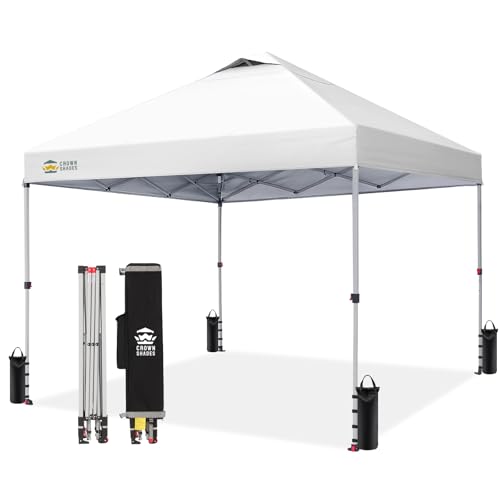
CROWN SHADES 10×10 Pop Up Canopy Tent, Grid White
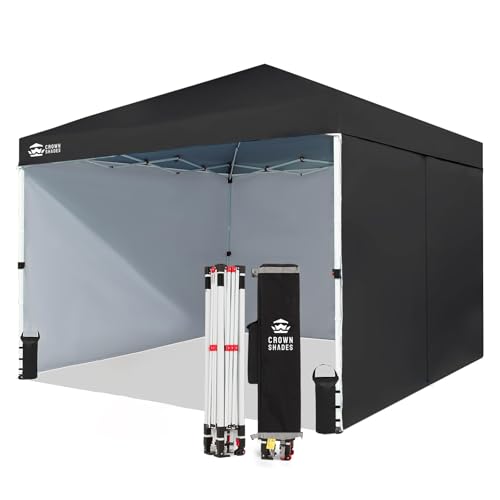
CROWN SHADES 10×10 Commercial Canopy Tent with Sidewalls
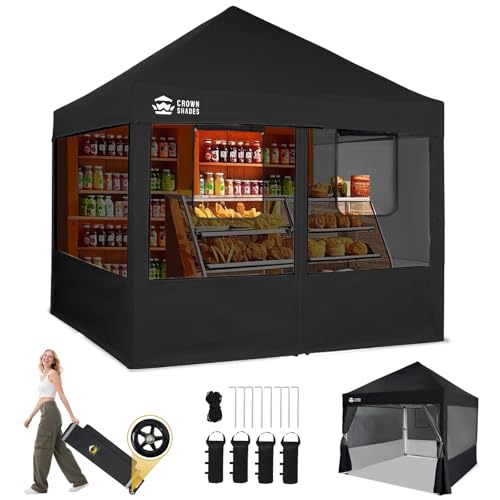
CROWN SHADES 10×10 Pop Up Canopy for Outdoor Serving

COBIZI 10×20 Heavy Duty Pop Up Canopy with Sidewalls
The Details Behind The Selections
Trade show exhibitors need more than shade; they need a billboard. This 10×10 NaBai canopy accepts a custom logo file and prints it through dye sublimation, which embeds the ink into the fabric rather than layering it on top. Buyers send their artwork along with a Pantone color reference through Amazon messages, and the manufacturer returns a proof before production.
Compared with the CROWN SHADES options below, this tent trades tool-free speed for brand presence. The Pantone-matched printing means a small business can match existing signage exactly. For a vendor working the same circuit all summer, that visual consistency pays off.
Good Reasons To Consider
- Full-coverage dye sublimation printing holds up to repeated folding and sun exposure better than surface-applied vinyl
- Pantone color matching eliminates the guesswork of trying to approximate a brand palette
- Standard 10×10 footprint fits typical booth grids at convention centers and outdoor markets
- Printed roof doubles as a passive marketing tool visible from across a busy aisle
Things To Consider
- Custom production adds lead time compared to off-the-shelf canopies
- Owners commonly report the printed fabric requires gentle folding to avoid creasing the artwork
- Frame specs and adjustment details are not detailed in the listing
Key Specs
Made For
Small business owners and trade show exhibitors who treat the tent as a marketing surface, not just a shade structure.
Look Elsewhere When
A casual weekend user should reach for the CROWN SHADES 10×10 with one side wall, since tool-free setup matters more than custom printing for a backyard party.
Backyard hosts and casual vendors need a canopy that goes up fast and comes down without a fight. The CROWN SHADES 10×10 uses a patented CenterLOK hub, where a single push locks all four legs into place. That single mechanical trick removes the need to wrestle each pole individually before guests arrive.
One included side wall blocks low-angle sun or wind from a single direction, which suits a patio setup where the house shields two sides already. In most cases, two people can have the frame extended and the canopy tensioned in under a minute, leaving time for tables and chairs.
What Pays Off
- One-push CenterLOK hub collapses setup time dramatically
- Three height adjustments let the canopy clear a grill or duck under tree branches
- Single sidewall is removable for open-air layouts on calm days
- Grid grey color hides dust and minor stains between events
Points To Note
- One side wall leaves three sides exposed; not ideal for full enclosure
- Fabric specs and frame weight are not detailed in the source
At A Glance
Who It Suits Best
Hosts running Saturday markets or family reunions who value fast setup and occasional wind protection more than full enclosure.
Consider Something Else When
Food vendors needing screened walls should look at the CROWN SHADES 10×10 for outdoor serving, which includes mesh panels with zippered access.
Repeat vendors setting up the same square footage weekly appreciate a frame that does not require tools or a second trip to the truck. This CROWN SHADES 10×10 uses the same CenterLOK one-push hub as its sibling model above, but ships without sidewalls. That bare configuration keeps weight and bulk down for solo transport.
The grid white fabric reflects more sunlight than darker colors, which can matter for events held on hot asphalt. Without walls, air flows freely underneath, so a band setup or a craft table stays cooler than under a fully sealed canopy.
Real-World Strengths
- One-push deployment speeds up recurring event days
- Lighter pared-down frame is easier for one person to handle
- White roof surface reflects heat, helping underneath feel cooler
- Pinch-free adjustment buttons reduce finger injuries during takedown
Honest Caveats
- No walls included; weather protection is limited to overhead shade
- White fabric shows dirt more readily than darker options like the Grid Grey pick
Feature Card
Right Fit For
Solo craft fair vendors and weekend market sellers who carry their canopy in a sedan and set it up without help.
Where Another Pick Suits Better
Anyone needing built-in walls for a private booth should choose the CROWN SHADES 10×10 Commercial canopy instead.
Pop-up retail booths and information tents need walls on every side to define a space and keep merchandise secure. This CROWN SHADES commercial canopy ships with sidewalls, turning the basic frame into a fully enclosed shelter. The same one-push CenterLOK hub keeps deployment simple even with the extra panels attached.
The black exterior projects a clean professional look and hides scuffs between uses. For a vendor pulling up to a different parking lot every weekend, full enclosure also means the booth reads as a destination rather than an open table.
Useful Touches
- Sidewalls transform the open canopy into a private retail environment
- One-push hub keeps setup fast despite the added wall weight
- Black exterior projects a polished booth appearance
- Three height settings allow door openings of different clearances
A Few Limitations
- Black fabric absorbs heat, making the space warmer on sunny days
- Sidewall attachment details are not specified in the source
- Fully enclosed layout limits airflow compared to the wall-free option above
Built With In Mind
Information booth staff and pop-up retail vendors who need a defined, enclosed space rather than an open shade structure.
Swap It Out When
Cooking for a crowd is the goal; the COBIZI 10×20 below offers much more room for food lines and prep tables.
Outdoor food service faces two enemies: sun on the cooks and flying insects on the food. This CROWN SHADES canopy tackles both with four mesh walls, two of which have mid-zip pass-through windows. The result is a screened booth that keeps flies away from serving trays while letting guests walk up and order.
The frame is described as an 8-way ultra-stable configuration, which matters when a catering tent is parked on grass for a wedding reception. Wind gusts that would rock a lightweight shelter are distributed across more contact points here.
Notable Gains
- Mesh walls protect plated food from flying insects in outdoor settings
- Mid-zip access points on two walls keep customer flow moving
- 8-way frame design resists wind better than basic four-leg layouts
- Detachable walls allow quick conversion to an open-air bar setup
Trade Offs
- Mesh walls add cleaning time, as owners commonly report debris sticking to the netting
- Frame weight is not detailed, which matters for transport to remote venues
- More moving parts than the basic CROWN SHADES 10×10 above
Whose Shelf It Belongs On
Caterers and food truck operators who serve plated or prepared food where insect protection is non-negotiable.
Skip It When
The event is purely shade-focused with no food prep; the simpler CROWN SHADES 10×10 with one sidewall handles that scenario cleanly.
Some events outgrow a 10×10 footprint fast. A wedding reception, a large craft fair booth, or a community fundraiser often needs twice the covered space. This COBIZI 10×20 doubles the floor area while keeping a pop-up format. The frame uses a full truss construction with a powder-coated finish for corrosion resistance.
Compared with the CROWN SHADES options above, this tent is heavier and less suited to solo deployment, but it offers serious headroom and sidewall coverage for larger groups. For an event planner running a season of outdoor gatherings, the extra capacity changes what is possible on-site.
The Value In It
- 200 square feet of covered space handles larger guest counts
- Full truss frame distributes weight and resists sagging over time
- Powder-coated steel resists rust across rainy seasons
- Included sidewalls extend the usable space into a defined room
Potential Sticking Points
- Larger packed size may not fit a sedan trunk; a truck or trailer helps
- Setup takes longer than a 10×10 and typically needs more hands
- Specific wind ratings are not provided in the source listing
Quick Facts
Best Suited To
Event planners and large family hosts who need capacity for 20 to 30 guests under one roof with sidewall coverage included.
Reach For A Different Pick When
Storage space is tight and a smaller 10×10 footprint is enough; the CROWN SHADES commercial canopy above offers sidewalls in a more compact package.
Factors That Matter When Picking A Pop Up Event Canopy
Footprint and Capacity. A 10×10 canopy covers about 100 square feet, which comfortably shelters four to six people at a table. Larger 10×20 layouts double that capacity but require more storage space and stronger transport. Match the canopy footprint to expected guest count plus a buffer for serving tables or display racks.
Setup Mechanism. CenterLOK hubs and one-push systems collapse deployment to seconds, while traditional frames require extending each leg manually. For recurring vendors or anyone setting up solo, that mechanical shortcut matters more than weight savings. First-time hosts may not notice the difference for a single annual event.
Wall Configuration. Open canopies maximize airflow and visibility, while full sidewalls create enclosed booths suited to retail and food service. Mesh walls solve insect problems during outdoor dining. The honest read is that more walls add weight, setup time, and cleaning effort.
Frame and Fabric Durability. Powder-coated steel frames resist corrosion through rainy seasons better than bare aluminum. Thicker pipe diameters and truss construction add rigidity at the cost of packed weight. Owners commonly report that thicker frames pay back the extra pounds during windy events.
Common Slip Ups And Upgrade Tradeoffs
Mistakes Worth Dodging
Underestimating packed weight leads to a tent that never leaves the garage. A 10×10 with walls can easily top 50 pounds, and a 10×20 doubles that. Measure trunk space and confirm the carry bag dimensions before committing. Staking and ballast matter too, since most markets canopies leave anchoring gear as a separate purchase.
When Paying More Pays Off
Higher-tier models invest the extra dollars in frame tubing, joint hardware, and fabric denier, the unit that measures thread thickness. Heavier fabric resists tearing when wind snaps the canopy, and thicker legs hold their adjustment longer. For anyone running monthly events, those upgrades typically return their cost through fewer replacements and steadier setups.