
A good poncho liner earns its place in a pack because it pulls double or triple duty: warmth around the fire, a sleeping layer under a shelter, a dry wrap during a gusty rain. For backpackers, military-style kit enthusiasts, and weekend campers, the modern “woobie” style has become one of the smartest pieces of kit to own. The five options below cover the spectrum, from waterproof shells to insulating quilted liners, so the right pick matches the climate and trip length.
The Leading Options At A Glance
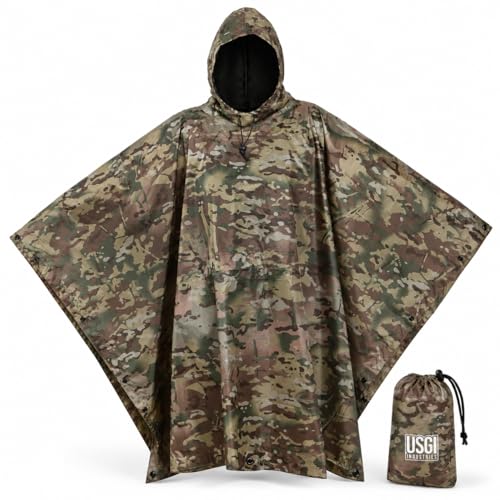
USGI Industries Military Style Rain Poncho

USGI Industries Woobie Blanket Poncho Liner

Military Gear Poncho Liners Woodland Woobie

PacMül Woobie Blanket Poncho Liner

GHILEO Camo Poncho Liner Army Blanket
A Deeper Look At The Lineup
This is the wet-weather half of the classic two-piece kit: a ripstop shell built to keep rain off while leaving room for an insulating liner to do its job underneath. Sized at roughly 62 by 82 inches, it drapes generously over a fully loaded pack, and the integrated snaps and grommets let the liner lock into the corners for a wearable sleeping system.
For backpackers and field campers who already own a quilted liner, this poncho serves as the protective outer layer. Pair it with a separate insulating blanket when temperatures drop, and the combination rivals a lightweight mummy bag without the weight of zippers and hoods.
Everyday Advantages
- Ripstop 210T polyester construction resists tearing on brush-heavy trails
- Water pressure resistance of 2000mm to 3000mm handles steady rain without soak-through
- Generous 62 x 82 inch cut covers most adults plus a daypack
- Snaps and corner grommets create dozens of configuration options
- Pairs cleanly with any compatible woobie-style liner
Things To Consider
- Provides no insulation on its own, so a liner is essential in cold weather
- Polyester can feel clammy during high-output activity in humid conditions
Built With In Mind
Backpackers and field campers who already use or plan to buy a separate insulating liner and need a tough, packable rain shell.
Where Another Pick Suits Better
For solo cold-weather trips where warmth matters more than rain protection, the USGI Industries Woobie Blanket delivers insulation in a single piece.
The blanket the US military has been handing out for decades, translated into a civilian-friendly package. Tightly woven nylon wraps a layer of quick-drying polyester batting in a wave-pattern quilt that traps warm air without weighing the pack down. One side carries the woodland camo print, the other stays neutral, which makes it versatile around the house or in the truck.
For campers layering under a rain shell or tossing over a sleeping bag on a cool night, this is the benchmark. Compared to the rain poncho covered above, this liner focuses entirely on warmth, with snaps along the edges that button into compatible ponchos to form a wearable sleeping system.
Bright Spots
- Lightweight enough for backpacking but warm enough for shoulder-season trips
- Snaps along the edges integrate with matching ponchos for a wearable cocoon
- Quick-drying batting handles damp conditions better than cotton blankets
- Doubles as a picnic blanket, ground cover, or wrap around the campfire
Worth Noting
- Not fully waterproof, so it needs a shell during heavy rain
- Battting can compress over years of heavy use, reducing loft
- Machine washing may cause clumping if not dried thoroughly
Quick Facts
Who Will Love This
Three-season campers and overlanders who want one piece that handles campfire nights, tent sleeping, and impromptu naps in the truck.
Swap It Out When
For travelers who need a complete pack-and-go system, the GHILEO Camo Poncho Liner comes bundled with a compression sack for tighter storage.
Often nicknamed the “woobie” by service members, this woodland-camo liner leans into traditional militaria styling and the comfort factor that earned it a cult following. It works as a standalone blanket, ties into a poncho for a sleeping bag configuration, or snaps into place when paired with a compatible shell. For milder climates or as a layer inside a heavier sleeping bag, it covers a lot of ground.
Veteran-owned sourcing gives this pick a slightly more nostalgic appeal for collectors and reenactors, while the practical construction still serves backpackers well. The trade-off is that insulation tops out in moderate conditions rather than deep winter.
What Stands Out
- Versatile woodland camo appeals to both reenactors and working outdoorsmen
- Snaps and tie points allow poncho integration or standalone use
- Lightweight and packable for extended backcountry trips
- Familiar “woobie” comfort factor that doubles as a security blanket on long trips
Trade Offs
- Best suited to milder weather rather than freezing overnight temperatures
- Woodland camo limits versatility in urban or suburban settings
- Quilting may loosen after repeated wash cycles
Made For
Reenactors, veterans, and casual campers who want a traditional woodland camo liner with character and solid all-around utility.
Consider Something Else When
For backcountry trips where weight and warmth per ounce matter more than nostalgia, the PacMül Woobie Blanket uses a nylon shell with bonded batting for a leaner pack profile.
Built by a veteran-owned brand, this liner emphasizes versatility across temperature swings and terrain. The nylon outer with bonded insulation aims to stay warm when damp and compress small when stuffed into a pack, while the tactical styling makes it a natural fit for bug-out bags and overlanding rigs.
Where the PacMül stands apart is intent: it markets itself as survival and bug-out gear rather than a casual camping blanket. For anyone building an evacuation or vehicle kit, that positioning adds confidence.
Features That Help
- Nylon shell resists wind and light precipitation during transitional weather
- Insulated thermal batting maintains loft through cool nights
- Compatible with standard military-style ponchos for a wearable sleeping system
- Compact storage footprint suits bug-out bags and vehicle kits
Points To Note
- Insulation is moderate, not suited to deep-winter solo sleeping
- Less established brand history compared to long-running military suppliers
The Right Fit
Survivalists, preppers, and overlanders who want a multi-use liner that doubles as part of a bug-out or emergency kit.
A Better Fit Elsewhere
For casual weekend campers focused on comfort, the GHILEO Camo Poncho Liner arrives with a compression carrying bag for cleaner storage.
GHILEO packages a two-layer nylon and polyester batting construction with a compression sack, which is the missing accessory on most competing liners. For travelers hopping between hostels, car campers packing the trunk, or backpackers tight on space, that bag makes a real difference in how compactly the liner disappears into a kit.
The sewn and quilted build holds up to repeated stuffing and unstuffing, and the camo pattern blends well in outdoor settings. It handles the same job as the other liners here but earns its place through convenience.
Real Benefits
- Two nylon layers around polyester batting create durable, washable construction
- Compression carrying bag included for tighter pack storage
- Functions as a blanket, poncho liner, or emergency wrap in vehicles
- Sewn quilted seams resist batting clumping over time
Honest Caveats
- Polyester batting runs cooler than heavier synthetic fills in deep cold
- Camo pattern may not suit non-tactical use cases
Quick Facts
Best Suited To
Travelers, car campers, and backpackers who value a tidy pack and want a storage sack included rather than purchased separately.
Skip It When
For dedicated field use in wet climates, the USGI Industries Military Style Rain Poncho offers stronger waterproofing as the outer layer.
Picking Poncho Liners That Match Your Trips
The right poncho liner depends on what kind of weather and terrain the kit will see most often. Three attributes carry the most weight in everyday ownership: insulation type and weight, compatibility with existing shells, and packed size.
Insulation matters first because it determines warmth without bulk. Polyester batting dries fast and stays warm when slightly damp, which suits damp shoulder-season trips better than cotton. Heavier fills trap more air but pack larger, so backpackers weighing every ounce usually lean toward lighter batting that can be layered under a shell for added warmth.
Compatibility with a rain poncho or shell expands the liner’s usefulness. Snaps and corner tie points allow the liner to lock into a poncho and form a wearable sleeping bag, freeing the hands for camp chores. Shoppers planning to pair a liner with an existing poncho should match snap spacing and dimensions before committing.
Packed size affects daily comfort on the trail. A liner that stuffs into a compression sack the size of a loaf of bread disappears into a pack, while a bulkier option may push other gear out. Travelers and ultralight hikers usually prioritize compression over maximum loft.
Key Considerations Across These Picks
Mistakes Worth Dodging
Treating a liner as a substitute for a sleeping bag is the most common slip-up. A woobie-style liner adds warmth and flexibility, but in freezing overnight conditions a proper sleeping bag still belongs in the kit. Skipping measurement checks against an existing poncho is another avoidable miss; snap spacing varies, and a mismatch turns a wearable system into a loose wrap.
When Paying More Pays Off
Higher-priced liners in this category typically invest in heavier quilting, tighter fabric weaves, and reinforced edges that survive years of stuffing and washing. The upgrade makes sense for frequent backpackers and anyone relying on the kit for emergencies, where a seam failure in cold rain is a serious problem. Casual weekend campers may find a mid-tier option perfectly sufficient for the mileage.