
Overlanders carry more than gear. They haul rooftop tents, recovery boards, fridge freezers, and the assumption that tonight’s campsite might sit miles from cell signal. The shelter on the roof or in the cargo box has to unfasten quickly, hold up under steady wind, and feel like a real room after hours behind the wheel. The picks below cover cabins that pop up in under a minute, double-layer shelters for shoulder-season trips, and tunnel-style floor plans that maximize interior space. None of these are purpose-built rooftop models, yet every one translates well to the overlanding rhythm: arrive late, set up fast, sleep well, pack down fast.
The Picks In Brief

Naturehike Village Instant Tent 4/8 Person Cabin
Naturehike Cape Instant Tunnel Camping Tent
Naturehike KOTA Double Layer Family Tent
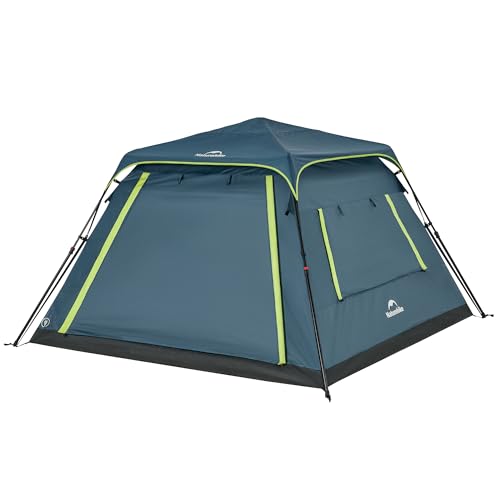
Naturehike Cape Lite 4-6 Person Cabin Tent
Why These Options Stand Out
The Village is a classic cabin-style instant tent, meaning the frame and fabric arrive pre-attached so the whole shelter goes up in roughly a minute. For overlanders rolling into a dispersed site after sunset, that speed matters more than any spec sheet claim.
Inside, the near-vertical walls keep headroom usable, and the 150D Ti Black fabric carries a UPF rating high enough to cut midday glare when the fly is rolled back. Family crews with a queen air mattress and a stack of duffel bags will appreciate the standing-room height and the gear-storage square footage, especially after long highway days.
A Few Highlights
- Pre-attached pole system cuts setup to about a minute, no sorting of poles required
- Full-coverage rainfly and 2000mm+ waterproof rating handle steady overnight rain
- 150D Ti Black fabric blocks strong sun, useful on exposed desert or alpine sites
- Cabin walls allow most adults to stand while changing or organizing gear
- Avaliable in 4-person and 8-person footprints, so crews can size up or down
Worth Noting
- The Ti Black fabric adds measurable weight, a real factor when this tent rides in a roof box
- Single-door cabin layouts can feel cramped for five or more sleepers entering at once
Made For
Family overlanders who want one large standing-height cabin for car-camping nights and short weekend loops.
Skip It When
The Naturehike Cape is a better call for crews needing separate sleeping bays and a tunnel-style footprint.
The Cape takes a different architectural path from the Village cabin. It uses a tunnel layout, which splits the floor into separated sleeping pods rather than one open room, and the pre-attached frame still rises in roughly a minute.
Where this tent earns its keep is on multi-vehicle overlanding trips. One end holds the kids, the other holds adults, gear stows in the central bay, and the 190T polyester shell carries a 3000mm waterproof rating for genuinely wet nights. Compared to the Village, this one prioritizes layout flexibility over a single standing-height room.
Practical Advantages
- Tunnel design separates sleepers into defined rooms, helping families settle in faster
- 3000mm waterproof rating exceeds typical weekend rainfall thresholds
- Pre-attached instant frame goes up in about a minute once the bag is opened
- Interior measures up to 12.9 square meters in the larger size, ample for cots and gear
Trade Offs
- Tunnel shapes catch wind from the side more than cabin-style walls do, so site selection matters
- Interior peaks may not match a true cabin tent, which can matter for changing clothes
Key Product Details
Right Fit For
Multi-vehicle overlanding trips with separate sleeping zones and shared central space.
Swap It Out When
The Naturehike KOTA suits travelers heading into shoulder-season weather with stronger wind and rain exposure.
The KOTA is the most modular shelter in this group. It is a double-layer tent, meaning a separate inner mesh room and outer rainfly, and either piece can be used on its own. In warm months the mesh inner becomes a stargazing room. In shoulder seasons the full double-wall setup handles wind, cold nights, and dust.
Overlanders running late-spring or early-fall routes benefit most. The vestibules and porch extend usable space outside the sleeping area, and the 75D 210T polyester shell is built thicker than the Cape’s, with a 3000mm+ waterproof rating. The trade-off is pack size and weight, a real consideration for trucks already loaded with recovery gear and water.
Useful Strengths
- Double-layer construction allows summer stargazing and cold-night insulation from one shelter
- Vestibules and porch area keep muddy boots and wet jackets outside the sleeping room
- 3000mm+ waterproof rating handles persistent rain common in shoulder-season trips
- Mesh inner stands alone as a freestanding screen room in dry, warm conditions
- Outer fly alone works as a sun or rain canopy for cooking and gear staging
- Available in 4, 6, and 8-person sizes so the shelter scales with crew size
Things To Weigh
- Setup takes longer than the Cape or Village because two layers go up instead of one
- Pack volume is heavier and bulkier, a real factor for roof-box storage on smaller SUVs
- More components mean more pieces to dry before packing, important on wet-deck mornings
Best Suited To
Overlanders tackling shoulder-season routes where cold nights, wind, and rain push past the limits of single-layer shelters.
Consider Something Else When
The Naturehike Cape Lite is a better match for travelers prioritizing fast setup and a smaller packed footprint over modular weather protection.
The Cape Lite is the smallest package here, and that is its entire reason for existing. The square footprint fits a queen mattress, and the 62-inch peak height lets most adults kneel comfortably, even if standing up requires ducking.
Overlanders short on roof-box space, or those running a two-person rig with limited cargo real estate, will appreciate how this tent compresses into a manageable bag. Setup still runs about a minute through the pre-attached frame. Compared to the KOTA, this one trades weather versatility for packing efficiency, a fair swap for travelers chasing weekend trips in mild conditions.
The Good Stuff
- Pre-attached instant frame goes up in roughly a minute, no loose poles to sort
- 101.5 by 101.5 inch square floor fits a queen mattress with room to spare
- 62-inch peak height allows kneeling and changing without crouching
- Smaller packed volume suits roof boxes and shorter-wheelbase vehicles
Points To Keep In Mind
- Single-layer shell handles fair-weather trips better than sustained storms
- Smaller floor limits gear storage inside, so vestibule space may feel tight
Whose Shelf It Belongs On
Two-person overlanding rigs and weekend travelers who need quick setup without burning cargo space.
Reach For A Different Pick When
The Naturehike Village is a better fit for family crews needing standing height and a larger cabin footprint.
Picking The Right Shelter For The Route
Tent choice hinges on the trip, not the spec sheet. Match the shelter to the typical weather, the crew size, and the cargo space actually available once recovery gear, water, and a fridge are loaded.
Weather Rating And Fabric Weight
A waterproof rating tells how much water pressure a fabric can resist before leaking. A 2000mm rating handles steady rain, while 3000mm and above shrugs off sustained downpours common in coastal or mountain weather. Thicker denier fabrics (like 75D) resist abrasion better but add weight, while 190T polyester trims grams for roof-box storage. For overlanders driving mixed terrain, a 3000mm-rated polyester shell is the practical sweet spot.
Setup Speed After Dark
Instant tents with pre-attached poles go up in roughly a minute, while double-layer shelters take longer because two components get assembled. Arrival fatigue is real after highway miles, so setup speed often matters more than peak technical specs. Travelers rolling into a site at dusk benefit most from instant-frame designs.
Floor Layout And Crew Size
Cabin tents (the Village, the Cape Lite) maximize standing room and gear space in one open room. Tunnel tents (the Cape) divide the floor into sleeping bays, useful for families or mixed crews. Double-layer shelters (the KOTA) add vestibules and porches for boot storage and cooking shelter outside the sleeping area.
Weight And Pack Volume
Every kilogram counts when a rig already carries a fridge, tools, and water. Single-layer instant tents pack smaller and lighter, while double-layer modular shelters trade packing efficiency for weather versatility. Match the tent to the cargo space left over, not the cargo space you wish you had.
Practical Notes Across These Picks
Where Shoppers Go Wrong
The most common mistake is sizing up for comfort without measuring the roof box or cargo area first. A larger tent that won’t fit in storage is useless on the trail. Another trap is assuming waterproof rating equals all-weather shelter: a 2000mm rating handles rain but not pooling water, so a footprint or ground tarp matters more than shoppers expect.
What The Higher Tier Buys
Premium overlanding tents cost more for thicker denier fabrics, double-layer construction, and modular layouts that work year-round. The KOTA’s separate inner mesh room and outer fly cost more than the Cape Lite’s single-layer cabin, and the upgrade pays off for shoulder-season travel. For fair-weather weekend trips, the lower tier delivers plenty of shelter without the extra weight and pack volume.