
Car-campers and overlanders want the same thing from a basecamp tent: roll up, pop it open, and get out of the weather. The four cabin and tunnel tents below lean on pre-attached frames and tall walls, which makes them friendlier for families, gear-heavy trips, and anyone who’d rather pitch a shelter in minutes than wrestle with poles at dusk.

The Leading Options At A Glance
Naturehike Village Instant Tent 4/8 Person Cabin
Naturehike Cape Instant Tunnel Tent 4/6/8 Person
Naturehike KOTA 4/6/8 Person Double Layer Tent
Naturehike Cape Lite 4-6 Person Cabin Tent
A Breakdown Of The Leading Choices
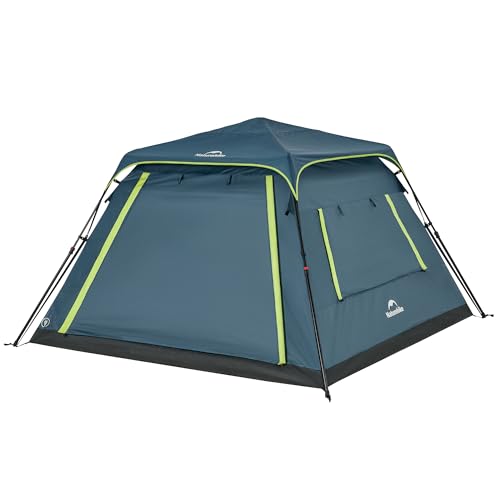
The Village reads like a small cabin dropped on a campsite. Its pre-attached frame and telescoping poles let the body unfold in roughly a minute, so unloading coolers and cots can happen in parallel with setup. The 150D titanium-coated fabric and full-coverage rainfly give it a thicker skin than most budget cabins, which pays off in shoulder-season rain and strong afternoon sun.
Standing height is the real headline for parents and dog owners: most adults can change a diaper or pull on a hoodie without ducking. Compared with the tunnel-style Cape covered next, the Village trades wind-shedding curvature for boxy, room-divider-friendly floor space.
Practical Pluses
- Pre-attached telescoping frame gets the tent standing in roughly 60 seconds, so late arrivals aren’t pitching in the dark.
- 150D titanium-coated shell with a 2000mm-rated rainfly handles heavy rain and offers serious UV block for desert basecamps.
- Cabin-style vertical walls leave room for cots, a chair, and a small camp table side by side.
- Available in 4-person and 8-person footprints, so couples and full families can size up without switching brands.
Things To Consider
- The cabin footprint needs a fairly flat, debris-free pad; rocks and roots show through the floor more than on geodesic designs.
- Bulk when packed runs larger than the Cape Lite, so smaller SUVs may need the trunk organized around it.
Who It Suits Best
Family campers and small groups arriving at a developed campground who value standing room and a fast pitch over ultralight pack size.
Skip It When
The Naturehike Cape Lite suits backpack-style overlanders who want a lighter cabin footprint and don’t need the Village’s 8-person capacity.
The Cape leans into a tunnel-style layout, which means long sleeping bays and a wind-friendly profile. Like the Village, its pre-attached poles unfold in about a minute, but the lower, curved shape translates into less standing height and more horizontal sleeping real estate. That trade-off matters when the trip is built around sleeping pads, pack organization, and gear drying lines rather than a camp chair inside the tent.
Owners commonly pair it with a footprint or ground tarp because the tunnel floor pulls taut but has fewer anchor points than a cabin. The 8.3 to 12.9 square meter sizes scale the same design up for larger crews, which is useful for groups rotating sleeping shifts on a multi-day overland route.
Strong Points
- Low-profile tunnel shape handles crosswinds better than a tall cabin on exposed ridges or desert washes.
- Long, wide sleeping floor fits two adult pads across with room for duffel bags along the sides.
- Same minute-class instant frame as the Village, so the learning curve stays short.
- 190T polyester shell is lighter to carry than the Village’s 150D fabric, which helps when packing space is tight.
Points To Note
- Tunnel tents need cross-beam staking, so soft sand or hard-packed dirt can slow the last step of setup.
- Standing height is limited along the centerline; taller campers will crouch more than they would inside the Village.
- Condensation can build on cool mornings because airflow lives mostly at the door ends.
Made For
Two-adult or small-group overlanders who prioritize sleep layout and wind performance over vertical living space inside the shelter.
Look Elsewhere When
The Naturehike KOTA is a better match for campers facing real shoulder-season cold, since its double-layer build manages condensation more deliberately than the single-skin Cape.
The KOTA is the most modular shelter in the lineup. A two-layer build pairs a mesh inner tent with a separate rainfly shelter, and either layer can stand alone. In warm months the mesh room lets stargazers trade cover for airflow; in shoulder seasons the fly pitches as a covered canopy over a picnic table or a clean staging area for wet boots. That flexibility is unusual at this price band.
Setup takes longer than the Village or Cape because two layers go up instead of one. The 3000mm-rated fly and 75D 210T polyester construction lean toward wet, cold conditions, which is exactly where the double layer earns its keep. Vestibules on the front porch add dry gear storage, so packs don’t crowd the sleeping floor.
The Case For It
- Two-layer construction manages condensation far better than the single-skin Cape in cool, damp weather.
- The mesh inner stands alone for summer trips, letting campers sleep under stars without losing bug protection.
- The fly alone works as a sun or rain canopy, which adds a real second use beyond overnight shelter.
- Vestibule porch creates dry storage for boots, packs, and a camp kitchen footprint.
- Higher-denier polyester shell is more abrasion-resistant than the Cape’s 190T, which matters on rocky desert sites.
Honest Caveats
- Setup time runs longer than the instant-frame picks, so late arrivals lose more light than they would with the Village.
- Packed weight and bulk scale up because two layer systems travel together.
- Modular design rewards a practiced routine; first-time campers may mis-step the inner-to-fly alignment.
Key Specs
Right Fit For
Year-round campers and overlanders heading into shoulder-season weather who want one shelter that pulls double duty as both sleeping quarters and a covered living space.
A Better Fit Elsewhere
The Naturehike Village is a smarter match for families who camp mostly in summer and prioritize a one-minute pitch over the KOTA’s modular flexibility.
The Cape Lite takes the cabin formula and trims it for smaller crews. Its roughly 101-inch square floor accepts a queen-size mattress, and the 62-inch peak lets most adults kneel or sit upright inside, which matters more than it sounds when lacing up boots before sunrise. Setup is the same instant-class frame the rest of the line uses, so a couple can have the tent standing while water still boils on the camp stove.
Compared with the larger Cape, the Lite gives up the tunnel layout and longer sleeping bay for a more compact box that fits tighter driveways and smaller roof-rack setups. For newer campers, that simpler geometry is part of the appeal: fewer corners means fewer arguments about which stake goes where.
Advantages To Know
- Compact square cabin fits two adults plus gear without forcing everyone into fetal positions.
- Instant-frame setup collapses the learning curve for campers new to pitching.
- Smaller packed footprint leaves room for chairs, a table, and a cooler in a mid-size SUV.
Worth Bearing In Mind
- Single-wall cabin construction can trap condensation on cold nights, so a vent or window should stay cracked when possible.
- Not sized for groups beyond two adults and a child, so growing families will outgrow it.
- Less vestibule space than the KOTA, meaning wet gear tends to migrate indoors during heavy rain.
Whose Shelf It Belongs On
Couples and small families easing into camping who want a forgiving cabin layout they can pitch on a first try.
Reach For A Different Pick When
The Naturehike KOTA suits overlanders expecting real wet weather, since its double-layer design handles condensation and rain better than the single-skin Lite.
What To Weigh Before Picking An Overland Shelter
Setup style sets the tone for every trip. Pre-attached instant frames keep pitch time near a minute but add bulk, while modular double-layer designs stretch setup into a longer ritual that pays back in weather performance. The trade-off comes down to who pitches the tent and how often the crew arrives after dark.
Capacity ratings lean optimistic. A “4-person” cabin usually sleeps two adults comfortably with gear, while an “8-person” cabin handles four adults plus a child without crowding. Picking a size up is the safer call when in doubt, especially for trips with dogs or extended family.
Weather rating deserves a close look. A 2000mm rainfly handles summer storms well, but a 3000mm shell with double-layer construction earns its keep when shoulder-season rain or wet snow enters the picture. For sunny desert basecamps, UV-rated coatings matter as much as waterproofing.
Footprint and storage often get overlooked. A tent that fits the campsite but not the vehicle forces repacking at the trailhead, so measuring the packed bag against the cargo area before checkout saves real frustration on departure day.
Key Considerations Across These Picks
Common Buying Slip Ups
Picking by person count alone tends to backfire. Person ratings assume light sleepers and minimal gear, so a family of four usually needs a 6-person cabin to keep duffels out of the sleeping area. The other trap is treating “instant setup” as identical across brands, when the actual time varies based on how cleanly the telescoping poles lock and how many stakes the layout demands.
What The Higher Tier Buys
Stepping up from the Cape Lite to the KOTA adds a true double-layer system, vestibule porch, and a thicker denier shell. That upgrade buys real wet-weather resilience and a second use case as a stand-alone canopy, which matters most for overlanders who camp across more than one season or who rely on the tent as a covered living space.
Wrap Up
The right cabin tent makes the campsite feel like home base within minutes of parking. Match the shelter to the climate first, then to the crew size, and the rest of the trip falls into place. Pick the build that suits the conditions you actually camp in, not the worst-case scenario you’ll never face.