
Backyard dinners, garden parties, and quiet evenings on the patio lose their charm fast when mosquitoes take over. For anyone tired of swatting mid-sentence, an outdoor mosquito fogger can turn a buzzing deck into a genuinely comfortable space. This roundup covers both aerosol foggers for quick knockdown and solar bug zappers for hands-free coverage, so the right match depends on whether the goal is a single evening’s relief or longer-term, low-effort control.
A Side-By-Side Look
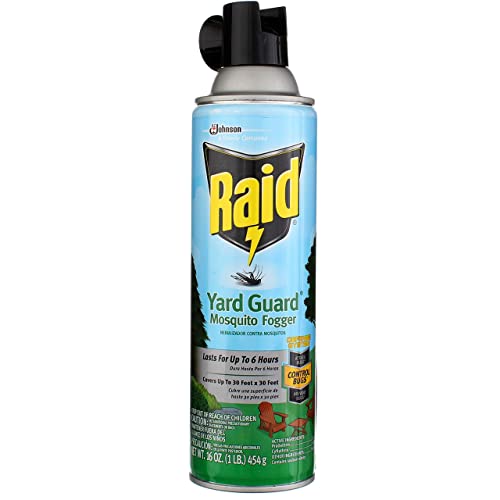
Raid Yard Guard Mosquito Fogger 16 Ounce (Pack of 12)
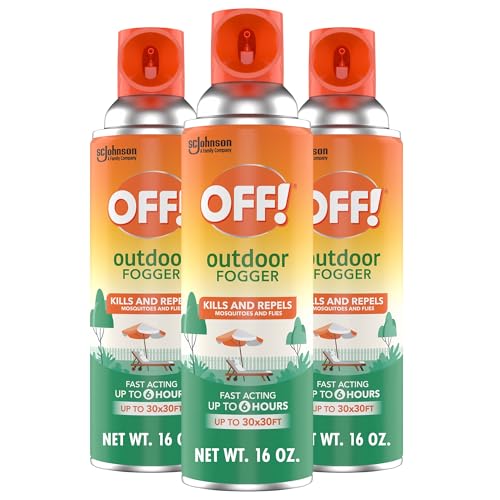
OFF! Outdoor Insect & Mosquito Repellent Fogger 16 oz (Pack of 3)

Raid Yard Guard Outdoor Mosquito Fogger 16 oz, 12 Count

Solar Bug Zapper Outdoor, 4500V Cordless Mosquito Zapper

Solar Bug Zapper Outdoor, 4500V Mosquito Zapper Dual Solar Panels

Solar Bug Zapper Outdoor with Flame Light & RGB Projector

Solar Bug Zapper Outdoor with Projector Lights, 4500V Mosquito Zapper
A Breakdown Of The Leading Choices
For homeowners planning a full season of mosquito control, the 12-pack of Raid Yard Guard foggers removes the need to constantly restock. Each 16-ounce aerosol can is designed to release a broad-spectrum fog that drifts into shrubs, grass, and shaded corners where mosquitoes rest during the day. For anyone who hosts frequent backyard gatherings, this bulk format is essentially a season’s supply waiting in the garage.
Unlike the OFF! pick reviewed next, this Raid formula leans toward kill-on-contact rather than repellency, so timing the application just before guests arrive tends to deliver the cleanest result. Compared with the solar zappers further down the list, aerosol foggers like this one require no charging and no placement decisions; you simply set the can, press the valve, and walk away.
Notable Gains
- Twelve cans in a single order covers multiple weekends of backyard use without repurchasing.
- Targets mosquitoes at resting sites in foliage, which often cuts populations faster than surface sprays.
- Also handles flies, gnats, small flying moths, wasps, hornets, and multi-colored Asian lady beetles, reducing the list of separate products to buy.
- Each can treats roughly a 30 by 30 foot area, which matches most mid-size patios and deck perimeters.
Points To Note
- Outdoor use only, so users with enclosed porches or screen rooms will need a different approach.
- Cans require upright placement during fogging, which can be awkward on sloped or uneven ground.
Who Will Love This
Homeowners with larger lots who want to pretreat an entire yard perimeter before outdoor events.
Look Elsewhere When
Shoppers who want hands-free, rechargeable control should consider the jepwe 4500V Solar Bug Zapper instead.
The OFF! Outdoor Fogger is framed by its maker as a “pretreat” product, which is a useful way to think about it: applied an hour before guests arrive, it creates a repellent cloud across a generous footprint. Each 16-ounce can covers up to 900 square feet, which is roughly the seating area of a large deck plus a nearby grill station. For suburban backyards, that single can is often all one evening requires.
Where this differs from the Raid Yard Guard 12-pack is the repellent-style approach. Rather than relying solely on knockdown, OFF! aims to push insects out of the treated zone, which can feel less harsh on beneficial pollinators drifting through. Set against the solar zappers lower in this roundup, the trade-off is clear: aerosol offers immediate impact but no nightly automation.
The Helpful Details
- Repels mosquitoes and listed flying insects for up to six hours, covering a full dinner party window.
- Wide 900 square foot coverage means one can often handles an average suburban patio without needing extras.
- Targets flies, mosquitoes, small flying moths, wasps, and Asian lady beetles in a single pass.
- Three-can pack balances convenience with manageable storage space in a garage or shed.
Worth Bearing In Mind
- Wind direction matters: applying on a still day produces a much more even repellent barrier.
- Reapplication is needed for each new event, so long-term control still calls for a layered approach.
Best Suited To
Hosts who want a one-step pretreatment before backyard dinners, birthday parties, or firepit nights.
Consider Something Else When
Anyone wanting daily automatic coverage should look at the Solar Bug Zapper Outdoor with Projector Lights instead.
This second Raid Yard Guard listing mirrors the format of the first pick but is positioned as a flexible multi-pack with several available pack sizes. The 16-ounce cans work identically: a fast-acting fog designed to knock down mosquitoes and flies on contact, with residual activity reported for up to six hours. For someone unsure how many cans a single summer will actually require, having the option to scale up or down is a quiet advantage.
Functionally, it shares the same application logic as Pick 1, so the real question becomes whether bulk-buyers prefer a single seasonal order or prefer to stock a smaller reserve and reorder as needed. The fast-acting aerosol nature also contrasts sharply with the solar zappers below: here there is no nightly charging cycle to manage, only a few seconds of setup before each application.
A Favorable Mix
- Fast knockdown formulation clears mosquitoes and flies quickly during an evening event.
- Pack-size variety lets shoppers match supply to actual seasonal demand.
- Works on a roughly 30 square foot zone per can, making dose planning straightforward.
- Decks, patios, and small backyards are all listed compatible use cases.
Trade-Offs To Consider
- Outdoor-only use restricts placement flexibility on screened porches or near open windows.
- Aerosol cans require upright handling, which can be inconvenient in tight spaces.
- Stockpiling a 12-count box takes up meaningful shelf or floor space in smaller garages.
Made For
Shoppers who want flexible pack sizes and don’t mind dedicating a corner of the garage to seasonal storage.
Skip It When
Anyone wanting a chemical-free daily option should consider the jepwe 4500V Cordless Solar Bug Zapper instead.
Switching from aerosol cans to electric zappers is a real shift in ownership experience. This jepwe solar unit runs without extension cords or outlet access, drawing energy from a built-in solar panel with USB charging as a backup. The 4500V electric grid is the same high-voltage class used across many consumer bug zappers, which means mosquitoes and gnats are eliminated on contact rather than merely repelled.
Compared with the aerosol picks above, the cordless solar format trades instant knockdown for ongoing nightly duty. For porches, pergolas, or anywhere a power outlet is inconvenient, that tradeoff usually pays off within the first week of ownership.
The Good Stuff
- Solar plus USB charging gives flexibility on cloudy stretches where pure solar models struggle.
- Cordless placement means the zapper can sit in the middle of a patio rather than tethered to a wall.
- Rechargeable battery cuts long-term cost versus disposable propane or aerosol alternatives.
Where It May Fall Short
- Solar charging depends on direct sunlight, so heavily shaded patios may need the USB fallback regularly.
- Owners commonly report periodic cleaning of the electric grid is needed for peak performance.
Feature Snapshot
Who Should Grab It
Apartment and townhouse dwellers with sunny balconies who want mosquito control without running cords.
Reach For A Different Pick When
Anyone wanting added ambient lighting should look at the jepwe Mosquito Zapper with Flame Light and RGB Projector instead.
This sibling to the previous pick uses dual solar panels, which is the headline difference. More solar surface area generally means faster charging and more reliable overnight runtime, particularly in regions where summer sun is reliable but evenings are short. For homeowners in northern climates or anyone who has been disappointed by single-panel zappers losing charge by 2 a.m., the dual-panel configuration is genuinely meaningful.
It still uses a 4500V grid with UV attraction, which puts it in the same performance bracket as other zappers reviewed here. Where it stands apart is the extra charging headroom, which in our view makes it the better choice for full-night coverage on patios used for late dinners.
Benefits That Matter
- Dual panels shorten charging cycles and improve runtime reliability.
- 4500V grid eliminates mosquitoes, gnats, and flies on contact.
- UV attraction pulls insects in from a wide perimeter around the unit.
- Cordless design suits decks, gardens, and camping setups.
Some Limits To Know
- Still depends on adequate sunlight, though less so than single-panel models.
- No automatic dusk-to-dawn sensor is listed, so manual on/off scheduling may be needed.
Key Specs
The Right Fit
Homeowners in partly sunny climates who want zapper performance that survives overcast stretches.
A Better Fit Elsewhere
Anyone prioritizing automatic on/off timing should consider the Solar Bug Zapper with Projector Lights instead.
Where most bug zappers are strictly utilitarian, this jepwe unit layers in atmosphere. The flickering flame effect plus RGB projector turns the device into a piece of outdoor decor rather than just a pest control tool. For people who entertain frequently or care about how the backyard looks at night, that dual purpose is the actual selling point. Functionally, it is still a 4500V zapper with UV attraction, so pest control performance tracks with the other jepwe models in this list.
Versus the dual-panel version reviewed earlier, this one trades extra solar surface area for lighting features. For covered patios or pergolas with built-in lighting already, the projector may be redundant, but for open decks it adds genuine warmth after sundown.
Bright Spots
- Combines mosquito control with decorative flame and RGB lighting in a single unit.
- Solar-powered operation keeps the cordless placement advantage of the other jepwe picks.
- Particularly well-suited to hosting setups like outdoor dinners or camping evenings.
Points To Keep In Mind
- Lighting features will not appeal to shoppers who want a strictly no-frills zapper.
- Projector brightness on full solar charging may vary on overcast days.
Perfect Match For
Entertainers and patio designers who want pest control that doubles as evening decor.
Swap It Out When
Anyone prioritizing maximum solar charging should look at the 4500V Mosquito Zapper with Dual Solar Panels instead.
For shoppers who want a true install-and-forget solution, this jepwe model adds the most useful automation feature on the list: a built-in light sensor that turns the zapper on at dusk and off at dawn. Hands-free operation sounds minor until you compare it to nightly trips outside with a power switch. The projector lights also throw festive color across nearby walls, which adds to evening ambiance without requiring a separate lighting product.
Alongside the 4500V grid and dual solar plus USB charging, this is the most feature-complete solar unit in the roundup. It is the option most likely to satisfy homeowners who want mosquito control to simply happen, rather than be part of their pre-event routine.
Notable Upsides
- Automatic dusk-to-dawn operation removes the need to manually switch the unit on each evening.
- Projector lights turn nearby walls, trees, and gardens into colorful scenes for parties and holidays.
- Dual solar plus USB charging handles cloudy stretches without manual intervention.
- Works for patios, porches, gardens, and camping setups.
Possible Compromises
- Light sensor placement can be fooled by nearby porch lights, which may delay activation.
- Projector lights are decorative and may feel unnecessary for users wanting pure pest control.
Feature Overview
Whose Shelf It Belongs On
Homeowners who want a true set-and-forget mosquito solution for full-season backyard use.
Not Your Match When
Hosts who only need mosquito control for occasional events may prefer the OFF! Outdoor Fogger 3-pack.
Picking The Right Match For Your Backyard
Matching a mosquito fogger to a yard comes down to how the space is actually used. Aerosol foggers like the Raid Yard Guard and OFF! products work best for event-driven use: a Saturday cookout, a holiday gathering, or a single stressful week when mosquitoes suddenly spike. They deliver immediate knockdown or repellent action, but the protection fades within hours, so reapplication is part of the deal.
Solar bug zappers serve a different rhythm. They cost more upfront and need a sunny placement, but they work quietly every evening without intervention. A homeowner who eats on the patio three or four nights a week usually benefits more from a zapper, while a household that only uses the yard for the occasional party gets better value from aerosol cans.
Coverage area matters too. A 30 by 30 foot zone suits a small deck, but a yard with a pergola, firepit, and dining area needs a wider perimeter treatment or multiple zappers. For larger properties, layering both approaches (a zapper for nightly baseline plus aerosol for high-traffic event days) covers gaps that either method leaves open.
Key Considerations Across These Picks
Where Shoppers Go Wrong
One common slip is assuming any aerosol “bug spray” works the same way as a mosquito fogger. Surface sprays leave residual repellent on skin or objects, while foggers fill the air with a drifting cloud designed to cover foliage and shaded zones. Reading the label for “outdoor fogger” specifically avoids that mismatch.
A second pitfall is placing a solar zapper in deep shade and expecting strong runtime. Solar panels need direct light for meaningful charging, so shaded pergola corners often underperform. Placing the unit where it gets midday sun, even if that means moving the seating arrangement slightly, makes a real difference in overnight performance.
When Paying More Pays Off
Higher-tier solar zappers in this category add dual panels, USB backup, automatic sensors, and decorative lighting. The extra cost is most justified for full-time residents who use their outdoor space daily. Renters or seasonal users who only face mosquito pressure a few weeks a year will find a basic aerosol fogger more efficient, since the premium features add value only when the device runs often enough to repay the investment.
Closing Thoughts
A comfortable backyard doesn’t require a single perfect product, but rather the right combination for how the space is actually used. Event-focused households will do well with aerosol foggers, while daily patio users tend to prefer the hands-off rhythm of a solar zapper. Whichever path fits, the goal is the same: more evenings spent outside, and fewer spent swatting.