
Finding the right electric skateboard feels harder than it should. Most riders want one that handles daily commutes, weekend rides, and the occasional hill without turning into a garage project. This roundup narrows four solid options across price tiers and use cases, so you can match a board to your routine instead of guessing from spec sheets alone.
An Overview Of The Picks
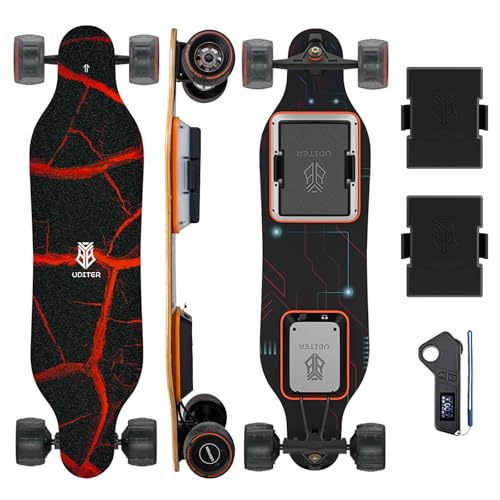
UDITER S3/Pixel/Mini Electric Skateboard with Swappable Battery

Madd Gear Cruiser Skateboard 31-Inch Maple Deck Longboard
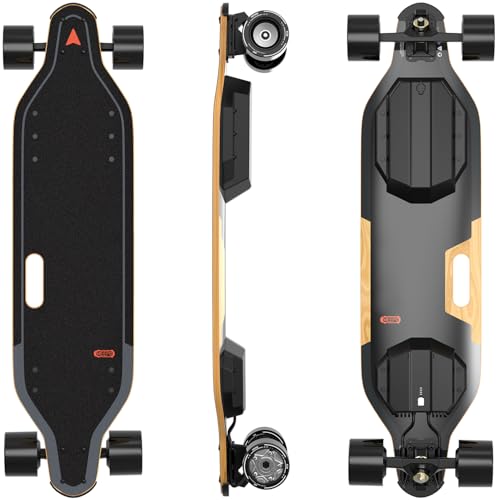
MEEPO Campus V3 Electric Skateboard with Remote

MEEPO Mini Series Electric Skateboard with Remote
Inside Each Recommended Option
The UDITER S3/Pixel/Mini arrives as a compact board with a smart twist: two lithium batteries in the box. That pairing matters because range anxiety, the quiet worry that your board will die three miles from home, is the single biggest reason electric skateboard newcomers abandon their rides. Each 5.2Ah pack carries its own UL 2272 safety listing, which means the cells meet recognized electrical and fire safety standards for personal e-mobility packs.
The 105mm wheels give you a noticeably cushier ride over rough pavement than the smaller 70-80mm wheels you see on typical short boards. Compared with the Madd Gear cruiser below, the UDITER is heavier and more complex, but you trade that weight for actual propulsion. Riders who want a real commuter rather than a kick-push board get genuine value here.
Noteworthy Benefits
- Swappable dual batteries extend your total range to roughly 20-26 miles on a full charge of both packs combined
- Quick-swap design lets you carry a charged spare and change it in seconds, useful for riders whose commute outruns a single battery
- Larger 105mm wheels roll over sidewalk cracks and small potholes with less foot fatigue
- UL 2272 certification on both battery packs adds a recognized safety layer for daily charging
- Compact deck format suits riders who need a board that fits in a locker or under a desk
Honest Caveats
- Carrying a second 5.2Ah battery adds weight to your bag or backpack, so light-packing commuters should plan for it
- Owners commonly report that the swap mechanism requires a clean, dry contact to seat properly on the first try
Feature Snapshot
Built With In Mind
Riders with a multi-leg commute who want backup power without owning two boards.
Reach For A Different Pick When
The Madd Gear Cruiser makes more sense for someone who actually wants a manual kick-push deck instead of motorized power.
The Madd Gear Cruiser is the odd one out in this lineup, and that is precisely the point. It carries no motor and no battery, just a 31-inch maple deck on smooth 70mm wheels, so it serves riders who want longboard cruising without committing to electric hardware. For teens, college students, or anyone easing into board sports, removing the throttle variable flattens the learning curve dramatically.
Pair it with the UDITER above and you cover both sides of a household: one rider pushes manually for exercise and skill building, while another uses the powered board for actual transportation. The lightweight maple construction also makes this cruiser easy to stash in a dorm closet or under a couch.
The Upside
- No electronics means zero charging time and zero battery degradation to worry about
- 31-inch deck suits shorter riders who find 38-inch longboards awkward to balance
- 70mm wheels roll smoothly over bike paths and sidewalks for casual cruising
Worth Bearing In Mind
- This is a manual cruiser, so hills, headwinds, and longer distances demand actual leg power
- Maple decks benefit from storage in a dry spot, since moisture can warp the plies over time
- Beginners often expect electric performance from any “skateboard” listing, which this one is not designed to deliver
Made For
Teens, college students, and first-time riders who want a stable manual cruiser at an approachable entry tier.
Where Another Pick Suits Better
The MEEPO Campus V3 fits better for anyone who actually wants motorized commuting and not just a push-around longboard.
The MEEPO Campus V3 is the everyday commuter choice in this roundup. It pairs an eight-layer Canadian maple deck (a strong, layered hardwood common in quality skateboards) with dual hub motors, the kind of motor built into the wheel hub itself rather than mounted to a belt outside it. That setup keeps the underside clean and reduces the kind of mechanical snag points belt-driven boards develop over time. Top speeds near 29 mph and a four-speed braking curve give you room to grow without overwhelming a new rider on day one.
Where the UDITER above leans into swappable range, the Campus V3 leans into ride feel and grab-and-go portability. The integrated carry handle on the deck is a small touch that matters: anyone who has walked a heavy board up a flight of stairs knows how much easier a built-in grip point becomes over time.
Useful Highlights
- Top speed up to 29 mph covers hilly commutes and faster bike-lane cruising
- Hub motors keep the deck low-profile and reduce belt maintenance
- Four-speed remote lets new riders ramp up gradually rather than jumping straight to full throttle
- Canadian maple deck absorbs road vibration better than cheaper bamboo blends
Trade-Offs To Consider
- Hub motors can heat up under sustained hill climbs, so flat-terrain commuters get more consistent performance
- Owners commonly rotate wheels and check motor covers every few months for debris
Quick Facts
Perfect Match For
College students and daily commuters who want a balanced electric board without specialized tricks or off-road capability.
Consider Something Else When
The MEEPO Mini Series works better for riders who need a shorter deck for tight urban storage or short-trip errands.
The MEEPO Mini Series is the short-board specialist of the group, with deck lengths running roughly 30-34 inches depending on the variant. That compact format suits apartment dwellers, students with limited hallway space, and anyone who carries their board onto public transit. Top speeds between 26 and 32 mph put it right alongside the Campus V3 above, but the smaller footprint makes the Mini feel more agile through crowded sidewalks.
The advertised load capacity of 330 pounds gives the Mini more headroom than many boards in this size class. A practical kick-tail at the rear helps with quick turns and manual-style maneuvers, which is a nice touch on a board that small.
What It Does Well
- 30-34 inch deck stows easily under desks, in narrow closets, and on bus racks
- 26-32 mph top speed range keeps it competitive with longer MEEPO boards
- 330 lb max load handles heavier riders and gear-laden commuters
- Kick-tail design aids tight cornering on city blocks
Soft Spots
- Shorter wheelbase (the distance between front and rear wheels) feels twitchier at top speed than the longer Campus V3
- Range figures vary widely by rider weight and terrain, so plan shorter trips on hilly days
Whose Shelf It Belongs On
Riders who live in tight apartments and want a board that disappears into a closet between rides.
Skip It When
The UDITER is the better match for anyone who needs long-distance range through swappable batteries over compact size.
Choosing The Right Electric Skateboard For Your Routine
Match The Board To The Distance
Range is the first number to check, but it is also the easiest to misread. A board advertised with 20 miles of range usually assumes a 150-pound rider on flat ground at moderate speed. Heavier riders, hills, and colder weather all cut real-world range, sometimes by a third. Plan for the worst realistic case, not the headline figure.
Think About Where You Will Carry It
Weight and deck length matter more than people expect. A board that is comfortable to ride becomes a chore the moment you carry it up a stairwell, onto a train, or under a restaurant table. The MEEPO Mini and the Madd Gear cruiser win on portability, while the UDITER trades some of that ease for swappable range.
Understand Hub Motors Versus Belt Drives
Hub motors sit inside the wheel hub and need almost no maintenance. Belt drives, where a rubber belt connects the motor to a wheel pulley, offer stronger torque for hills but require occasional belt swaps. For urban commuters, hub motors tend to be the easier ownership experience.
Braking And Speed Modes Matter More Than Top Speed
Top speed numbers grab attention, but a smooth four-speed braking profile (the way the board slows down when you pull the trigger on the remote) actually keeps newer riders safe. Pick a board that lets you throttle up gradually rather than dumping full power from the first pull.
Key Considerations Across These Picks
Where Shoppers Go Wrong
The most common mistake is choosing a board based on top speed alone. A 32 mph board with twitchy handling on a 30-inch deck is harder to ride safely than a 25 mph board with smooth braking and a longer wheelbase. Beginners should weight braking quality and remote feel above headline speed.
What Separates Premium From Basic
Higher-tier electric skateboards usually invest in better remote ergonomics, denser battery cells, and stronger deck layups. The MEEPO V-series and the UDITER dual-battery build sit a step above entry-level boards because of those details, and the difference shows up over months of daily use rather than the first ride.
Frequently Asked Questions
What is a reasonable range for an electric skateboard?
Most boards deliver 10-15 miles of real-world range per charge for average-weight riders on flat terrain. Heavier riders or stop-and-go city commutes typically see less, so factor your worst day into the decision rather than the best case.
Are electric skateboards hard to ride for beginners?
Modern boards with smooth throttles and gradual braking curves are approachable, but wearing a helmet and starting in a low-speed mode on flat pavement makes the first week far safer and more enjoyable.
Can electric skateboards go uphill?
Most electric skateboards in this class handle moderate inclines, though steep hills reduce speed and drain the battery faster. Hub motors handle modest grades, while belt drives typically climb better at the cost of more maintenance.
How long does the battery take to charge?
Typical charging times run two to four hours from empty to full depending on battery capacity. The UDITER’s swappable design sidesteps that wait by letting you swap in a pre-charged pack instead.
Do I need to maintain an electric skateboard?
Basic upkeep includes checking wheels, cleaning the deck and motor covers, and tightening hardware every few rides. Belt-driven boards add periodic belt inspection, while hub-motor boards like the MEEPO V-series stay simpler to maintain overall.
Wrap Up
Your best electric skateboard comes down to where you ride and how far you go. Apartment dwellers and quick-trip commuters tend to click with the MEEPO Mini, while distance riders get more out of the UDITER’s swappable battery setup. The MEEPO Campus V3 covers the middle ground for daily generalists, and the Madd Gear cruiser stays the right call for anyone who wants to push, not throttle.