
A ladder, a limb saw, and the slow dread of overreaching still define how most people handle tree work. Electric pole saws flip that script, letting you stand on flat ground while a powered bar chews through branches overhead. Cordless and corded models now cover everything from light pruning to thick limbs, so the right pick depends on your yard, your reach, and how often you reach for it.
The Picks In Brief

Milwaukee M18 FUEL Pole Saw with QUIK-LOK

Milwaukee M18 FUEL 10″ Pole Saw w/QUIK-LOK
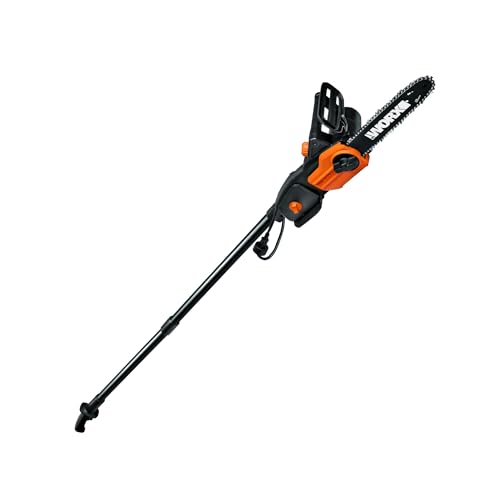
WORX 8 Amp 10″ 2-in-1 Pole Saw WG311

WORX 20V 8″ Cordless Pole Saw WG349
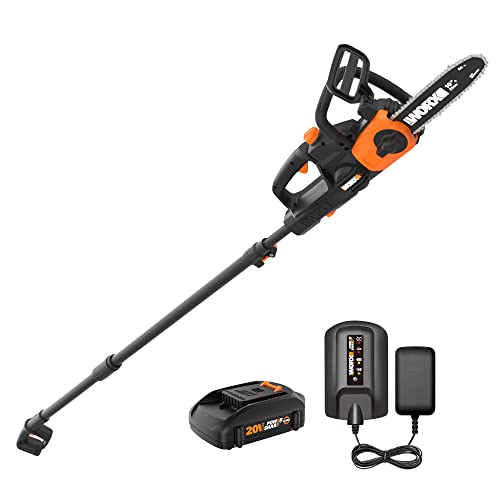
WORX 20V 10″ 2-in-1 Pole Saw WG323

Dewalt 20V 15FT Cordless Pole Saw DCPS620B
Taking A Closer Look At The Options
The Milwaukee M18 FUEL Pole Saw with QUIK-LOK is aimed at people who treat their yard like a jobsite, not a hobby. It shares the M18 battery platform with hundreds of other tools, so once you’re in the ecosystem, swapping a fresh pack takes seconds.
Reach matters more than raw bar size in most yards, and the included extension stretches working height to roughly 10 feet. Compared to the lighter WORX models covered below, this saw leans toward thicker cuts and longer sessions where battery capacity becomes the deciding factor.
The Practical Payoff
- QUIK-LOK attachment system lets the same power head drive other tools, which is a real money-saver for owners who already run M18 gear
- 10-inch bar with 3/8-inch low-profile pitch and 0.043-inch gauge cuts cleanly through typical yard limbs without bogging down
- Translucent automatic oiler reservoir means you can check chain oil at a glance and refill before dry-cutting ruins the bar
- 4600 RPM motor speed delivers fast chip clearance, reducing the chance of binding on green wood
Things To Consider
- Bare tool only, so the battery and charger push the real cost higher for first-time M18 shoppers
- At roughly 12.7 lbs fully assembled, overhead work tires shoulders faster than with the WORX WG349 below
Whose Property It Suits
Owners with mature trees, thick limbs, and a long-term plan to expand into other M18 tools will get the most from this setup.
Look Elsewhere When
Quick pruning on a small suburban lot is handled more comfortably by the lighter WORX WG349 covered later in this list.
The Milwaukee M18 FUEL 10″ Pole Saw w/QUIK-LOK sells the saw head only, no battery and no charger in the box. For shoppers already running M18 packs from drills or blowers, that keeps the bill reasonable and the charger drawer uncluttered.
The modular split-boom design accepts the same QUIK-LOK attachments as the kit version above, so this pick rewards people who think in systems, not single tools. The 80-inch assembled length and 12.7-pound weight carry over from the earlier Milwaukee entry, which makes it a familiar feel in the hands of existing M18 users.
Reasons It Performs
- Same 4600 RPM motor, 10-inch bar, 3/8-inch low-profile pitch, and 0.043-inch gauge as the kit version, so cutting performance does not drop
- Splits from the power head for compact storage in a garage corner or truck bed
- Pairs cleanly with any M18 battery you already own, which is the quiet selling point for tool-tired homeowners
Honest Caveats
- Buying in means buying the battery and charger separately, which can erase the savings if this is your first M18 tool
- Chain oil is not included, and the auto-oiler needs bar oil before the first cut or the chain stretches fast
Right Fit For
Existing Milwaukee M18 owners who already own a charged battery and want the pole saw head at a lower entry cost.
Consider Something Else When
Anyone without M18 batteries on the shelf should look at the WORX WG311 covered below, which arrives corded and ready to cut.
The WORX 8 Amp 10″ 2-in-1 Pole Saw WG311 is a corded machine, which sounds old-fashioned until you remember what that means in practice. No battery to babysit, no charge cycles, and no fade halfway through a limb.
It extends up to 10 feet of reach and cuts at roughly 28 feet per second, which is brisk enough for most suburban trees. The 10-pound weight keeps fatigue manageable, and the knob-adjusted chain tension cuts downtime between cuts, a small touch that adds up over a long afternoon.
Real Benefits
- 8-amp corded motor runs indefinitely, so long pruning sessions never hit a low-battery wall
- 2-in-1 design detaches into a handheld chainsaw for ground-level cleanup after the canopy work is done
- Tool-free chain tensioning with a single knob avoids the wrench-fumbling that slows down older designs
- Automatic chain lubrication keeps the bar fed without a manual oil can
Trade Offs
- The cord limits mobility, so very large yards may need an outdoor extension cord to reach far trees
- Chain oil should be topped off before each session; the reservoir is small for sustained work
Feature Snapshot
Built With In Mind
Homeowners with a medium yard and a reachable outdoor outlet who would rather plug in than charge up.
Swap It Out When
Properties far from any outlet, or where dragging a cord around the garden is a deal-breaker, are better served by the Dewalt DCPS620B covered below.
The WORX 20V 8″ Cordless Pole Saw WG349 is the lightest pick in this list at roughly 8.8 pounds with battery, which changes the entire feel of overhead cutting. Arms stop burning, wrists stop complaining, and trimming becomes a chore you might actually finish.
The 8-inch bar favors small limbs and frequent touch-ups over major felling work, which is exactly the use case for most backyards. It also detaches into a handheld chainsaw for ground work, and the auto-tension system keeps the chain snug without tools.
What Works In Its Favor
- 8.8-pound assembled weight is genuinely easy to lift above shoulder height for extended periods
- Auto chain tensioning removes the most common reason beginners stall a job: a loose chain that derails mid-cut
- Shares the 20V WORX battery platform with trimmers, blowers, and mowers across the brand lineup
Worth Noting
- 8-inch bar limits the diameter of limbs you can tackle in a single pass
- Runtime depends entirely on the amp-hour rating of the battery you pair with it; small packs fade quickly on thicker cuts
- Bar oil still needs manual topping off, which is easy to forget until the chain smokes
Who Will Love This
Anyone trimming small ornamental trees or shaping shrubs who values low weight over maximum cutting depth.
Not Your Match When
Homeowners facing thick, mature limbs should step up to the WORX WG323 below for a longer bar and matching reach.
The WORX 20V 10″ 2-in-1 Pole Saw WG323 blends a compact 20V chainsaw head with a pole attachment, delivering up to 12 feet of reach without leaning on a ladder. The chainsaw head itself weighs only about 6.2 pounds, which makes the conversion back to a handheld saw feel almost weightless.
For homeowners who split their time between overhead pruning and ground-level bucking, owning one tool that does both jobs means less clutter in the garage. Auto-tension keeps the chain dialed in, and the 20V battery platform overlaps with other WORX tools, simplifying the charging drawer.
Notable Upsides
- Up to 12 feet of reach clears most residential eaves and lower roofline branches safely
- Detachable chainsaw head doubles as a ground tool for cutting fallen limbs into firewood length
- Auto-tension system adjusts the chain without tools, keeping cuts consistent across long sessions
- Slim, balanced profile suits users who find bulkier pro-grade pole saws awkward overhead
A Few Limitations
- 20V battery platform produces less torque than the 40V-class competitors, so very thick limbs may require multiple passes
- Battery and charger are not always bundled, depending on the listing, so check the package contents before checkout
Feature Snapshot
Best Suited To
Homeowners who want a single tool for both overhead pruning and ground cleanup on small to medium trees.
Reach For A Different Pick When
Taller canopies that exceed 12 feet call for the longer reach of the Dewalt DCPS620B covered next.
The Dewalt 20V 15FT Cordless Pole Saw DCPS620B earns its place in this lineup with up to 15 feet of reach, which pushes it past the comfortable ceiling for casual users and into serious pruning territory. It runs on the 20V Max battery platform that powers a wide range of Dewalt tools, so existing owners can swap packs in seconds.
For tall ornamental trees, fruit trees trained high, or property with multi-story rooflines, that extra reach is the difference between finishing the job and calling a professional. The bare-tool format means the battery and charger come separately, a small frustration for first-time Dewalt buyers.
Points In Its Favor
- Up to 15 feet of reach covers taller canopies that overwhelm typical 10-foot pole saws
- 20V Max battery compatibility ties into one of the most widely supported cordless platforms in the category
- Brushless motor design (typical of this model class) improves runtime per charge compared to brushed motors
Possible Compromises
- Longer reach means more leverage on the operator, so extended overhead work can tire wrists and shoulders faster than with the WORX models above
- Bare tool only, so first-time Dewalt shoppers need to factor in battery and charger costs separately
- Chain oil reservoir still requires manual checks; running dry even briefly damages the bar
Feature Snapshot
Perfect Match For
Homeowners with tall trees, high rooflines, or professional crews that already run 20V Max packs across multiple tools.
Skip It When
Smaller yards and short ornamental trees are over-served by this much reach; the WORX WG349 handles those jobs with far less fatigue.
What Matters Before You Choose An Electric Pole Saw
Reach is the first filter, and most homeowners underestimate how much they actually need. Measure the height of the branches you most want to cut, then add two feet for the saw body and your comfortable arm extension. Anything under 10 feet of reach suits small ornamental work, while 12 to 15 feet covers mature trees and rooflines.
Bar length is the next filter, and it controls the diameter of limb you can cut in one pass. An 8-inch bar handles twigs and small limbs up to about 4 inches across, which covers most routine pruning. A 10-inch bar pushes that ceiling closer to 6 inches, useful for storm cleanup and fruit-tree maintenance. Going larger starts to add weight without much practical gain in residential settings.
Power source shapes how the saw feels in daily use. Corded models like the WORX WG311 deliver unlimited runtime but tie you to an outlet, while cordless options trade that tether for the convenience of swap-in batteries. Platform compatibility matters more than people realize; choosing a battery system that overlaps with other tools you already own cuts the real cost significantly.
Weight and balance quietly decide whether a pole saw ends up in the garage or the trash. Anything over 12 pounds becomes a workout overhead, and the difference between an 8-pound saw and a 13-pound saw feels much larger than the numbers suggest. Auto-tension systems and tool-free chain adjustments save real time across a long session, though they rarely make or break a purchase on their own.
Key Considerations Across These Picks
Pitfalls Shoppers Hit
The most common mistake is buying a pole saw with too little reach, then standing on a stepladder to finish the job, which defeats the purpose. Measure your tallest target branch first, then buy to that number rather than to the lowest price. Another trap is overlooking the total cost of a bare-tool listing: a $200 saw plus a $100 battery plus a $70 charger adds up to more than a competing kit that bundles everything.
Where The Extra Money Goes
Higher-tier picks earn their cost through brushless motors that stretch runtime per charge, automatic oiling systems that protect the bar, and modular attachment heads that turn one power unit into several tools. For occasional homeowners, those upgrades rarely pay back. For people who prune monthly, manage rental properties, or run a small landscaping side business, the time savings and longer tool life justify the jump from entry-level cordless to pro-grade cordless systems.
Frequently Asked Questions
What is the difference between a pole saw and a regular chainsaw? A pole saw adds an extending shaft between the motor and the bar, putting cutting height at your fingertips without a ladder. A regular chainsaw only cuts at arm’s length, so it stays on the ground or on lower branches.
How long does a cordless pole saw battery last? Most 20V batteries in this list deliver 20 to 40 minutes of real cutting time per charge, depending on limb thickness and the battery’s amp-hour rating. A higher amp-hour pack noticeably extends runtime.
Can electric pole saws cut thick branches? Most residential electric pole saws handle limbs up to 6 inches in diameter comfortably, with 10-inch bars pushing that ceiling higher. Anything thicker usually requires multiple cuts or a gas-powered unit.
Are pole saws safe for beginners? Electric pole saws are generally safer than gas units because there is no hot exhaust and fewer mechanical parts. That said, wearing eye protection, gloves, and a hard hat is still wise when limbs fall from height.
How do I maintain an electric pole saw? Keep the bar oil reservoir topped off before each session, clean the air vents of sawdust, sharpen the chain every few hours of cutting, and store the tool indoors to prevent rust on the bar and chain.
Closing Remarks
The right electric pole saw is the one that matches your trees, your reach, and your tolerance for lugging a tool overhead. Match the bar and reach to your tallest common cut, pick a battery platform you can grow into, and respect the weight before you buy. A pole saw that stays comfortably in your hands will see far more use than one that intimidates you back into the garage.