
Electric mowers have earned their place in the shed. You skip the gas, the oil changes, and the pull-start arm workout, and you trade a roaring engine for a quieter, simpler cut. The right pick for your yard comes down to deck size, battery runtime, and whether you want self-propelled drive or a straightforward push. This list rounds up five solid options that cover small lawns, mid-size suburban lots, and larger properties where you still want cordless convenience without dragging a hose of fuel around.
A Snapshot Of The Selections

Greenworks 80V 21in Push Lawn Mower

Greenworks 24V 8-Tool Combo Kit

Greenworks 60V 21in Self-Propelled Mower

EGO POWER+ LM2135SP Self-Propelled Mower
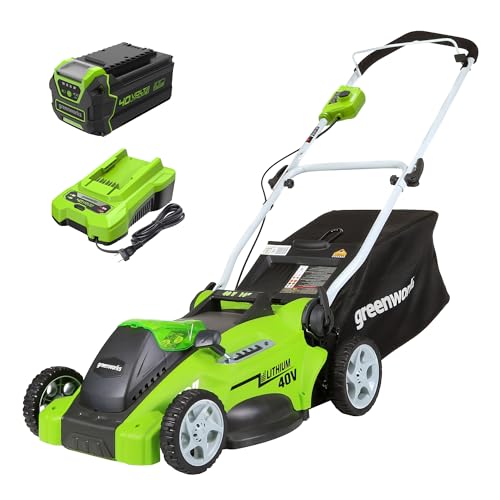
Greenworks 40V 16in Push Lawn Mower
The Details Behind The Selections
The Greenworks 80V 21in Push Lawn Mower sits at the heavier end of the cordless category, and that’s a feature, not a flaw, for anyone tired of flimsy plastic decks. The 21-inch cutting width covers ground quickly, and the single-lever height adjustment lets you swap between bagging, mulching, or side-discharge modes without hunting for tools. Compared to the Greenworks 40V pick later in this list, this one trades compactness for raw cutting presence.
Homeowners with mid-size suburban lots, roughly a quarter acre or more, get the most out of the 80V system. The brushless motor keeps noise down to a level where neighbors won’t glare at you on a Saturday morning. You push it yourself, so it rewards flat, obstacle-free terrain more than steep hills.
Real Benefits
- Steel deck holds up to season after season of weekly mowing without flexing or rattling.
- Brushless motor runs quieter than gas, which matters in close-set neighborhoods with early start times.
- 80V battery platform gives longer sustained cuts than 40V alternatives, so you finish the lawn in one stretch.
- Single-lever height adjustment means one motion changes all four wheels at once.
Things To Consider
- Push-only drive, so steeper slopes will wear you out faster than a self-propelled alternative.
- Steel deck adds noticeable weight, which you feel during turns and storage lifts.
- Larger footprint needs more shed space than the 16-inch Greenworks pick.
Feature Snapshot
Who Will Love This
Suburban homeowners with flat, medium-sized lawns who want gas-comparable cutting without the maintenance routine.
Skip It When
Your yard slopes heavily, in which case the Greenworks 60V 21in Self-Propelled Mower saves your legs on every pass.
This is the outlier in a mower roundup, and that’s the point. The Greenworks 24V 8-Tool Combo Kit is a starter bundle built around a shared battery platform that feeds well over a hundred compatible tools, mowers included. You get a drill, impact driver, circular saw, reciprocating saw, jigsaw, multi-tool, sander, and flashlight, all on the same 24V lithium-ion backbone.
The trade-off matters: 24V sits below the 40V, 60V, and 80V mower-specific picks in this list. That means runtime and torque take a back seat to convenience if your goal is mowing alone. The win is for homeowners who want one charger, one battery type, and a whole workshop that talks to each other.
Everyday Wins
- Eight tools on one platform removes the wall of mismatched chargers that piles up with mixed-brand setups.
- Power bank function on the 2.0Ah batteries lets you charge a phone off the same cell that drives your drill.
- 65W rapid charger tops batteries faster than standard 20W units.
Points To Note
- Mower attachment on this platform runs cooler than dedicated 60V or 80V options, so thick or tall grass demands more passes.
- Eight-tool kits ship in a larger storage footprint, which matters in small workshops.
- Brand-locked platform means future tool purchases need to stay Greenworks 24V.
Made For
DIYers and homeowners who want one battery system to cover yard tools, shop tools, and household fixes.
Where Another Pick Suits Better
Anyone focused strictly on mowing performance gets more from the Greenworks 80V 21in Push Lawn Mower.
Where the 80V Greenworks pick is a push mower for flat ground, this Greenworks 60V 21in Self-Propelled Mower brings the rear-wheel drive. The motor spins the back wheels for you, which changes everything on a sloped or uneven lot. The 60V platform lands between the lighter 40V model and the heaviest 80V option in this list, so you get a balance of weight and stamina.
Two 4.0Ah batteries ship in the kit, which is the practical headline. You mow on one, charge the other, and finish larger lawns without stopping mid-cut to wait. For anyone who mows weekly through a long growing season, that workflow alone justifies the step up from a single-battery setup.
What Helps Most
- Self-propelled drive takes the strain off hips and shoulders on sloped terrain.
- Dual 4.0Ah batteries let you swap mid-mow without a charging pause.
- 60V brushless motor handles thicker grass without bogging down the way 24V or 40V units can.
- Quieter operation than gas makes early-morning sessions neighbor-friendly.
Honest Caveats
- Heavier than push-only models, so storing it on a shelf requires a moment of thought.
- Battery and self-propelled components add cost over basic push mowers.
Quick Facts
Best Suited To
Homeowners with sloped or larger lawns who mow often enough to need consistent, fatigue-free operation.
Not Your Match When
Your yard is small and flat, where the Greenworks 40V 16in Push Lawn Mower handles the job with less bulk.
The EGO POWER+ LM2135SP brings the most refined cutting system in this lineup. The 56V battery class sits in the same high-performance neighborhood as the Greenworks 60V option, and the self-propelled drive matches it spec for spec. What separates this EGO is the Select Cut multi-blade system, which uses interchangeable lower blades to switch between mulching, high-lift bagging, and extended runtime cuts without swapping the whole deck.
The kit ships with a 7.5Ah battery and a 5.0Ah battery, so you start with two cells ready to rotate. Compared to the Greenworks 60V pick, you trade a slightly larger deck presence for finer control over the cut finish. In our view, that matters most to homeowners who actually look at the lawn afterward and care how the clippings land.
Useful Strengths
- Three interchangeable blades cover mulching, bagging, and runtime priorities with one mower.
- Two batteries in the kit remove mid-cut charging pauses on larger lots.
- Self-propelled drive lightens the workload on slopes and uneven ground.
- 56V platform delivers torque comparable to small gas engines without the noise or fumes.
Worth Noting
- Select Cut system requires owners to swap blades for different finishes, which adds a step versus single-purpose mowers.
- Premium positioning shows up in the price, so budget-first shoppers may prefer the Greenworks 80V push option.
- Spare batteries from EGO cost more than the Greenworks equivalents, in our experience with cordless platforms.
Right Fit For
Homeowners who care about cut quality, switch between bagging and mulching through the season, and mow larger or uneven lawns.
A Better Fit Elsewhere
Tight-budget shoppers on flat, simple lawns will find the Greenworks 40V 16in Push Lawn Mower covers the basics without the premium price.
The Greenworks 40V 16in Push Lawn Mower is the small-yard specialist of the group. A 16-inch deck trims close to fence lines and fits through gates that swallow larger mowers. The 40V platform is lighter than the 60V and 80V Greenworks options higher in this list, which makes it easier to carry up basement stairs or hang on a wall hook.
Homeowners with townhouse lots, narrow side yards, or patchy grass around a garden will get along fine with the smaller cutting width. Where the EGO and Greenworks 60V picks push self-propelled power, this one keeps things simple: you push, the motor cuts, and the 4.0Ah battery handles a typical small lawn in a single stretch.
What Stands Out
- Compact 16-inch deck slips through narrow gates and tight garden corridors.
- Lighter build than the 21-inch options, easier to lift into a trunk or carry up stairs.
- 40V battery charges quickly and fits the broader Greenworks 40V tool family.
Soft Spots
- Smaller deck means more passes on bigger lots, which eats into the time advantage cordless mowers offer.
- 40V motor bogs more easily in tall, wet grass than the higher-voltage options.
- Push-only drive means you’ll feel every slope yourself.
Feature Card
Perfect Match For
Small-lot owners, townhouse residents, and anyone who needs a lightweight mower for tight spaces and short grass.
Look Elsewhere When
Your lawn stretches past a quarter acre, where the Greenworks 60V 21in Self-Propelled Mower saves time and effort.
What Matters Most Before Choosing Electric Mowers
Deck size and battery voltage drive most of the practical differences between cordless mowers. A 16-inch deck fits tight spaces and light storage, while a 21-inch deck covers more ground per pass and finishes large lawns faster. Voltage, the measure of battery power, climbs from 24V (light-duty kits) up through 40V, 56V, 60V, and 80V (heavy residential use). Higher voltage handles thick grass without slowing the blade.
Drive type changes the physical demand of mowing. Push mowers cost less and weigh less, but they rely on your legs for every slope. Self-propelled mowers use a motor to drive the rear wheels, which matters on uneven or hilly properties. If your yard has flat, open stretches, push works fine. For anything with grade, self-propelled saves your knees and back.
Battery count and capacity shape your mowing rhythm. A single 4.0Ah battery suits small lawns. Two batteries in the kit let you rotate cells and finish larger yards without pausing to charge. If your lot is bigger than a third of an acre, dual batteries or a high-capacity single cell pays off.
Cutting system options (mulching, bagging, side discharge) determine how clippings land. Mulching returns fine clippings to the lawn as natural fertilizer. Bagging collects clippings for a tidy look. Side discharge handles tall grass quickly. Some mowers offer all three, while others focus on one or two modes. Pick based on how you prefer to finish your cut.
Key Considerations Across These Picks
Where Shoppers Go Wrong
The most common mistake is choosing voltage based on the lawn size today, not the lawn size in two years. Grass grows, and what looked small in spring becomes a thick summer carpet. Underestimating future needs leaves you with a mower that bogs down on the first cut after a rain. The second mistake is ignoring deck width. A 16-inch mower on a half-acre lot means double the passes of a 21-inch deck, and runtime math gets worse from there.
When Paying More Pays Off
The jump from a basic push mower to a self-propelled, dual-battery model costs more up front, but the difference shows up in time and effort every weekend. Self-propelled drive removes the physical tax of mowing slopes. Dual batteries remove the downtime of mid-cut charging. Higher voltage (60V, 80V) handles wet or tall grass without stalling. For homeowners who mow weekly through a long season, the upgrade pays for itself in saved time and fewer frustrating cuts.
Frequently Asked Questions
How long do electric mower batteries last on a single charge? Most cordless mowers in this category run 30 to 60 minutes per charge, depending on grass thickness and battery capacity. A 4.0Ah battery on flat terrain gives most homeowners a full mowing session.
Are electric mowers powerful enough for thick grass? Higher-voltage models (56V, 60V, and 80V) handle thick grass well. Lower-voltage options (24V and 40V) work best on routinely maintained lawns rather than overgrown turf.
Can electric mowers handle wet grass? Cordless mowers cut wet grass, but wet clippings clump and clog the deck more than dry ones. For best results and longer blade life, mow when the grass is dry.
Do electric mowers need much maintenance? Maintenance is minimal: keep the deck clean, sharpen or replace blades once a season, and store the battery indoors during extreme cold. There is no oil, spark plug, or air filter to service.
How long do electric mower batteries last before replacement? Most lithium-ion mower batteries hold useful capacity for three to five years of regular use. Battery life depends on charge cycles, storage conditions, and how deeply the cells discharge during mowing.
Closing Remarks
The right electric mower matches your lot size, your terrain, and how often you cut. Small, flat yards do well with compact 40V push models, while larger or sloped properties benefit from self-propelled 56V, 60V, or 80V options. Whichever pick fits your yard, you trade gas headaches for quieter, simpler weekends.