
A drafty RV turns a quick weekend trip into a shivering affair, and built-in furnaces are noisy, hungry for propane, and sometimes leave cold spots near the cab. Electric heaters for RV rigs run quieter, plug into existing 12V or shore-power systems, and warm a small cabin without the exhaust fumes of combustion heat.
The Shortlist At A Glance

Vintage Air 506101 Compact Heater with Defrost

DREO 2026 Upgraded Portable Space Heater 1500W
DREO Atom One Portable Electric Heater with Thermostat
VEVOR 8kW Diesel Air Heater DC12-24V

VEVOR 8KW Diesel Heater with Altitude Adjustment
VEVOR 12V All-in-One Diesel Air Heater 5L Tank
Inside Each Recommended Option
For owners of classic motorhomes and vintage truck campers, the Vintage Air 506101 Compact Heater with Defrost earns its spot at the top of the list. Unlike the plug-in ceramic models further down, this is a hard-mounted Gen-II heater assembly designed to replace an aging factory unit under the dash.
It measures roughly 10.25 inches tall by 10 inches wide and 6 inches deep, with a plastic housing that keeps weight down for retrofit work. The dual front vent layout doubles as a defroster, clearing windshield fog on chilly mornings when you fire up the rig for an early departure.
What Helps Most
- Dual front vents push warm air to both driver and passenger while defogging the windshield.
- Three fan speeds give you control from a whisper-quiet idle to a quick cabin warm-up.
- Compact plastic body slips behind older dashboards where space is already tight.
- Includes 5 feet of 2-inch duct hose, enough for most short-wheelbase motorhome installations.
- Acts as a direct replacement for worn factory assemblies without fabricating new mounts.
Things To Consider
- Plastic housing is lighter than metal but can scuff under harsh engine-bay conditions.
- Installation requires basic fabrication and duct routing skills, not a true plug-and-play upgrade.
Who It Suits Best
Owners restoring a classic Winnebago, vintage Airstream motorhome, or older truck camper who need a hardwired heater with defrost.
Where Another Pick Suits Better
Casual weekend campers in modern RVs will find the DREO 2026 Upgraded Portable Space Heater 1500W easier to deploy, since it requires no install work.
The DREO 2026 Upgraded Portable Space Heater 1500W takes a different path than the Vintage Air hard-mount, trading permanent install for grab-and-go flexibility. It uses PTC (positive temperature coefficient) ceramic heating, a style of element that self-regulates its surface temperature as air flows through it.
Rated at a claimed 34 decibels on low, it ranks among the quietest fans in this category, which matters when your bed sits three feet from the heater on a cold desert night. The 12-hour timer, thermostat, and five operating modes cover most climates without overthinking the controls.
Everyday Wins
- PTC ceramic heat warms a small cabin within seconds, ideal for short weekend stops.
- Tilt-detection sensor cuts power if the unit tips over on an uneven RV floor.
- Remote control and 12-hour timer mean you can run it overnight without leaving your sleeping bag.
- Carrying handle and lightweight body make it easy to move from cab to bunk area.
Points To Note
- 1500W draw needs a solid shore-power connection, so off-grid use requires an inverter or generator.
- Owners commonly report that the warm-air reach drops noticeably past eight feet in drafty rigs.
Made For
Light sleepers in parked RVs with shore power who want quiet background warmth through the night.
Look Elsewhere When
You camp off-grid for days at a time and need heat that runs on 12V, where the VEVOR 8kW Diesel Air Heater DC12-24V fits the bill.
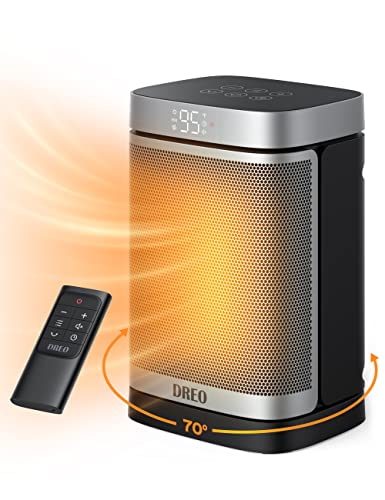
The DREO Atom One Portable Electric Heater with Thermostat is the smaller sibling of the upgraded DREO above. It still leans on the same Hyperamics PTC technology, but it ships in a tighter enclosure that disappears under a dinette bench when not in use.
For van dwellers, teardrop trailer owners, and anyone working with a narrow galley, the Atom One’s low profile solves a problem larger tower heaters cannot. The fan pushes warm air forward in a focused stream rather than a wide 360-degree wash.
Benefits That Matter
- Compact tower shape slips behind a chair or under a dinette without blocking foot space.
- 1500W output warms a small cabin within minutes of plugging in.
- Carrying handle makes it easy to relocate from cab to bunk without bending over.
- Thermostat dial keeps room temperature steady without constant manual adjustment.
Room For Improvement
- Lacks the upgraded model’s timer and remote, so you get up to adjust modes by hand.
- Fan noise sits a notch above the 34dB-rated DREO 2026 model on higher settings.
- 1500W draw still requires shore power or a stout inverter setup.
Best Suited To
Solo travelers in compact campervans who want a small, easy-to-stash electric heat source for shoulder-season trips.
Skip It When
You need the quietest possible night operation, in which case the DREO 2026 Upgraded Portable Space Heater 1500W is the calmer choice.
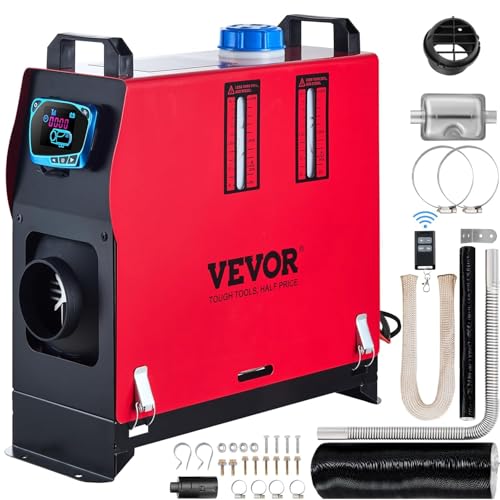
Switching gears from 120V plug-ins, the VEVOR 8kW Diesel Air Heater DC12-24V is built for travelers who live off the grid. Rated at 8 kilowatts, it covers spaces roughly 161 to 215 square feet, which fits most Class B and Class C motorhome interiors with room to spare.
The unit runs on 12V or 24V DC, meaning your RV house battery powers it instead of shore current. A ceramic igniter handles cold starts, while the leak-proof fuel cap reduces splash risks on rough forest roads.
A Few Highlights
- DC 12-24V compatibility keeps it running off battery banks without shore power.
- 8kW output comfortably heats mid-size camper cabins within minutes of firing up.
- Blue LCD switch and remote let you adjust temperature from the bunk or cab.
- Heat-insulated exhaust shield reduces burn risk during outdoor installation.
- Fuel gauge helps you plan refills before the heater runs dry mid-night.
- Pre-heating function warms the combustion chamber, aiding cold-weather ignition.
Honest Caveats
- Requires diesel fuel, exhaust routing, and a small install project, not a plug-and-play appliance.
- Heavier draw on batteries means a healthy solar or alternator charging setup is essential.
- Exhaust must vent outside, and you need to plan around window and door clearances during install.
Feature Snapshot
Right Fit For
Off-grid winter campers running sizeable battery banks who want heat without shore power or propane demand.
Reach For A Different Pick When
You rarely leave paved campgrounds, since the DREO 2026 Upgraded Portable Space Heater 1500W covers simple shore-power stays at lower complexity.
Climbing into the Rockies or the Sierra Nevada changes how a combustion heater breathes, and that’s exactly the problem the VEVOR 8KW Diesel Heater with Altitude Adjustment solves. It auto-compensates for elevations up to 18,045 feet, so the air-fuel mix stays balanced without manual tweaking.
On top of that, the sandblasted aluminum heat exchanger moves warmth fast, with the manufacturer claiming comfortable cabin temperatures within ten minutes. The Bluetooth app adds a modern twist, letting you adjust temperature from inside your sleeping bag.
Bright Spots
- Automatic altitude compensation up to 18,045 feet removes manual adjustments at high camps.
- Aluminum heat exchanger ramps up warmth quickly in cold alpine mornings.
- Bluetooth app control means no late-night walks to the heater panel.
- Covers 215-269 ft², suitable for larger Class A interiors and converted buses.
- Remote control and LCD monitor included for backup control without the app.
Softer Spots
- Premium feature set sits at a higher cost than the simpler VEVOR 8kW Diesel Air Heater DC12-24V.
- Bluetooth pairing requires occasional reconnection after long storage periods, based on common user reports.
Who Will Love This
Mountain adventurers and full-time RVers who spend cold nights at elevation and want reliable combustion heat.
A Better Fit Elsewhere
Sea-level weekend travelers can save money with the VEVOR 8kW Diesel Air Heater DC12-24V, which shares the core heating hardware.
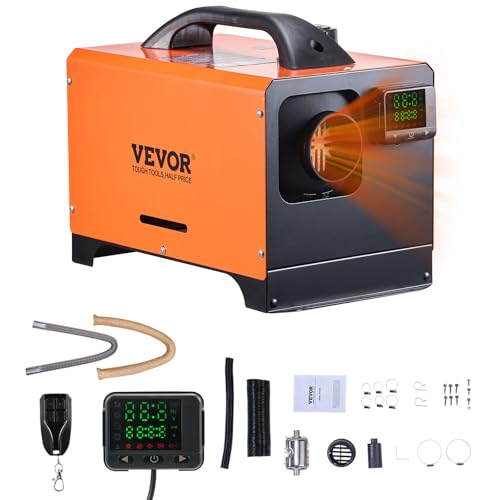
The VEVOR 12V All-in-One Diesel Air Heater 5L Tank wraps heater, fuel tank, and pump into a single orange box, which is exactly what first-time diesel-heat owners want. Instead of mounting a separate tank and chasing fuel lines through the cabin, you bolt one unit in place and route only the exhaust and intake hoses.
The integrated 5L tank holds roughly 1.3 gallons, enough for a full night of heat at the manufacturer-stated consumption of 0.18-0.36 liters per hour. That simplicity trims install time and reduces leak points, which matters for anyone nervous about diesel plumbing.
Why It Works Well
- Built-in 5L tank removes the need for separate fuel plumbing in tight cabinets.
- Ceramic igniter supports reliable cold-start performance on frosty mornings.
- Heat-insulated exhaust shield protects against accidental contact burns.
- Low fuel consumption stretches runtime between refills during overnight trips.
- Leak-proof fuel cap and fuel gauge add visible safety cues during travel.
Points To Keep In Mind
- Heated range of 161-215 ft² is smaller than the altitude-adjusted VEVOR sibling.
- Still demands a proper exhaust vent and intake routing, so plan a half-day for install.
Who Should Grab It
First-time diesel heater owners who want the cleanest install path with the fewest external components to mount.
Not Your Match When
You camp regularly above 5,000 feet, where the VEVOR 8KW Diesel Heater with Altitude Adjustment runs more efficiently.
Picking The Right Heater For Your Travel Style
Power Source Shapes The Whole Decision
Electric heaters for RV travel split into two camps: 120V plug-in ceramic units that lean on shore power, and 12V/24V diesel combustion heaters that run off your battery bank. Shore-power models like the DREO Atom One work beautifully at full-hookup campgrounds, but they stall on a remote desert site without a generator.
Diesel units trade install complexity for true off-grid freedom, so the right pick depends on where you tend to camp. Most weekend travelers stay plugged in, while full-timers chasing shoulder-season weather lean toward combustion heat.
Heating Area And Insulation Matter Equally
Manufacturers rate coverage in square feet, but a drafty 1970s motorhome loses heat faster than a modern insulated van conversion. A claimed 200-square-foot range can feel weak in a single-pane Class A, yet perfectly toasty inside a well-sealed sprinter.
Adding reflective window covers, sealing window trim, and insulating the cab-to-cabin pass-through stretches any heater’s effective range. Heaters work harder in leaky rigs, so an upgrade in insulation often beats an upgrade in wattage.
Noise And Overnight Comfort
Sleeping three feet from a fan matters more than most specs suggest. A 34dB-rated unit runs quieter than soft rainfall, while a louder ceramic heater can wake light sleepers every time the thermostat cycles on. Diesel heaters add combustion hum to fan noise, so test them in person when possible.
Safety Features Worth Prioritizing
Tilt sensors on portable heaters shut off the unit if it tips, a real concern in moving vehicles. Diesel units should carry heat-shielded exhaust pipes, leak-proof fuel caps, and clear fuel gauges. Skip any heater that lacks these basics, regardless of cost savings.
Key Considerations Across These Picks
Pitfalls Shoppers Hit
Underestimating battery drain is the most common mistake with diesel heaters. An 8kW unit pulls serious current overnight, so make sure your solar array, alternator charging, or generator can keep up. Plug-in ceramic heaters trip shore-power breakers on older 15-amp pedestals, so a 20-amp or 30-amp site is safer.
Where The Extra Money Goes
Premium diesel heaters add altitude compensation, Bluetooth control, and faster heat exchangers. These features pay off when you camp at elevation or want app-based convenience, but they cost real money. For flat-terrain campers, the base VEVOR 12V All-in-One delivers the same core heat at a friendlier price.
Frequently Asked Questions
Can An Electric Heater Run On RV Batteries Alone?
Plug-in 120V ceramic heaters need an inverter or generator to draw from batteries, which often drains them overnight. Diesel heaters run directly on 12V or 24V DC and are the practical off-grid option.
How Many Square Feet Will An 8kW Diesel Heater Cover?
Most 8kW units cover 160 to 270 square feet depending on insulation and outdoor temperature. A well-sealed van feels toasty at the lower end, while a drafty motorhome needs the upper end or extra insulation.
Are Ceramic Heaters Safe To Leave Running Overnight?
Modern PTC ceramic heaters with tip-over and overheat protection are widely used overnight, but you should still confirm the unit sits on a flat, non-flammable surface before sleeping.
Do Diesel Heaters Need Ventilation Outside?
Yes, combustion byproducts must vent through an exhaust pipe routed outside the cabin. Installers commonly mount the exhaust through a sidewall or floor with a weatherproof grommet.
Can I Install A Diesel Heater Without A Professional?
Many DIYers complete a basic install with hand tools, but routing fuel lines, exhaust, and intake safely takes patience. First-timers often find the all-in-one VEVOR model easier because fewer parts need mounting.
Closing Thoughts
The right electric heater depends less on specs and more on how you actually travel. Plug-in ceramic models shine at full-hookup parks, while diesel combustion units open up real cold-weather freedom for boondockers. Match the heater to your typical campground, your insulation level, and how quietly you need to sleep, and the rest falls into place.