
Camping trips get better when your gear actually works. A quiet, dependable source of power lets you charge phones, run a coffee maker, keep a cooler humming, or light up a tent after dark. Picking from a wall of options gets tricky fast, though, since fuel type, noise level, and weight all shape how a generator feels at a real campsite. This shortlist covers seven solid options spanning traditional gas-powered workhorses and silent lithium power stations, so you can match the right wattage to your weekend setup.
How The Shortlist Stacks Up

Westinghouse 14500 Peak Watt Tri-Fuel Home Backup Portable Generator

Westinghouse 13500 Peak Watt Tri-Fuel Home Backup Portable Generator

BLUETTI FridgePower Portable Power Station 2016Wh

Honda EU2200i Companion 2200 Watt Inverter Generator

EF ECOFLOW Delta 3 Portable Power Station 1024Wh
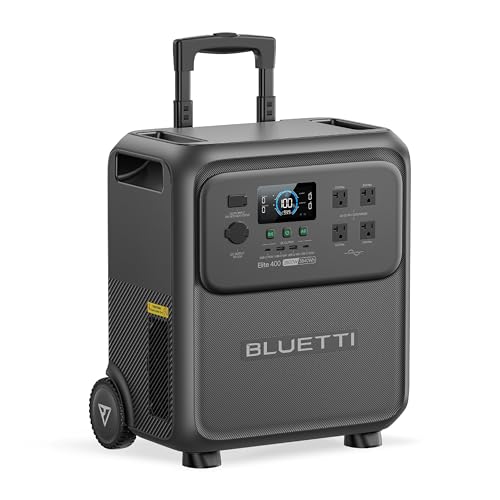
BLUETTI Elite 400 Portable Power Station 3840Wh

BLUETTI Elite 100 Mini Portable Power Station 1004.8Wh
Taking A Closer Look At The Options
The Westinghouse 14500 Peak Watt Tri-Fuel Home Backup Portable Generator is built for setups that need real muscle. Its 550cc 4-stroke OHV engine runs on gasoline, propane, or natural gas, which gives you flexibility when fuel choices vary by location. At roughly 230 pounds with a 9.5-gallon tank, this unit is firmly in tow-it-behind-the-truck territory rather than carry-to-the-tent territory.
For group campgrounds or RV pads that pull double duty as job sites, the remote electric start and transfer-switch readiness remove friction from daily use. The tri-fuel design also acts as a hedge: propane stores longer than gasoline and burns cleaner, while natural gas taps into a home line when used at a residence. Compared to the smaller Honda later on this list, this Westinghouse trades portability for raw output.
A Few Strong Suits
- Tri-fuel capability (gasoline, propane, natural gas) adapts to whatever fuel is on hand
- 14500 peak watts handles whole-campsite loads including RV air conditioners and microwaves
- Remote electric start removes the need to wrestle a recoil pull cord in cold weather
- Transfer-switch ready for homes that want automatic backup integration
- Built-in CO sensor adds a safety layer often required at newer campgrounds
Worth Noting
- At over 230 pounds, you will need a vehicle to move it any real distance
- Open-frame design runs louder than inverter units, which can bother neighboring campers
- Gasoline in the tank degrades over months, so seasonal owners may end up draining and refilling regularly
Made For
RV owners, job-site crews, and large-group campers running air conditioning or power tools who park near a vehicle.
Where Another Pick Suits Better
Backpackers and tent campers should look at the BLUETTI Elite 100 Mini Portable Power Station 1004.8Wh instead, since it weighs a fraction of this Westinghouse and runs silent.
The Westinghouse 13500 Peak Watt Tri-Fuel Home Backup Portable Generator is the slightly trimmer sibling to the first pick, with a 500cc engine in place of the larger 550cc block. You still get gasoline, propane, and natural gas options, plus the same remote electric start and transfer-switch hookup. The 9.5-gallon tank carries over, giving you long stretches between refuels.
This model suits weekend RV travelers who want tri-fuel flexibility without paying for the absolute top of the wattage ladder. For most camping rigs running a fridge, lights, and a microwave, 10500 running watts is plenty of headroom. It shares the same open-frame noise profile as its bigger brother, so etiquette at quiet campgrounds still applies.
Bright Spots
- Tri-fuel versatility lets you switch fuel types based on what is stocked at the camp store
- 13500 peak watts covers most RV air conditioners and household appliances at once
- Remote start and transfer-switch readiness simplify hookup at home or on the road
- Cast iron cylinder sleeve supports long engine life under heavy seasonal use
Trade Offs
- Still weighs roughly 200 pounds, so plan on wheeled transport to the site
- Open-frame gas engines are louder than inverter or battery options in this list
Best Suited To
Full-time RVers and homeowners wanting a versatile backup that handles fuel shortages gracefully.
Look Elsewhere When
Campers who need true silence should consider the Honda EU2200i Companion 2200 Watt Inverter Generator, which is far quieter for tent-friendly sites.
The BLUETTI FridgePower Portable Power Station 2016Wh is a lithium iron phosphate (LFP) battery backup designed to keep refrigerators and freezers running through outages. With 2016 watt-hours of capacity and a 1800-watt AC output, it can shoulder the surge most modern fridges need on compressor startup. The LFP chemistry generally outlasts standard lithium-ion, which matters for a box meant to sit on standby.
For campers using a 12V portable fridge or running a household fridge at a cabin, this station offers a silent alternative to the Westinghouse gas units. It also accepts expansion batteries, letting you scale up to multi-day runtime for serious food-safety situations. The trade-off, as with all battery stations, is finite capacity versus the indefinite runtime of a fueled generator.
Key Advantages
- LFP battery chemistry supports longer cycle life for frequent deep discharges
- 1800W output handles the startup surge of full-size refrigerators
- Expandable with extra battery packs for multi-day off-grid runtime
- Silent operation means no fumes, no noise, safe for indoor or tent-adjacent use
Points To Note
- Recharging depends on wall AC, solar, or car input, so plan sources ahead of time
- At roughly 50 pounds it is portable but not backpack-friendly
- Once the battery is drained, runtime stops until you find a power source to refill it
Who It Suits Best
Cabin owners, van lifers, and campers who prioritize keeping a fridge cold through quiet hours.
Consider Something Else When
Heavy AC or jobsite tool users should reach for the Westinghouse 14500 Peak Watt Tri-Fuel Home Backup Portable Generator, which offers longer runtime from fuel.
The Honda EU2200i Companion 2200 Watt Inverter Generator is the long-standing favorite for campers who care about noise. Operating in the 48 to 57 dB(A) range, it stays well below the conversation threshold of most gas generators and meets the sound limits at noise-restricted campgrounds. The 30A outlet is built specifically for RV use, and parallel capability means you can double up with a second unit when needed.
Inverter generators also produce cleaner sine-wave power, which protects sensitive electronics like laptops and phone chargers from harmonic distortion. The Companion suffix here means the 30A RV outlet replaces one of the standard household receptacles, so pair it with a regular EU2200i if you want both plug types. Compared to the Westinghouse tri-fuel models earlier, this Honda trades raw power for a much friendlier campsite footprint.
The Upside
- Whisper-quiet operation fits national-park quiet hours and tight campground etiquette
- Clean inverter power is safe for laptops, cameras, and modern phone chargers
- 30A RV outlet simplifies hookup to most travel trailers without adapters
- Honda engines have a strong reputation for longevity with basic oil changes
Honest Caveats
- 2200 watts is enough for essentials but not whole-RV air conditioning under heavy load
- No tri-fuel option: gasoline only, so you must manage fuel stabilizer for storage
- Oil changes and spark-plug service follow a regular interval you cannot skip
Right Fit For
Tent and small-RV campers who value low noise and reliable inverter power over maximum output.
A Better Fit Elsewhere
For completely silent operation with no fuel at all, the BLUETTI FridgePower Portable Power Station 2016Wh is the better call for indoor or close-quarters use.
The EF ECOFLOW Delta 3 Portable Power Station 1024Wh hits a sweet spot between capacity and recharge speed for active travelers. It pulls up to 1500W from AC input, which combined with solar input can move a near-full charge in under an hour. The 1800W output supports most camping appliances, and the unit is part of an expandable ecosystem that grows with extra battery packs.
This station works well for road trippers who run solar panels on the vehicle roof and want to top off quickly during a lunch stop. For campers juggling camera gear, drones, laptops, and a portable fridge, the 1024Wh bank covers a typical day of mixed draw. Versus the BLUETTI FridgePower earlier, this ECOFLOW prioritizes fast turnaround over maximum capacity.
Notable Upsides
- Fast AC and solar input shorten downtime between campsite moves
- Expandable battery ecosystem scales up to multi-kWh setups for longer trips
- Silent, fume-free operation works indoors and inside enclosed vehicle cabins
- 1800W output handles higher-draw appliances like induction cooktops briefly
Points To Keep In Mind
- Solar charging depends on panel quality and sun angle; full sun is rarely guaranteed
- Capacity is mid-range, so heavy daily draw may deplete it before nightfall
Who Should Grab It
Active road-trippers and overlanders who recharge on the move with vehicle or solar input.
Swap It Out When
Multi-day off-grid campers should reach for the BLUETTI Elite 400 Portable Power Station 3840Wh, which holds far more energy per charge.
The BLUETTI Elite 400 Portable Power Station 3840Wh is the largest-capacity option in this lineup, pairing a 3840Wh LFP battery with a 2600W continuous output. Nine ports cover AC outlets, USB, and DC connections, so a wide range of camp gear runs from a single box. A trolley system addresses the obvious weight concern, letting you roll it across a flat campsite rather than carry it.
This unit makes sense for basecamp-style trips where you park for a week and run household-style loads. Think glamping setups, off-grid cabins, or contractor trailers running tools and lighting overnight. Compared to the ECOFLOW Delta 3 reviewed earlier, the Elite 400 trades recharge speed for sheer energy storage, which matters more when wall power is rare.
Features That Help
- 3840Wh capacity supports multi-day runs of refrigerators, lights, and small appliances
- 2600W continuous output handles power tools and induction cooking without tripping
- LFP battery chemistry aims for thousands of cycles before noticeable degradation
- Integrated trolley simplifies moving 90+ pounds across a campsite
A Few Limitations
- Recharging a 3840Wh battery takes time even on high-watt AC input
- Large physical footprint takes up meaningful cargo space in smaller vehicles
- Up-front cost sits well above mid-size battery stations in this category
Who Will Love This
Glampers, off-grid cabin hosts, and basecamp operators needing long runtime without refueling.
Another Choice May Suit
Travelers who need to relocate often will find the EF ECOFLOW Delta 3 Portable Power Station 1024Wh easier to keep charged on the move.
The BLUETTI Elite 100 Mini Portable Power Station 1004.8Wh stands out for its compact 23.59-pound vertical design, which fits on a counter, in a tent vestibule, or in the back of a hatchback. Its 1004.8Wh capacity and 700W output handle phones, lights, small fridges, and laptops without breaking a sweat. The LFP cell chemistry keeps cycle life high for a unit this small.
For backpackers, motorcycle campers, or anyone working with limited cargo room, this station fills a niche that larger units cannot. You give up raw wattage compared to the ECOFLOW Delta 3, but gain meaningful size and weight savings. In practice, it is the easiest pick to live out of a single duffel bag for a weekend.
Noteworthy Benefits
- Compact vertical body fits on shelves, counters, and in tight vehicle storage
- 23.59-pound weight makes it manageable for one person to carry to a site
- LFP chemistry supports the kind of deep cycling campers tend to put on portable banks
- 700W output covers roughly 90 percent of common small camping electronics
Small Caveats
- 700W max output will not drive induction cooktops or high-draw tools
- Recharging a 1000Wh-class battery still requires planning around sun or wall time
Perfect Match For
Tent campers, backpackers, and travelers who need silent, lightweight power for small electronics.
Reach For A Different Pick When
Anyone running a household fridge or RV air conditioning should choose the BLUETTI FridgePower Portable Power Station 2016Wh instead, since it doubles the capacity for similar gear.
What Matters Most Before Choosing Electric Generators For Camping
Matching Output To Your Real Load
The first step is honest wattage math. Add up the running watts of everything you plan to power at the same time, then account for startup surges on motors and compressors. A portable fridge may only draw 60W running but spikes to 600W or more on compressor kick-in. Generators and power stations list both peak (surge) and running watts, and you want at least 20 percent headroom above your highest combined draw.
Weighing Noise Against Runtime
Open-frame gas generators produce serious output but generate the noise that prompts complaints at quiet campgrounds. Inverter generators and lithium power stations run nearly silent but cap you at finite fuel or battery capacity. If you camp in national parks or near other tents, the noise-versus-runtime trade-off often pushes you toward inverter or battery options.
Thinking About Fuel And Recharge Logistics
Gasoline spoils over months and cannot fly on airplanes, which complicates long-distance or last-minute trips. Propane stores indefinitely but burns hotter and requires tank swaps. Battery stations need wall or solar input to refill. Tri-fuel units like the Westinghouse models cover more bases, though they are heavy enough to require vehicle transport.
Considering Weight And Footprint
A 230-pound generator only works if you can drive right to your campsite. A 23-pound Mini can ride in a backpack or small car trunk. Match the unit’s mass to your actual transport, because lifting an oversized generator onto a tailgate gets old fast.
Key Considerations Across These Picks
Where Shoppers Go Wrong
The most common slip-up is buying for peak wattage alone and ignoring running watts, which is the number that actually determines what runs simultaneously. Another pitfall is choosing a generator that the campground rules do not allow; many state and national park sites prohibit gas generators during quiet hours, so a battery station is the only compliant option. Finally, underestimating recharging time leaves you with a dead bank when the sun disappears behind clouds.
When Paying More Pays Off
Higher-tier models tend to add LFP battery chemistry, larger inverter tolerances for sensitive electronics, faster recharge circuitry, and longer cycle life. For someone who camps weekly, the upgrade from a standard lithium-ion station to an LFP unit often pays back through years of extra service. Gas units at the top of the wattage ladder add tri-fuel flexibility and remote start, which matter more for full-time RV living than for occasional tent trips.
Frequently Asked Questions
How Long Can A Portable Power Station Run A Camping Fridge?
A 1000Wh battery station typically runs a 50W portable fridge for roughly 15 to 18 hours, depending on ambient temperature and compressor duty cycle. Larger 2000 to 4000Wh units stretch that runtime into multi-day territory without recharging.
Are Gas Generators Allowed At All Campgrounds?
Many campgrounds allow gas generators during designated daytime hours but ban them at night or in tent-loop sections. Always check the specific park rules before running any fueled unit, since violations can lead to fines or eviction.
Do I Need Pure Sine Wave Output For Sensitive Electronics?
Sensitive electronics like laptops, cameras, and modern CPAP machines benefit from pure sine wave power, which inverter generators and quality power stations produce. Older modified sine wave units can cause buzzing or long-term damage in some devices.
Can I Solar Charge Any Of These Stations?
The lithium power stations in this list accept solar input through standard MC4 or XT60 connectors, with maximum solar wattage varying by model. Gas generators do not accept solar, so runtime depends entirely on fuel reserves.
How Often Should A Gas Generator Get Maintenance?
Most portable gas generators need an oil change every 50 to 100 hours of use, plus periodic spark plug and air filter service. Owners who run their generator infrequently should drain old fuel or add stabilizer to prevent carburetor clogs.
Bottom Line
The right pick depends on where you camp, how much gear you run, and how quietly you need to run it. Battery stations cover tent campers and cabin hosts, while tri-fuel gas units handle RV and worksite demands. Match the wattage to your actual load, weigh noise against runtime, and your next trip will stay powered without drama.