
Walk out to a yard covered in leaves, and the right tool turns an hour of raking into a 10-minute sweep. Cordless blower technology has matured quickly, and the gap between professional-grade rigs and homeowner-friendly units has never felt thinner. This roundup looks at four electric garden blowers built for different scales of cleanup, from small patio debris to deep autumn leaf piles. Pick the one that matches the size of your yard and how often you actually pull it out.
The Lineup, Simplified

Makita XBU02PT1 36V Brushless Blower Kit (5.0Ah)

MILWAUKEE 2724-20 M18 Fuel Blower (Bare)

LAZYBOI 21V Cordless Leaf Blower 2-Speed (Green)
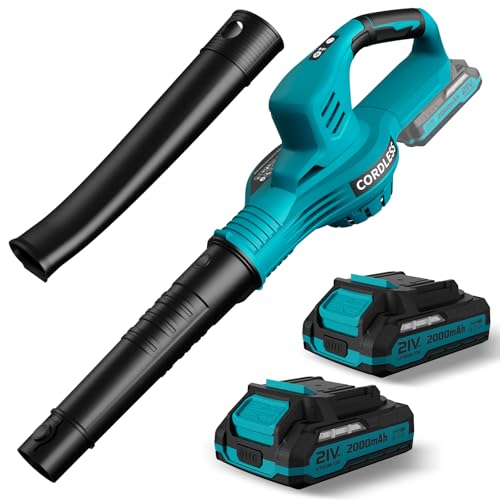
LAZYBOI 21V Cordless Leaf Blower with 2 Batteries
A Closer Look At Each Pick
This Makita kit runs on two 18V LXT batteries wired in series, which is engineering shorthand for “it acts like a 36V tool without being tethered to a wall.” Landscapers and homeowners with bigger properties tend to gravitate here because the brushless motor (a motor design that uses electronic sensors instead of carbon brushes, which generally means longer life and less friction loss) keeps efficiency high even as the batteries drain.
The four 5.0Ah batteries that ship in the box mean you can rotate packs and stay in the field longer. For most homeowners with half-acre lots, that’s enough to clear fall leaves without stopping to recharge mid-sweep.
What Helps Most
- Dual-battery 36V platform delivers sustained output closer to gas rigs than entry-level 18V units.
- Brushless motor typically means longer tool life and cooler operation under load.
- Four 5.0Ah batteries let you rotate and keep working through a full cleanup session.
- Zero emissions and notably quieter than gas, which matters in noise-sensitive neighborhoods.
- Plays well with anyone already running Makita 18V LXT tools across their garage.
Things To Consider
- The kit carries a noticeable weight when both batteries are seated, so shorter users may want to test grip comfort.
- Price runs higher than homeowner-tier options, and the savings only show up if you already use LXT batteries elsewhere.
Right Fit For
Homeowners with a half-acre or larger yard, or anyone already invested in the Makita 18V LXT platform who needs a workhorse blower.
Consider Something Else When
The LAZYBOI 21V Cordless Leaf Blower 2-Speed is a more sensible match for small patios where a 36V rig is overkill.
Milwaukee’s M18 Fuel blower targets a very specific shopper: someone who already owns a stable of M18 batteries and wants a cordless tool that feels like a serious machine. Compared to the Makita kit above, it leans lighter and quicker off the line, which is the main reason it shows up on landscaping trucks.
The “bare” label means no battery or charger ships in the box, which only makes financial sense if you already own M18 packs. The power-state brushless motor and red lithium-ion pairing work together to keep airflow strong even as the battery drains toward the bottom of its charge.
Where It Delivers
- Reaches full throttle in under a second, useful when chasing blowing debris across pavement.
- Lighter than many competitive pro-tier blowers, reducing arm fatigue on long sessions.
- Compatible with the broader M18 system, so existing batteries and chargers all work here.
- Solid airflow for moving damp leaves and heavier yard debris off hard surfaces.
Worth Noting
- Bare-tool configuration means you’ll need to budget for batteries and a charger separately.
- Owners commonly report the unit feels less balanced than dedicated homeowner blowers because the battery sits high on the rear of the housing.
- No included storage bag or nozzle attachments, which professional users often add aftermarket.
Feature Snapshot
Best Suited To
Landscape crews, tradespeople, and homeowners who already run Milwaukee M18 tools and need a fleet-compatible blower.
Reach For A Different Pick When
The Makita XBU02PT1 kit makes more sense for users who don’t already own M18 batteries and want everything in one box.
The LAZYBOI 21V handheld blower lands in the spot where most casual homeowners actually live: smaller yards, occasional use, and a real aversion to dragging out a heavy pro tool. Compared to the Makita and Milwaukee rigs above, it sacrifices top-end airflow for portability, and for patio-level debris that’s a fair trade.
Two 2.0Ah batteries ship with the unit, so you can keep working while the other pack charges. The two-speed mode lets you tame the noise for clearing a dusty garage floor or open it up for a real leaf pile.
Well-Handled Touches
- Lightweight handheld design reduces fatigue during overhead work like clearing gutters or patio furniture.
- Dual-speed control lets you match power to the job, which also extends battery life on lighter tasks.
- Two batteries and a charger ship in the box, no separate purchases required.
- Lower noise output makes it more neighborhood-friendly than larger brushless rigs.
Trade Offs
- Air volume trails pro-tier blowers significantly, so heavy wet leaves or compacted debris take longer to clear.
- 2.0Ah packs run shorter per charge, meaning realistic cleanup windows sit closer to 15-20 minutes per battery in our view.
- Build quality skews toward casual use, so dropping it on concrete is a real risk to consider.
Who Will Love This
First-time homeowners, apartment dwellers with small patios, and anyone wanting a light grab-and-go blower for quick cleanups.
Swap It Out When
The Makita XBU02PT1 is the stronger choice for properties with mature trees that drop heavy leaf volume each fall.
This second LAZYBOI 21V entry is the budget sibling of the previous pick, leaning into the same lightweight handheld formula. The shorter title hides the fact that it’s essentially the same platform, marketed toward shoppers who care about the price tag above all else.
You may find this version lands as the smart starter for someone cleaning a driveway once a week through autumn, rather than managing an estate-sized property. Two batteries still ship in the box, which keeps the entry cost predictable.
Strong Points
- Lightweight handheld form factor is easy to store in a closet or small shed.
- Dual-battery setup avoids the downtime trap that cheaper single-battery tools hit mid-job.
- Cordless design removes extension-cord hassle on porches and detached garages.
Points To Keep In Mind
- Lower air output compared to the Makita and Milwaukee picks, so heavy debris piles take patience.
- Plastic housing tends to show wear after a season or two of regular outdoor storage, depending on climate.
- Battery capacity is best suited to short jobs, with longer cleanups requiring planned charging breaks.
Made For
Anyone wanting the lowest-friction entry into cordless cleanup, especially for balconies, small driveways, and seasonal touch-ups.
Look Elsewhere When
The LAZYBOI 21V Cordless Leaf Blower 2-Speed is the better pick for shoppers who want a two-speed mode and don’t mind a small step up in price.
What Matters Most Before Choosing Electric Garden Blowers
Air Volume Versus Air Speed
Two numbers get tossed around in blower specs: CFM (cubic feet per minute, the volume of air pushed) and MPH (the speed of that air). Each one solves a different problem. High CFM moves big piles of dry leaves quickly across an open lawn, while high MPH loosens stubborn damp debris stuck to pavement edges and corners. Pro-tier rigs typically balance both, while handheld homeowner units lean toward one or the other.
Battery Platform And Long-Term Cost
Cordless blowers live and die by their battery ecosystem. Buying into a platform like Makita’s LXT or Milwaukee’s M18 means future batteries, chargers, and tools all share the same packs. For shoppers who already own compatible tools, that ecosystem fit can outweigh raw specs. Standalone 21V kits like the LAZYBOI options skip platform lock-in entirely, which is a real plus for casual users.
Weight, Noise, And The Actual Cleanup Job
A 10-pound blower sounds light until you hold it overhead for 20 minutes. Weight, balance, and noise output often decide whether a tool ends up in regular use or collects dust in the garage. Smaller yards and quick touch-ups favor the handheld 21V class, while larger properties and frequent heavy cleanups justify the heavier brushless pro rigs.
Runtime And Battery Capacity
Amp-hour (Ah) ratings translate directly into minutes of runtime. A 5.0Ah battery typically runs longer than a 2.0Ah pack under the same load, but it also adds weight. For occasional short cleanups, a lower-capacity pack is enough. For full-property fall sweeps, larger batteries or a dual-pack rotation saves real time.
Key Considerations Across These Picks
Wrong Turns To Avoid
Buying on raw CFM alone is the most common mistake. Air volume numbers look impressive in listings but tell you nothing about how the blower feels in the hand, how long the battery actually lasts under load, or whether the trigger responds smoothly. Match the tool to the size of your cleanup, not the biggest number on the spec sheet.
Why Top Tier Costs More
Premium blowers carry brushless motors, higher-capacity batteries, and tougher housings, and those components add up at checkout. The trade-off is longer service life, better runtime, and stronger airflow when the battery dips below half charge. For a small patio, that premium rarely pays back. For a half-acre yard with mature trees, it usually does.
Frequently Asked Questions
How long does a cordless blower battery typically last?
A 2.0Ah pack on a 21V handheld unit generally runs 15 to 25 minutes under typical yard load, while a 5.0Ah battery on a 36V pro blower can stretch past 45 minutes.
Can cordless blowers handle wet leaves?
Most cordless units handle lightly damp leaves fine, but heavy wet piles benefit from higher air speed and volume, which is where pro-tier 36V rigs outperform compact handhelds.
Are electric garden blowers loud enough to bother neighbors?
Handheld 21V units run noticeably quieter than gas or 36V brushless rigs, making them a more considerate choice in shared or noise-restricted spaces.
Do I need two batteries to use a cordless blower?
A second battery lets you rotate while one charges, which matters most for larger properties or longer cleanup sessions.
How should I store a cordless blower between seasons?
Storing the battery at room temperature and roughly half charge, away from direct moisture, typically extends pack life over multi-season ownership.
Closing Remarks
The right electric garden blower matches the size of your yard and the kind of debris you actually face. Pro-tier brushless rigs earn their place on larger properties and frequent fall cleanups, while lightweight 21V handhelds cover quick touch-ups with less hassle. Pick based on how often and how long you plan to use it, and the rest falls into place.