
A real dual-fuel setup lets you sear hot dogs on propane in eight minutes, then settle into a low-and-slow brisket on charcoal without changing cookers. The trouble is finding one rig that genuinely does both jobs well, without forcing compromises on capacity, heat control, or build quality. Whether you host a crowd every weekend or you just want a flexible cook on a small patio, these seven picks cover the spread from tabletop charcoal to full propane-and-charcoal combos.
How The Shortlist Stacks Up

Oklahoma Joe’s Rambler Portable Charcoal Grill 218 sq. in.
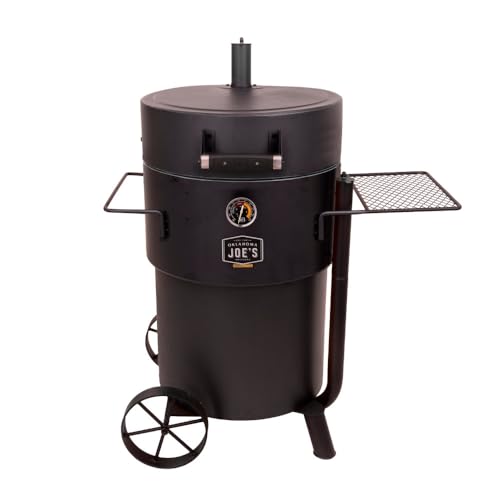
Oklahoma Joe’s Bronco Pro Drum Smoker and Grill 366 sq. in.

Oklahoma Joe’s Firecraft Series Modular Open Fire Barrel Charcoal Grill 480 sq. in.

Oklahoma Joe’s Highland Reverse Flow Offset Charcoal Smoker and Grill 1093 sq. in.

Monument Grills Mesa200S 2-Burner Propane Gas Grill
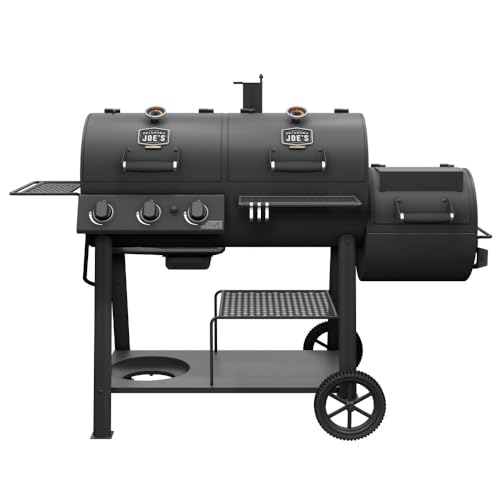
Oklahoma Joe’s Canyon Combo Dual Fuel Grill and Smoker 1031 sq. in.

Oklahoma Joe’s Longhorn Offset Charcoal Smoker and Grill 1060 sq. in.
A Breakdown Of The Leading Choices
Pull this out of the trunk at a tailgate and you are cooking in under fifteen minutes. The Oklahoma Joe’s Rambler is built for short trips, not long sessions, but it delivers honest charcoal flavor on a 218-square-inch grate without the bulk of a full-size rig. Apartment dwellers with a balcony and weekend campers will appreciate how light it feels yet how sturdy the steel body remains once hot.
Unlike the Bronco Pro coming up next, the Rambler skips a sealed smoking chamber in favor of open airflow. That keeps things simple: you control heat by raising or lowering the charcoal tray and by venting the dampers. For most weeknight cooks who want quick burgers and a little smoke, the trade-off feels fair.
Practical Advantages
- The adjustable charcoal tray (a sliding plate that moves closer to or further from the grates) lets you dial in direct searing or gentle indirect cooking without buying extra parts.
- 218 square inches fits roughly eight to ten burgers at once, which is plenty for a small family dinner.
- Lightweight steel construction makes it easy to load into a sedan trunk, unlike the heavier drum smokers further down this list.
- Cleanup is straightforward since the compact grate and ash bowl come apart without specialty tools.
Things To Consider
- Open airflow means wind affects temperature more than on a sealed drum, so blustery days may require extra lid babysitting.
- Smoke retention is limited, so long ribs or brisket are tough to pull off without constant attention.
Who It Suits Best
Tailgaters, apartment cooks, and anyone who wants charcoal flavor on a small patio without dedicating serious storage space.
Consider Something Else When
Step up to the Oklahoma Joe’s Bronco Pro if you want to smoke a full rack of ribs or a pork shoulder for several hours, since its sealed drum design holds heat far better.
The Bronco Pro looks like an oil barrel on legs, and that is exactly the point. Drum smokers are prized by competition cooks because the thick steel walls and tight-sealing lid hold a steady temperature through long cooks. Owners commonly report getting fifteen or more hours of burn from a single charcoal load, which is a meaningful upgrade over the open Rambler you just read about.
The 366-square-inch grate fits two pork shoulders or a brisket with room to spare, and the top-mounted chimney with adjustable dampers (small vents that control airflow) gives genuine low-and-slow control. Pitmasters who already know their way around a Maverick thermometer will feel right at home. Beginners can climb the learning curve too, but expect to spend a few cooks dialing in vent positions.
Where It Delivers
- Sealed drum design keeps heat stable through overnight cooks, so you sleep instead of feeding the fire.
- Heavy-gauge steel walls (thick metal that resists warping under high heat) hold temperature even when the wind picks up.
- The oversized charcoal basket cuts down on mid-cook refuels, a real benefit during twelve-hour brisket sessions.
Points To Keep In Mind
- The drum format takes up a wide footprint, so smaller patios may feel cramped around it.
- There is a learning curve with airflow control; expect a couple of trial runs before dialing in perfect bark (the seasoned crust on smoked meat).
- Ash cleanout requires tipping or vacuuming since the fire basket sits low.
Made For
Serious low-and-slow enthusiasts who already know how to manage a charcoal fire and want competition-style results in a backyard setup.
A Better Fit Elsewhere
Pick the Oklahoma Joe’s Highland if you want more vertical capacity and offset airflow for even larger gatherings than the Bronco Pro’s drum can handle.
The Firecraft barrel lives in its own category, somewhere between grill, fire pit, and cook station. With 480 square inches split across two round grates, you can grill a couple of steaks while a cast iron skillet hangs over the open flame for fajita veggies. Owners who love live-fire cooking appreciate that the open firebox design lets you reach in from any angle to add wood or stoke coals without lifting the lid off your food.
Where the Bronco Pro is about sealing in heat, the Firecraft is about embracing the flame. The twist-lock handle system lets you raise and lower each grate over the fire for direct or indirect cooking. For cooler evenings, the barrel doubles as a backyard fire pit once the grates come off, which is a nice bonus for entertaining.
Good Reasons To Consider
- 360-degree firebox access lets you tend the fire from any side, which is harder to do on enclosed drum smokers.
- Two heavy-gauge wire grates provide 240 square inches each, giving you true dual-zone cooking (two different heat zones at once).
- The modular design converts to a fire pit by removing the grates, extending its usefulness beyond cooking nights.
Honest Caveats
- Open-fire cooking means flare-ups are common with fatty meats, so lean cuts work better than ribeyes.
- Smoke control is minimal since there is no lid, so this is more of a griller than a smoker.
The Right Fit
Cooks who love the primal feel of cooking over an open flame and want a centerpiece that works as both grill and fire pit.
Reach For A Different Pick When
Go with the Monument Grills Mesa200S if you want simple knob-controlled propane grilling without managing live wood and embers.
The Highland is a serious piece of equipment, the kind of smoker you see parked at a neighborhood cook-off. Its claim to fame is the reverse flow system: a baffle plate (a metal plate that redirects smoke) forces heat and smoke to travel along the bottom of the cook chamber before reaching the stack. That means more even temperatures across the grates and a uniform smoke ring (the pink layer just under the bark) from end to end.
At 1093 square inches, you can fit several briskets or multiple racks of ribs with room for sausage on the side. The adjustable smokestack and removable baffles let you toggle between reverse flow and traditional offset, giving you flexibility depending on the cook. Where the Firecraft is about open-fire flair, the Highland is all about precision and capacity.
Positive Points
- Reverse flow baffles even out hot spots, so the food in the far corner cooks at the same rate as the food near the firebox.
- The 1093-square-inch chamber handles large cuts and whole-hog cooks without cramming.
- Removable baffles let you switch to traditional offset smoking when you want a more classic flavor profile.
Where It Is Less Suited
- The full-size cabinet footprint demands a dedicated patio corner; you cannot tuck this against a wall.
- Reverse flow adds complexity, so new pitmasters face a steeper curve than with the simpler Bronco Pro drum.
Feature Snapshot
Best Suited To
Cooks who host large gatherings regularly and want the kind of even, consistent results that reverse flow smokers are known for.
Swap It Out When
Choose the Oklahoma Joe’s Longhorn for a more approachable offset design that still feeds a crowd without the reverse flow complexity.
Propane grilling has its place, especially on a Tuesday night when you want dinner on the table in twenty minutes. The Monument Grills Mesa200S brings two 304 stainless steel burners (a higher-grade stainless steel that resists rust and corrosion) putting out 24,000 BTU total (BTU, or British Thermal Unit, measures heat output) under 320 square inches of primary cooking space. The fold-down side shelves are the real star for small patios, since they collapse flat for storage against a wall or fence.
The Clearview lid window is a thoughtful touch for anyone who has burnt a chicken breast by trusting the timer alone. For cooks who do not want to babysit coals or learn vent management, this knob-controlled setup removes the guesswork. It is the simplest tool on this list, and that is its strength.
What Earns Its Place
- Foldable shelves save serious patio space, unlike the open barrel of the Firecraft which always needs a wide footprint.
- The 304 stainless steel burners resist corrosion better than painted steel, so coastal humidity is less of a worry.
- Knob-controlled ignition means no lighter fluid, no charcoal chimney, and no ten-minute startup wait.
Some Limits To Know
- Two burners limit true indirect cooking; you can only manage a small cool zone.
- Propane flavor lacks the depth of charcoal or hardwood, so this is not the pick for smoke-craving cooks.
Quick Facts
Perfect Match For
Weeknight grillers in apartments or condos who want fast startup and easy cleanup without the charcoal commitment.
Look Elsewhere When
Step up to the Oklahoma Joe’s Canyon Combo if you want both propane speed and charcoal flavor in one unit rather than choosing between them.
This is the headline pick for anyone who actually wants true dual-fuel flexibility. The Canyon Combo runs a 3-burner propane side (36,000 BTU) for fast searing alongside a charcoal side that handles low-and-slow smoking. You are not choosing between propane speed and charcoal flavor. You are running both in the same cookout. The 1031-square-inch capacity covers a 750-square-inch primary chamber that fits two pork shoulders, with the propane side adding room for a dozen burgers.
The clever part is the workflow. Light the propane side and sear steaks while your charcoal side builds up embers for a brisket later. Where the Mesa200S earlier in this list forced you to commit to propane only, the Canyon lets you change fuels mid-cook. For hosts juggling multiple proteins at different temperatures, that flexibility changes everything.
Real Benefits
- True dual-fuel design means searing and smoking happen at the same time without separate cookers.
- The 3-burner propane side reaches high heat fast, cutting your preheat window down to minutes.
- The 1031-square-inch total feeds a crowd without rotating trays or juggling cook times.
Practical Considerations
- Propane tank is sold separately, so budget for that add-on if you do not already own one.
- The full-size cabinet needs a permanent spot; it does not fold down like the Mesa200S for tight storage.
Feature Card
Who Will Love This
Dual-fuel believers who entertain often and want to handle brisket, burgers, and sides without rotating cookware or running two separate grills.
Skip It When
Choose the Oklahoma Joe’s Highland instead if your cooks lean almost entirely toward smoking and you do not need the propane side at all.
The Longhorn is the most approachable offset smoker in this lineup, and that matters for cooks who want classic BBQ flavor without reverse flow baffles to manage. With 751 square inches in the primary chamber and 309 square inches in the secondary firebox side, you can smoke multiple racks of ribs on one side while grilling sausages on the other. Hardwood splits and chunks deliver the rich wood-fired profile that defines traditional offset cooking.
Compared to the Highland above, the Longhorn skips the reverse flow complexity in favor of a simpler baffle arrangement. For most family cooks who want ribs on Saturday and burgers on Sunday, that simpler approach pays off in less babysitting. You still get the offset design (the heat and smoke travel from a side firebox across the food before exiting the stack), just without the extra tuning knobs.
A Strong Showing
- 1060 square inches across two chambers handles family-sized cooks without cramming food together.
- Classic offset design produces the wood-fired flavor profile traditional pitmasters expect.
- Simpler baffle arrangement than the Highland, making it more forgiving for newer offset smokers.
Worth Bearing In Mind
- Without reverse flow, hot spots near the firebox side are more common and need rotation.
- Charcoal management on a traditional offset takes practice, so expect a few uneven early cooks.
Built With In Mind
Family cooks and weekend smokers who want classic offset flavor and enough capacity for ribs, brisket, and burgers without reverse flow complexity.
Another Choice May Suit
Pick the Oklahoma Joe’s Firecraft Series barrel instead if you prefer open-fire cooking with fire-pit flexibility over the enclosed offset design.
Matching The Grill To The Way You Cook
Before picking a fuel type, think about what you actually cook on a Saturday afternoon. If your weeknight default is chicken breasts and asparagus under tight timing, propane gives you that twenty-minute turnaround without charcoal setup. The Mesa200S handles that crowd without fuss. If your weekends revolve around low-and-slow projects like brisket or ribs, the Bronco Pro drum and Highland reverse flow offset give you the heat stability that long cooks demand.
Dual-fuel setups like the Canyon Combo earn their keep when your menus cross categories. A cookout with seared steaks, smoked chicken, and grilled vegetables runs smoother when each protein gets its ideal heat source. For most households, the trade-off comes down to footprint versus flexibility. Smaller patios favor propane or portable charcoal; larger spaces benefit from full-size offsets or dual-fuel cabinets.
Hardwood splits and chunks deliver a different flavor than charcoal alone, so look for smokers with room to add wood alongside the fuel. Smokestack and damper quality matters more than brand names here, since airflow control determines whether you hold a clean 225 degrees F or chase temperature all afternoon.
Key Considerations Across These Picks
Mistakes Worth Dodging
Overbuying capacity is the most common trap. A 1060-square-inch smoker looks impressive in the driveway, but if you cook for two most nights, the preheat time and fuel use feel wasteful. Match the cook chamber to your usual guest count, then size up only if you host large gatherings at least monthly.
Ignoring storage and clearance is the second pitfall. Offset smokers and dual-fuel cabinets need airflow space around them and a covered spot during winter. Measure your patio corner before committing, and plan for propane tank placement if the unit runs on gas.
Where The Extra Money Goes
Higher-tier models buy thicker steel walls, heavier grates, and better sealing lids. Those three details translate directly to more stable temperatures, fewer flare-ups, and longer equipment life. For cooks who light the smoker weekly, those upgrades pay off in consistent results and fewer replacement parts over the years. Casual monthly grillers may not recoup the difference, and a mid-tier pick like the Mesa200S or Rambler serves them just fine.
Frequently Asked Questions
What Is A Dual Fuel Grill?
A dual fuel grill combines two fuel sources, usually propane and charcoal, in one unit so you can sear on gas and smoke on charcoal without swapping equipment. The Canyon Combo is a textbook example of this setup.
How Much Cooking Space Do I Need?
For a household of four, 400 to 500 square inches is a comfortable starting point. Families that regularly host six or more benefit from 750 square inches or larger chambers like the ones on the Highland and Longhorn.
Is Charcoal Harder To Use Than Propane?
Charcoal requires more setup time and active airflow management, but it delivers deeper smoke flavor. Propane wins on convenience and weeknight speed. Dual-fuel rigs like the Canyon Combo let you pick the right fuel per cook.
Can A Beginner Use An Offset Smoker?
Yes, with patience. Simpler offsets like the Longhorn are more forgiving than reverse flow designs. Expect to spend a few cooks learning how damper position and fuel amounts affect temperature before results feel predictable.
How Do I Clean And Maintain These Grills?
Empty ash after every charcoal cook, wipe grates while still warm, and cover the unit when not in use. Steel smokers benefit from a light oil coat on the exterior once or twice a year to prevent rust, especially in humid climates.
Wrap Up
The right grill depends on how you actually cook, not the spec sheet. Match the fuel type to your menu, the footprint to your patio, and the capacity to your guest list. From portable charcoal to full dual-fuel cabinets, one of these seven rigs should fit the way you entertain.