
You want a grill that handles both fast weeknight burgers and a long Saturday smoke without needing two separate rigs sitting on the patio. That is the real promise of a dual grill: charcoal flavor on one side, gas convenience on the other, or a smoker chamber paired with a direct-heat grate. Choosing the wrong one means wasted fuel, uneven cooks, or a unit too bulky for the space you have. These seven picks cover everything from tailgate-friendly compact grills to full backyard offsets and a propane griddle built for smash burgers and pancakes.
A Side-By-Side Look

Oklahoma Joe’s Rambler Portable Charcoal Grill 218 sq. in.
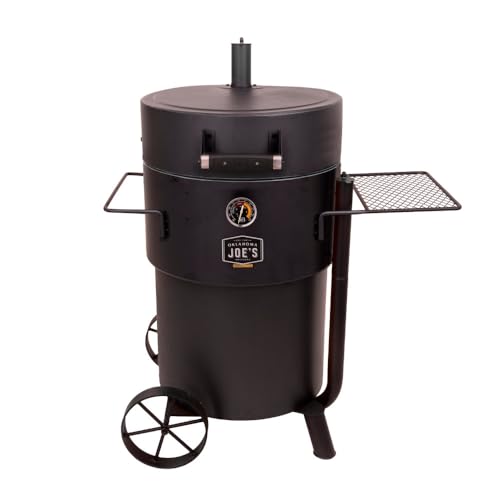
Oklahoma Joe’s Bronco Pro Drum Smoker and Grill 366 sq. in.

Oklahoma Joe’s Firecraft Series Open Fire Barrel Grill 480 sq. in.

Oklahoma Joe’s Highland Reverse Flow Smoker and Grill 1093 sq. in.
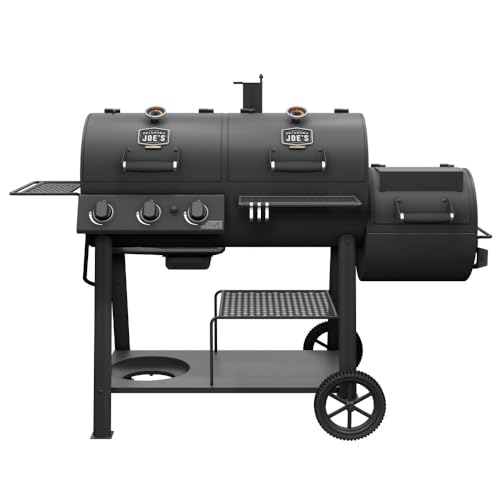
Oklahoma Joe’s Canyon Combo Dual Fuel Smoker and Grill 1031 sq. in.

Oklahoma Joe’s Longhorn Offset Smoker and Grill 1060 sq. in.
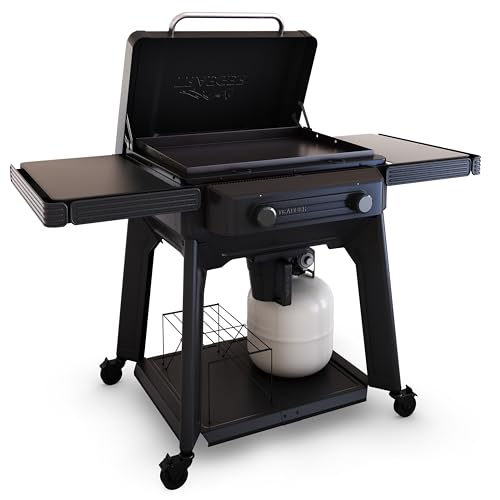
Traeger Flatrock 2 Zone Griddle 468 sq. in.
Why These Options Stand Out
The Rambler is the smallest charcoal grill in this roundup, and that is exactly the point. It fits on a picnic table, a tailgate, or a small apartment patio without dominating the space. The compact footprint makes it a natural fit for anyone cooking for two or three rather than a crowd.
Unlike the larger Oklahoma Joe’s offsets and combo units later in this list, the Rambler is built for quick weeknight grilling, not long smoking sessions. You trade chamber size for portability, and for many owners that is a fair swap. It is a sensible pick if charcoal flavor matters more to you than cooking for a dozen people at once.
A Few Strong Suits
- Light, tabletop-friendly build that travels well to tailgates and campsites
- Adjustable charcoal tray lets you dial heat up or down for varied foods
- Simple charcoal-only setup, no gas lines or propane tanks to manage
- Easy to store in a garage or shed when not in use
Trade Offs
- Smaller grate limits how much food fits per cook
- Not designed for long, low-temperature smoking
Right Fit For
Tailgaters, renters, and small-household cooks who want real charcoal flavor without a permanent backyard footprint.
Consider Something Else When
You regularly feed a crowd or want offset-style smoking, in which case the Oklahoma Joe’s Longhorn gives you far more cooking space.
The Bronco Pro is a vertical drum smoker that doubles as a direct-heat grill when you flip the configuration. Its sealed lid and tuned airflow target steady low-and-slow temperatures, the kind of environment brisket and ribs need to render fat without drying out. For cooks chasing competition-style results, that sealed design is a real advantage over open barrel setups.
The oversized charcoal basket is built for long burns, which means fewer mid-cook refuels during an all-day smoke. Compared with the Rambler above, this is a much larger and more stationary unit, but it trades that portability for serious capacity and heat discipline. Owners commonly treat it as a dedicated smoker first and grill second.
Benefits That Matter
- Sealed drum body holds steady temperatures for low-and-slow cooks
- Large charcoal basket supports extended burns with fewer interruptions
- Vertical layout keeps the heat footprint compact on the patio
- Heavy-gauge steel construction for long-term durability
- Doubles as a direct-heat grill when reconfigured
Minor Gripes
- Heavier and bulkier than tabletop grills, harder to move once seasoned
- Learning curve for dialing in airflow and vent settings
- Direct grilling surface is smaller than dedicated grill models
Key Specs
Who It Suits Best
Pitmasters focused on low-and-slow barbecue who want a sealed drum design over an open fire pit.
Look Elsewhere When
You want both charcoal smoking and propane grilling in one unit, in which case the Canyon Combo is a better fit.
The Firecraft barrel is less of a closed smoker and more of a live-fire cooking station. The open firebox design lets you reach in from any angle to tend coals or rotate food, which is a different experience than the sealed Bronco Pro above. For owners who want interaction with the fire rather than hands-off smoking, this format has real appeal.
Two heavy-gauge wire grates split the 480 square inches evenly, giving you flexibility to cook over direct heat on one side and let food rest or slow-cook on the other. It also pulls double duty as a fire pit once the cooking is done. The honest read is that this grill rewards people who actually like standing around the fire.
The Upside
- 360-degree fire access for tending coals and rotating food
- Doubles as a fire pit after the meal
- Two round grates give you direct and indirect zones at once
- Heavy-gauge wire grates resist corrosion over time
Room For Improvement
- Open design is less efficient for long, slow smokes
- Requires more attention to fire management than a sealed drum
Best Suited To
Cooks who want an interactive open-fire experience and like the idea of a grill that becomes a fire pit after dinner.
Skip It When
You mostly want set-and-forget low-and-slow smoking, in which case the Bronco Pro or Highland are stronger fits.
The Highland is the largest dedicated smoker-and-grill combo in this roundup, with over a thousand square inches of cooking space spread across multiple chambers. The reverse-flow baffle system routes smoke and heat under a plate before it reaches the meat, evening out temperatures across the cook chamber. For long brisket sessions, that even heat is what separates a good bark from a great one.
Removable baffles and an adjustable smokestack let you switch between reverse-flow and traditional offset smoking without rebuilding the firebox. Compared with the Longhorn below, the Highland adds more chamber volume and finer airflow control. It is a serious commitment in both space and budget, and it rewards cooks who actually run multi-meat cooks.
Bright Spots
- Reverse-flow baffle evens out heat across the cook chamber
- 1093 sq. in. handles large cuts and full racks of ribs at once
- Switchable baffles and smokestack for traditional offset mode
- Side firebox supports separate grilling and smoking zones
Honest Caveats
- Takes up significant patio space and is hard to reposition once assembled
- More setup and tuning than smaller units in this list
- Charcoal and hardwood fuel costs add up on long cooks
Key Specs
Who Will Love This
Dedicated pitmasters running competition-style cooks or family gatherings that demand large-volume smoking.
A Better Fit Elsewhere
If you want propane convenience alongside charcoal smoking, the Canyon Combo delivers similar capacity with a gas burner.
The Canyon Combo is the closest thing in this roundup to a true dual grill. One side runs a 3-burner propane system for fast weeknight grilling, the other side is a charcoal chamber for low-and-slow smoking. That split means you can sear burgers on propane at the same time a brisket rolls along in the smoke chamber, without two separate grills crowding the patio.
The 750-square-inch primary chamber handles multiple pork shoulders or a full pack of ribs, and the propane side heats quickly when you don’t want to wait on coals. Compared with the Highland above, you trade reverse-flow baffles for gas convenience. For most households, that trade is a smart one.
Everyday Wins
- True dual-fuel design, propane grilling and charcoal smoking in one unit
- 3-burner gas side reaches cooking temperature fast
- Large 1031 sq. in. total area for family-sized cooks
- Charcoal side supports indirect heat for proper low-and-slow
Worth Noting
- Propane tank is sold separately
- Bulkier footprint than single-fuel units
Key Specs
Made For
Backyard cooks who want one rig that handles both quick weeknight grilling and full Saturday smoking sessions.
Reach For A Different Pick When
You have no interest in propane at all, in which case the Longhorn keeps things simpler with a pure charcoal offset design.
The Longhorn is the classic Oklahoma Joe’s offset and a long-running favorite among entry-level offset smokers. It uses a side firebox to feed heat and smoke into the main chamber, which is the traditional approach to offset smoking. For someone stepping up from a kettle grill, this is the natural next step.
With 1060 square inches split between a primary chamber and a warming rack, you have room for multiple racks of ribs or a couple of pork shoulders alongside side dishes. Compared with the Highland above, the Longhorn skips the reverse-flow baffle system for a simpler, more approachable offset. That simplicity is exactly what beginners want.
Useful Strengths
- Traditional offset design with proven smoke flavor results
- Large 1060 sq. in. split across primary and secondary chambers
- Side firebox separates the heat source from the cook chamber
- Approachable price point for first-time offset owners
Small Caveats
- Heat consistency varies more than reverse-flow designs
- Requires chimney and baffle tuning to dial in temperatures
- Paint on the lid may need seasoning maintenance over time
Key Specs
Perfect Match For
Beginners stepping into offset smoking who want a proven, approachable platform at a friendlier cost than the Highland.
Swap It Out When
You want a true dual-fuel experience, since the Longhorn runs on charcoal alone, while the Canyon Combo adds a propane side.
The Traeger Flatrock is a flat-top griddle rather than a traditional grill, which earns it a spot in this roundup for owners who cook breakfast, smash burgers, and stir-fried vegetables more often than they smoke ribs. Two separate heat zones let you run pancakes on one side while searing meat on the other, all on a single flat cooking surface.
The propane fuel system reaches temperature quickly, and the built-in grease management cuts down on cleanup time after a big cook. Compared with the charcoal-heavy Oklahoma Joe’s picks above, this is a fundamentally different cooking experience: hot metal, not open flame. It earns its place when versatility matters more than smoke flavor.
The Good Stuff
- Two independent heat zones on a 468 sq. in. flat top
- Propane heats up fast for weeknight cooking
- Built-in grease keg simplifies post-cook cleanup
- Great surface for pancakes, eggs, smash burgers, and veggies
Points To Keep In Mind
- No charcoal or wood-smoke flavor profile
- Flat top requires seasoning and regular oiling to prevent rust
Built With In Mind
Households that want a fast, versatile flat-top for breakfast and weeknight dinners alongside their existing grill or smoker.
Where A Sibling Pick Shines
For traditional low-and-slow barbecue, the Oklahoma Joe’s Canyon Combo delivers charcoal smoke flavor this griddle cannot.
What To Weigh Before Choosing A Dual Grill
The “dual” part of a dual grill means different things across this list. Some units run two fuel types side by side, like the Canyon Combo with propane and charcoal. Others are dual-purpose cookers that grill and smoke in one chamber, like the Longhorn or Highland offsets. A few are dual-format in a structural sense, like the Firecraft barrel that becomes a fire pit. Knowing which kind of flexibility you actually need is the first call to make.
Fuel type is the next big lever. Charcoal and hardwood splits give you smoke flavor but require more setup and attention. Propane griddles like the Traeger Flatrock trade that flavor for speed and easy cleanup. If your household values a fast weeknight sear, a propane side is worth its weight. If you are running all-day smokes, dedicated charcoal makes more sense.
Cooking area matters, but only relative to your typical cook. A 218-square-inch tailgate grill feeds a few people. A 1000+ square-inch offset smoker feeds a crowd. Size also drives footprint, so measure your patio before committing. Storage matters too, since a heavy drum smoker is not something you wheel into a garage every night.
Finally, think about your learning curve. Drum smokers and reverse-flow offsets reward owners who learn airflow and vent control. Open-fire barrels like the Firecraft ask for active fire management. A griddle or propane side is the most forgiving format for newer cooks. Matching the format to your patience and experience goes a long way toward enjoying the cook.
Smarter Choices Across This Lineup
Where Shoppers Go Wrong
The most common misstep in this category is buying for capacity you will never use. A 1000+ square-inch offset smoker sounds impressive, but if you are cooking for two most nights, you are paying for chamber volume and fuel that goes unused. Measure your typical cook, not your biggest imagined party. A smaller, hotter grill often beats a larger one that never gets fully loaded.
Another trap is ignoring fuel logistics. Charcoal and hardwood require storage space, dry conditions, and ash disposal. Propane needs tank refills and a safe spot for the spare tank. Buyers sometimes focus on cooking performance and forget that each fuel type carries its own daily ownership cost in time and storage.
When Paying More Pays Off
Higher-tier picks like the Highland or Canyon Combo earn their position through better heat control, larger chambers, and dual-fuel flexibility. The upgrade is worth it when you actually run multi-meat cooks, host gatherings, or want both gas and charcoal in one footprint. For households that cook two or three times a week on a small patio, a simpler offset like the Longhorn covers the same flavor profile at a friendlier entry point.
Frequently Asked Questions
What is a dual grill exactly?
A dual grill combines two cooking formats in one unit, typically gas and charcoal sides, or a smoker chamber paired with a direct-heat grill area. The goal is flexibility without needing two separate rigs.
Can you really smoke and grill at the same time?
Yes, on combination units like the Canyon Combo or Highland offset. You manage two fuel sources independently, which means longer total cook times and more ash or propane to manage, but the results justify it for many owners.
How much patio space do I need for an offset smoker?
Plan for at least a 4 by 4 foot footprint for a full-size offset, plus clearance behind the smokestack and room to access the firebox. Drum smokers and barrel grills are more compact, while reverse-flow offsets tend to be the longest.
Is a flat-top griddle a substitute for a grill?
A griddle covers breakfast, smash burgers, and vegetables extremely well, but it cannot replicate the open-flame sear or smoke flavor of a charcoal grill. Many households end up with both rather than choosing one.
How long does it take to season a new smoker?
Most charcoal smokers benefit from an initial burn-off at high temperature for 30 to 60 minutes, followed by a light coat of cooking oil on interior surfaces. Building a durable seasoning layer typically takes several cooks.
The Takeaway
The right dual grill depends less on specs on paper and more on how you actually cook during the week. Quick weeknight meals point toward propane flexibility, while weekend-long smokes call for charcoal capacity and airflow control. Match the format to your routine, your patio size, and the fuel logistics you can live with, and the rest of the decision tends to fall into place.