
A dual fuel grill lets you sear burgers over propane one minute and then settle into a low-and-slow smoke with charcoal the next. For anyone who wants weeknight convenience without giving up weekend barbecue flavor, the format is hard to beat. This roundup walks through seven charcoal-forward and dual fuel options worth your attention, from a tailgate-ready tabletop model to full-size offset rigs and a true two-fuel combo that handles a crowd.
The Leading Options At A Glance

Oklahoma Joe’s Rambler Portable Charcoal Grill
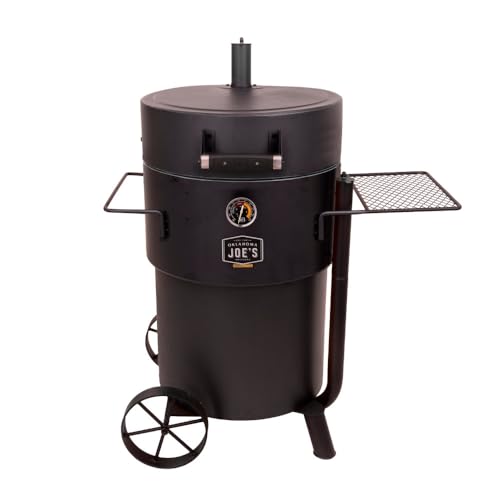
Oklahoma Joe’s Bronco Pro 21.5″ Heavy Duty Drum Smoker and Grill

Oklahoma Joe’s Firecraft Series Modular Open Fire Barrel Charcoal Grill

Char-Griller Portable Charcoal Grill and Side Fire Box (E82424)

Oklahoma Joe’s Highland Reverse Flow Offset Smoker and Grill
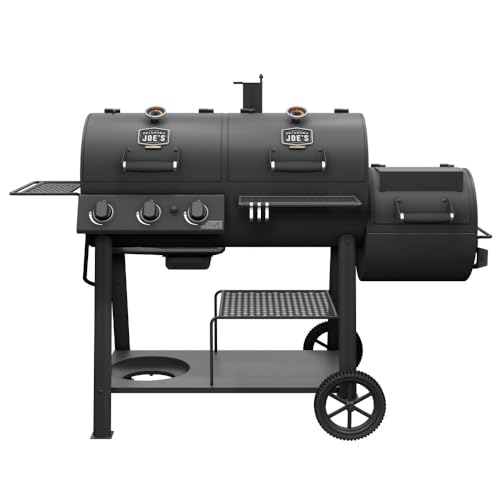
Oklahoma Joe’s Canyon Combo Dual Fuel 3-Burner Propane and Charcoal Smoker and Grill

Oklahoma Joe’s Longhorn Offset Charcoal Smoker and Grill
What Each Pick Brings To The Table
The Rambler is built for people whose “grill” lives in the trunk of a car more than on a patio. At 218 square inches of cooking area, it asks you to cook in batches, but the small footprint is the whole point. Toss it on a picnic table, light the charcoal, and you have a real cook station at the campsite or the parking lot before kickoff.
Compared with the bigger offset rigs and drum smokers that follow in this list, the Rambler trades capacity for portability. Its height-adjustable charcoal tray does the heavy lifting on heat control: drop it close to the coals for searing, raise it up for gentler cooking. For apartment dwellers with no balcony, tailgaters, or anyone cooking for two, it covers the basics without hogging space.
Where It Helps
- Small footprint fits on most tabletops and tailgates
- Adjustable charcoal tray gives you a real sear or a low-and-slow cook
- Forgiving learning curve for charcoal beginners
- Easy to store in a closet or car trunk between cookouts
Worth Noting
- 218 square inches caps you at roughly six to eight burgers per round
- Lid is light-gauge and tends to lose heat quickly in cold or windy weather
- Cleaning ash from a small box requires tipping the unit, which gets old fast
Made For
Tailgaters, campers, and small-space cooks who want real charcoal flavor in a package they can carry with one hand.
Skip It When
The Oklahoma Joe’s Canyon Combo suits backyard hosts who cook for a crowd far better than this tabletop unit.
Drum smokers are all about set-it-and-forget-it cooking, and the Bronco Pro leans hard into that promise. Its sealed lid and purpose-built airflow system give you the kind of tight temperature control that turns a Saturday afternoon into a real smoke session. Drop in a brisket or a couple of pork shoulders, adjust the vents, and walk away.
The oversized charcoal basket is the headline feature here. It holds enough fuel to keep the cook going for over fifteen hours without a refill, which matters when you are running a competition-style overnight cook or pulling a midnight babysitting shift on a family packer brisket. Compared with the offset smokers further down the list, the Bronco Pro is less fiddly: no baffle plates to swap, no firebox-to-cook-chamber heat management to learn.
Noteworthy Benefits
- Sealed drum design holds steady temperature with minimal venting adjustments
- 15+ hour burn per charcoal fill suits long overnight cooks
- 366 square inches handles two pork butts or a full packer brisket with room to spare
- Easier learning curve than a traditional offset rig
Trade Offs
- No dedicated grill grate height, so searing over direct flame is limited
- Drum shape concentrates heat in the center; edge space runs cooler than the middle
- Heavy unit that benefits from a permanent patio spot rather than weekly moves
At A Glance
Best Suited To
Patient pitmasters who want long, low-and-slow cooks with minimal babysitting and do not need a wide-open grill surface.
Swap It Out When
The Oklahoma Joe’s Highland is a smarter move for cooks who want traditional offset airflow with a much larger 1093 square inch footprint.
The Firecraft Barrel is for cooks who do not actually want a grill as much as they want a controlled fire. The open-fire design gives you 360-degree access to stoke the coals without moving your food, and two heavy-gauge wire cooking grates split the 480 square inches into 240 each. The end result feels more like cooking over a campfire than standing at a traditional kettle grill.
Versatility is the real pitch. You can run it as a straight grill, throw wood on for live-fire cooking, or close the lid and let it double as a backyard fire pit on a cool evening. The twist-lock grate handles let you adjust heights on the fly, which is a small touch that pays off when you are juggling vegetables over high heat while a steak rests on the cooler side.
A Few Strong Suits
- 480 square inches split across two removable round grates
- Twist-lock grate handles let you raise and lower cooking surfaces mid-cook
- Pulls double duty as a fire pit when the cook is done
- Heavy-gauge wire grates hold up to repeated high-heat sessions
Things To Consider
- Open firebox is less weather-resistant than a sealed drum or offset cabinet
- No lid or hood means flare-ups are part of the deal
- Steel body benefits from a cover and dry storage to fight surface rust long-term
Whose Backyard It Belongs In
Outdoor cooks who want the live-fire, fire-pit vibe and are happy trading lid-and-vent precision for atmosphere and flame access.
Look Elsewhere When
The Oklahoma Joe’s Bronco Pro fits anyone who needs sealed-drum temperature control more than open-flame drama.
Most of the picks in this roundup are standalone units, but the E82424 earns its slot by doing two jobs. As a side fire box, it bolts onto most Char-Griller barrel grills and offset rigs to give you a real Texas-style offset cooking chamber. Detach it, drop on the included legs, and it becomes a portable charcoal grill with thick cast iron grates.
The cast iron grates are the feature that stands out. They hold heat aggressively and leave the kind of sear marks charcoal cooks chase, while the heavy-gauge powder-coated steel body shrugs off the high temperatures a side fire box has to absorb. At 250 square inches, the cooking surface fits roughly a dozen burgers when running standalone, which is generous for a unit you can also sling onto a bigger rig.
A Favorable Mix
- Two-in-one: portable grill or side fire box attachment
- Thick cast iron grates hold and release heat for a stronger sear
- Heavy-gauge powder-coated steel resists heat and weather wear
- Fits cleanly with most Char-Griller barrel and dual fuel rigs
Points To Note
- Standalone use is limited compared with a dedicated portable like the Rambler
- Cast iron grates need regular oiling to prevent rust if you cook outdoors year-round
- Real value shows up only if you already own or plan to own a compatible Char-Griller base
Who Will Love This
Existing Char-Griller offset owners who want to add a real Texas-style smoking chamber without buying a whole new rig.
Consider Something Else When
The Oklahoma Joe’s Rambler is the better pick for tailgaters who want a true standalone portable rather than an add-on module.
The Highland is the kind of smoker you build a cook schedule around. Its removable baffles and adjustable smokestack let you switch between reverse flow, where smoke travels across the cook chamber before venting, and traditional offset, where it draws straight from the firebox. That flexibility is what competition-style cooks look for, and it is also why this rig earns its space in a serious backyard setup.
The 1093 square inch total cooking area, spread across a primary chamber and a warming rack, gives you room for multiple cuts at once. You can run two briskets, a few racks of ribs, and a tray of vegetables without playing tetris. For hosts feeding a real crowd, the Highland handles volume without the temperature swings that punish smaller offset smokers.
What Makes Sense
- 1093 sq in spread across primary chamber and warming rack
- Removable baffles switch the cook between reverse flow and traditional offset
- Large charcoal basket supports longer burns with fewer mid-cook refills
- Heavy-gauge steel body holds heat steadily through overnight cooks
Practical Considerations
- Requires real estate: the footprint will not fit a small patio
- Reverse flow setup takes longer to learn than a sealed drum design like the Bronco Pro
- Seams and gaskets need occasional inspection to keep the chamber sealed tight
Feature Snapshot
Whose Patio It Belongs On
Cooks running large gatherings, church fundraisers, or competition-style practice sessions who want real offset airflow control.
Reach For A Different Pick When
The Oklahoma Joe’s Longhorn is a friendlier entry point for first-time offset owners who do not need the reverse flow swap.
The Canyon Combo is the only true two-fuel rig in this roundup: a charcoal side for slow smoking, plus a 36,000 BTU three-burner propane side for fast grilling. That split personality is what makes it the most versatile pick here. Wednesday-night burgers happen on the propane side in ten minutes flat. Saturday brisket happens on the charcoal side while you mow the lawn.
The 1031 square inch total footprint, with a 750 square inch primary chamber, handles large family cookouts without crowding. Owners get the option to run both sides at once, which is useful when the ribs are resting and you still need to char vegetables. For hosts who genuinely cook everything, this is the unit that does not ask you to choose.
Useful Highlights
- Charcoal side and propane side run independently for true weeknight-to-weekend cooking
- 36,000 BTU three-burner propane side hits grilling temperatures fast
- 750 sq in primary smoke chamber fits two pork shoulders with breathing room
- Offset design handles indirect heat for traditional low-and-slow cooks
Things To Weigh Up
- Propane tank is sold separately, adding to real cost of ownership
- Bigger and heavier than single-fuel options; plan a permanent patio spot
- Running two fuel systems at once is more maintenance than a single-fuel rig
Quick Facts
The Right Fit For
Backyard hosts who want propane convenience on busy nights and charcoal flavor when the weekend opens up.
A Better Fit Elsewhere When
Pure charcoal traditionalists may prefer the Oklahoma Joe’s Highland for its larger dedicated offset cooking chamber.
The Longhorn is the original Oklahoma Joe’s offset, and it remains a sensible pick for cooks entering the offset world. Its 751 square inch primary chamber and 309 square inch secondary rack give you 1060 total, which is enough real estate to smoke for a dozen people without splitting cooks across two batches.
Compared with the Highland, the Longhorn skips the reverse flow baffle swap in favor of a simpler traditional offset layout. That makes the learning curve gentler. Add hardwood splits or chunks, manage the smokestack damper, and you get the indirect heat that defines the offset category. It is the rig most first-time offset owners should look at before graduating to the Highland or the Canyon Combo.
Good Reasons To Consider
- 1060 sq in across primary and secondary chambers for full cookout volume
- Traditional offset layout is easier to learn than reverse flow
- Steel body and proven design have aged well in the Oklahoma Joe’s lineup
- Firebox setup supports both splits and chunks for flexible smoke flavor
Some Limits To Know
- Smaller firebox than the Highland means more frequent fuel top-ups on long cooks
- Smoke and heat distribution are less even than the Highland’s reverse flow option
- Steel cabinet benefits from a fitted cover if it lives outside year-round
The Numbers That Matter
Built With In Mind
First-time offset owners who want proven traditional airflow and a generous cook chamber without reverse flow complexity.
Where A Sibling Pick Shines
The Oklahoma Joe’s Canyon Combo is the stronger call for shoppers who want propane grilling in the same rig.
Choosing The Right Dual Fuel Setup For How You Cook
Dual fuel setups are not all built for the same job, and the right pick depends on how you actually plan to use it. Start with your cooking style before chasing specs.
A true dual fuel rig, like the Canyon Combo, makes sense for anyone who cooks two or three nights a week and wants propane convenience alongside weekend charcoal flavor. If you mostly grill, you may not need the charcoal side at all, and a dedicated charcoal or offset smoker like the Longhorn will serve you better. A tabletop charcoal unit like the Rambler covers the tailgate crowd that values portability over capacity.
Cooking area tells you how many burgers, ribs, or briskets you can fit per round. Anything under 300 square inches is built for two to four people. The 750 to 1100 square inch range handles family gatherings and most backyard cookouts. Going larger means planning a permanent patio spot, since these rigs are heavy and awkward to move.
Offset smokers use indirect heat, where smoke and hot air travel from a firebox into the cooking chamber before venting. Drum smokers rely on a sealed drum with controlled airflow. Reverse flow adds a baffle plate that sends smoke across the chamber before reaching the exhaust, evening out the heat. Each approach rewards a different cooking style.
Build quality matters more than brand hype. Look for heavy-gauge steel, tight-fitting lids, and substantial grates. Cast iron grates hold heat better but need oiling to prevent rust. Wire grates are lighter and easier to clean, with less heat retention.
Plan a permanent spot. Larger rigs weigh well over 100 pounds, so a flat surface, a cover, and decent clearance from siding are worth thinking about before delivery day.
What To Watch Before You Click Buy
Common Shopping Slip Ups
The biggest mistake is buying by square inch alone without considering how often you actually cook for a crowd. A 1000 square inch rig that intimidates you out of the kitchen is a worse purchase than a 250 square inch portable you use every weekend.
Another trap is ignoring fuel logistics. Charcoal needs dry storage, a chimney starter, and a place to dump ash. Propane adds a tank to buy and refill. Dual fuel setups need both systems working in sync. Skip the math, and you end up with a rig you only run on one side.
Finally, do not skip patio dimensions. Measure your space, including overhead clearance for the lid, before choosing an offset or dual fuel rig. Returns on heavy smokers are a hassle.
What The Higher Tier Buys
Premium-priced options earn their money through thicker steel, better gaskets, tighter-fitting lids, and heavier grates. Those features translate to steadier temperatures, longer burn times, and cleaner smoke flavor over a long session.
Reverse flow capability, like the Highland offers, is a real upgrade for cooks chasing competition-style bark and even color. Adjustable smokestacks and removable baffles give you more control, but they also add parts to manage. The upgrade is worth it for cooks who run weekly smokes, less so for occasional weekend use.
Frequently Asked Questions
What is a dual fuel grill? A dual fuel grill uses two fuel types in one rig, typically propane for fast grilling and charcoal for slow smoking. The Canyon Combo in this roundup is the clearest example.
Do dual fuel grills cost more to run than single-fuel models? Running both propane and charcoal adds modest ongoing cost, but most owners only use the propane side for quick weeknight cooks and reserve charcoal for longer sessions. Actual cost depends on how often you cook.
Can a charcoal smoker double as a grill? Some can, but indirect heat design makes searing limited. Drum and offset smokers handle smoke well but are not built for high-heat direct grilling like a gas grill.
How much cooking space do you need for a family of four? Around 400 to 600 square inches covers most family cookouts. Larger gatherings or overnight smokes call for 750 square inches or more.
Is a reverse flow smoker worth the extra cost? Reverse flow delivers more even heat distribution, which helps on long cooks. For occasional weekend smoking, traditional offset airflow is usually enough.
Closing Remarks
Your perfect dual fuel grill is the one you will actually use. Match the format to your cooking rhythm: portable for tailgates, offset for patient weekends, dual fuel for hosts who want it all. Whichever direction you go, a little charcoal patience goes a long way toward the cook you are chasing.