
A charcoal lover’s patience plus a propane burner’s speed, served on the same cooktop. That’s the pitch behind dual fuel gas grills, and for anyone torn between low-and-slow ribs and a quick weeknight sear, the combo is genuinely useful. This roundup walks through seven grills that lean into the format, from a compact charcoal tabletop to full-size reverse-flow rigs and one true dual-fuel workhorse. Pick the cooking area, fuel style, and footprint that match your backyard, and the rest tends to fall into place.
An Overview Of The Picks

Oklahoma Joe’s Rambler Portable Charcoal Grill (Black)
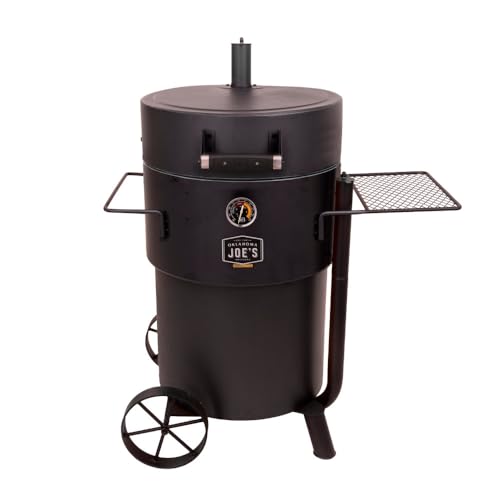
Oklahoma Joe’s Bronco Pro 21.5 in. Charcoal Drum Smoker and Grill (Black)

Oklahoma Joe’s Firecraft Series Modular Open Fire Barrel Charcoal Grill (Black)

Oklahoma Joe’s Highland Offset Reverse Flow Charcoal Smoker and Grill (Black)

Monument Grills Mesa200S 2-Burner Propane Gas Grill
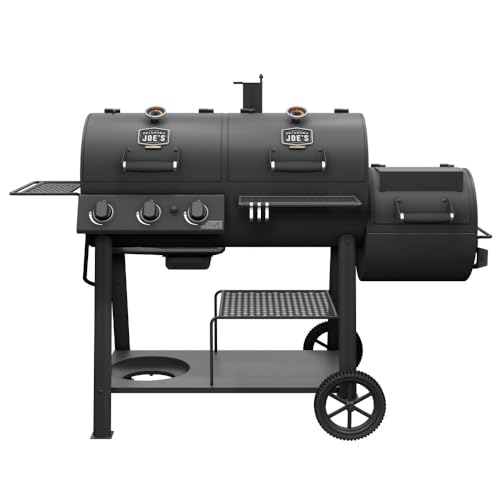
Oklahoma Joe’s Canyon Combo Dual Fuel Propane and Charcoal Smoker and Grill (Black)

Oklahoma Joe’s Longhorn Offset Charcoal Smoker and Grill (Black)
Why These Options Stand Out
Small enough to toss in the truck yet built like a proper cooker, the Rambler makes charcoal grilling approachable for anyone without a permanent outdoor kitchen. Its compact tabletop footprint suits apartment balconies, picnic tables, and tailgate setups where a full-size rig simply won’t fit. Compared to the larger Oklahoma Joe’s smokers further down this list, the Rambler trades capacity for genuine portability without losing the brand’s heavy-gauge feel.
Well-Handled Touches
- 218-square-inch cooking grate handles roughly six burgers or a couple of steaks at once.
- Tabletop form factor slips onto small patios and folds down for transport.
- Adjustable charcoal tray lets you raise or lower the fire for both searing and slow cooking.
- Steel construction feels sturdier than most portable charcoal options at this size.
Things To Consider
- No lid or hood means longer indirect cooks are tough to manage.
- Smaller grate means you’ll feed a crowd in batches, which can be a real bottleneck on busy weekends.
- Owners commonly report the legs and handles get hot, so a pair of grilling gloves is a smart add-on.
Who Should Grab It
Tailgaters, apartment dwellers, and anyone who wants a real charcoal cook in a packable format.
Skip It When
You regularly host ten or more guests, in which case the Canyon Combo Dual Fuel gives you far more breathing room.
The Bronco Pro is a vertical drum smoker built for cooks who want competition-style temperature discipline without the offset learning curve. Its sealed lid and tuned airflow system keep heat and smoke moving predictably, which is why dedicated low-and-slow enthusiasts often gravitate here. Where the Rambler is built for travel, the Bronco Pro is built for the serious weekend hobbyist who lives for brisket flats and ribs.
What Earns Its Place
- 366-square-inch cooking area swallows a full brisket or multiple racks of ribs.
- Sealed drum design plus adjustable dampers deliver tight temperature control.
- Oversized charcoal basket supports extended burns with fewer mid-cook refuels.
- Heavy-gauge steel body holds heat steadily in cooler weather.
Worth Noting
- The drum footprint takes up more patio space than a horizontal offset of similar capacity.
- Ash cleanup at the bottom is messier than a typical offset firebox.
Quick Technical Notes
Made For
Backyard pitmasters who want competition-style consistency and longer, hands-off cooks.
Look Elsewhere When
You want a traditional offset feel with a side firebox; the Highland Reverse Flow suits that workflow better.
The Firecraft barrel isn’t really a grill in the usual sense. It’s a live-fire cooking station that doubles as a backyard fire pit after the food comes off, which makes it the most social option on this list. Compared to the closed-drum Bronco Pro, the Firecraft gives you open-flame cooking with 360-degree access to the fire. People who entertain more than they cook will appreciate how the rig transitions from dinner to firepit without any extra equipment.
Why It Works Well
- 480-square-inch total cooking area split across two round grates.
- Open firebox design lets you stoke coals without disturbing the food.
- Modular barrel doubles as a fire pit once the cooking is done.
- Twist-lock handle releases grates for height adjustment over the coals.
Trade Offs
- Open fire means wind affects temps more than on enclosed smokers.
- No lid, so true low-and-slow is harder than on the Bronco Pro or Highland.
- Depending on your fire code, open-flame rigs may not be allowed in every neighborhood.
Who It Suits Best
Entertainers and live-fire cooking fans who want grill, fire pit, and conversation piece in one.
Consider Something Else When
You mostly cook in cold or windy weather; the Highland Reverse Flow cabinet holds heat far more reliably.
The Highland is the heavyweight of this list, a serious reverse-flow offset smoker built for full-day cooks and crowd-sized spreads. Its 1,093-square-inch footprint covers the largest gathering on the list, and the removable baffles let you toggle between reverse flow and traditional offset smoking. While the Longhorn below offers similar DNA at a smaller price, the Highland’s heavier gauges and longer cabinet earn their keep for committed smokers.
Strong Points
- 1,093-square-inch cooking area handles brisket, ribs, and sides in a single session.
- Removable baffles let you switch between reverse flow and classic offset heat patterns.
- Heavy-gauge steel construction holds heat through overnight cooks.
Honest Caveats
- Large footprint demands a dedicated patio or yard corner.
- Two people are usually needed to move it once assembled.
- Reverse-flow baffles add a learning curve for first-time offset owners.
Feature Snapshot
Best Suited To
Smokers who host large gatherings and want the most even heat distribution in this lineup.
Swap It Out When
You want a smaller, lighter footprint with the same offset DNA; the Longhorn Offset is the friendlier pick.
The Mesa200S is the only pure propane option here, and it earns its spot by solving a problem the charcoal rigs can’t: quick weekday cooking in a tight footprint. Its two foldable side shelves collapse to a slim profile, which makes storage in a garage or narrow patio far easier than the bulkier offsets. Compared to the larger Canyon Combo below, this grill trades dual-fuel versatility for compact convenience.
What Pays Off
- 450-square-inch total cooking area (320 primary plus 130 warming) fits a family dinner.
- Two foldable shelves shrink the footprint when not in use.
- Push-and-turn knob ignition lights the burners quickly.
- Clearview lid lets you check food without lifting and losing heat.
Points To Note
- Propane tank not included, so factor that into your setup.
- Two-burner layout means less zone cooking than larger propane rigs.
- No charcoal option, so it doesn’t deliver true smoky flavor.
Right Fit For
Patio and balcony cooks who mostly want fast, clean grilling without the charcoal mess.
Another Choice May Suit
You want both propane speed and charcoal smoke; the Canyon Combo gives you both on one frame.
The Canyon Combo is the only true dual-fuel rig in this roundup, with a charcoal side and a 3-burner propane side living on the same frame. You can slow-smoke pork shoulders on one half while searing burgers on the propane burners across the same cook. For families who want both fuel types without buying two separate grills, this is the most direct answer the market offers right now.
The Upside
- 750-square-inch primary charcoal chamber fits two pork shoulders or several brisket flats.
- 3-burner propane side reaches high heat fast for burgers, steaks, and veggies.
- Combined 1,031-square-inch cooking area covers a full backyard party.
- Two fuel systems on one frame mean no swapping equipment mid-meal.
Trade-Offs To Consider
- Propane tank is sold separately, adding to the total cost.
- Large footprint requires a generous patio or deck.
- Running both fuels at once means managing two heat sources during the cook.
Key Attributes
Whose Shelf It Belongs On
Backyard hosts who want charcoal smoke and propane speed on the same rig.
Where A Sibling Pick Shines
You only need charcoal and want a bigger single-fuel cabinet; the Highland Reverse Flow offers more smoking volume per dollar.
The Longhorn is the classic Oklahoma Joe’s offset, a familiar silhouette in the brand lineup that has earned its reputation through years on backyard patios. With 751 square inches of primary cooking space and a secondary chamber, it handles family-sized cooks without the heavier gauges of the Highland. Compared to the newer reverse-flow design above it, the Longhorn keeps the layout simple, which is a real plus for first-time offset owners.
Benefits That Matter
- 1,060-square-inch total cooking area (751 primary, 309 secondary) suits mid-sized gatherings.
- Traditional offset design produces rich, wood-fired smoke flavor.
- Smaller learning curve than reverse-flow baffle systems.
- Heavy enough to stay stable on the patio without constant re-leveling.
Worth Bearing In Mind
- Older offset design runs hotter near the firebox, so end-to-end temps vary.
- Standard steel thickness means more attention to insulation in cold weather.
- No lid thermometer in some configurations, so a separate probe becomes a must.
Who Will Love This
Tradition-minded BBQ fans learning the offset craft without overcommitting to premium gauges.
Reach For A Different Pick When
You want even heat across the entire grate; the Highland Reverse Flow is the more refined choice.
What To Weigh Before Choosing A Dual Fuel Gas Grill
Match The Fuel Mix To Your Real Cooking Style
Dual fuel works best when you actually use both sides. Pick a side-by-side combo if you genuinely want propane speed for weeknights and charcoal smoke for weekends. If you only ever reach for charcoal, a dedicated offset or drum is more useful, and you save the cost of a propane side you’ll rarely fire up.
Read Cooking Area As Square Inches Per Guest
A rough rule for outdoor cooking is about 75 to 100 square inches of primary grate per adult. That puts the Mesa200S in family-of-four territory and the Canyon Combo or Highland in full-party territory. Secondary racks and warming shelves help, but the primary grate is where the real work happens.
Check The Footprint Before You Commit
Bigger cabinets cook more, but they also dominate a patio. Measure storage space, door clearance, and the distance from siding or railings. A rig like the Highland Reverse Flow is great in open yards but tough to manage on small decks. Foldable side shelves, like those on the Mesa200S, make a real difference in tight spots.
Build Quality Matters More Than BTU Numbers
High BTU figures on a thin steel cabinet can actually make things worse, because thin metal loses heat fast and creates hot spots. Look for heavier gauges, reinforced lids, and proven weld points, especially around the firebox on offset smokers. If you cook year-round, this matters even more.
Key Considerations Across These Picks
Pitfalls Shoppers Hit
Treating the propane side as a bonus instead of a planned fuel leads to grills that get used 90% of the time on one side. You also want to confirm the propane tank size fits your outdoor setup, since most retailers ship the grill without one. Finally, don’t skip the cover question. A grill this size left uncovered through a winter will pay for a fitted cover within one season.
What The Higher Tier Buys
Premium charcoal cabinets like the Highland earn their keep with heavier steel and tuned baffles, which means more even heat and less babysitting during long cooks. Dual-fuel models like the Canyon Combo cost more because they ship two complete cooking systems in one frame. For anyone cooking for a crowd more than once a month, that extra structure translates to fewer hot spots and longer life.
Frequently Asked Questions
What makes a grill “dual fuel”?
A dual-fuel grill runs two fuel sources, usually propane and charcoal, on the same frame so you can switch between quick grilling and slow smoking without changing equipment.
Is a dual-fuel grill worth it for beginners?
Yes, if you actually want both styles. Beginners often find a true dual-fuel combo easier than learning two separate grills at once, since the learning happens side by side.
How much cooking space do I need?
Plan for roughly 75 to 100 square inches of primary cooking area per adult you typically serve. For a family of four, 320 to 400 square inches covers most meals.
Do these grills come with propane tanks?
Most propane-equipped grills ship without a tank, so you’ll need to buy or reuse a standard 20-pound propane tank separately.
How do I clean an offset charcoal smoker?
Burn off residue at high heat after each cook, then sweep the firebox and ash pan once it cools. A wire brush on the grates handles the rest, and a deep clean once a season keeps airflow unrestricted.
Wrap Up
The right pick depends on how often you cook, how much space you have, and whether propane speed or charcoal smoke matters more on a typical weeknight. Backyard hosts who want both will find the Canyon Combo the most direct answer, while purists chasing traditional smoke flavor will feel right at home on the Highland or Bronco Pro. For small patios and quick meals, the Mesa200S handles weeknight duty without taking over the deck.