
Most weekend cooks end up choosing sides, charcoal for flavor or propane for speed. Dual fuel setups settle that argument by giving you both on the same frame, so a low-and-slow brisket shares real estate with weeknight burgers. The right pick depends on how much space you have, how often you entertain, and whether you want to drag the rig to a tailgate or leave it planted on the patio.
Below is a handpicked shortlist of seven grills and smokers that handle fuel flexibility well, from tabletop charcoal units to a proper two-in-one gas-and-charcoal combo. Each entry is matched to a realistic cooking style, so you can skip past the ones that don’t match your weekend.
A Fast Comparison Of The Options

Weber Q 2800N+ Portable Grill (Flame Red)

Oklahoma Joe’s Rambler Portable Charcoal Grill 218 sq. in.
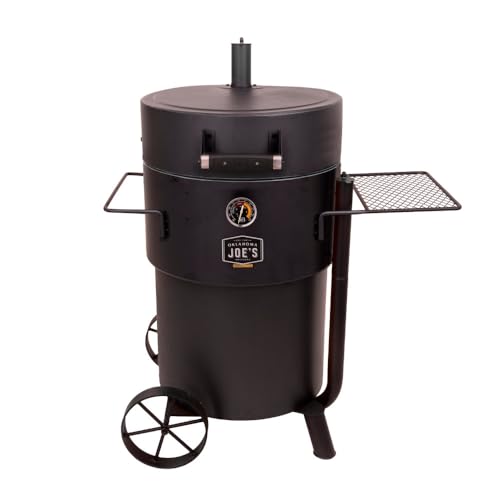
Oklahoma Joe’s Bronco Pro Drum Smoker and Grill 366 sq. in.

Oklahoma Joe’s Firecraft Modular Open Fire Barrel Grill 480 sq. in.

Oklahoma Joe’s Highland Reverse Flow Offset Smoker 1093 sq. in.
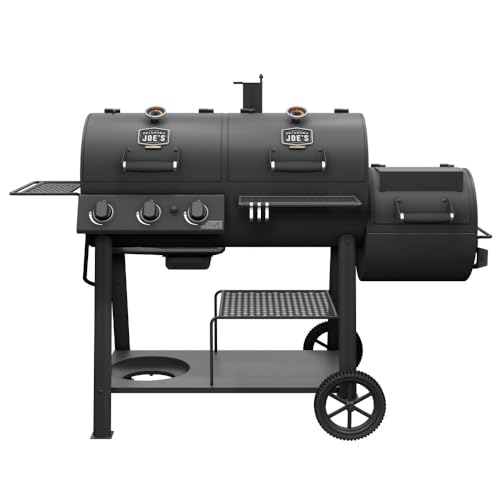
Oklahoma Joe’s Canyon Combo Dual Fuel Grill and Smoker 1031 sq. in.

Oklahoma Joe’s Longhorn Offset Charcoal Smoker 1060 sq. in.
What Each Pick Brings To The Table
The Weber Q 2800N+ lands first because it solves a problem the rest of this list mostly ignores: tight spaces. Apartment balconies, small patios, and tight condo courtyards rarely accommodate a full offset rig, but they almost always welcome a compact propane unit that lights fast and cleans up quicker than charcoal. The wide 250 to 700°F range means you can roast a spatchcocked chicken low or hit a hard sear on a steak, all without swapping grills.
Compared to the charcoal options later in this list, the trade-off is flavor depth. You gain convenience, predictable heat, and minimal ash cleanup, and you give up that wood-fire taste. For weeknight cooks who mostly want to get dinner on the table without babysitting a fire, the exchange usually feels worth it.
The Upside
- Wide temperature range covers roasting, baking, and high-heat searing on a single grate.
- Compact footprint fits balconies and small patios where the Oklahoma Joe’s rigs won’t go.
- Propane ignition means a fast startup, no chimney starter or charcoal fuss.
- Lightweight build is genuinely portable for tailgates, beach trips, or park days.
Things To Consider
- No real smoke flavor without a separate wood box or smoker attachment.
- Propane tank adds a recurring fuel cost and a hose to manage around the deck.
- Cooking surface is smaller than every offset or drum model in this roundup.
Who It Suits Best
Balcony dwellers, condo owners, and weeknight cooks who want hot, reliable meals without a charcoal ritual.
Skip It When
The Oklahoma Joe’s Canyon Combo Dual Fuel Grill and Smoker is a better match for hosts who regularly feed eight or more and want charcoal flavor on the same frame.
The Rambler is built for the cook who doesn’t want to leave smoky flavor at home just because they’re camping. At 218 square inches, it’s small enough to live in a truck bed or car trunk, yet the body still feels substantial once it’s unfolded. The height-adjustable charcoal tray is the real centerpiece, letting you drop coals for a hot sear or lift them for a gentler cook without moving the food.
Where the Weber Q 2800N+ handles propane convenience, this one handles charcoal in a stripped-down, no-frills package. You won’t get a side burner or a warming rack here, and owners commonly report that the lid seal is loose enough that it’s not a true smoker. But for fast direct-heat cooking on the go, that’s more than enough.
Real Benefits
- Height-adjustable tray gives real control over heat without flipping the grate.
- Tray handles direct sears and low-temperature cooks on the same cookout.
- Tabletop size makes it a natural pick for tailgates, parks, and small patios.
- Sturdy build holds up well to frequent transport and rougher campsite handling.
Worth Noting
- 218 square inches limits how much food you can handle for larger groups.
- Lid fit is loose, so true low-and-slow smoking isn’t its strong suit.
- Charcoal only, so you’ll need patience for startup and time for ash cleanup.
Made For
Campers, tailgaters, and anyone who wants charcoal flavor in a portable, no-extra-feature package.
Consider Something Else When
The Weber Q 2800N+ Portable Grill suits apartment cooks who want propane ignition and a similar footprint with zero charcoal setup.
The Bronco Pro swaps the wide stance of an offset smoker for a vertical drum design, and that shape change pays off in two ways. You get a smaller footprint on the patio, and you get better convection since heat wraps around the food on its way up the chamber. Owners commonly report the sealed lid and tuned airflow give them steady temperatures across long cooks, which is exactly what a brisket or pork shoulder demands.
Where the Rambler above focuses on portability, the Bronco Pro focuses on smoke quality. The oversized charcoal basket is built for long burns, so you spend less time reloading and more time sleeping through the night on a twelve-hour pull. It’s not a grill for flipping thirty burgers, but for a few racks of ribs or two whole chickens, it does the job cleanly.
Useful Strengths
- Vertical drum shape fits smaller patios than a full offset rig.
- Oversized charcoal basket supports long, uninterrupted smoke sessions.
- Sealed lid and tuned airflow give steady temperatures across hours of cooking.
- 366 square inches of cooking area handles multiple racks of ribs at once.
Trade Offs
- Charcoal only, no quick propane option for fast weeknight grilling.
- Drum shape limits direct-heat grilling flexibility compared to an open grate.
- Heavier than the Rambler, so it’s a planted-patio smoker, not a tailgate unit.
Best Suited To
Backyard smokers who want steady low-and-slow results without dedicating a full corner of the yard to an offset rig.
Look Elsewhere When
The Oklahoma Joe’s Highland Reverse Flow Offset Smoker suits dedicated pitmasters who want more cooking area and want to manage an offset fire rather than a drum.
The Firecraft leans into open-fire cooking in a way the other grills on this list barely touch. The barrel design gives you 360-degree access to the fire, so stoking coals or adding wood doesn’t mean reaching over hot grates or moving food. The 480-square-inch cooking surface is split across two round wire grates that twist-lock for height adjustment, which makes it feel more like a cooking station than a closed box.
Where the Bronco Pro is a closed drum for steady smoke, this one invites you to work the fire like a backyard fire pit. It doubles as a conversation piece after dinner, and the modular design means you can configure it for grilling, fire-pit use, or open-flame cooking depending on the evening. Owners commonly mention that the open-fire setup takes some practice, especially if you’re used to a lid-and-dial smoker.
Where It Delivers
- Open-fire layout doubles as a grill, fire pit, and cooking station in one barrel.
- Twist-lock grates adjust height for direct heat or slower cooking without moving food.
- Heavy-gauge wire grates handle frequent use and resist corrosion over time.
- 360-degree access makes tending the fire simpler than working through a lid.
Points To Note
- Charcoal only, and open-fire cooking demands more hands-on fire management.
- Less temperature precision than a closed drum or offset smoker for long cooks.
- Bulkier footprint than the Bronco Pro, so it needs dedicated patio space.
Who Will Love This
Backyard hosts who want grill, fire pit, and conversation starter rolled into one rugged unit.
Swap It Out When
The Oklahoma Joe’s Longhorn Offset Charcoal Smoker is a stronger pick for cooks who prefer a lid-based design and traditional offset flavor for family gatherings.
The Highland is built around one specific idea: even heat across a large cooking surface. Reverse flow means the smoke and heat travel down and under the cooking chamber before reaching the stack, which evens out the hot spots that plague smaller offsets. With 1,093 square inches of total cooking area, there’s room for two briskets, a rack of ribs, and a tray of vegetables without crowding.
Compared to the drum-style Bronco Pro, the Highland demands more fire management but rewards you with traditional offset flavor and a much bigger play surface. Removable baffles and adjustable smokestack positions let you switch between reverse-flow and traditional offset cooking on the same cook. For pitmasters who care about bark and smoke ring, that’s the real reason to choose this over a drum.
Everyday Perks
- Reverse-flow design evens out hot spots across the entire 1,093-square-inch surface.
- Adjustable smokestack and baffles let you toggle between reverse flow and traditional offset setups.
- Large charcoal basket supports long burns with fewer reload interruptions.
- Plenty of room for multiple briskets, racks, or whole birds in a single session.
Honest Caveats
- Larger footprint than the drum and barrel options, so patio space matters.
- Offset cooking rewards patience, and beginners often need a few cooks to dial it in.
- Charcoal and wood only, no propane option for fast weeknight meals.
Perfect Match For
Dedicated low-and-slow pitmasters who want a true offset with serious capacity for competition-style cooks.
Another Choice May Suit
The Oklahoma Joe’s Canyon Combo Dual Fuel Grill and Smoker fits hosts who want similar capacity but also want a propane burner for quick weeknight grilling.
The Canyon Combo is the only true two-in-one in this roundup, a 36,000 BTU three-burner propane section sharing a frame with a charcoal offset firebox. That setup matters more than it sounds: a 750-square-inch primary chamber handles two pork shoulders while the propane side knocks out a dozen burgers for guests who don’t want to wait on a long smoke. No other pick here covers both ends of that meal without two separate grills.
Where the Highland above asks you to commit to charcoal and patience, the Canyon Combo lets you mix fuels within a single cookout. You can smoke low and slow on one side, then flip the propane burners on for a fast sear or veggie skewers. Owners commonly report that the propane side heats up quickly and holds even temperatures, which makes midweek dinners easy when the smoker side isn’t running.
Practical Pluses
- True dual-fuel setup handles long smokes and fast grilling on the same frame.
- 36,000 BTU three-burner propane section lights fast for weeknight flexibility.
- 750-square-inch primary chamber fits multiple large cuts for entertaining.
- 1,031 square inches total handles gatherings without crowding the grate.
Things To Weigh
- Large footprint, so it really needs a dedicated backyard or patio corner.
- Two fuel systems mean more setup, more cleanup, and more points to maintain.
- Propane tank is sold separately, adding to the total cost of getting started.
Built With In Mind
Hosts who entertain often and want one rig that covers both a long smoke and a fast grill without juggling equipment.
Not Your Match When
The Oklahoma Joe’s Highland Reverse Flow Offset Smoker fits purists who prefer dedicated charcoal cooking and don’t need propane flexibility.
Feature Snapshot
The Longhorn is the traditionalist’s choice on this list, a no-frills offset smoker that leans on hardwood splits and chunks for flavor. With 751 square inches of primary cooking space plus a 309-square-inch secondary chamber, you’ve got room to run multiple cuts at once for family gatherings or weekend cookouts. It doesn’t try to be a grill and a smoker in one; it’s a smoker that happens to do direct-heat work when you need it.
Compared to the Highland above, the Longhorn skips the reverse-flow baffles and adjustable smokestack. Owners commonly report that the trade-off is worth it for cooks who prefer a simpler setup and want to focus on managing the firebox rather than chasing airflow controls. It’s heavier and more planted than the Canyon Combo, and it asks for real charcoal skills, but the flavor profile is exactly what traditionalists expect from an offset.
Useful Highlights
- Classic offset design delivers traditional hardwood smoke flavor without complex baffles.
- 751-square-inch primary plus 309-square-inch secondary fits large family cooks.
- Heavy-duty construction holds up well to years of weekend cooking.
- Straightforward firebox design is easier for newer offset cooks to learn on.
Potential Drawbacks
- No reverse-flow system, so heat distribution demands more firebox attention.
- Charcoal only, with no propane burner for fast weeknight grilling.
- Large footprint and heavy build mean it’s a planted-patio smoker, not portable.
The Right Fit
Weekend cooks and family hosts who want a traditional offset smoker that delivers classic smoke flavor without extra airflow gadgets.
Reach For A Different Pick When
The Oklahoma Joe’s Highland Reverse Flow Offset Smoker suits cooks who want larger capacity and want reverse-flow heat distribution for long, even cooks.
Feature Snapshot
What To Think Through Before Choosing
Dual fuel setups cover a wide range, from compact propane tabletop units to full-size charcoal offsets with a propane side. The right pick depends on how you actually cook, not just what looks impressive on a patio.
Cooking style matters most. If your weekends revolve around brisket and ribs, a dedicated charcoal offset like the Highland or Longhorn gives you the flavor and the surface area you need. If your weeknights lean toward quick burgers and vegetables, the Weber Q 2800N+ or the propane side of the Canyon Combo handles that with less fuss. For something in between, a portable charcoal unit like the Rambler covers tailgate cooks without committing to a planted rig.
Fuel cost and storage also shift the decision. Propane requires a tank on hand and a hose path around the deck. Charcoal needs dry storage for bags or lump, plus ash cleanup after every cook. Dual fuel setups like the Canyon Combo require both, which means more gear to manage but more flexibility per cookout.
Patio footprint is the silent constraint. Drum smokers and open-fire barrels fit smaller spaces than full offsets, and the Canyon Combo is one of the largest units on this list. Measure your cooking area before committing to a 1,000-square-inch rig, and leave room for airflow and a safe distance from railings or siding.
Key Considerations Across These Picks
Where Shoppers Go Wrong
The most common slip-up is buying for the headline feature rather than the cook you actually do. A 1,000-square-inch offset is overkill for a balcony, and a portable charcoal grill won’t satisfy a household that runs weekly brisket nights. Match the fuel type, surface area, and footprint to your real routine, not to the most appealing spec sheet.
Another trap is forgetting about ventilation and clearances. Charcoal and wood smokers put out real smoke, and many HOAs or apartment complexes restrict open-flame or live-fire cooking. Check local rules before investing in a heavy rig you can’t legally light.
When Paying More Pays Off
Higher-tier models in this category earn their cost through thicker steel, better seals, and airflow systems that hold temperature over long cooks. The Highland’s reverse-flow baffles and the Canyon Combo’s separate fuel chambers are the kinds of features that pay off over years, not just the first weekend. For casual cooks, those upgrades aren’t necessary. For hosts running monthly cookouts, they’re the difference between steady results and constant fire tending.
Frequently Asked Questions
What Is A Dual Fuel Barbecue Grill?
A dual fuel barbecue grill combines two fuel types, usually propane gas and charcoal, on the same frame so you can run a long smoke and a fast sear without switching equipment.
Can You Smoke And Grill At The Same Time On A Dual Fuel Unit?
On true two-in-one rigs like the Oklahoma Joe’s Canyon Combo, yes, the charcoal side handles low-and-slow smoking while the propane burners run for fast grilling or veggies.
How Much Space Do I Need For An Offset Smoker?
Full offset smokers like the Highland and Longhorn need a dedicated patio corner with clearance on all sides, generally at least a few feet of open space for safe airflow.
Is Charcoal Better Than Propane For Flavor?
Charcoal and hardwood typically produce a deeper smoke flavor, while propane offers cleaner, faster cooking. Dual fuel setups let you pick the right fuel per dish.
Do Portable Charcoal Grills Work For Camping?
Yes, units like the Oklahoma Joe’s Rambler are sized for tailgates and campsites, though you’ll need a stable surface and a safe ash disposal plan away from tent fabric.
The Takeaway
Dual fuel barbecue grills give you more flexibility than a single-fuel rig, but the right pick depends on how you actually cook. Balcony dwellers will appreciate the Weber Q 2800N+, while serious pitmasters should lean toward the Highland or the Canyon Combo for capacity and control. Match the rig to your space, your fuel tolerance, and your weekend routine, and you’ll use it more often than not.