
A dog that bolts the second the door swings open makes outdoor time stressful, and a flimsy cable only makes it worse. Tie outs come in more shapes than most people expect: ground stakes, wall hooks, crate anchors, and long reflective cables that give a big dog room to roam. This roundup covers six solid options across those categories, so you can match the hardware to your dog, your yard, and your setup. Pick the one that fits the situation you actually have, not just the one with the loudest claims.
An Overview Of The Picks

The Dog Agility Shop Dog Crate Tie Down D-Ring Kit

Canine Hitch Wall Hook With Clip

BV Dog Tie Out Cable 25 Feet (Grey)
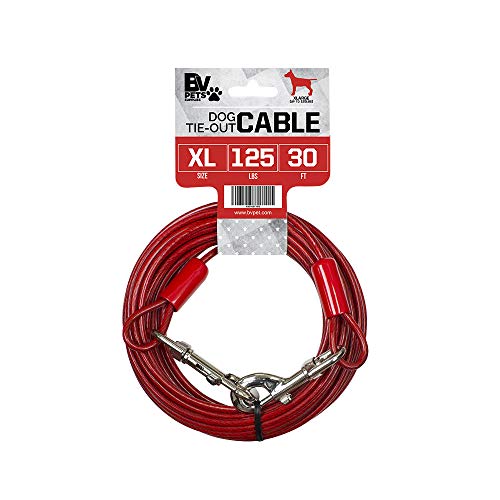
BV Dog Tie Out Cable 30 Feet (Red)

Stainless Steel Tie Out Wall Hook With Clip

Dog Tie Out Stake With Lock-Cap
What Each Pick Brings To The Table
This kit is built for a very specific job: keeping a Ruff Land kennel locked in place inside a vehicle. Four D-rings paired with serrated hex bolts give you anchor points at the corners of the crate, and the anti-slip head design keeps them from backing out under vibration. For anyone who travels to trials, hunts, or weekend events with a mid-sized crate, that kind of redundancy matters more than cable length.
Installation requires drilling into the crate floor, which is a permanent modification you should weigh before committing. Owners commonly report that the bolts bite firmly into aluminum and hold through long drives, though the kit only fits Ruff Land style kennels and will not adapt to other crate brands without extra hardware.
What Stands Out
- Serrated hex bolts resist loosening under road vibration
- Four D-ring points let you secure the crate at each corner
- Anti-slip head design keeps the bolt from spinning during install
- Clean fit for Ruff Land kennels, no adapter guessing
Things To Consider
- Requires drilling the crate floor, which is a permanent change
- Not designed for free-roaming tie-out duty
- Hardware is sized for Ruff Land style kennels specifically
Who It Suits Best
People who haul a Ruff Land kennel in a truck or SUV and need the crate to stay put on rough roads.
Consider Something Else When
Anyone wanting a yard cable should look at the BV Dog Tie Out Cable 25 Feet instead, since it gives a large dog actual roaming room.
The Canine Hitch is a stainless wall hook with a clip on the end, designed for parking a dog on a short lead indoors or in a covered workspace. It is sold in multi-packs and ships with mounting hardware so you can set up multiple stations along a wall, which makes it a natural fit for groomers, vets, and home mudrooms where several dogs rotate through. The all-stainless build shrugs off the kind of moisture and grime that wears down plated hooks.
For a backyard setup, this is more of a tethering anchor than a roaming line. You will need to mount it into a stud or masonry, and the clip-style attachment is best used with a fixed-length lead rather than a long runner.
Positive Points
- Stainless construction resists rust in damp spaces
- Multi-pack sizing suits shops with multiple stations
- Included hardware simplifies a clean wall install
- Clip-end design makes drop-in tethering fast
Points To Keep In Mind
- Not a roaming solution for outdoor yard use
- Must anchor into a stud or masonry for safety
- Works best with a separate short lead
Quick Facts
Made For
Grooming shops, vet clinics, and home entryways where a dog needs a short tether at a fixed station.
Where Another Pick Suits Better
Anyone wanting a yard roaming setup for a big dog should choose the Dog Tie Out Stake With Lock-Cap for actual outdoor freedom.
BV makes two versions of this cable, and the 25-foot model is the heavier one, rated for dogs up to 250 pounds. The reflective vinyl jacket brightens the line in low light, which matters when your dog circles behind a bush at dusk and you suddenly cannot see where the cable ends. The 360-degree rotating clasp and quick-release clips handle the boring chore of keeping the cable from twisting into knots every time the dog does a lap.
At 25 feet, this cable suits a small-to-medium yard rather than a wide pasture. Owners commonly note that the rust-resistant coating holds up well through wet seasons, and the swivel clasp stops most tangles if the dog changes direction often.
The Value In It
- Higher weight rating matches strong or large dogs
- Reflective jacket improves visibility after dark
- Rotating clasp keeps the cable from twisting
- Quick-release clips speed up hookup and teardown
Trade Offs
- Shorter reach than the 30-foot sibling
- Best paired with a separate stake or anchor
Whose Shelf It Belongs On
Owners of strong medium-to-large breeds who want a short, heavy-duty line for a modest backyard.
A Better Fit Elsewhere
Anyone with a wider yard and a lighter dog will get more reach out of the BV Dog Tie Out Cable 30 Feet (Red).
The 30-foot sibling trades some weight capacity for extra range, landing at 125 pounds, which covers most family dogs comfortably. Same reflective vinyl, same 360-degree swivel, same quick-release clips, just more cable to work with. For a standard backyard this is the more useful length, since a medium dog can actually patrol a perimeter instead of pivoting in a tight circle.
The red jacket is easier to spot in grass than a plain cable, and the swivel does most of the anti-tangle work without any owner intervention. Compared to the heavier 25-foot version, you give up some maximum strength for that extra reach, so giant-breed owners may want to size up.
The Helpful Details
- 30-foot reach suits typical backyard layouts
- Reflective red jacket improves low-light visibility
- Swivel clasp cuts down on cable twisting
- Quick-release clips speed daily hookup
- Lightweight cable is easy to coil and store
Small Caveats
- Lower weight limit than the 25-foot version
- Needs a proper ground anchor to work safely
- Cable can wear against rough concrete over time
Feature Snapshot
Best Suited To
Owners with a medium dog and a normal backyard who want simple, tangle-resistant daily tie-out time.
Skip It When
Anyone walking a giant breed over 125 pounds should step up to the BV Dog Tie Out Cable 25 Feet for the stronger rating.
This ZENGSUSU hook pushes the weight ceiling higher, rated up to 500 pounds, which puts it in giant-breed territory. The stainless body is paired with an M8 carabiner that opens and closes quickly, so a big dog gets clipped on and off in seconds rather than threaded through a loop. Mounted into a stud, post, or masonry wall, it doubles as a parking point for grooming, training, or crate-area tethering.
The carabiner gate is the part to keep an eye on long-term. Owners commonly report that the hook itself holds its weight rating easily, but a chewed lead or a yanked collar can stress the gate over time, so periodic checks help.
What Makes Sense
- 500-pound rating covers St. Bernard-class dogs
- Stainless build fights rust in outdoor walls
- M8 carabiner speeds clip-on and clip-off
- Wall mount frees up floor space in tight areas
Honest Caveats
- Requires a solid mounting surface
- Carabiner gate should be checked periodically
- Not a roaming cable on its own
Feature Rundown
Who Will Love This
Giant-breed owners and trainers who want a wall-mounted parking point for a powerful dog.
Reach For A Different Pick When
Anyone wanting outdoor roaming room should pick the Dog Tie Out Stake With Lock-Cap instead, since it gives actual ground freedom.
This Duckygoo stake takes a different approach: a 17-inch screw-in shaft with a lock-cap design that resists the popping-out problem common with lighter stakes. Rated to hold against 350 pounds of pulling force, it is built for the big dog who hits the end of the line at full tilt. The lock-cap locks the cable to the stake so a hard yank cannot flick the clasp off the ring.
Installation is as simple as twisting it into soft ground, though harder or rocky soil will demand a pilot hole. Owners commonly note that the longer shaft gives better grip in loose soil than short auger-style stakes, and the cap design makes the anchor easier to find if grass grows over it.
Notable Gains
- 17-inch screw shaft grips deep in soft soil
- Lock-cap prevents the cable from popping free
- 350-pound pull rating handles strong dogs
- Pairs with any standard tie-out cable
Practical Considerations
- Hard or rocky soil requires a pilot hole
- Anchor can be hidden by tall grass over time
Feature Snapshot
Perfect Match For
Large-breed owners with soft, diggable soil who want a ground anchor that does not pop out on the first lunge.
Where A Sibling Pick Shines
Anyone with concrete or hard-packed ground should reach for the Stainless Steel Tie Out Wall Hook With Clip and mount to a post instead.
Matching Tie Out Hardware To Your Setup
Choosing dog tie outs starts with the ground you have. Soft soil rewards a screw-in stake like the Duckygoo, while a concrete patio or shop wall points toward a mounted hook. Weight rating is the next filter: a cable rated for 125 pounds covers most dogs, but a 250- or 350-pound system gives real margin for a strong puller.
Length shapes the daily experience more than any other spec. A 25-foot cable fits a tight yard, while 30 feet gives a medium dog room to actually move. Reflective jackets and swivel clasps sound minor until you walk the line at night or untangle knots for the third time in a week.
Indoor and vehicle setups are a different category. Crate anchoring, grooming stations, and entryway parking call for wall hooks with a clip, not a roaming cable. Match the format to the job and the dog, not the other way around.
Key Considerations Across These Picks
Mistakes Worth Dodging
The most common mistake is picking a cable by length alone and ignoring the weight rating. A 30-foot cable rated for 30 pounds will not survive a Labrador that bolts, no matter how reflective the jacket is. The flip side is just as bad: a heavy cable overbuilt for a small dog adds weight and tangles without buying real safety.
Another trap is trusting a stake in hard or frozen soil. A 17-inch screw needs ground that will accept it, and forcing it into rocky terrain bends the shaft and weakens the anchor. Always check soil type before choosing a stake over a wall mount.
Where The Extra Money Goes
Higher-tier tie outs tend to spend the budget on three things: better cable coatings that resist rust over many seasons, swivel hardware that genuinely prevents tangles, and weight ratings with real margin beyond your dog’s size. The wall hooks in the higher tier also tend to use thicker stainless and heavier carabiners, which holds up to daily clip-on stress.
The upgrade pays off most for owners of strong or giant-breed dogs, and for anyone who uses the tie out daily rather than occasionally. For a small dog in a mild climate, a mid-range cable covers the job without the premium price.
Frequently Asked Questions
How long should a tie out cable be for a backyard?
Most backyards work well with a 25- to 30-foot cable. Anything shorter turns the dog in tight circles, while anything much longer can wrap around obstacles and create tripping hazards.
Can a tie out replace a fenced yard?
A tie out gives a dog freedom to roam a single anchor point, but it does not replace the security of a fence. Use it as a supplement during the day, not a permanent substitute for a secure yard.
Are reflective cables really necessary?
Reflective jackets help most in low light, when a dark cable disappears into grass and creates a tripping hazard. For daytime use in a bright yard, they are a nice extra rather than a must-have.
What weight rating should you choose?
Pick a rating at least double your dog’s weight for a real margin of safety. A 50-pound dog on a 125-pound cable gives you room for sudden lunges without snapping the line.
Will a stake work in rocky or hard soil?
Screw-in stakes need soft ground to bite properly. In rocky or hard-packed soil, a wall-mounted hook or a post anchor is the safer and more reliable choice.
Bottom Line
The right dog tie out depends on where it lives and how strong your dog is. Wall hooks handle grooming and crate anchoring, screw-in stakes give a big dog room to roam on soft ground, and reflective cables with swivel clasps are the workhorse for everyday yard use. Match the format to the job, and any of these six picks will do its job well.