
Letting a strong-pulling dog hang out in the yard without a fence means trusting whatever keeps them tethered. A tie out cable earns its keep the second your 70-pound mix hits the end of the line at full tilt, and that’s exactly where the wrong setup fails. The five options below cover the spread: short home runs, full-yard reach, in-ground anchoring, wall-mounted mounting, and overhead trolley systems that feel almost like giving your dog their own track.
The Choices Worth Comparing

BV Dog Tie Out Cable 25 Feet Heavy Duty

BV Dog Tie Out Cable 30 Feet Reflective
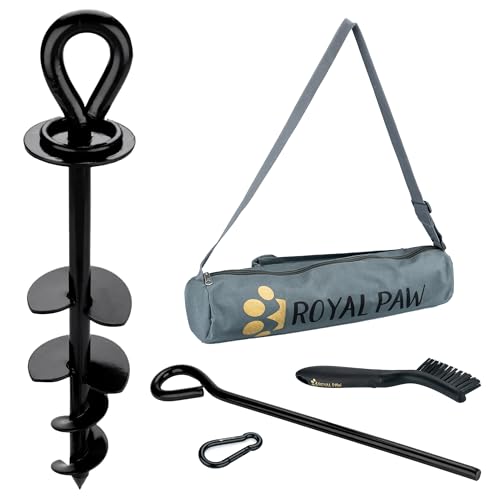
ROYAL-PAW Dog Tie Out Stake for Large Dogs

Stainless Steel Wall Mount Tie Out Hook

Duckygoo Double Shock Absorption Dog Trolley 50FT
More On The Choices That Made The List
The 25-foot BV cable is the workhorse end of this roundup, rated for dogs up to 250 pounds. That’s serious headroom for anyone with a stocky Mastiff or a Husky that hits the line like a sled dog. The cable carries a rust-resistant coating and a 360-degree rotating clasp at the end, which is the small detail that decides whether your dog wraps themselves into a knot every five minutes.
Reflective threading along the cable helps with low-light visibility, so you’re less likely to trip over it during dusk bathroom breaks. Quick-release swivel clips at both ends mean you can unhook the dog without fumbling when your hands are full of leash and treats.
Notable Gains
- Rated strength up to 250 pounds covers virtually every domestic breed.
- Rotating clasp keeps the cable from twisting as your dog circles.
- Reflective material adds a useful safety layer at night.
- Rust-resistant coating suits year-round outdoor exposure.
- Quick-release clips make hookup and takedown simple.
Trade-Offs Worth Bearing In Mind
- 25 feet is on the shorter side if you want full-yard roaming.
- Coating can wear at the soil contact point over multiple seasons.
Who It Suits Best
Owners of large, powerful breeds who need a compact, strong cable for a smaller yard zone.
Look Elsewhere When
Shoppers wanting maximum yard roaming should reach for the Duckygoo trolley system instead.
This 30-foot BV option stretches the same brand’s design into a more generous reach for a moderate-sized yard. Rated for dogs up to 125 pounds, it fits the bulk of family pets: Labs, Goldens, mid-weight mixed breeds. The red coating is a small aesthetic change but the construction underneath is what matters.
You get the same tangle-resistant rotating clasp as the 25-foot model, just with five extra feet of running room. The reflective vinyl threading serves the same safety purpose, helping drivers and family members spot the cable after sundown.
Positive Points
- 30-foot length suits medium yards without losing handling control.
- Reflective threading improves visibility for evening yard time.
- Rust-resistant build handles damp grass and morning dew.
Things To Weigh
- 125-pound rating leaves less margin than the 250-pound BV cable.
- No shock absorption, so a hard stop at full extension is possible.
- Requires a separate stake or anchor, which adds to the install.
Made For
Mid-size dog households wanting a balanced reach-and-strength cable for daily yard use.
Where Another Pick Suits Better
Anyone with a giant breed over 125 pounds should default to the 250-pound-rated BV cable above.
ROYAL-PAW shifts the focus from cable to anchor, and that’s exactly the piece most setups quietly depend on. This in-ground stake is built for dogs up to 210 pounds and pitches itself as a travel-friendly solution. Drive it into the lawn, a beach edge, or a campsite, and you’ve got a portable tethering point without a fence.
Unlike the BV cables above, this is just the anchor, so you’ll still need a cable or lead to pair it with. The midnight-black finish and heavy-gauge steel construction feel like gear that can survive being kicked around in a trunk.
Where It Helps
- 210-pound rating covers large breeds without flex.
- Portable design works for travel, beach, and camping trips.
- Pairs with any standard cable or leash you already own.
Possible Compromises
- Won’t hold well in loose sand or very rocky soil.
- Cable sold separately, which raises the total setup cost.
Right Fit For
Travelers and campers who need a portable ground anchor they can drive in anywhere.
A Better Fit Elsewhere
Homeowners with a fixed yard setup will find the Duckygoo trolley system gives more daily freedom without a stake at all.
The wall hook from ZENGSUSU plays a different role from the cables and stake, and it’s the kind of small piece that quietly anchors a much larger system. Built from stainless steel and rated up to 500 pounds, it’s the strongest single component in this roundup by a wide margin. Mount it to a solid post, deck joist, or masonry wall and you’ve got a permanent tethering point.
The included M8 carabiner clip opens and closes for fast hookup, which keeps daily use painless. This is best paired with a cable of your choice, similar to how the ROYAL-PAW stake works as a base for a separate lead.
The Practical Payoff
- 500-pound rating is well beyond any domestic dog you’ll encounter.
- Stainless steel construction resists rust and corrosion over years of outdoor exposure.
- Carabiner clip enables hands-free attachment and removal.
Honest Caveats
- Requires solid mounting substrate: drywall alone won’t cut it.
- Cable sold separately, so the full system needs a second purchase.
Who Should Grab It
Shoppers wanting a permanent, no-maintenance anchor on a deck, barn post, or masonry wall.
Reach For A Different Pick When
Renters who can’t mount hardware should choose the ROYAL-PAW stake instead, since it’s removable.
The Duckygoo setup is the closest thing on this list to giving your dog an actual track to run on. It’s an aerial trolley system with 50 feet of main cable plus 10 feet of lead with a built-in spring, plus an additional elastic section for double shock absorption. The 360-degree tangle-free clip is the same hardware category as the BV cables, but the overhead mounting gives your dog a circular running path rather than a single linear reach.
Rated for dogs up to 250 pounds, it’s suited to large breeds that need more than a short stake-out zone. The trade-off is installation complexity: you’ll need two solid anchor points and a way to tension the line.
The Value In It
- 50-foot main cable plus 10-foot lead gives a generous circular path.
- Double shock absorption softens the stop when a dog hits full extension.
- Spring and elastic combination protects your dog’s neck over time.
- 250-pound rating handles the largest common breeds.
Worth Noting
- Requires two solid anchor points, which adds install time.
- More components mean more pieces to check seasonally.
Best Suited To
Owners with large yards and big, energetic dogs who want genuine running room rather than a stationary stake-out.
Where Another Pick May Suit Better
Anyone working with a small patio or balcony will find the 30-foot BV cable more practical.
Picking The Right Tie Out For Your Yard
The right tie out depends less on your dog’s size than on how you actually plan to use it. A flat 25-foot cable works fine for bathroom breaks and a quick porch sit, while a 50-foot trolley system makes sense only when you have two trees or posts wide enough apart to tension a long overhead line. Weight rating is the first filter: a 50-pound dog’s sudden lunge at a squirrel puts real strain on hardware, and a 250-pound rating is not overkill even for medium breeds.
For in-ground anchoring, soil type quietly decides whether a stake holds. Loose sand or freshly turned garden soil will let even a heavy stake shift, so consider a wall mount on a deck post as a sturdier long-term option. If your dog pulls hard and fast, shock absorption matters more than reach. A spring-loaded lead or an elastic section reduces the jolt on your dog’s neck every time they reach the end of the line.
Finally, think about routine. A tangle-free 360-degree clasp is worth real money if you use the cable daily, because untwisting is the chore that gets old fast. Reflective threading is a small but useful touch for anyone stepping out after dusk.
Key Considerations Across These Picks
Mistakes Worth Dodging
Matching a cable to your dog’s weight only by breed name is one common trap. A lean 90-pound German Shepherd and a 90-pound English Bulldog put very different strain on hardware, so a rating that fits your dog’s weight with a margin is the safer call. Skipping the anchor purchase is another, since the cable alone does nothing without a stake, wall mount, or trolley system at one end.
Where The Extra Money Goes
Premium tie out systems spend the upgrade on materials and shock absorption. Stainless steel components, double-spring leads, and elastic buffers all reduce wear on your dog’s neck and on the hardware itself. For dogs that lunge hard or for households that leave a dog tied out longer than a quick break, the upgrade tends to pay back in fewer replacements and a calmer, safer setup.
Frequently Asked Questions
How long should a dog tie out cable be?
For small yards and short bathroom breaks, 20 to 30 feet is usually enough. Larger yards or more energetic dogs benefit from 50 feet or a trolley system that lets the dog run in a circle.
Can a tie out cable hurt a dog?
A sudden stop at full extension can stress the neck, especially without shock absorption. Spring-loaded leads or elastic buffers reduce that jolt and are a smarter choice for hard pullers.
What weight rating should I pick for my dog?
Aim for a rating at least double your dog’s weight. A 60-pound dog does well on a 125-pound-rated cable, while large breeds above 100 pounds benefit from 250-pound or higher ratings.
Are reflective cables worth it?
Reflective threading helps in low light, particularly for households that step out after dark. It’s a small safety upgrade that costs very little extra.
Do I need a stake or anchor separately?
In most cases yes. Cables connect to an anchor at one end, whether that’s an in-ground stake, a wall hook, or part of a trolley system. Plan the anchor purchase alongside the cable.
The Takeaway
A good tie out setup is the sum of cable, anchor, and weight rating working together. Match the hardware to your dog’s real size and your yard’s actual layout, and you’ll spend less time untangling and more time letting your dog enjoy the outside.