
A dog that loves fresh air usually doesn’t want to be stuck indoors while you handle the rest of the day. Yard tie-outs and aerial runs give medium and large breeds room to roam, sniff, and burn energy without a fence project or a daily leashed walk. The trick is matching the runner to your dog’s pull strength, yard size, and ground type, since a 30-foot cable on a mastiff feels different from the same cable on a beagle.
The Choices Worth Comparing

BV Dog Tie Out Cable 25 Feet (Grey)
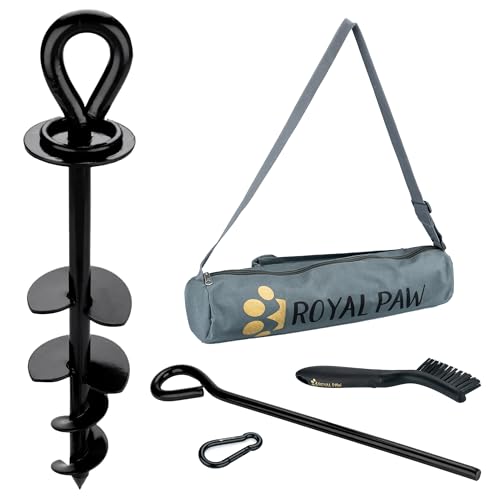
ROYAL-PAW Dog Tie Out Stake 210 lbs

iklekione Dog Tie Out Stake Stainless Steel

Duckygoo Shock Absorption Trolley 50FT

MOLANZ Tie Out Stake with 2x20FT Cables

Duckygoo Elastic Cable Yard Runner 100ft
A Deeper Look At The Lineup
The BV cable is the no-frills option most people picture when they hear “dog tie out.” It runs 25 feet of reflective vinyl-coated cable with a quick-release swivel clasp at each end, designed for dogs up to around 250 pounds, so even a stocky Labrador or a stockier mixed breed has plenty of headroom on the weight rating.
For a typical suburban backyard with a tree, a porch post, or a dedicated stake, setup takes a few minutes. The reflective jacket is the detail that matters most after dark: when your dog is out for a last bathroom trip at 10 p.m., that glow under a porch light helps you spot the cable and avoid tripping over it.
Where It Delivers
- Reflective vinyl jacket improves visibility in low light and at night
- Quick-release swivel clips at both ends make hooking and unhooking fast
- Weight rating up to 250 pounds covers most medium and large breeds comfortably
- Simple loop-and-clip design works with trees, posts, or any anchor you trust
Things To Consider
- 25 feet of cable limits how far your dog can roam in larger yards
- No shock absorption, so a hard sprint to the end of the line puts more force on a collar
- Vinyl coating can wear over years of sun exposure and may need inspection before each season
Right Fit For
Suburban households with medium breeds and a modest yard who want a dependable, easy-to-clip cable without a permanent installation.
Look Elsewhere When
You want a wider roaming radius or aerial trolley style: the Duckygoo Shock Absorption Trolley 50FT stretches further and softens the stop at the end of the line.
The ROYAL-PAW stake leans into the heavier end of the dog-runner spectrum, rated to hold large breeds up to about 210 pounds. A spiral ground anchor design drives into soil like a giant corkscrew, and the eye loop on top gives you a single solid anchor point for whatever cable you already own or buy separately.
In practice, this stake pairs well with cabin trips and lake houses where you’re not sure what’s underground. Twist it in with a length of pipe through the eye for leverage, hook up your cable, and you have a portable anchor that moves with you. Compared with the BV cable above, this is the ground side of the equation, not the line itself.
Everyday Advantages
- 210-pound holding capacity covers extra-large breeds and strong pullers
- Ground-anchor design leaves the yard free of permanent posts or hardware
- Works for yard, beach, and camping setups when you bring a wrench or pipe
- Black finish helps the anchor blend into lawn and soil once installed
Honest Caveats
- Loose or sandy soil may not hold the spiral as firmly as packed clay
- Requires manual effort to install and remove, which can be tiring in hard ground
- Cable and clip are sold separately, so the total setup cost adds up
Made For
Owners of big, powerful dogs who need a serious ground anchor for travel days and backyard days alike.
A Better Fit Elsewhere
You run two dogs at once and want a single kit out of the box: the MOLANZ Tie Out Stake with 2x20FT Cables ships with cables for two dogs already attached.
The iklekione stake goes all-in on corrosion resistance, building the anchor from 304 stainless steel and alloy hardware. For homes in coastal areas, rainy climates, or anywhere a regular steel anchor would orange up within a season, that material choice removes a recurring headache.
The screw-in design uses a 12-inch-long, half-inch-diameter anchor with a swivel eyelet on top. Once it is in the ground, you attach your own cable and clip. Think of this as the long-term anchor you install once and forget about, while still being able to unscrew it if you change landscaping.
Key Advantages
- 304 stainless steel body resists rust in wet, humid, or coastal climates
- 12-inch screw depth keeps the anchor steady through dog lunges and weather shifts
- Works as a permanent fixture you can leave outside year-round
- Swivel eyelet helps prevent the cable from twisting as your dog circles
Points To Note
- Installation needs a wrench or a bar through the eyelet for leverage
- Hard, rocky ground may require a pilot hole before the screw will bite
Who It Suits Best
Households in wet or coastal climates who want a stake that stays out through every season without flaking or staining the lawn.
Reach For A Different Pick When
You need a one-and-done kit with the cable already attached: the MOLANZ Tie Out Stake with 2x20FT Cables arrives with cables ready to clip on.
The Duckygoo trolley flips the dog-runner concept from a flat cable on the grass to an overhead zipline. A main 50-foot cable runs between two anchor points, a pulley rides along it, and a 10-foot lead hangs down to your dog’s collar. The “shock absorption” piece is a built-in spring plus an elastic segment that softens the stop when your dog reaches the end of the line.
The benefit shows up in the dog’s neck: a flat cable yanks hard at full sprint, while a spring and elastic section take the edge off that jolt. For active breeds that love to launch after a squirrel, the trolley format also keeps the cable out of the grass, so it doesn’t snag on garden hoses, lawn chairs, or sprinkler heads.
Where It Helps
- Overhead trolley keeps the cable clear of obstacles at ground level
- Built-in spring and elastic lead absorb the jolt at the end of a sprint
- 50-foot main span plus 10-foot lead gives dogs a wide circle to roam
- Rated for dogs up to about 250 pounds
Worth Noting
- Requires two solid anchor points, typically trees or installed posts
- Setup takes longer than a simple stake and cable
- Springs and elastic parts need a quick visual check each season for wear
Best Suited To
Active large-breed owners with two strong anchor points and a yard long enough to make a 50-foot span meaningful.
Skip It When
You camp in soft soil without reliable trees: the iklekione Dog Tie Out Stake Stainless Steel gives you a single-screw anchor that travels without needing two mounting points.
The MOLANZ kit bundles a stainless steel ground stake with two 20-foot cables, which is the rare ready-to-go option for multi-dog homes. The two cables can run independently for separate dogs, or you can connect them end-to-end for a single 40-foot runner for one bigger yard.
Dual 360-degree swivels at the stake head keep the lines from tangling when both dogs cross paths, which is a common headache with cheaper twin setups. With a 200-pound capacity on the anchor, this kit covers most large-breed pairings you can throw at it.
Well-Handled Touches
- Two 20-foot cables cover either one dog with extra range or two dogs at once
- Dual swivels at the stake prevent the cables from twisting into knots
- Stainless steel hardware resists rust across rainy seasons
- 200-pound anchor rating covers most large breeds
Trade-Offs
- 40-foot combined span is shorter than the Duckygoo aerial runs
- Spiral stake still needs decent soil to bite into
Whose Shelf It Belongs On
Two-dog households who want a single purchase that covers both pets and travels to camp or the lake.
Another Choice May Suit
You have one dog and want maximum range with shock absorption: the Duckygoo Shock Absorption Trolley 50FT trades a second cable for a longer overhead span and a softer stop.
The 100-foot Duckygoo runner is the long-reach sibling of the 50-foot trolley above. Same trolley-and-zip-line concept, same shock-absorption spring plus elastic lead, but the main cable stretches twice as far for bigger properties or wide camping clearings. The 10-foot lead hangs from the trolley, giving dogs a real orbit to explore.
For households with multiple acres, a long side yard, or a vacation property with mature trees, the 100-foot span turns an aerial run from a novelty into a genuine exercise tool. Compared with the shorter Duckygoo, the trade-off is a slightly higher setup effort and a need for two anchor points that are farther apart and lined up correctly.
What Makes Sense
- 100-foot main span suits long yards, narrow fields, and wooded camping sites
- Spring plus elastic lead absorbs the hard stop at each end of the line
- Overhead cable stays clear of sprinklers, toys, and garden beds
- Pulley glides smoothly along the cable so dogs can change direction without snagging
Practical Considerations
- Needs two well-spaced, sturdy anchor points to support a 100-foot span
- Higher cable tension means posts or trees should be checked for movement after install
- Elastic components benefit from seasonal inspection for wear
Who Should Grab It
Owners with long, open properties or frequent campers who want maximum roaming range and a forgiving end-of-line stop.
Not Your Match When
Your yard is small or square-shaped: the Duckygoo Shock Absorption Trolley 50FT covers most suburban lots without wasting cable length.
What Matters Most Before Choosing Dog Runners For Yard
Ground Anchor Strength And Soil Type
A stake is only as good as the soil it sits in. Packed clay and loam grip a spiral anchor firmly, while loose sand or freshly turned topsoil can let even a 200-pound-rated stake work loose under a lunging dog. For soft ground, a longer screw section or an in-ground anchor with deeper flutes gives you more holding power. For hard ground, a pilot hole or a small sledgehammer makes installation realistic without bending hardware.
Cable Length And Yard Shape
Twenty-five feet sounds generous until you measure the corner-to-corner span of your yard. A circular roaming path needs roughly a 50-foot cable to feel like a real run, and a long, narrow yard often needs 75 or 100 feet just to reach from one tree line to the other. Match the cable length to the actual radius you can offer, not the largest size you can find.
Shock Absorption And Collar Safety
A flat cable teaches a fast dog a hard lesson at full sprint. Springs, elastic lead segments, and trolley systems all spread that stop across a few extra inches, which protects the dog’s neck and collar hardware. For sighthounds, huskies, and any dog that hits the end of the line at speed, shock absorption is more than a comfort feature.
Portability Versus Permanent Install
Spiral stakes unscrew and travel well, while trolley systems need two solid anchor points and a careful re-tension at each new site. Frequent campers benefit from kit-style options like the MOLANZ bundle that arrive with cables already attached. Full-time backyard users often prefer heavier stainless anchors that stay installed year-round.
Key Considerations Across These Picks
Where Shoppers Go Wrong
The most common slip is buying on cable length alone and ignoring the stake side of the system. A long cable attached to a soft-soil stake is just a longer lever pulling the anchor loose. Match the cable span to your yard, and match the anchor’s holding capacity to your dog’s pull strength and your soil type. Skipping a quick walk around the yard to confirm anchor points is the other usual mistake, since trolley systems need two trees or posts roughly the right distance apart.
The Upgrade Payoff
Higher-tier models earn their keep through three things: stainless or alloy hardware that survives weather, integrated shock absorption that protects the dog’s neck, and dual-swivel designs that prevent tangles during energetic play. For one quiet dog in mild weather, an entry-level cable gets the job done. For two dogs, a strong puller, or any dog that hits the line at speed, the upgrade pays back in fewer replacements and a safer setup.
Frequently Asked Questions
How long should a yard dog runner be?
Most suburban yards feel generous with a 25 to 50 foot cable, while long properties or camping setups usually want 75 to 100 feet. Measure the radius you can offer from your anchor point before committing.
Are ground stakes safe for large dogs?
Spiral and screw-in stakes rated at 200 pounds or more handle most large breeds when installed in packed soil. Looser ground may need a longer screw depth or a concrete-set anchor for the same dog.
Do aerial trolley systems really reduce pulling?
The spring and elastic segments spread the end-of-line jolt across more inches, which lowers peak force on the dog’s neck and collar. They do not change how hard the dog pulls mid-run, only how the stop feels.
Can one stake work for two dogs?
Only if the stake and cables are designed for it, like the MOLANZ dual-cable kit. Most single-cable stakes will twist or loosen when two dogs pull in different directions, even if the weight rating technically allows it.
How do I maintain a dog runner through the seasons?
Wipe down cables and swivels a few times a year, check for fraying vinyl or worn elastic, and confirm the stake still sits firmly in the soil before each warm-weather stretch. Replace any part that shows cracking, rust pitting, or loose stitching.
Closing Remarks
The right dog runner comes down to your yard, your dog, and how often you travel. Small yards and calm dogs do well with a simple reflective cable, while big properties and active breeds benefit from longer aerial runs with shock absorption. Pick the anchor and the cable as a matched pair, and your dog gets reliable outside time without you rebuilding the setup every season.