
A working crank radio earns its spot in your kit the moment the grid goes down or the trail takes you past cell coverage. You don’t need to be a hardcore prepper to want one; any homeowner in storm country, RV traveler, or weekend camper gets genuine value from a unit that charges without a wall outlet. Each pick below leans on NOAA-certified weather access, a rechargeable battery, and a hand-crank backup that keeps the news flowing when nothing else will.
Your Options, Compared

PPLEE NOAA Emergency Weather Radio 12000mAh Hand Crank Solar

PPLEE NOAA Weather Radio 12000mAh Emergency Hand Crank Solar

Roxicosly Emergency Weather Radio with Large Solar Panel
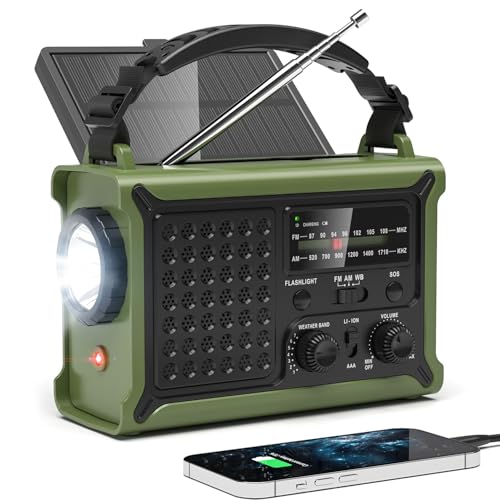
PPLEE 12000mAh 44400mWh Emergency NOAA Weather Radio Hand Crank Solar

OnLyee Emergency Radio Hand Crank Solar NOAA 12000mAh

Mesqool Solar Radio Emergency Hand Crank 12000mAh Clear Signal
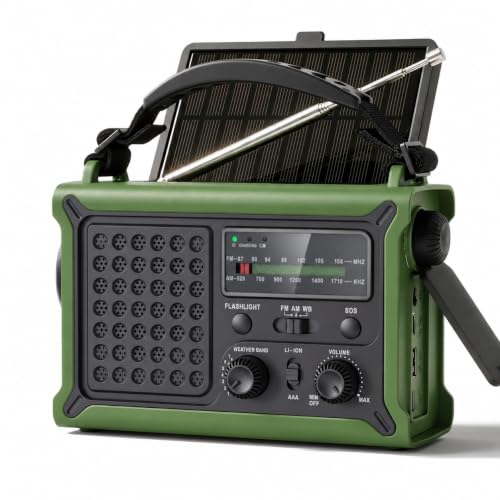
Raynic 12000mAh Emergency Weather Radio 2X Solar Panel USB-C
The Strengths Of Each Pick
PPLEE opens the list with a unit that feels like a sensible default. The 12000mAh pack outruns many entry-level radios, and the AM/FM plus NOAA band reception gives you more than weather alerts, which matters during a long blackout when local news updates carry practical weight.
Compared to the larger-capacity PPLEE unit further down, this one stays lighter and easier to toss into a backpack. You get the same charging philosophy without the extra weight, and the built-in flashlight rounds out the basics for hallway navigation during a power cut.
Key Advantages
- NOAA-certified access to seven preset weather channels for live local alerts
- 12000mAh battery doubles as a power bank for a phone in a pinch
- Three charging paths, hand crank, solar, and USB, cover nearly any scenario
- Compact shell fits a kitchen drawer or car glovebox without fuss
Things To Consider
- Solar panel size is modest, so cloudy-day top-ups stay slow
- Speaker output is fine for voice, less satisfying for music
Who It Suits Best
Homeowners in storm country who want a single radio that lives in a hallway closet until the lights go out.
Where Another Pick Suits Better
Campers chasing longer solar top-ups will find the Roxicosly Emergency Weather Radio a stronger fit.
The second PPLEE sits close to its sibling in capability but finds its own identity as a dedicated travel unit. You get the same NOAA approval, the same charging trio, and AM/FM broadcast access for keeping tabs on regional news while driving between cities.
The trade-off shows up in panel size, which is unassuming compared with the Roxicosly or Raynic entries below. For urban and suburban use where you charge via USB between outings, that trade-off rarely matters.
Bright Spots
- Reception locks onto distant NOAA channels with reasonable clarity
- Hand crank turns a minute of effort into usable listening time
- Doubles as a phone top-up in genuine emergencies
Honest Caveats
- Solar recovery is slower than larger-panel rivals
- The flashlight beam is narrow and aimed more at reading than room coverage
- No water resistance rating, so rainy camp setups need a dry bag
Made For
Households wanting a second radio that lives in the car, ready for road trips and surprise weather events.
Skip It When
Off-grid backpackers will get more from the Mesqool Solar Radio Emergency Hand Crank, which adds signal noise filtering.
Roxicosly leans hard into the solar side of things with an 8500mm² monocrystalline panel, which is a meaningful upgrade for anyone parked at a campsite for several days. The crank is also tuned to deliver useful output from short bursts, which matters when your arms tire before the battery fills.
The honest read is that this radio feels designed around the sun first and a wall outlet second. For a Florida backyard, a Pacific Northwest cabin, or anywhere solar exposure is reliable, that orientation pays off.
What Pays Off
- Monocrystalline panel pulls in usable charge faster than smaller cells
- Cranking one minute yields enough power for short radio checks and flashlight bursts
- NOAA weather band keeps you posted on local conditions without cell service
- AM/FM reception extends the radio beyond emergencies into normal camping life
Points To Keep In Mind
- Larger panel makes the body bulkier than entry-level PPLEE units
- Headphone jack and antenna length matter; owners commonly rely on the telescoping antenna in open areas
Key Specs
Best Suited To
Campers and overlanders who expect extended time away from wall outlets and need the radio to feed itself.
Reach For A Different Pick When
Shoppers who mostly charge from a USB cable at home will find the OnLyee Emergency Radio more compact.
This third PPLEE variant distinguishes itself with a high-capacity cell advertised at 44400mWh. For multi-day outages, that figure translates to longer listening sessions before you need to crank or top up. The radio pairs that capacity with the same NOAA approval seen across the brand.
The heavier battery does push the weight up a notch, so this is more of a kitchen-counter or garage-shelf radio than a hiking companion. For hurricane-prone regions on the Gulf or Atlantic coast, that footprint actually suits the use case well.
Practical Pluses
- Larger internal battery sustains longer listening between charges
- NOAA reception helps you track storm progression in real time
- USB power bank output is genuinely useful for keeping a phone alive during extended blackouts
Where It May Fall Short
- Bulkier chassis reduces pack-and-go convenience
- Charging from empty takes longer given the larger cell
Quick Facts
Who Should Grab It
Homeowners in hurricane or wildfire zones who want a radio that runs for days rather than hours on a single charge.
A Better Fit Elsewhere
Travellers chasing lighter gear will prefer the OnLyee Emergency Radio for less weight in the bag.
OnLyee slots into the middle of the list as the radio you’d grab without overthinking it. Its 12000mAh cell matches several competitors, and NOAA certification gives you the seven preset channels that matter for fast storm updates. The form factor stays sensible for an apartment shelf or RV dinette.
The reception lives up to typical expectations for the category, and AM/FM broadcast gives the radio a life beyond emergencies. For casual preppers who want one device that works for daily news too, OnLyee covers the bases.
Well-Handled Touches
- Triple charging paths cover crank, sun, and USB scenarios
- NOAA weather band with seven preset channels
- AM/FM reception handles everyday listening
Points To Note
- Solar panel size trails larger-panel rivals for fast sun recovery
- Speaker is functional for voice, modest for music playback
The Right Fit
Apartment dwellers and RV owners who want a single radio that doubles as a phone top-up during outages.
Consider Something Else When
Off-grid hikers will appreciate the Roxicosly Emergency Weather Radio for its larger solar surface and quicker crank output.
Mesqool positions itself around signal clarity, which is the kind of detail that separates a frustrating emergency experience from a calm one. The high-sensitivity chip and noise-reduction circuitry are designed to lock onto weak broadcasts when conditions are rough.
Storm-prone regions benefit from that focus, because NOAA signals can degrade in heavy rain or thunderstorms. The 12000mAh cell keeps the radio running through multi-hour listening sessions between top-ups.
Notable Gains
- Noise-reduction circuitry improves weak-signal clarity
- Extended antenna helps in remote or sheltered locations
- AM/FM and NOAA coverage in one device
Worth Bearing In Mind
- Solar charging speed is moderate; USB top-ups are more reliable indoors
- Plastic shell feels sturdy but lacks an official water-resistance rating
Feature Snapshot
Whose Shelf It Belongs On
Shoppers in storm-prone regions who care more about signal clarity than panel size.
Look Elsewhere When
Campers chasing maximum solar surface area will find the Roxicosly Emergency Weather Radio a stronger pick.
Raynic anchors the list with a feature-rich approach that rewards family readiness kits. The dual solar panel surface pulls in noticeably more charge than single-panel rivals, and the inclusion of USB-C alongside the older USB input broadens cable compatibility for modern phones.
Reading light and SOS beacon are practical extras that earn their place in a hurricane kit, where hallways and bedrooms both need illumination. The crank handle is also tuned for shorter, more productive turns compared with budget options.
Notable Upsides
- Two-panel solar design accelerates top-ups in direct sun
- USB-C input matches modern cables you already own
- LED flashlight plus reading light handle different room situations
- SOS function adds a layer of signalling for outdoor emergencies
Some Limits To Know
- Larger panel layout makes the radio less backpack-friendly than slimmer picks
- Multiple features can feel like overkill for apartment-only users
Feature Card
Perfect Match For
Family readiness kits where one device needs to cover charging, lighting, and weather alerts across multiple rooms.
Swap It Out When
Solo travellers prioritising lighter gear will appreciate the PPLEE NOAA Emergency Weather Radio for everyday portability.
Picking A Crank Radio That Actually Earns Its Place
NOAA certification matters more than brand name. The National Oceanic and Atmospheric Administration runs a network of weather transmitters across the US that broadcast on seven specific frequencies between 162.400 and 162.550 MHz. A radio without those channels, or one that uses them poorly, defeats the purpose during a tornado watch or hurricane approach. Check for explicit NOAA certification rather than vague “weather alert” wording.
Battery capacity shapes how the radio lives day to day. A 12000mAh cell supports phone top-ups and many hours of listening between charges, which suits apartment dwellers and weekend campers. For multi-day outages, higher-capacity batteries like the PPLEE 44400mWh option stretch further before any crank or solar input becomes essential.
Charging paths determine real-world resilience. USB covers everyday top-ups. Solar adds independence during extended outages or off-grid trips. Hand crank provides a guaranteed last-resort source when the other two fail. Three paths is the practical minimum, and panel size is the variable that separates a sluggish solar panel from one that recovers in a useful window.
Reception quality becomes critical in remote areas or weak-signal regions. Telescoping antennas, high-sensitivity chips, and noise-reduction circuitry all help lock onto distant broadcasts. In heavy rain or dense forest, those details mean the difference between clear alerts and static.
Portability and form factor affect daily behaviour. Lighter units move from kitchen drawer to car to backpack. Larger units with bigger panels work better as stationary fixtures. Pick the size that matches your real routine, not the impressive-looking one that ends up in a closet.
Practical Considerations For Smart Shoppers
Traps First Timers Fall Into
Many shoppers grab the cheapest unit and skip NOAA certification, then discover during the first real storm that their radio cannot pull local alerts. Weather radio without proper certification is just an AM/FM receiver with extra buttons.
Others over-focus on solar charging and ignore crank usability. A large panel that recovers slowly in cloud cover matters less than a crank that produces usable power in one minute, especially when arms tire before the battery fills.
Where The Extra Money Goes
Higher-tier radios invest in reception circuitry, panel efficiency, and battery longevity. Mesqool’s noise-reduction chip and Raynic’s dual-panel solar surface both demonstrate that premium engineering shows up where it counts: weak signals and slow recoveries. For households that live through real weather events rather than imagined ones, those upgrades earn their cost quickly.
Frequently Asked Questions
How Long Does A Crank Radio Battery Actually Last?
Most 12000mAh radios run for 8 to 12 hours of typical listening per charge, with shorter runtimes when you also use the flashlight. Charging via USB restores full capacity in roughly 4 to 6 hours on a standard wall adapter.
Do You Need NOAA Certification For Emergencies?
NOAA certification ensures your radio receives the seven dedicated weather broadcast frequencies that carry local alerts, watches, and warnings. Without certification, you get AM/FM only and miss emergency notifications.
Can A Hand Crank Really Power A Phone?
Short answer: barely. A minute of cranking produces a small percentage of charge, enough for a brief emergency call or text. Treat the crank as a survival backup, not a daily charging method.
What Is The Difference Between AM/FM And Weather Band?
AM/FM handles music, talk shows, and local news. The weather band (NOAA frequencies) carries dedicated emergency alerts from the National Weather Service. A useful emergency radio includes both.
How Often Should You Test Your Crank Radio?
Monthly is sensible. Crank for a minute, check reception on all bands, and confirm the flashlight works. Batteries slowly lose charge sitting idle, so periodic top-ups keep the radio ready.
Final Take
A crank radio earns its place in a kit by being ready when nothing else is. The seven units above span apartment-friendly compactness, off-grid solar performance, and family-readiness feature density, all anchored by NOAA-certified reception. Match the radio to your real routine, charge it once a month, and it will be quietly useful for years.